Airedale Terrier Grooming
The largest terrier there is, and the biggest hand stripping job a salon will take on
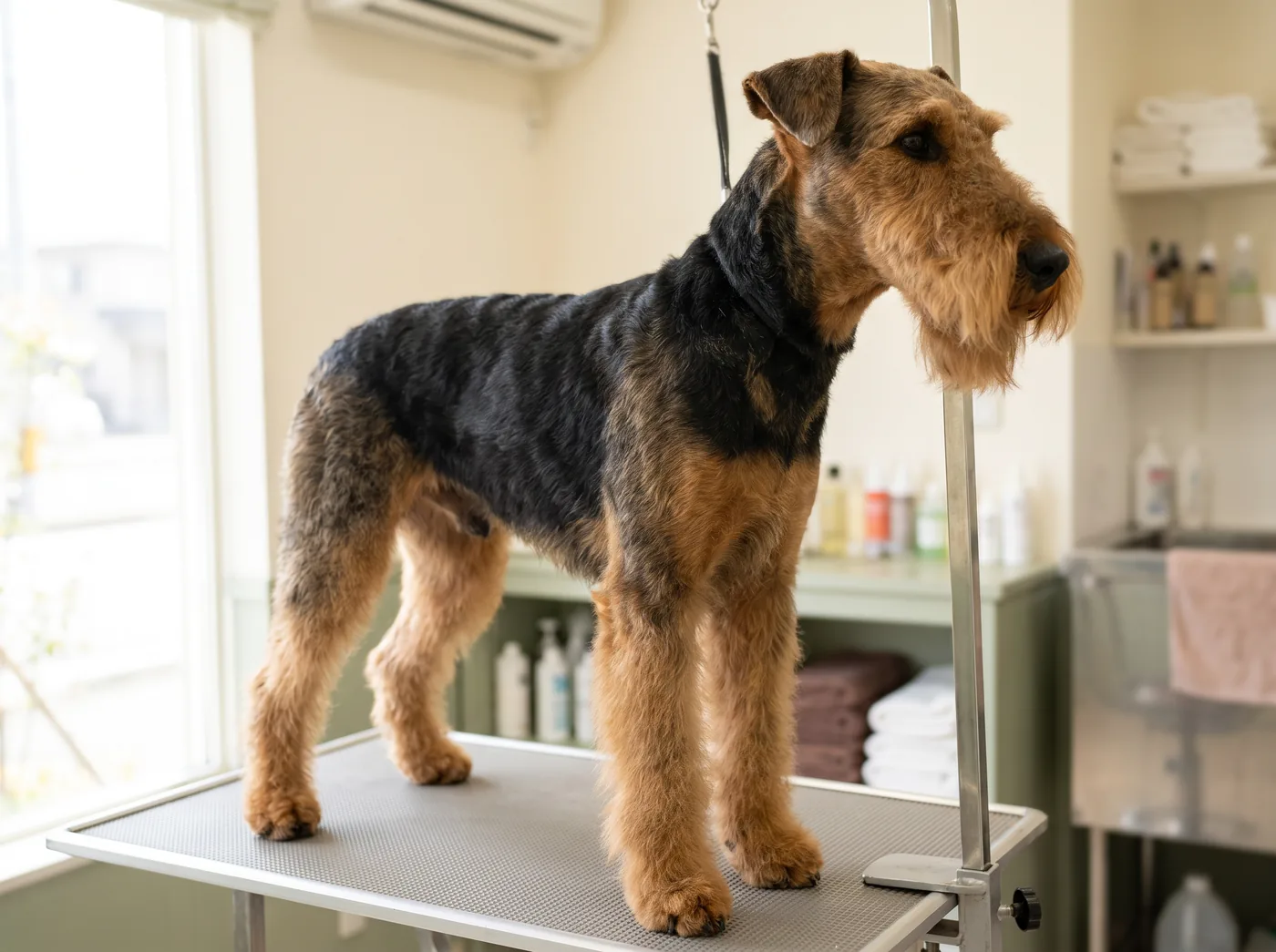
About the Airedale Terrier
The Airedale is the largest of the terriers and carries a classic wire coat: a hard, dense, wiry outer jacket lying close to the body, a soft undercoat beneath it, and long dense furnishings on the legs and face that give the breed its rectangular head and full beard.
Everything on this page follows from one fact about that coat. A wire jacket does not shed the way a normal coat does. Each hair grows to a set length, dies, and then sits in the follicle waiting to be pulled out. Nothing removes it except your hand or a stripping knife, and if it is cut off instead of pulled the follicle keeps the dead root and the next hair that grows is softer.
So there are two genuinely different ways to groom this dog, they produce different coats, and one of them cannot be undone. That decision is worth understanding before the first appointment rather than after the third.
This coat can be clipped, but the texture or the color may change and it will not always come back the same. Talk it through with your groomer before the first one.
What a wire coat is, and why it behaves differently
A wire coat is a working coat, developed to shrug off water, thorns and vermin bites while the dog worked hedgerows and riverbanks. The hardness is the point: a harsh outer hair resists damage and dirt slides off it rather than sticking.
The hardness comes from the way the hair grows. A wire hair is thickest at the tip and tapers toward the root, the reverse of a normal hair. It grows to a finished length and then dies, and because of that taper it sits loosely in the follicle rather than falling out. On a wild ancestor it would be rubbed out against undergrowth.
That gives the coat a cycle rather than a constant shed, which is why Airedales are often described as low shedding. They are, but only if the dead coat is being taken out. Leave it and the jacket goes dull, soft and open, loses its water resistance, and the dead hair tangles with the undercoat.
The furnishings are a different coat entirely: soft, dense, faster growing hair on the legs, muzzle and eyebrows, closer in behavior to a silky coat. They do not strip and they do mat, and they are most of the daily work on the dog.
So an Airedale is two coats on one animal, wanting two different things, which is exactly why the appointment is long and skilled.
Hand stripping versus clipping, and the one way door
Hand stripping means pulling the dead outer hairs out at the root, a small pinch at a time, using finger and thumb or a stripping knife used as a lever rather than a blade. It does not hurt a dog when the coat is ready: a dead wire hair is loose in the follicle and comes away with very little resistance. A dog that objects is usually being stripped on coat that is not ready, or has furnishings being pulled by mistake.
Done properly, stripping keeps the jacket hard and dark, keeps the water resistance, and stimulates the follicle to produce the same coat again. Some groomers roll the coat, taking out the longest hairs every few weeks so the dog always looks tidy, and some strip the whole jacket down at once and let it come back together.
Clipping cuts the hair off at the surface and leaves the dead root behind. The follicle carries on producing softer hair beneath, the undercoat comes to dominate, and over a few years the jacket becomes woolly rather than harsh, fades from black and tan toward gray and pale tan, loses its weather resistance and starts to mat where it never used to.
Clipping is quicker, cheaper, and completely acceptable if you want it. Plenty of pet Airedales are clipped and live perfectly good lives. But it is close to irreversible: once a coat has been clipped for a few years, stripping generally will not bring the hard jacket back, and getting anywhere near it means growing the coat out through a long scruffy stage.
Decide deliberately. The wrong outcome is drifting into clipping because one appointment was cheaper, then wanting the jacket back.
The furnishings, the beard and the legs
This is the half of the coat an owner deals with, and it is the half that causes problems between appointments.
The leg furnishings are long, dense and soft, and they mat in exactly the places you would expect: the armpits, the inside of the back legs, and anywhere a harness or collar rubs. They also collect mud, snow and burrs, and an Airedale is not a breed that avoids any of those. Comb them through weekly with a metal comb, right to the skin, and after any muddy walk.
The beard is the other one. An Airedale beard goes into every water bowl and every meal, and it holds both. Left alone it stains, smells and eventually mats solid against the jaw. Rinse it and dry it after meals, comb it through daily, and accept that a light colored beard on a dog that eats wet food will discolor whatever you do.
The eyebrows and the hair around the eyes need keeping out of the eyes, and the ears want checking weekly like any drop eared dog.
Feet want the hair between the pads kept flush, which on a wire coated breed also stops the classic hard grit filled pellets forming between the toes.
The sanitary area and the hair under the tail get trimmed at every appointment.
What a full groom involves, and what moves the price
A stripped Airedale is one of the longest routine appointments in a salon, commonly three hours and sometimes more. It is skilled hand work on a large dog, and there is no way to make it fast.
The order is: comb the furnishings out dry, strip or clip the jacket, scissor the furnishings and the head into the breed outline, bathe, dry, then tidy. Stripping happens on a dry unwashed coat, because a bathed coat is soft and slippery and the hairs will not come out cleanly, which is why a stripping appointment often runs backwards from what owners expect.
The price reflects the hours and the skill. Hand stripping is a premium service, it is not available in every salon, and a groomer who does it well on a breed this size is worth keeping. Expect to pay considerably more than for a clip and expect to book ahead.
What moves it beyond that: the interval, because a coat left twelve weeks is a much longer job than one left six; the condition of the furnishings, since dematting is charged by the hour and is unpleasant work; and whether the dog stands well for three hours, which is largely a matter of what it learned as a puppy.
The single biggest saving available to an owner is combing the furnishings weekly.
What to tell your groomer
Say whether you want the coat stripped or clipped, and ask what they actually offer. Not every salon hand strips, and a salon that does not will clip without necessarily explaining what that does long term.
If you want it stripped, ask whether they roll the coat or strip it out in one go, and book the interval they recommend rather than the one that suits your calendar.
Do not bathe the dog before a stripping appointment. Clean and dry is right; freshly washed is wrong, and a groomer will thank you.
Say honestly how much combing the furnishings actually get, so the appointment is booked with the right amount of time.
Ask for the beard, the feet and the sanitary area done every visit whatever else is happening.
And bring a photograph if you want the classic outline, because the head and leg scissoring is what makes an Airedale look like one.
Keeping the coat between grooms
Comb the leg furnishings
A metal comb to the skin. The soft furnishings are what mats, not the wire jacket, and armpits and back legs go first.
Weekly
Rinse and dry the beard
It goes into every bowl and every meal, and it holds both. Left wet it stains, smells and eventually mats to the jaw.
Daily
Keep the stripping interval
Six to eight weeks. A coat left twelve is a much longer and more expensive appointment, not the same one delayed.
Every six to eight weeks
Do not bathe before a strip
A washed coat is soft and slippery and the dead hairs will not come out cleanly. Clean and dry is right.
Before appointments
Common Questions About the Airedale Terrier
Does hand stripping hurt the dog?
Not when the coat is ready. A wire hair grows thick at the tip and tapers toward the root, so once it has died it sits loosely in the follicle and lifts out with very little resistance. Most dogs stripped regularly from puppyhood find it unremarkable and many fall asleep during it. A dog that objects is usually being stripped on coat that has not died yet, or is having soft furnishings pulled by mistake, and both are the groomer's error rather than an argument against the technique.
What happens if I have my Airedale clipped instead?
The coat changes permanently. Clipping cuts the hair at the surface and leaves the dead root in the follicle, so the harsh outer jacket is gradually replaced by soft undercoat: the coat goes woolly, the black and tan fades toward gray and pale tan, the water resistance goes, and it starts matting where it never used to. It is a legitimate choice and plenty of pet Airedales are clipped, but after a few years stripping generally will not bring the hard jacket back. Decide deliberately rather than drifting into it.
How often does an Airedale need grooming?
A full appointment every six to eight weeks, running around three hours if the coat is being stripped, plus combing the leg furnishings and the beard at home weekly and after every muddy walk. The jacket and the furnishings are effectively two different coats: the jacket wants stripping on a cycle, and the furnishings are soft, fast growing and the part that mats. Stretching the interval past eight weeks turns one appointment into a considerably longer and more expensive one.
Similar breeds
Same coat, same schedule, or the breeds this one is crossed from.

Miniature Schnauzer
A wire jacket and a set of furnishings, and one decision that cannot be undone
Miniature Schnauzer
West Highland White Terrier
A harsh white jacket over some of the most sensitive skin in dogs
West Highland White TerrierFind a groomer who knows this coat
Search 37,863 groomers by town, or keep reading the breed guide.
Find a Local Groomer View All Breeds