Basset Hound Grooming
A very short coat and a very long list, because none of the work is on the hair
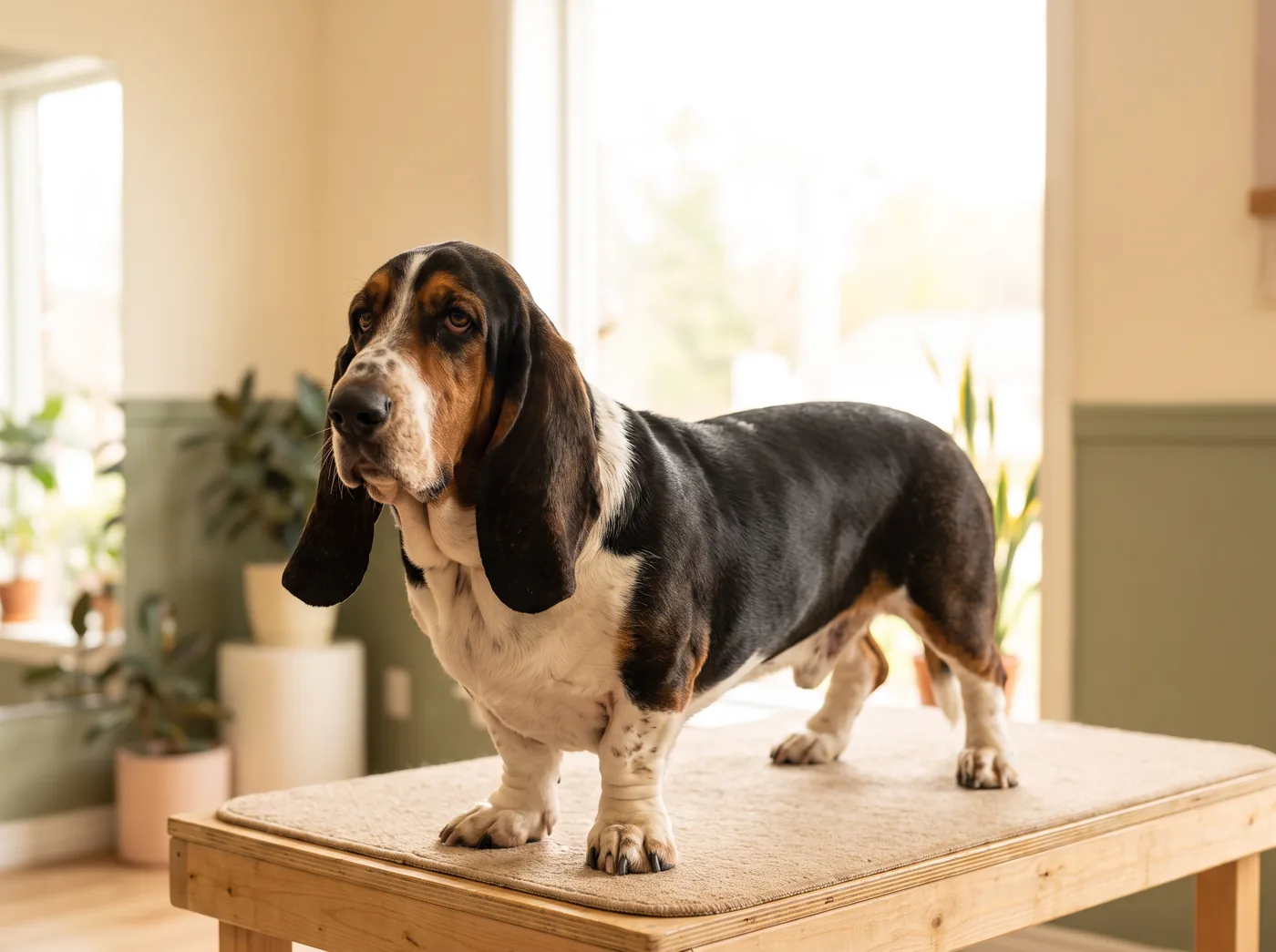
About the Basset Hound
The Basset Hound has a short, hard, dense coat and needs more routine care than most long haired breeds. That sounds like a contradiction and it is the whole point of the page.
Almost none of the work is on the coat. It is on the ears, which are the longest in dogs and among the worst ventilated; on the loose folded skin, which was bred in to protect the dog pushing through cover and now traps moisture; and on the skin itself, which produces a great deal of oil and carries the hound smell that owners either accept or spend years fighting.
The hound group page argues that group membership predicts grooming badly, and that the group contains both the lowest maintenance coat in dogs and some of the highest. The Basset is the far end of that. It is short haired, it never needs cutting, and it should be seen roughly as often as a Cocker Spaniel.
The Basset Hound has a double coat that regulates its own temperature. Shaving it does not keep the animal cooler, removes the protection against sun and insects, and the top coat often grows back patchy or never returns correctly. A thorough deshed takes out the undercoat and does the job the owner was actually asking for.
The ears, which are the main event
A Basset ear is the longest in the dog world, hangs well below the jaw, and is heavy, dense and completely sealed against the head. It was bred that way on purpose: a low slung scent hound works with its nose to the ground, and the long ears sweep scent up toward it while the flap keeps debris out.
Everything good about that design is a problem indoors. The canal underneath gets no airflow at all. It stays warm and damp, which is what yeast and bacteria need, and the breed has ear disease at rates that make it the single most common veterinary complaint here.
The ears also physically drag. They go into food bowls, water bowls, mud and anything the dog is investigating, and a wet ear held against a sealed canal is the worst version of the problem.
The routine is weekly and it has two halves. Lift each flap, look, and smell: healthy is pale and odorless, while yeast is sweet and musty and unmistakable. Then dry the ear leather itself, especially after eating and drinking.
Head shaking, scratching at an ear, tilting the head, a bad smell, redness, or brown or black discharge all mean a veterinarian rather than a bottle of cleaner. Chronic untreated ear disease thickens the canal permanently and eventually needs surgery.
Practical fixes that genuinely help: a narrow deep bowl or a snood at mealtimes so the ears stay out, and a proper dry after every wet walk.
The folds, and why the breed smells
The loose wrinkled skin around the face, neck and shoulders is a breed characteristic, and like the ears it is warm, enclosed and slightly damp. It behaves exactly like a Pug face fold, at a larger scale and in more places.
Wipe into the folds with a damp cloth and dry them properly, several times a week and daily on a dog with deep folds. The drying is the half that matters. Sore, red or smelly folds are a veterinary matter rather than a cleaning one.
Then the smell, which is the thing owners actually ask about. Bassets are genuinely more odorous than most breeds and there are three separate reasons.
The skin produces a lot of oil, which is what gives the coat its slightly greasy feel and its water resistance. Oil oxidizes and that is the classic hound smell. It is normal and it cannot be eliminated, only managed.
The folds and the ears contribute their own, and those two are usually the real source when a dog smells worse than it should.
And the feet, which on a low slung dog are permanently in whatever the ground has on it.
Bathing every three to four weeks, more often than most short coated breeds, is the honest answer to the oil, using a gentle shampoo and rinsing thoroughly. Bathing weekly makes it worse, because stripping the skin makes it produce more oil rather than less. A sudden change in smell is a veterinary matter, not a bath.
The coat, and the shedding people are not warned about
The coat is short, hard and dense, with a light undercoat, and it sheds constantly. Because the hairs are short, straight and stiff they embed themselves in fabric with real determination and a lint roller barely touches them.
A rubber curry or a hound glove once a week, worked in circles and then along the lie, lifts a great deal of it and also spreads the skin oils, which is good for the coat.
There is no matting, no cutting and no schedule to keep, so this is one of the few breeds where a weekly ten minutes genuinely is the whole coat routine.
The skin under it is the part worth watching. Bassets are prone to allergies and to yeast overgrowth, and the two present similarly: itching, a rash in the armpits or groin, and a musty smell. Because the coat is short, any of that is visible early, which is an advantage over a breed where it hides for months.
What you do not want to do is shave a Basset. There is nothing to gain, the coat protects skin that is already prone to trouble, and it offers sun protection on a dog whose belly is inches from reflective ground.
Feet, nails and a dog built low to the ground
The Basset is a dwarf breed. It carries the bone and body mass of a much larger hound on very short, heavy, slightly turned legs, and that shapes several parts of the routine.
Nails are the priority. They grow fast and thick, the dog wears very little down, and overlong nails change the angle of feet that are already unusually loaded. This is a breed where nail neglect has real orthopedic consequences, and every three to four weeks is not optional.
The feet themselves splay outward by design and pick up everything, so check between the toes and clear any hair between the pads.
Everything on the underside of the dog is close to the ground: the chest, the belly, the sheath or vulva and the front of the legs all take mud, salt, grit and hot pavement directly. Rinse the underside after a wet or salted walk and dry it, because the chest is a common site for irritation on this breed.
The tail carries a small amount of feathering and stays clean if the sanitary area is kept trimmed.
And a note for the appointment: a Basset is far heavier than it looks and must never be lifted under the front legs or allowed to jump off a table. The back matters on a dwarf breed with a long spine.
What to tell your groomer
Ask for the ears cleaned and dried as part of every appointment, and say whether there is any ear history at all.
Ask for the folds cleaned and dried, and point out any that have been sore.
Ask for the nails, and say if the dog objects to having its feet held. On this breed the nails are the single most valuable thing in the appointment.
Say that the dog is heavy for its size and should be supported rather than lifted by the front, and never allowed to jump down.
Mention any skin trouble or allergies, because a yeasty Basset needs a different shampoo and a veterinarian rather than a stronger scent.
And do not ask for a deodorizing treatment as a solution. It masks a smell that is either normal or is coming from the ears and folds, and covering it up delays finding out which.
Keeping the coat between grooms
Lift, look, smell and dry the ears
The longest ears in dogs over a canal with no airflow. This is the breed's defining problem and a weekly minute prevents most of it.
Weekly
Clean and dry the folds
Wipe into them, then dry. Warm, enclosed and damp is what yeast wants, and the drying is the half people skip.
Several times a week
Clip the nails
Thick, fast growing, barely worn down, on legs that are already unusually loaded. Nail neglect here has orthopedic consequences.
Every three to four weeks
Bathe monthly, not weekly
The oil is what makes the smell, and stripping the skin makes it produce more. Every three to four weeks is the balance.
Every three to four weeks
Common Questions About the Basset Hound
Why do Basset Hounds smell?
Three reasons, and only one is unavoidable. The skin produces a lot of oil, which waterproofs the coat and oxidizes into the classic hound smell; that is normal and can only be managed, with a bath every three to four weeks. The other two are usually the real problem when a dog smells worse than it should: the sealed ears and the skin folds, both of which are warm and damp and grow yeast. Bathing more often than every three weeks backfires, because stripping the skin makes it produce more oil. A sudden change in smell needs a vet.
How do I look after my Basset Hound ears?
Weekly, in two parts. Lift each flap, look and smell: healthy is pale and odorless, while yeast smells sweet and musty. Then dry the ear leather itself, particularly after eating, drinking and wet walks, since the ears drag through everything. A narrow deep bowl or a snood at mealtimes helps a great deal. Head shaking, scratching, a head tilt, redness or dark discharge means a veterinarian rather than a cleaner, because untreated ear disease permanently thickens the canal and eventually needs surgery.
Do Basset Hounds shed?
Constantly, and more than people expect from a coat that short. It is dense with a light undercoat, and the hairs are short, straight and stiff, so they embed in upholstery and carpet rather than sitting on top where they can be lifted off. A rubber curry or hound glove once a week takes out a great deal and spreads the skin oils at the same time. There is no matting and nothing to cut, so that ten minutes really is the entire coat routine.
Similar breeds
Same coat, same schedule, or the breeds this one is crossed from.


Find a groomer who knows this coat
Search 37,863 groomers by town, or keep reading the breed guide.
Find a Local Groomer View All Breeds