Border Collie Grooming
A working coat that is never clipped, and mats in exactly three places
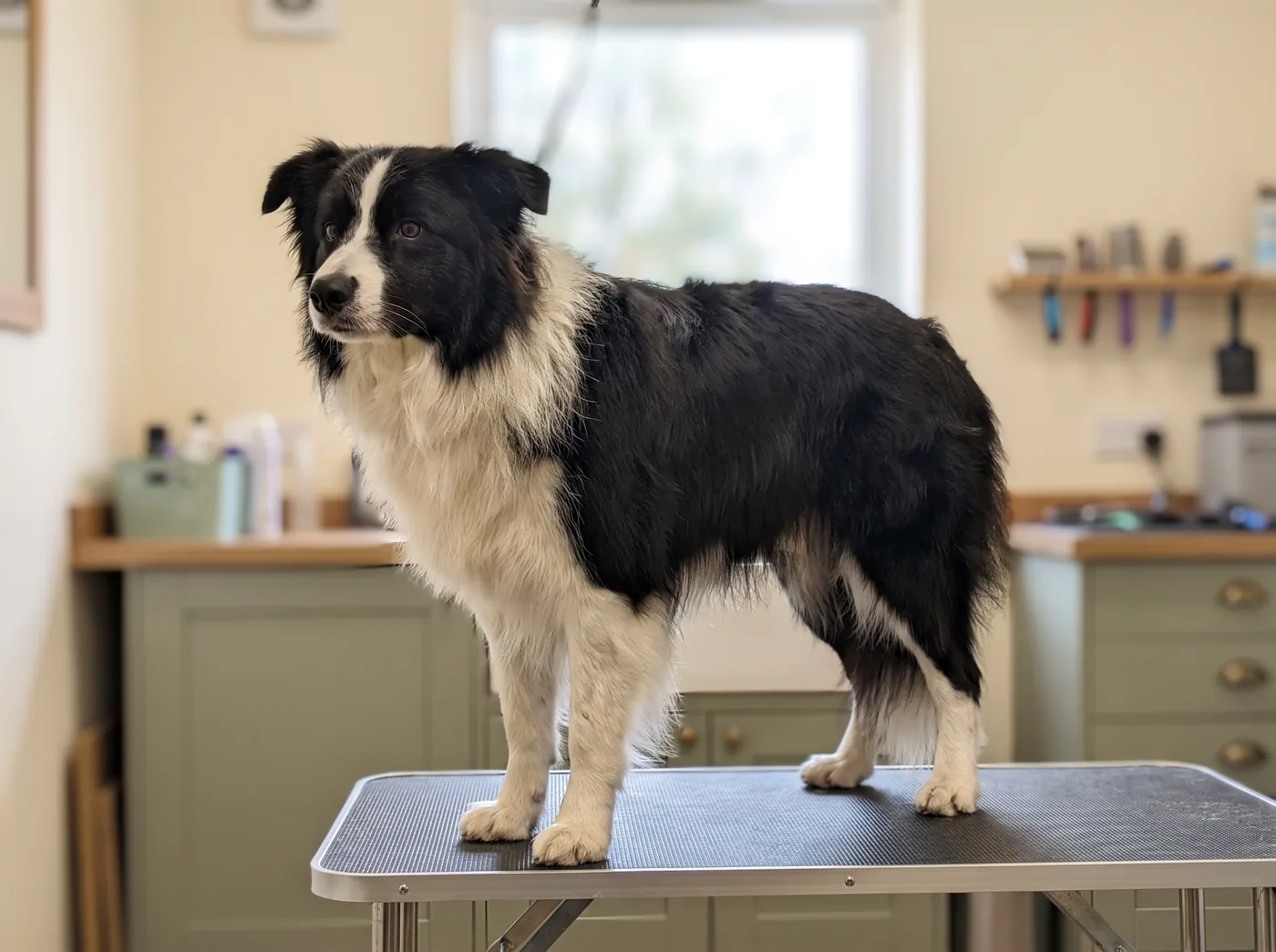
About the Border Collie
The Border Collie carries a weather resistant double coat built for a dog working outdoors in bad conditions all day: a dense insulating undercoat with a coarser top coat over it that sheds rain and blocks sun.
It comes in two varieties. The rough coat is medium length with a full ruff at the neck, feathering on the legs and a plumed tail, and it is what most people picture. The smooth coat is short over the same undercoat and needs a little less combing. Everything on this page applies to both.
It is never clipped, it blows coat twice a year, and it mats in three predictable places. Beyond that it is one of the more straightforward coats in grooming, which surprises people who assume all that hair means work.
The Border Collie has a double coat that regulates its own temperature. Shaving it does not keep the animal cooler, removes the protection against sun and insects, and the top coat often grows back patchy or never returns correctly. A thorough deshed takes out the undercoat and does the job the owner was actually asking for.
What a full groom involves
A deshedding appointment. There is no haircut on this breed at any point.
A rake and slicker through the dry coat first, concentrating on the ruff, the trousers and behind the ears. Then a bath in a shampoo that swells and lifts the undercoat, plus conditioner to help it release.
Then the high velocity dryer, which does most of the work: it drives water off the shaft and blasts the loosened undercoat out at the same time. On a rough coated Collie in full blow the quantity is genuinely startling.
Then the rake again to take out what has been freed, then the tidying, which is minimal and deliberately so: feathering on the legs and tail shaped rather than shortened, the hair between the pads cleared, and a sanitary trim. Nails and ears.
Around two hours, almost all of it bath and dry.
The three places it mats, and they are always the same three
Ask any groomer where a Border Collie mats and the answer comes in the same order every time.
Behind and under the ears is first, always. The hair there is finer than the body coat, the ear moves constantly, and a collar or harness strap works against it. On a rough coated dog the ruff behind the ear is dense enough that a mat can be the size of a golf ball before anything shows from above.
Then the trousers on the backs of the thighs, which rub against each other with every stride. Then the tail, particularly on a heavily feathered dog.
The armpits and the chest ruff come next but they are a distant fourth and fifth.
Check by pushing the coat backward against the lie and looking at the skin rather than running a brush over the top. A brush passes cleanly over a coat that is felted underneath, which is why owners who brush regularly are still caught out. Five minutes a week on those three places with a rake and a comb is worth more than an hour of general brushing.
Never clipped, and what to ask for instead
A Border Collie coat regulates temperature in both directions and blocks sun. A clipper cannot tell the two layers apart, so it removes the guard hairs completely and leaves most of the insulating undercoat against the skin, which is the worst of both: no sun protection, no water resistance, and the heat trapping layer still there.
On many double coated breeds the guard hairs then grow back slowly, unevenly or not at all, and what fills in is woolly and mats far more readily than the original coat.
If the dog is genuinely struggling in the heat there is a real answer and any good groomer will offer it: a full deshed, which takes out a remarkable amount of warmth; the belly taken shorter than the top, which lets the dog cool against a cool floor and is invisible; the feathering, pads and sanitary area tidied.
The one thing worth knowing about house living Collies specifically: constant indoor temperature and artificial light blur the seasonal signals, so many shed moderately all year instead of blowing coat cleanly twice, and never fully clear the old undercoat. That retained layer is exactly what mats, and it is why a dog that never seems to blow coat can still be carrying a felted one.
What moves the price
Drying time, mostly, which scales with how much coat there is. A rough coated Collie in full coat takes noticeably longer than a smooth one.
Whether it is a coat blow, second. The same dog in April and in November is two different appointments.
Coat condition third: a dog carrying a year of retained undercoat takes far longer to clear than one that has been raked, and matted trousers have to be worked out or clipped.
What does not move it is the trim, because there barely is one. This is a mid priced medium dog and one of the better value appointments for the amount of hair it removes from your house.
What to tell your groomer
Ask for a bath, a full deshed and a blow out. That is the appointment.
Do not ask for a clip, and if the dog is struggling in the heat say that instead so they can offer what actually helps.
Mention the collar or harness if the dog wears one all day, because the mat underneath it is completely hidden and they will check.
Say if the dog is noise sensitive or does not like the dryer. Border Collies are bright, and many are genuinely reactive to the high velocity dryer in a way a Labrador is not. A groomer who knows will introduce it gradually rather than fight it, and it makes a large difference to how the dog feels about the next appointment.
Book at the start of a coat blow rather than after it, which is the single most useful timing decision with any double coated breed.
Keeping the coat between grooms
Rake the three hot spots
Behind the ears, the trousers and the tail. Five minutes there beats an hour of general brushing.
Twice a week
Push the coat backward to check
A brush glides over a coat that is felted underneath. Look at the skin, not at the surface.
Weekly
Book at the start of a blow
Not after it. It is the single most useful timing decision with any double coated breed.
Spring and fall
Clear between the pads
The only trimming this breed needs. Hair there collects grit and costs grip on a smooth floor.
Every few weeks
Common Questions About the Border Collie
Can I shave my Border Collie in summer?
No. The coat insulates in both directions and blocks sun, and clipping removes the protective guard hairs while leaving the insulating undercoat in place, so the dog ends up hotter and less protected. Regrowth on double coated breeds is frequently patchy and woolly and can take a year or more, if it recovers properly at all. A full deshed removes far more heat than a clip and keeps the coat doing its job.
What is the difference between a rough and smooth coated Border Collie?
The top coat only. Rough coated dogs have a medium length outer coat with a full ruff, leg feathering and a plumed tail. Smooth coated dogs have a short outer coat over exactly the same dense undercoat. Both shed heavily, both blow coat twice a year, and neither is clipped. The rough coat needs more combing of the feathering and takes longer to dry; that is the whole difference.
My Border Collie never seems to blow coat but is matted underneath. Why?
Living indoors under constant temperature and artificial light blurs the seasonal cues, so many house dogs shed moderately all year rather than clearing the old undercoat twice. That retained undercoat is exactly what mats, so a dog can shed steadily, never have a dramatic blow, and still be felted behind the ears and in the trousers. Book deshedding appointments on a schedule rather than waiting for a visible blow.
Similar breeds
Same coat, same schedule, or the breeds this one is crossed from.

German Shepherd
The heaviest shedder most people ever own, and a coat that must not be clipped
German Shepherd
Golden Retriever
A coat that needs deshedding rather than cutting, and must never be shaved
Golden RetrieverFind a groomer who knows this coat
Search 37,863 groomers by town, or keep reading the breed guide.
Find a Local Groomer View All Breeds