Burmese Grooming
A satin coat over a cat considerably heavier than it looks, and two head types worth telling apart
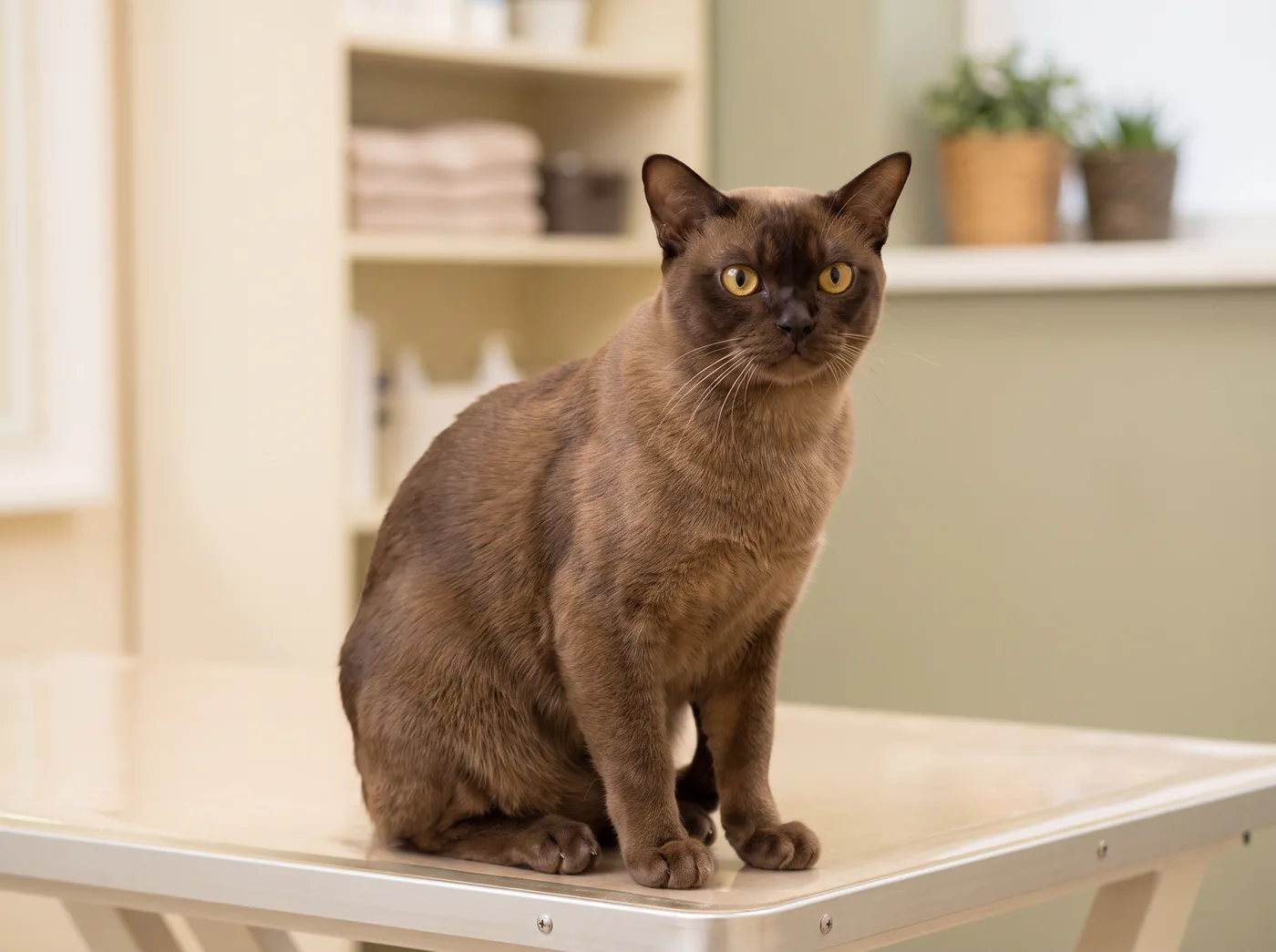
About the Burmese
The Burmese carries one of the most distinctive coats in cats: extremely short, fine, close lying and famously satin-like, with a glossy sheen that catches light along the whole body. It descends from a single cat brought from Burma to the United States in the 1930s and crossed with Siamese.
The coat needs about five minutes a week and nothing else. There is no undercoat to speak of, nothing that mats, and bathing is essentially never required.
Two things about this breed are worth a page anyway. It is startlingly heavy for its size, which matters when you are judging weight and when somebody picks it up. And it exists in two quite different head types, one of which carries a genuine health consideration that owners should know about before choosing a kitten.
This coat can be clipped, but the texture or the color may change and it will not always come back the same. Talk it through with your groomer before the first one.
The coat, and the five minutes
Short, fine, close lying and glossy enough that people describe it as satin. There is almost no undercoat, which is why there is nothing to mat and nothing to felt.
A rubber grooming mitt or a soft chamois once a week, run along the lie of the coat. That removes what is loose, spreads the skin oils and produces the sheen the breed is known for. Most Burmese enjoy it, being an unusually people-focused breed.
Avoid a slicker used with pressure. There is very little coat between a tool and the skin.
Shedding is light and the hairs are fine enough not to embed in fabric the way a stiff short hair does, so this is a low mess cat to live with.
Bathing is rarely needed. The coat carries little oil and a healthy Burmese keeps itself immaculate.
Nails every three to four weeks. Ears are medium and reasonably open; a weekly look and a wipe of the outer ear only.
Teeth matter more than average here, and for a specific reason: Burmese and Siamese lines have a documented tendency to gingivitis and to tooth resorption, and this is a breed that commonly lives fifteen to eighteen years. Start brushing young, while the cat will accept it, and expect veterinary dental checks to be routine.
The coat is also worth using as a health check, because on a coat this short and this even, any change shows immediately.
Heavier than it looks, and why that matters
Burmese are famously described as bricks wrapped in silk, and it is an accurate description rather than a fond one. They are compact, densely muscled and solid boned, and a Burmese routinely weighs a third more than somebody guesses from looking at it.
That has two practical consequences.
The first is handling. Anyone picking up a Burmese for the first time, including a groomer, will misjudge the weight, and a cat that is dropped or gripped harder in surprise is a cat that stops cooperating. Support the body properly and expect more than you can see.
The second matters more: you cannot judge a Burmese's body condition by eye. A cat that looks sleek and fit may be carrying real excess weight, because the dense build hides it and the short coat lies so flat that there is no visual cue.
Feel the ribs monthly instead. You should be able to feel them easily under a thin layer, and feel a waist behind the ribs.
Burmese are also greedy, food motivated and very good at persuading people, and they are one of the breeds most prone to obesity and to diabetes. In some lines the diabetes risk is significant, and weight is the main thing an owner controls.
The connection back to grooming is the one every cat page here makes: a heavy cat cannot twist to reach its own back and rear, and the coat is where you see that first. On a coat this short, dandruff along the spine or a greasy look over the lower back is an early and reliable signal.
The two types, and an honest note about the head
Burmese diverged into two distinctly different cats and the names vary, but the split is real.
The European or traditional Burmese has a more moderate wedge shaped head, a longer muzzle and a slightly more elongated body. This is the type seen across most of Europe and Australia.
The American or contemporary Burmese has been bred toward a rounder head, a much shorter muzzle and a more compact cobby body.
The grooming is identical, and for most cats of either type nothing on this page changes.
Where it matters is at the extreme end of the American type. Breeding for a very short, rounded head has been associated with a serious inherited craniofacial defect in some American lines, severe enough that affected kittens do not survive, and responsible breeders test for and avoid it. Less severely, the shortened muzzle brings the usual flat faced considerations: some tearing, a shallower eye socket, and reduced heat tolerance.
Practically, if your Burmese has a noticeably flattened face, treat it as partly brachycephalic at bath time: warm rather than hot water, no heat drying, and short sessions.
If it has a normal muzzle, none of that applies.
It is worth knowing when choosing a kitten, and worth asking a breeder about directly.
Temperament, which decides the appointment
Burmese are among the most people-dependent cats there are. They are strongly bonded, insistently affectionate, vocal, and genuinely dog like in following their person around and wanting contact. Many do not cope well with being left alone for long periods, and a great many owners keep two.
For grooming that cuts both ways, in the same shape as the Oriental Shorthair.
The good half: a Burmese that trusts you will sit on a lap for a weekly mitt and enjoy the attention, so home grooming is entirely realistic and the coat needs so little that a professional is rarely necessary.
The harder half: they are sensitive to change and to being handled by strangers, and a busy salon with dogs barking is a poor environment. A cat this attached to its person finds being left there genuinely stressful.
If you do need a professional, ask for a cat only groomer or a separate quiet room, no waiting in reception, and short sessions.
Handle the feet from kittenhood, because nails are the one job that has to happen and a sensitive cat that has never had its feet touched turns it into a fifteen year fight.
They are also active and curious well into old age, which is part of why weight creeps up unnoticed: an older Burmese slows down long before the food does.
What to tell your groomer
Most Burmese owners never need one, which with this coat is the right outcome.
If you do book, ask whether they take cats, whether cats are kept away from dogs, and whether there is a quiet room.
Say the coat is very short and fine and needs a mitt rather than a comb or a slicker.
Warn them the cat is far heavier than it looks, so it is supported properly when lifted.
Say if your cat is the flatter faced American type, so drying is done on low with no heat.
Ask for the nails, a few claws at a time, and ask them to look at the teeth and gums given the breed's dental record.
Keeping the coat between grooms
Mitt along the lie
Five minutes once a week. No slicker and no pressure: there is very little coat between the tool and the skin.
Weekly
Feel the ribs, never judge by eye
A dense build under a flat coat hides real weight, and this breed is prone to obesity and to diabetes.
Monthly
Check and brush the teeth
Burmese and Siamese lines have a real record of gingivitis, on a cat that may live eighteen years.
Weekly
Support the weight when lifting
Far heavier than it looks. A cat that is gripped harder in surprise is a cat that stops cooperating.
Every time
Common Questions About the Burmese
Do Burmese cats need grooming?
Barely. A rubber mitt or soft chamois once a week along the lie of the coat takes five minutes and is the whole routine. The coat is extremely short, fine and satin like with almost no undercoat, so there is nothing to mat and shedding is light. Avoid a slicker used with pressure, since there is very little coat protecting the skin. Nails every three to four weeks and regular tooth brushing matter far more, because the breed has a real record of gingivitis.
Why is my Burmese so much heavier than it looks?
Because they are densely muscled and solid boned under a coat that lies completely flat, which is why the breed is described as bricks wrapped in silk. A Burmese routinely weighs a third more than somebody guesses. It matters for two reasons: anyone lifting one for the first time will misjudge it, and you cannot assess body condition by eye. Feel the ribs monthly instead, because this is a greedy breed that is prone to obesity and, in some lines, to diabetes.
What is the difference between European and American Burmese?
Head and body type. The European or traditional Burmese has a moderate wedge shaped head with a longer muzzle; the American or contemporary type has been bred toward a rounder head, a much shorter muzzle and a cobbier body. Grooming is identical. Where it matters is at the extreme end of the American type, where breeding for a very short rounded head is associated with a serious inherited craniofacial defect that good breeders test for, plus the usual flat faced considerations around heat and drying.
Similar breeds
Same coat, same schedule, or the breeds this one is crossed from.


Oriental Shorthair
A Siamese in every color there is, with even less coat and even less padding
Oriental ShorthairFind a groomer who knows this coat
Search 37,863 groomers by town, or keep reading the breed guide.
Find a Local Groomer View All Breeds