Cairn Terrier Grooming
A working jacket meant to look natural, and the one terrier where a neat outline is wrong
About the Cairn Terrier
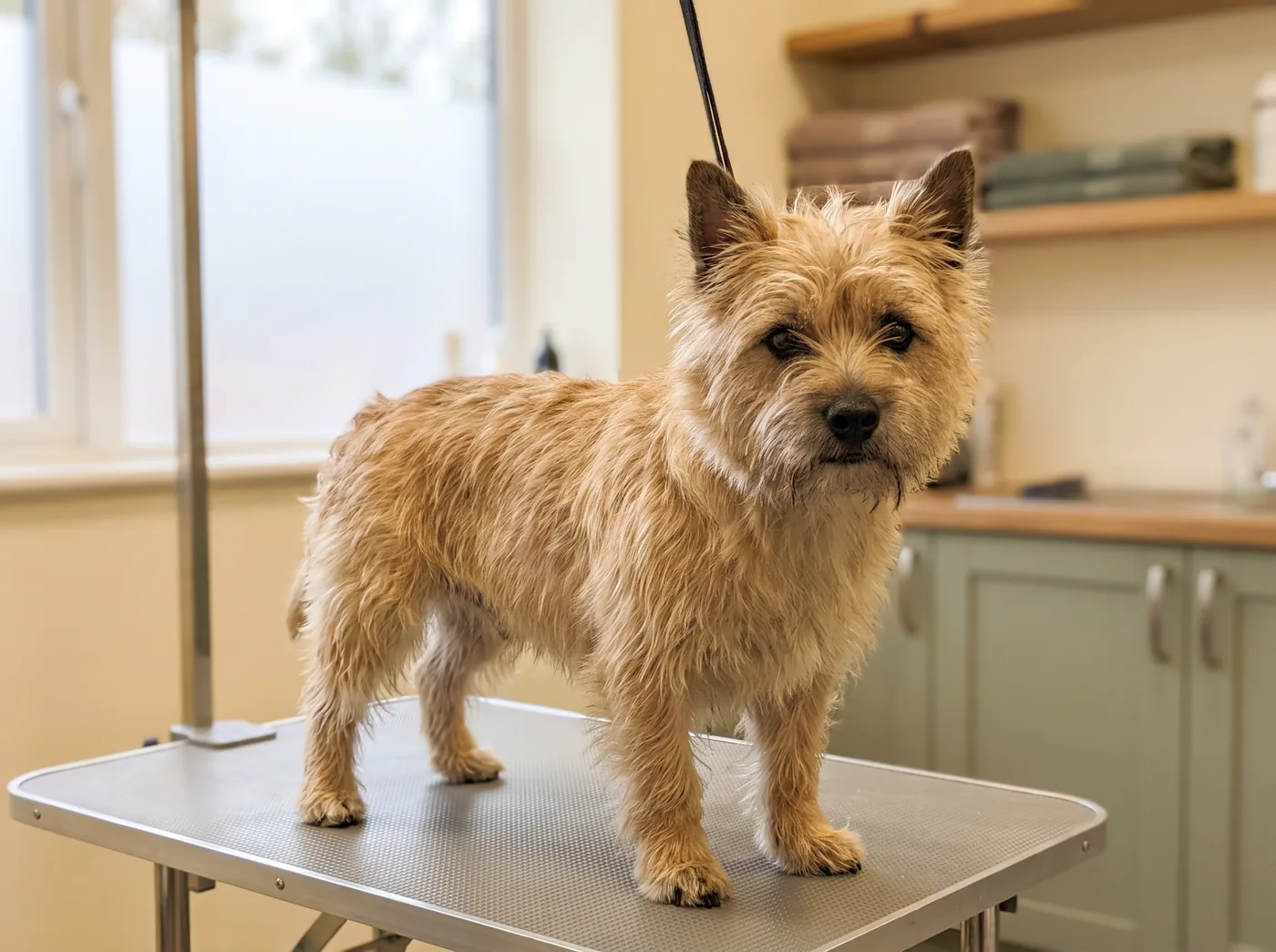
The Cairn carries a classic double wire coat: a harsh, weather resistant, slightly shaggy outer jacket over a short soft undercoat. It was bred to work rock cairns in the Scottish Highlands after fox and otter, in weather that punished anything less.
What separates it from the other terriers is not the coat structure, which is much the same as a Westie or a Scottie. It is the outline.
A Westie is scissored into a rounded silhouette, a Scottie into a sculpted skirt and head, a Schnauzer into a defined jacket and furnishings. A Cairn is supposed to look like none of that. The breed standard asks for a natural, shaggy, workmanlike dog, and a Cairn that has been neatly sculpted has been groomed into the wrong breed. That is the single most useful thing to know before booking one in.
This coat can be clipped, but the texture or the color may change and it will not always come back the same. Talk it through with your groomer before the first one.
Why a scruffy Cairn is a correct Cairn
This matters practically, because a groomer who has not done the breed will default to what they do for other small terriers, and produce a tidy dog that is wrong in a way the owner often cannot name.
The Cairn was never a show-ring construction. It is the oldest of the Scottish working terriers and the standard has deliberately preserved a natural outline: a shaggy, slightly untidy jacket, a foxy head with the furnishings left rough rather than shaped, and no sculpted skirt or defined leg columns.
Practically, the appointment should be a tidy rather than a haircut. The dead outer coat is pulled out, the very longest straggling hairs are shortened, the feet are neatened, the sanitary area and the pads are cleared, and the hair around the eyes is taken back enough to see. That is it.
What should not happen: scissoring a smooth outline, clipping the body to a uniform length, sculpting the head into a shape, or trimming the eyebrows and beard into a defined pattern.
If you want a photograph to take with you, use a working or show Cairn rather than a groomed pet, because a great many pet Cairns online have been given a Westie trim.
Colors are also worth knowing: Cairns come in cream, wheaten, red, gray and brindle, and brindles change through life, frequently darkening toward black or silvering with age. That is normal and not a coat problem.
Stripping, clipping and what each does
The mechanics are the same as on every wire coat here. Each outer hair grows to length, dies, and sits loose in the follicle rather than dropping, so it comes out by hand.
Hand stripping pulls those dead hairs out at the root. It does not hurt when the coat is ready. It keeps the jacket harsh and weather resistant, keeps the color, and prompts the follicle to grow the same coat again. On a dog this size it is not a large job, and many owners learn to roll the coat themselves, taking out the longest hairs over a few evenings so the dog is always in reasonable order.
Clipping cuts the hair at the surface and leaves the dead root, so the soft undercoat gradually dominates. The jacket goes woolly, the color fades and flattens, the coat loses its ability to shed water and dirt, and it starts holding both. On a brindle the fading is obvious.
Neither is cruel and a clipped Cairn lives perfectly happily, but it is close to a one way door: after a few years of clipping, stripping will not restore the harsh jacket.
Clipping also removes the practical point of the coat. This is a small dog that goes through mud and wet undergrowth by preference, and a harsh jacket that sheds dirt when it dries is genuinely useful.
Every eight to twelve weeks for a strip, which is a longer interval than most terriers here because the natural outline tolerates growth.
The undercoat, shedding and brushing
Unlike some wire breeds the Cairn has a genuine soft undercoat, and that changes two things.
It sheds more than people expect from a terrier. Low shedding is relative: the outer coat holds its dead hair until stripped, but the undercoat releases normally and increases seasonally.
And it can mat, which a pure harsh jacket largely does not. The undercoat compacts against the skin, particularly if the outer coat has been left long past a strip, and the usual places are behind and under the ears, the armpits, the trousers and around the collar.
Comb through weekly with a metal comb, reaching the skin rather than skimming, plus a slicker or a stripping comb on the body. Ten minutes.
The beard and the leg furnishings are softer than the jacket and need combing rather than stripping, and the beard wants drying after meals like any bearded terrier.
Check between the pads, since a working terrier picks up grit, mud and in winter ice balls, and this breed genuinely uses its feet.
Bathe every couple of months at most. A harsh coat is naturally dirt shedding and frequent bathing softens it, which is the opposite of what the coat is for. Mud that has dried usually brushes straight out.
Skin, and a small hardy dog on a table
Cairns have a reasonable rate of allergic skin disease, and the classic presentation is itching, licking the paws and recurrent ear or skin infections. Because the jacket is not dense it is visible early. Persistent scratching is a veterinary matter rather than a case for a soothing shampoo.
The breed also has a known predisposition to a condition affecting the jaw in young dogs, causing pain when the mouth is opened, so a puppy that objects to having its head handled or is reluctant to chew deserves a veterinary look rather than more patience.
Otherwise this is a robust, long lived, generally healthy dog that commonly reaches fourteen or fifteen.
On a table, a Cairn is a terrier: confident, busy, opinionated and not naturally inclined to stand still for an hour. They are rarely difficult, but they are quick and they have views.
The usual owner side work applies. Handle the feet, ears and muzzle daily from puppyhood. Exercise the dog before the appointment. And start stripping early, because a dog that has known it since it was a puppy accepts it as routine, while one meeting it at four does not.
Nails every three to four weeks, and teeth, which on a fifteen year dog is worth the effort.
What to tell your groomer
Say plainly that the dog should look natural and shaggy, not sculpted, and that you do not want a Westie trim. This is the instruction that matters most on this breed.
Say whether you want the jacket stripped or clipped, and understand that clipping permanently softens and fades it.
Do not bathe the dog before a stripping appointment. Clean and dry is right; freshly washed coat will not release.
Ask for the feet, pads and sanitary area cleared and the hair taken back from the eyes, and nothing else shaped.
Ask them to comb the undercoat out properly, since that is what mats rather than the jacket.
And mention any skin or ear history, and any reluctance to have the head handled.
Keeping the coat between grooms
Ask for natural, not sculpted
The one terrier here where a neat outline is wrong. Say it explicitly, because most groomers will default to a Westie trim.
Every appointment
Comb the undercoat to the skin
The soft undercoat is what mats, not the harsh jacket. Behind the ears, armpits and trousers.
Weekly
Strip or roll the coat
Every eight to twelve weeks. Start in puppyhood: a dog that has always known it accepts it as routine.
Every eight to twelve weeks
Bathe rarely
A harsh coat sheds dirt when it dries. Frequent bathing softens it, which is the opposite of what it is for.
Every couple of months
Common Questions About the Cairn Terrier
Why does my Cairn Terrier look scruffy?
Because it should. The breed standard asks for a natural, shaggy, workmanlike outline rather than the sculpted silhouettes given to Westies, Scotties and Schnauzers. A Cairn that has been scissored into a neat shape has effectively been groomed into another breed. The correct appointment is a tidy: dead coat stripped out, the longest straggling hairs shortened, feet and sanitary area cleared, and hair taken back from the eyes. Nothing shaped.
Should a Cairn Terrier be hand stripped?
If you want the harsh weatherproof jacket and the color, yes, every eight to twelve weeks. Stripping pulls dead outer hairs from the follicle and does not hurt when the coat is ready, and on a dog this size many owners learn to roll the coat themselves over a few evenings. Clipping is acceptable but permanently softens the jacket, fades the color noticeably on brindles, and removes the coat's ability to shed dirt and water.
Do Cairn Terriers shed?
More than most terriers, because unlike some wire breeds the Cairn has a genuine soft undercoat underneath the harsh jacket. The outer coat holds its dead hair until stripped, but the undercoat releases normally and more heavily at the seasonal changes. That undercoat is also what mats, usually behind the ears, in the armpits and on the trousers, so a weekly comb to the skin matters more than the jacket does.
Similar breeds
Same coat, same schedule, or the breeds this one is crossed from.

West Highland White Terrier
A harsh white jacket over some of the most sensitive skin in dogs
West Highland White Terrier
Scottish Terrier
A harsh jacket over a long soft skirt, and the skirt is where all the work is
Scottish TerrierFind a groomer who knows this coat
Search 37,863 groomers by town, or keep reading the breed guide.
Find a Local Groomer View All Breeds