Canaan Dog Grooming
A landrace that survived on its own, and it shows in how little it needs
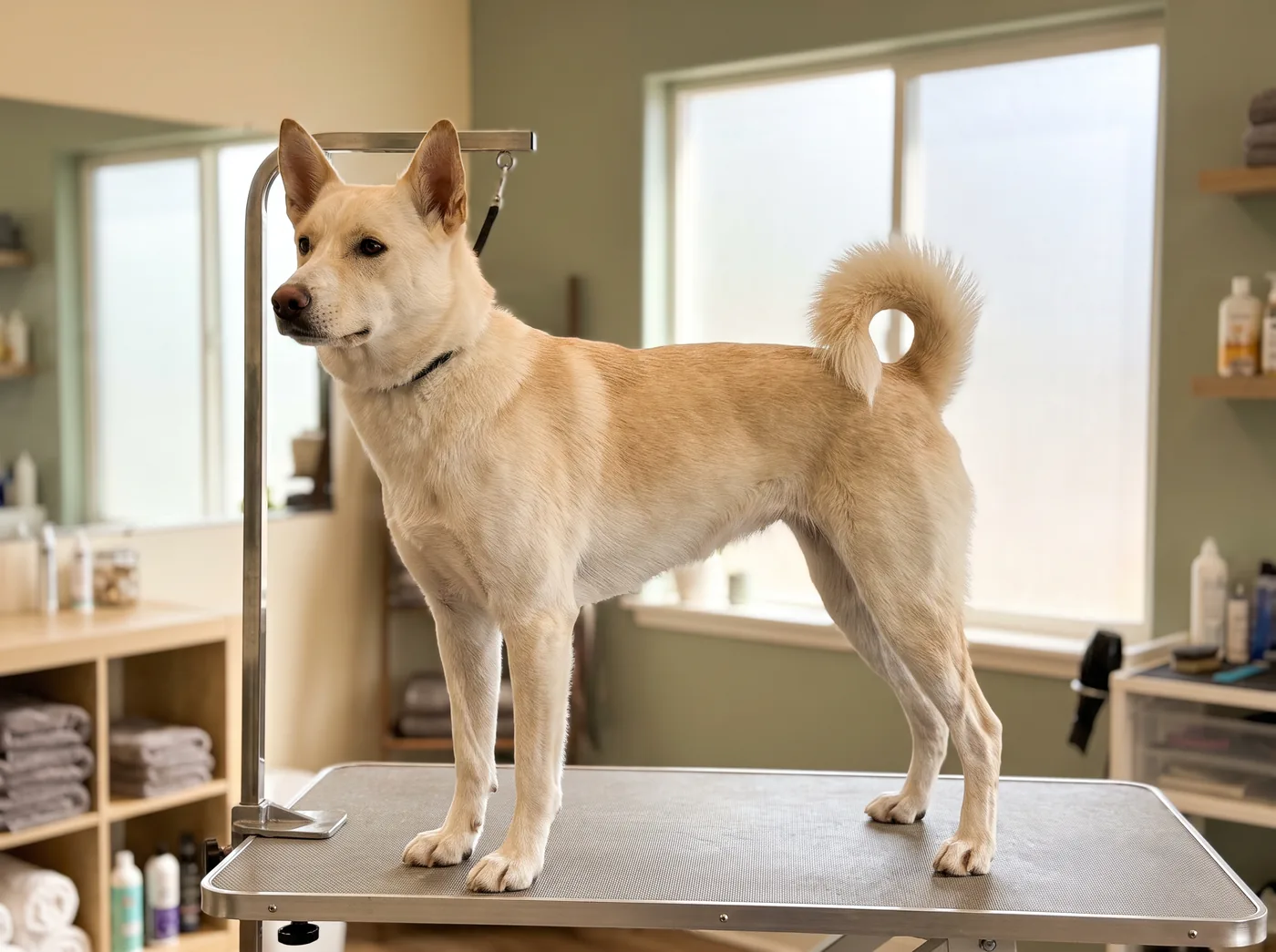
About the Canaan Dog
The national dog of Israel, and one of the few breeds anywhere that developed as a free living population rather than being constructed.
Canaan Dogs lived semi-wild in the Negev and around Bedouin encampments for a very long time, and the breed was established from those dogs in the 1930s. Selection was done by the desert first and by breeders second.
What that produced is a dog with no exaggeration anywhere: a moderate frame, upright ears, a normal muzzle, tight feet, and a short harsh flat double coat with a straight outer coat and a dense undercoat.
A weekly brush, an undercoat rake twice a year, and nothing else.
It is the dog side of the same point the Sokoke page makes for cats: a population shaped by survival carries less trouble than one shaped by a show ring.
The Canaan Dog has a double coat that regulates its own temperature. Shaving it does not keep the animal cooler, removes the protection against sun and insects, and the top coat often grows back patchy or never returns correctly. A thorough deshed takes out the undercoat and does the job the owner was actually asking for.
A weekly brush and two hard weeks a year
For most of the year, brush weekly with a slicker and follow with a comb. The coat is short, harsh and flat, it does not mat, and it sheds dirt as it dries.
Twice a year the undercoat blows, usually spring and autumn, and the volume from a forty pound dog is more than people expect.
Through those two or three weeks, rake daily with an undercoat rake, concentrating on the ruff, the britches and the tail. A bath with a high velocity blow out at the start of the blow shortens the whole thing considerably.
Bathe every three months or so otherwise. Canaan Dogs are notably clean and low odor.
Do not clip. It is a desert double coat that insulates against heat as well as cold, and the harsh outer coat that reflects sun and sheds dirt does not always come back correctly once cut.
Trim the pads and the sanitary area, and nothing else.
The feet are tight and hard, which is another landrace feature, and they need less attention than most.
What a landrace buys, and what it costs
The Canaan Dog is one of the healthiest breeds there is. There are no widespread breed specific disorders, no exaggerated features, tight feet, a functional muzzle, well ventilated upright ears and a life span of twelve to fifteen years.
Nothing about the dog was pushed to an extreme for appearance, because until the 1930s nobody was choosing it for appearance at all.
What it costs is temperament, and this is the part a prospective owner needs.
A dog that survived semi-wild was selected for suspicion, independence and self preservation, and all three are still present. Canaan Dogs are naturally wary of strangers, extremely alert, quick to bark at anything new, and they think for themselves rather than deferring.
That is not aggression and it is not poor breeding. It is what kept them alive.
For a salon it means a dog that will be watchful and possibly vocal, that does not warm up to a stranger quickly, and that responds very badly to being forced.
Early handling and continuity of groomer matter more here than technique.
The upright ear again
Canaan Dogs carry erect, low set, broad based ears, which is one of the best ventilated shapes there is.
Ear infections are consequently uncommon, and a weekly wipe of the visible part is enough.
It is the same point the Podengo page makes: the ear shape rather than the breed group decides whether the canal has trouble.
Check for grass seeds and debris after fields, since an upright ear funnels efficiently even though it drains well.
The eyes are dark, almond shaped and set obliquely, and they are protected rather than exposed, which is another absence of trouble.
Nails every three to four weeks, though a Canaan on hard ground wears them down more than most.
Teeth brushed.
Feel for ribs monthly. They should be lean and hard, and this is not a breed that carries weight well.
Hip dysplasia and progressive retinal atrophy are the two worth asking a breeder about, and both are uncommon.
The natural breeds, side by side
A few breeds developed with almost no human direction, and together they make one point.
Sokoke, a cat from the Kenyan coast: no engineered trait at all, and no documented breed specific conditions.
Basenji, from central Africa: an ancient type with a short easy coat, though it does carry some inherited conditions.
Canaan Dog, from the Negev: no exaggeration, minimal grooming, and notably robust.
Set against them, the breeds that carry the most warnings are almost all deliberately constructed: the flat faces, the folded ears, the short legs, the extreme coats.
Nearly every serious welfare caution in grooming attaches to a trait somebody selected for on purpose.
That is not an argument against pedigree dogs, and plenty of constructed breeds are perfectly sound. It is an argument for looking at what a feature costs the animal before admiring it.
The Podengo makes the same point from an ancient working type.
What to tell your groomer
Say a bath, a brush, nails, ears and pads. There is nothing to strip, scissor or clip.
Ask for a deshedding groom during the two seasonal blows: bath, blow out and a full undercoat rake.
Say the coat is never clipped, including for heat.
Say the dog is wary of strangers by breed rather than badly socialized.
Say it responds very badly to being forced, and that slow works where pushing does not.
Ask for the same groomer each time if possible.
Keeping the coat between grooms
Brush weekly, rake in a blow
Short, harsh and flat. It does not mat and it sheds dirt as it dries.
Weekly, then daily
Never clip a desert coat
It insulates against heat as well as cold, and may not come back right.
Never
Same groomer, slow pace
Bred by survival to distrust strangers. Forcing it costs the next visit.
Every visit
An easy ear
Erect and broad based, so almost no infections. Just check for seeds.
Weekly
Common Questions About the Canaan Dog
How much grooming does a Canaan Dog need?
A brush once a week for most of the year, plus two or three harder weeks in spring and autumn when the undercoat blows and needs raking daily. The coat is short, harsh and flat, it does not mat, and it sheds dirt as it dries. Bathe every three months or so. Never clip it: this is a desert double coat that insulates against heat as well as cold, and the harsh outer coat does not always come back correctly once cut.
Why is my Canaan Dog so suspicious of the groomer?
Because it was selected for it, by the desert rather than by a breeder. Canaan Dogs lived semi-wild around Bedouin encampments for a very long time, and survival there rewarded suspicion, independence and self preservation. A modern one is naturally wary of strangers, extremely alert and quick to bark at anything new, and it thinks for itself rather than deferring. It is not aggression or poor socialization, and it responds very badly to being forced.
Are Canaan Dogs a healthy breed?
Unusually so, and the reason is instructive. Nothing about the dog was pushed to an extreme for appearance, because until the 1930s nobody was selecting it for appearance at all, so it has a moderate frame, a functional muzzle, well ventilated upright ears, tight feet and no widespread breed specific disorders. Hip dysplasia and progressive retinal atrophy are worth asking a breeder about and both are uncommon. Life span is twelve to fifteen years.
Similar breeds
Same coat, same schedule, or the breeds this one is crossed from.


Shiba Inu
A small spitz with a full northern double coat, and very strong opinions about baths
Shiba Inu
Portuguese Podengo
Three sizes and two coats, so the breed name covers six different dogs
Portuguese PodengoFind a groomer who knows this coat
Search 37,863 groomers by town, or keep reading the breed guide.
Find a Local Groomer View All Breeds