Catahoula Leopard Dog Grooming
A ten minute coat, and a color gene that can take the hearing with it
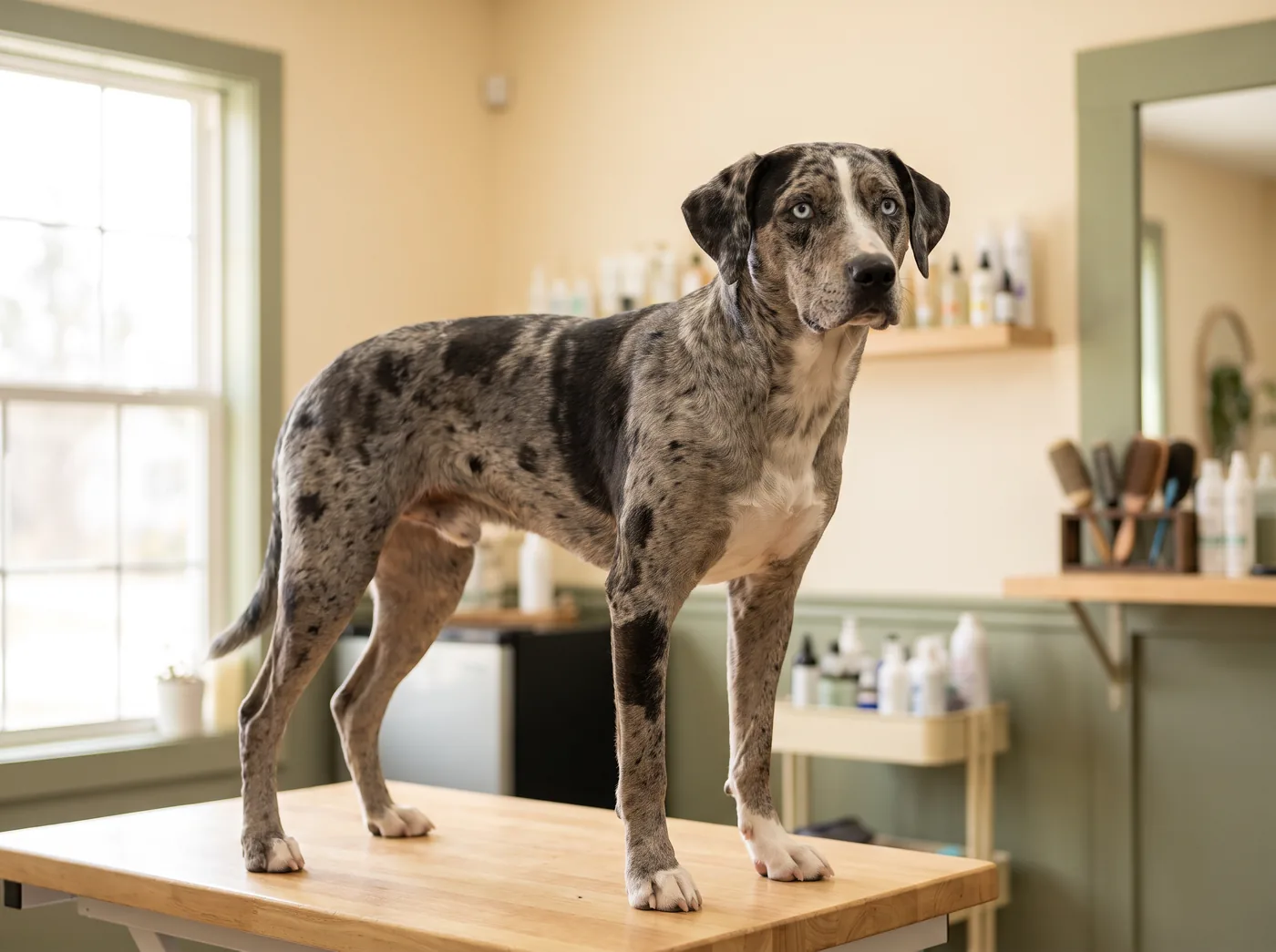
About the Catahoula Leopard Dog
A Louisiana working dog with about as little coat as the site carries: short, single and close lying, sometimes almost smooth and sometimes a little coarser, with no undercoat worth the name.
Ten minutes a week with a rubber mitt is the whole coat routine, and nothing is ever cut.
What makes this page worth writing is the merle. The mottled leopard patterning the breed is named for comes from the merle gene, and merle does more than color a coat: it affects pigment cells that also do a job in the inner ear and the eye.
A single merle is simply a color. Two copies is a different matter, and that is where deafness and eye defects come from.
It is worth a groomer knowing before they approach a dog from behind with a dryer.
The Catahoula Leopard Dog has a double coat that regulates its own temperature. Shaving it does not keep the animal cooler, removes the protection against sun and insects, and the top coat often grows back patchy or never returns correctly. A thorough deshed takes out the undercoat and does the job the owner was actually asking for.
Merle, and what two copies does
Merle is a dominant gene that dilutes patches of pigment, producing the mottled leopard coat and often pale blue or glass eyes.
One copy is just a coat color and the dog is fine.
Two copies, which happens when two merles are bred together, is a different animal. Double merle dogs are typically largely white and frequently deaf, blind or both, because the same pigment cells the gene affects are also required in the inner ear and in the developing eye. Each puppy from a merle to merle mating has a one in four chance of it.
Catahoulas are bred merle to merle more often than most breeds, partly because the pattern is what buyers want, so double merles turn up.
What that means practically at a salon is simple and worth doing regardless: approach a largely white or heavily merled Catahoula where it can see you, never surprise it from behind, and introduce a dryer in its line of sight.
A deaf dog that is startled from behind reacts, and it is not the dog's fault.
A clap test at home is unreliable because dogs respond to air movement and vibration. If it matters, ask a veterinarian.
Pink skin under a mottled coat
The other consequence of merle is unpigmented skin, and it shows up in patches under the pale parts of the coat.
Those patches burn, and this is an outdoor working dog in a hot climate.
Use a dog formulated sunscreen on the nose, ear tips and any thinly coated pink areas before extended sun, never a human product containing zinc oxide, and provide shade in the middle of the day.
Repeated burning over a working life is a real skin cancer risk.
A short single coat also hides nothing, which is an advantage: check the dog over weekly for scrapes, ticks and lumps and you will find them.
Catahoulas can have skin allergies, and the pattern is the usual one: chewing feet, rubbing the face, recurrent ear trouble. That needs a veterinarian rather than a shampoo.
Bathe every ten weeks or so with a plain shampoo. There is nothing between the product and the skin.
The coat, in ten minutes
Go over the dog once a week with a rubber curry mitt or a hound glove, working against the lie of the coat and then with it. It lifts the dead hair and spreads the skin oils.
Catahoulas shed moderately and steadily rather than seasonally, and the short stiff hairs work into fabric.
There is no clipping, trimming or styling on this breed at all beyond nails and keeping the pads clear.
Dry properly after a bath or a wet day. A single coated dog with no undercoat chills faster than it looks like it should.
Nails every three to four weeks, and check the feet after work, since this is a dog that covers hard ground.
Ears are drop ears, so lift weekly, look and smell, and dry after swimming. Catahoulas are strong swimmers and were used on water as well as in scrub.
Use the weekly session as the hands-on check, which on this breed is the whole point of having a routine.
A hard working dog with opinions
Catahoulas were bred to work wild cattle and hogs in Louisiana scrub, independently and at a distance, and that is the temperament: serious, independent, territorial and not naturally biddable.
Many are reserved or wary with strangers, and a Catahoula that has decided it does not want to be handled is a seventy pound problem.
Handling has to be established in puppyhood and kept up, because these are not dogs that tolerate novelty well as adults.
Choose a groomer who will meet the dog first, be honest at booking, and ask for a quiet slot.
They are also strongly dog selective and many do not do well in a busy salon with loose dogs, which is worth saying rather than discovering.
An under-exercised Catahoula is considerably harder to handle than a worked one.
Nails may well need two people, and starting that in puppyhood is the difference.
What to tell your groomer
Say if the dog is deaf, or is largely white or heavily merled and untested, so nobody approaches it from behind or surprises it with a dryer.
Say if it has pink skin patches, which is a sunburn risk rather than a grooming one.
Ask for a bath, a curry, nails, ears and a skin check. There is no haircut on this breed.
Ask for a plain unscented shampoo, since there is nothing between the product and the skin.
Say how the dog is with strangers and other dogs, and ask for a quiet slot and a meeting first.
Ask them to check the feet and ears, since this is a working dog that swims.
Keeping the coat between grooms
Approach where it can see you
Merle can carry deafness. Never start a dryer behind a white or merled dog.
Every session
Sunscreen the pink patches
Merle leaves unpigmented skin under the pale coat, on an outdoor working dog.
Before sun exposure
Curry mitt, ten minutes
The whole coat routine, and the hands-on check at the same time.
Weekly
Dry the ears after swimming
A drop eared dog that was bred to work water as well as scrub.
After every swim
Common Questions About the Catahoula Leopard Dog
Is the merle coat a health problem?
A single merle is just a coat color and the dog is fine. The problem is breeding two merles together, which gives each puppy a one in four chance of inheriting two copies. Double merle dogs are typically largely white and frequently deaf, blind or both, because the pigment cells the gene affects are also needed in the inner ear and the developing eye. Catahoulas are bred merle to merle more often than most breeds, so double merles do turn up.
How should a groomer handle a possibly deaf dog?
Approach where the dog can see you and never from behind, and introduce a dryer or clipper in its line of sight rather than switching it on out of view. A deaf dog that is startled reacts, and that is not the dog's fault. It is worth doing with any largely white or heavily merled dog whether or not deafness is confirmed, since a clap test at home is unreliable, dogs responding to air movement and vibration, so many owners genuinely do not know.
How much grooming does a Catahoula need?
About ten minutes a week. A rubber curry mitt or hound glove against the lie of the coat and then with it, plus a bath every ten weeks or so with a plain shampoo. There is no clipping, trimming or styling at all. What matters more is the weekly hands-on check, sunscreen on any pink skin patches under the pale parts of the merle coat, and drying the ears after swimming, since these are strong swimmers with drop ears.
Similar breeds
Same coat, same schedule, or the breeds this one is crossed from.

Australian Shepherd
A working double coat with feathering, and three places it always mats
Australian Shepherd
Miniature American Shepherd
A recognized breed in its own right, with an Aussie coat and the same MDR1 risk
Miniature American Shepherd
American Staffordshire Terrier
A coat that takes ten minutes and skin that can take the rest of your life
American Staffordshire TerrierFind a groomer who knows this coat
Search 37,863 groomers by town, or keep reading the breed guide.
Find a Local Groomer View All Breeds