Cavalier King Charles Spaniel Grooming
A tidy rather than a haircut, and a set of ears that need watching
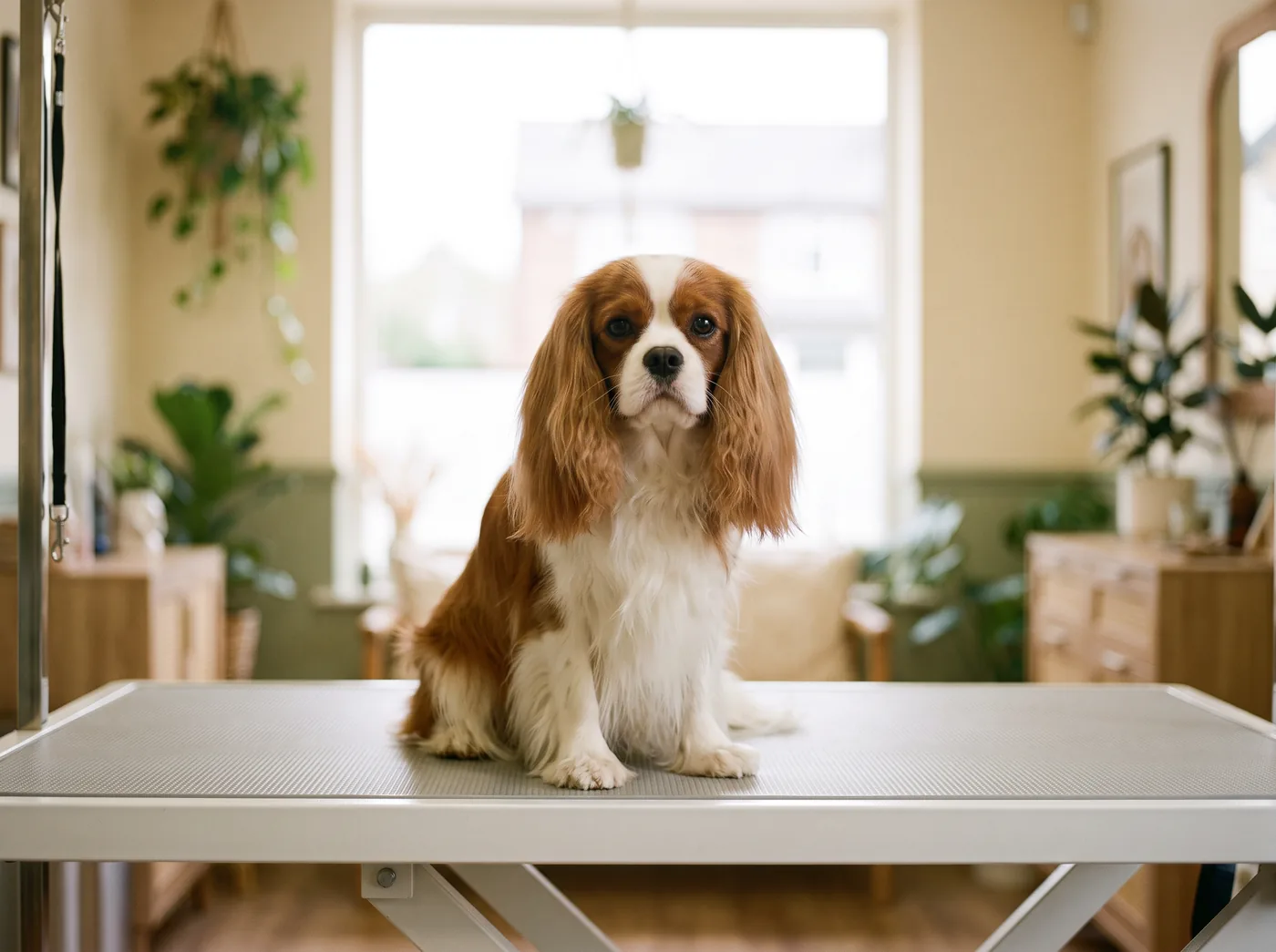
About the Cavalier King Charles Spaniel
The Cavalier is one of the more forgiving coats in the toy group and is often mistaken for a no maintenance one. The body coat is silky, medium length and largely self managing. Nothing about it needs clipping and the traditional presentation is untrimmed.
The work is all in the feathering: the long fringes on the ears, the chest, the backs of the legs and the tail. That hair is finer and softer than the body coat, it moves constantly, and it mats where the body coat never would.
The ears deserve particular attention, and not only for grooming reasons. A long, heavy, low hanging ear with feathering on it, on a dog that puts its face into things, is a structure that needs checking every week of its life.
What a full groom involves
A tidy rather than a haircut, and it is a shorter appointment than most small breeds.
A comb through the feathering first, dry, because that is where the tangles are and the body coat rarely needs it.
Then a bath and a full blow dry with a brush working the feathering straight, which is what makes it hang properly rather than frizz.
Then the tidying, and how much there is depends on what you want. The feet are the main decision: hair grows long between and around the pads and most owners have it cleared and the outline of the foot neatened. The hocks and the trousers get evened. The ear fringes are usually left long and simply combed, though the hair on the underside near the canal is often thinned.
Then ears cleaned, nails, sanitary trim.
Around ninety minutes, and there is no clipper work on a traditionally presented Cavalier at all.
How often, and what happens if you stretch it
Six to eight weeks, which is more relaxed than most small breeds, and it is one of the reasons the Cavalier is a good first dog for somebody who has not owned a coated breed before.
What fails first is the feathering, and specifically four places: behind and under the ears, in the armpits, the trousers on the backs of the thighs, and around the feet. Everything else looks after itself for a long time.
Stretch it far enough and the ear fringes felt, which is uncomfortable because they are attached to something that moves constantly, and the feet become a genuine problem: hair between the pads mats, collects grit, and costs the dog grip on a smooth floor.
Combing those four places twice a week between appointments is the entire home routine and it takes a few minutes.
The ears, which are more than a grooming question
A Cavalier ear is long, heavy, low set and covered in feathering, and it lies flat against the head. That seals the canal so air does not circulate, and it is the same structural setup that gives Cocker Spaniels their reputation for ear trouble.
The grooming half is straightforward: comb the fringes twice a week, particularly where the ear meets the head which is where they mat first, and ask the groomer to thin the hair on the underside near the canal opening.
The health half needs stating plainly. Lift the flap weekly, look, and smell, because smell arrives before anything is visible. Head shaking, scratching at one ear, a tilt, a dark discharge or a yeasty smell is a veterinary matter and not something to clean away. Cleaning an already inflamed ear makes it worse.
The ear fringes also trail in food and water bowls. A narrower or deeper bowl that the ears clear is a small change that saves a lot of washing.
What moves the price
Not much, and this is genuinely one of the better value coated breeds. There is no clipping, no scissored outline to build and no whitening work.
What adds time: feathering that has been left to tangle, which has to be worked out or cut off; feet that need clearing properly; and ear fringes that have felted at the base.
Size is a minor factor. A Cavalier baths and dries quickly.
Temperament almost never adds anything. The breed is famously easygoing on a table, which is worth something and is one reason groomers like them.
What to tell your groomer
Say whether you want a traditional untrimmed presentation with the feathering left long, or a tidier pet trim with the feet and hocks neatened. Both are normal and the difference is mostly the feet.
Say specifically what you want on the feet, because that is the decision that changes how the dog looks and how much upkeep it needs. Cleared pads and a neatened outline are practical; a full slipper foot is the show look and needs more combing.
Mention any ear history at all. It is the most common ongoing issue in the breed and a groomer will keep the hair short around the canal if they know.
Ask them not to clip the body. Some general salons will reach for a blade on any long coated small dog, and a clipped Cavalier loses the silky texture and can take a long time to come back properly.
Keeping the coat between grooms
Comb the feathering
Ears, armpits, trousers and around the feet. The body coat looks after itself; these four are the whole job.
Twice a week
Lift the ears and smell
The highest value minute on this breed. Smell arrives before anything is visible, and the fringes mat where the ear meets the head.
Weekly
Check between the pads
Hair grows long between the toes, mats, collects grit and costs the dog grip on a smooth floor.
Every couple of weeks
Use a bowl the ears clear
A narrower or deeper bowl keeps the ear fringes out of food and water, which saves washing and helps the ears stay dry.
Ongoing
Common Questions About the Cavalier King Charles Spaniel
Should a Cavalier ever be clipped?
Traditionally no, and generally it is best not to. The coat is silky and self managing, the breed presentation is untrimmed, and clipping can change the texture and take a long time to recover. A tidy of the feet, hocks and ear undersides is standard and is all most Cavaliers need. Clipping is a reasonable last resort for a badly matted dog or a senior who cannot tolerate long sessions.
Why do Cavaliers get so many ear infections?
Structure. The ear is long, heavy and low set with feathering on it, so it lies flat and seals the canal, and air cannot circulate through a warm dark space. Keep the hair on the underside near the canal thinned, dry the ears after baths and wet walks, and check weekly by lifting the flap and smelling. Repeated infections are worth investigating for an underlying allergy.
Do Cavaliers shed a lot?
Moderately, and less than a Labrador or a Beagle, but they are not a low shedding breed. The silky coat drops hair steadily year round and a little more seasonally. A comb through the feathering twice a week and a brush over the body handles most of it, and it is one of the trade-offs that makes the coat so much easier than a curly one.
Similar breeds
Same coat, same schedule, or the breeds this one is crossed from.


Golden Retriever
A coat that needs deshedding rather than cutting, and must never be shaved
Golden RetrieverFind a groomer who knows this coat
Search 37,863 groomers by town, or keep reading the breed guide.
Find a Local Groomer View All Breeds