Colorpoint Shorthair Grooming
A Siamese in sixteen colors the Siamese standard does not allow, and the same easy coat
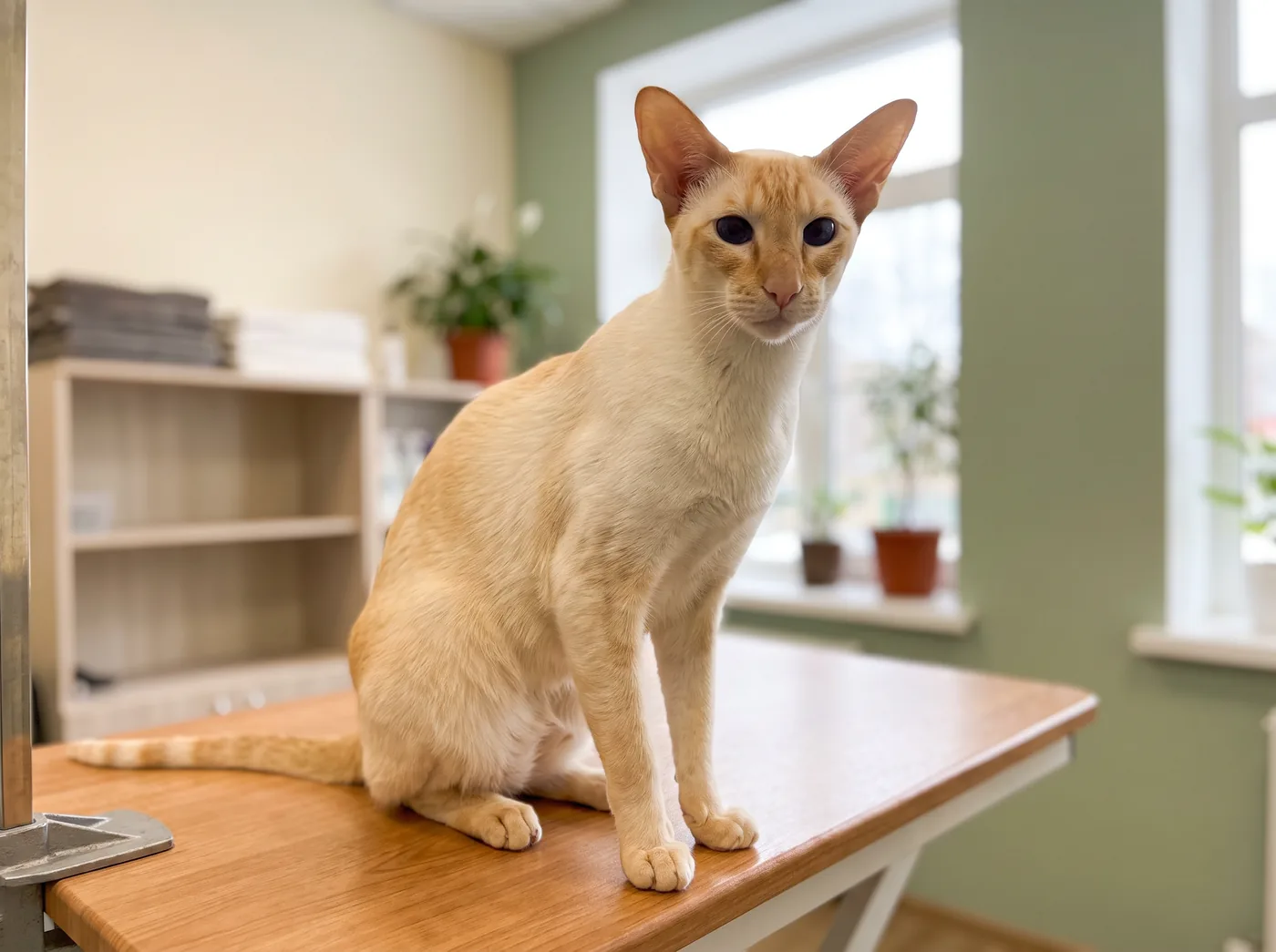
About the Colorpoint Shorthair
This breed exists because of a registry disagreement rather than anything about the cat, and the naming is the most confusing thing on it.
A Siamese is recognized in four point colors: seal, chocolate, blue and lilac. When breeders produced pointed cats of Siamese type in other colors, red, cream, tortie and lynx points among them, some registries accepted them as Siamese and others created a separate breed for them. In the United States the Cat Fanciers' Association calls them Colorpoint Shorthairs; elsewhere they are simply Siamese.
For grooming the distinction is worth nothing at all. It is a Siamese: the same short fine close lying coat, the same lean build, the same voice, the same five minutes a week.
What is worth knowing is the same set of oriental cautions, plus the point coloring behaving exactly as it does on every pointed cat here.
The Colorpoint Shorthair has a double coat that regulates its own temperature. Shaving it does not keep the animal cooler, removes the protection against sun and insects, and the top coat often grows back patchy or never returns correctly. A thorough deshed takes out the undercoat and does the job the owner was actually asking for.
The naming, once, plainly
Registries disagree, and an owner will be told contradictory things, so it is worth setting out.
The Siamese standard in most registries allows four point colors: seal, chocolate, blue and lilac.
Pointed cats of identical Siamese type in other colors, including red, cream, cinnamon, fawn, tortie points and all the lynx or tabby points, are either registered as Siamese or as a separate breed, depending on where you are.
In the United States the Cat Fanciers' Association separates them as the Colorpoint Shorthair. The International Cat Association and most European registries do not, and call them Siamese.
The cats are the same. Same body type, same head, same coat, same temperament, and the two are freely interbred.
For an owner it means a cat may be sold under either name and both can be correct. For grooming it means any advice for a Siamese applies here without adjustment.
The longhaired version of the same thing is the Balinese, and the non pointed version is the Oriental Shorthair.
Five minutes a week
The coat is very short, fine, close lying and glossy, with essentially no undercoat.
Comb once a week with a fine metal comb, or go over the cat with a rubber grooming mitt. That is the entire coat routine, and it doubles as the weekly check over the body.
Shedding is low. Matting does not happen. There is no reason to bathe or clip a healthy cat.
Do not use a slicker or a deshedding blade. There is no undercoat to remove and those tools pull live hair from a single coat and irritate the skin.
A dull, greasy or scurfy coat on a cat this glossy is a signal rather than a grooming failure, and it usually means the cat has stopped grooming itself: dental pain, arthritis, obesity or illness.
Because the coat is so easy, the weekly habit is worth keeping for the check rather than the coat.
The point coloring, and the shaved patch
Point coloring comes from a temperature sensitive gene: pigment develops in the cooler parts of the body, so the face, ears, feet and tail darken while the warm core stays pale.
Kittens are born white and the points develop over weeks and months, deepening for a year or more.
A cat living somewhere cold darkens overall with time, and an older pointed cat is usually darker than it was at two.
The practical consequence, and it is worth telling a vet in advance: a patch shaved for surgery or a blood sample regrows noticeably darker, because the skin there was cooler while it was bare. It fades back over subsequent coat cycles.
Owners who have not been warned reasonably think something has gone wrong, and it is the same fact that appears on the Balinese and Snowshoe pages.
The lynx and tortie points can also look uneven or blotchy, which is correct for those varieties rather than a fault.
The oriental cautions
This is the group rule and it applies here in full.
The cat is lean and finely built with very little body fat under a thin coat with no undercoat, so it chills faster than a plush coated cat.
If a bath is genuinely needed, and it rarely is, keep the room and water comfortably warm, work quickly, and dry thoroughly before letting the cat wander off damp. Clipper work has very little coat between blade and skin.
Teeth matter more than the coat. The oriental breeds have a real tendency toward gum disease, and dental pain is one of the main reasons a cat stops grooming itself.
Ears are large and open, so wipe the visible part weekly and never push anything into the canal.
Claws want tipping every two to three weeks, with a post provided and no declawing.
These cats are famously vocal, demanding and involved in everything, which makes handling easy from kittenhood and means a quiet withdrawn one is telling you something.
What to tell your groomer or vet
Say it is a Siamese in all but registry name, so any Siamese advice applies without adjustment.
Ask for a comb or rubber mitt only, and no slicker or deshedding blade.
Say the coat is not to be clipped and the cat does not need bathing.
Warn that a shaved patch will regrow darker for a while, so nobody records it as a problem.
Say the cat is lean and chills easily, so warmth matters during and after anything wet.
Ask for claws tipped and the mouth looked at, given the tendency to gum disease.
Keeping the coat between grooms
Comb or mitt, five minutes
No undercoat, so no slicker and no deshedding blade. It never mats.
Weekly
Keep it warm if it gets wet
Lean, thin coated and quick to chill. Warm room, warm water, dry thoroughly.
If bathed
Brush the teeth
Oriental breeds are prone to gum disease, and it matters more than the coat.
Daily if you can
Tip the claws
Sharp tip only, clear of the quick. A post, and never declawing.
Every two to three weeks
Common Questions About the Colorpoint Shorthair
Is a Colorpoint Shorthair just a Siamese?
Effectively yes, and the difference is a registry disagreement rather than anything about the cat. The Siamese standard in most registries allows four point colors: seal, chocolate, blue and lilac. Pointed cats of identical Siamese type in other colors, including red, cream, tortie and all the lynx points, are called Colorpoint Shorthairs by the Cat Fanciers' Association in the United States and simply Siamese almost everywhere else. Same body, same coat, same temperament, and they are freely interbred.
How much grooming does one need?
About five minutes a week. The coat is very short, fine and close lying with essentially no undercoat, so a fine comb or rubber mitt once a week is the whole routine and matting does not happen. Do not let anyone use a slicker or a deshedding blade, since there is no undercoat to remove and those tools pull live hair from a single coat. The rest is claws every two to three weeks, ears wiped weekly, and teeth, which matter far more than the coat.
Why did the fur grow back darker after surgery?
Because pointed coloring responds to temperature. Pigment develops more where the body is cooler, which is why the face, ears, feet and tail are dark and the warm core is pale. A patch shaved for surgery or a blood sample leaves that skin cooler while the hair regrows, so it comes back noticeably darker, and it fades back over the following coat cycles. Tell a vet in advance if you can, since it looks alarming to an owner who has not been warned.
Similar breeds
Same coat, same schedule, or the breeds this one is crossed from.


Oriental Shorthair
A Siamese in every color there is, with even less coat and even less padding
Oriental ShorthairFind a groomer who knows this coat
Search 37,863 groomers by town, or keep reading the breed guide.
Find a Local Groomer View All Breeds