English Springer Spaniel Grooming
The ears are the appointment, and the show and working coats are two different dogs
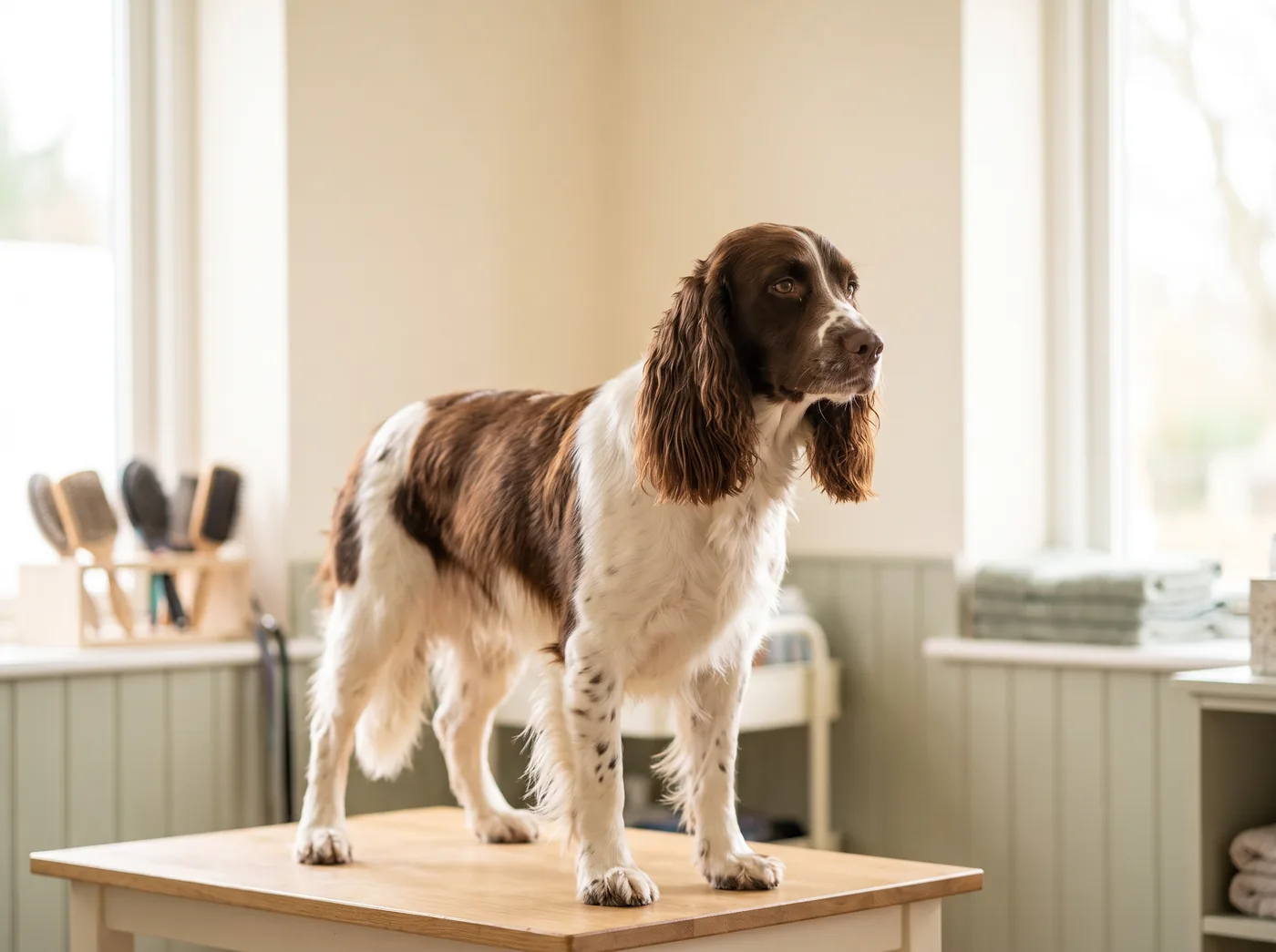
About the English Springer Spaniel
The English Springer Spaniel carries a medium length, flat or slightly wavy, weather resistant double coat with heavy feathering on the ears, the chest, the legs and the belly. It was bred to work through wet undergrowth all day, and every part of the coat is built for that.
Which is exactly why it is work at home. Feathering that sheds water in a hedgerow also collects burrs, seeds, mud and pond weed, and brings all of it into the house. The long heavy drop ears that protect the canal in cover also seal it shut, and ear trouble is the single most common reason a Springer sees a veterinarian.
There is one more thing to know before anything else on this page: show bred and working bred Springers have diverged into two visibly different dogs. The show type carries far more coat and far heavier feathering. The working type is shorter, lighter and tidier. Advice written for one fits the other badly, so it is worth knowing which you have.
This coat can be clipped, but the texture or the color may change and it will not always come back the same. Talk it through with your groomer before the first one.
Show coat and working coat, which are not the same job
The split in this breed is wider than in almost any other and it changes the grooming completely, so establish which dog you have before following any advice.
The show type carries a long, profuse, heavily feathered coat: deep fringing on the ears that can reach well below the jaw, a full skirt along the belly, thick feathering down the backs of all four legs. It is beautiful and it is a genuine commitment, needing combing every couple of days and a groom every six weeks or so to stay on top of.
The working type, bred for the field rather than the ring, carries a shorter, tighter, lighter coat with far less feathering, and is often docked. Many working Springers need very little beyond a brush, an ear check and the feet kept clear.
Most pet Springers are show bred, which is why so many owners are surprised by how much coat arrives over the first two years. A Springer puppy gives almost no clue: the feathering comes in gradually and the dog at eighteen months is a different grooming proposition from the dog at six.
If you have a show bred dog and want the working look, that is a perfectly reasonable request and a groomer can produce it. Read the section on clipping first, because how it is done matters.
The ears, which are where the trouble is
Ear disease is the defining health nuisance of this breed and the reason most Springers end up at a veterinarian at some point. The anatomy explains all of it.
A dog ear canal is L shaped, running down and then turning inward, so it does not drain by gravity the way ours does. A drop ear lies flat over the opening and seals it. A Springer ear is a long heavy drop ear with dense feathering on both sides, and many Springers also grow hair inside the canal itself. So the canal is warm, unventilated and frequently damp, which is what yeast and bacteria need.
Add a breed that swims, works in wet cover and pushes through undergrowth, and the picture is complete.
The routine is weekly and takes a minute. Lift the flap, look, and smell. A healthy ear looks pale and smells of nothing. Yeast smells sweet and musty and is unmistakable once you have met it. Redness, brown or black discharge, heat, head shaking, tilting the head or rubbing an ear along the floor all mean a veterinary visit rather than a bottle of cleaner.
Prevention is drying and airflow. Dry the ears after every swim and every wet walk, including the feathering, which holds water against the opening for hours. Keep the hair underneath the flap and around the opening trimmed so air can move. Use a cleaner only if a veterinarian has recommended one, and never push anything into the canal.
Grass seeds deserve their own warning. In summer a seed works into a canal fast, causes sudden violent head shaking and pain, and needs removing under sedation. Check the ears after every walk through long grass.
Feathering, feet and what a walk brings home
The feathering is the second half of the work and the part that decides how the house looks.
Comb it every two or three days, working through the backs of the legs, the belly skirt, the chest and behind the ears. Those are the places a Springer coat mats, and the mats form where the coat rubs and where it stays wet.
The feet need real attention on this breed. Springers grow dense hair between the pads and around the toes, which mats into hard pellets, collects grit, ice and mud, and costs the dog grip on smooth floors. Keeping it trimmed flush with the pad is standard and worth asking for every visit. It is also where grass seeds enter, working between the toes and causing a sudden limp and a swelling that needs veterinary attention.
The belly skirt and the trousers pick up everything the dog walks through and hold water for a long time after. A dog that swims should be rinsed of salt or pond water and dried properly, because a permanently damp skirt is where hot spots start.
Springers shed moderately year round with a heavier drop twice a year. That is undercoat, and the answer is a deshedding session at the change of seasons rather than anything drastic.
Clipping, stripping and what each does to the coat
The traditional method for a Springer is hand stripping and thinning: pulling dead outer coat out by the root and blending the length with thinning shears rather than running clippers over the dog. It keeps the flat weather resistant texture and the color, and it is what a show coat requires.
Clipping is quicker, considerably cheaper and very widely done on pet Springers, and it comes with a real trade. Clippers cut through both the coarse outer coat and the soft undercoat, and over repeated clips the softer undercoat comes to dominate. The coat becomes woollier and denser, loses its water resistance, mats more readily than it used to, and the rich liver or black color often fades. On some dogs the regrowth is patchy.
None of that is a disaster and plenty of clipped Springers live comfortable, tidy lives. But it is a one way door: a coat that has been clipped for several years generally will not come back to its original texture. Decide deliberately rather than drifting into it because one appointment was easier.
The middle path most groomers will offer is a tidy: ears, feet, sanitary area and the skirt shortened, feathering thinned rather than cut off, and the body coat left alone. It looks neat, it holds the texture, and it takes most of the daily work away.
Whatever you choose, a full shave down is not appropriate for this coat outside a welfare emergency, for all the reasons on the double coat page.
What to tell your groomer
Say whether the dog is show bred or working bred, or bring a photograph of the look you want. They are two different appointments.
Be explicit about clipping. If you want the texture kept, ask for thinning and tidying rather than clippers over the body, and expect it to cost more and take longer.
Ask for the hair under the ear flap and around the opening kept trimmed for airflow, and for the pads cleared flush every visit.
Mention any ear history at all, and say if the dog swims, because both change what the groomer does about drying.
Say if the dog has had a grass seed, since a groomer who knows to look is the person most likely to find the next one.
And book six to eight weeks ahead on a show bred coat. It is the interval the feathering actually needs.
Keeping the coat between grooms
Lift, look and smell the ears
A healthy ear smells of nothing. Sweet and musty is yeast. This is the breed's defining health nuisance and a weekly minute prevents most of it.
Weekly
Dry the ears and skirt after water
Including the feathering, which holds water against the ear opening for hours. A swimming dog needs this every time.
After every swim
Comb the feathering
Backs of the legs, belly skirt, chest and behind the ears. Everywhere else largely looks after itself.
Every two or three days
Clear the feet
Hair between the pads mats into hard pellets, holds grit and ice, and costs the dog grip. It is also where grass seeds get in.
Every few weeks
Common Questions About the English Springer Spaniel
Why does my Springer keep getting ear infections?
Anatomy plus lifestyle. A dog ear canal turns a corner and does not drain by gravity, a long heavy drop ear seals the opening, dense feathering on both sides blocks airflow, and many Springers grow hair inside the canal. Add a dog that swims and works through wet cover and the canal stays warm and damp, which is what yeast and bacteria need. Dry the ears after every swim and wet walk, keep the hair under the flap trimmed for airflow, and check weekly by lifting and smelling. Recurring infections need a veterinarian to identify what is growing, not a stronger cleaner.
Can I have my Springer Spaniel clipped short?
You can, and many pet Springers are, but it changes the coat permanently. Clippers cut both the coarse outer coat and the soft undercoat, so over repeated clips the undercoat dominates: the coat goes woollier, loses its water resistance, mats more readily and the color often fades. It generally does not come back. A tidy is the middle option most groomers prefer, taking the ears, feet, sanitary area and skirt down and thinning the feathering while leaving the body coat intact.
How often does an English Springer Spaniel need grooming?
A professional groom every six to eight weeks on a show bred coat, with combing every two or three days through the feathering in between. A working bred Springer carries far less coat and many need little more than brushing, an ear check and the feet kept clear. Whichever you have, the ears get checked weekly and the feet get cleared regularly, and neither of those waits for an appointment.
Similar breeds
Same coat, same schedule, or the breeds this one is crossed from.


Golden Retriever
A coat that needs deshedding rather than cutting, and must never be shaved
Golden RetrieverFind a groomer who knows this coat
Search 37,863 groomers by town, or keep reading the breed guide.
Find a Local Groomer View All Breeds