Gordon Setter Grooming
The heaviest of the setters, under the most feathering of the three
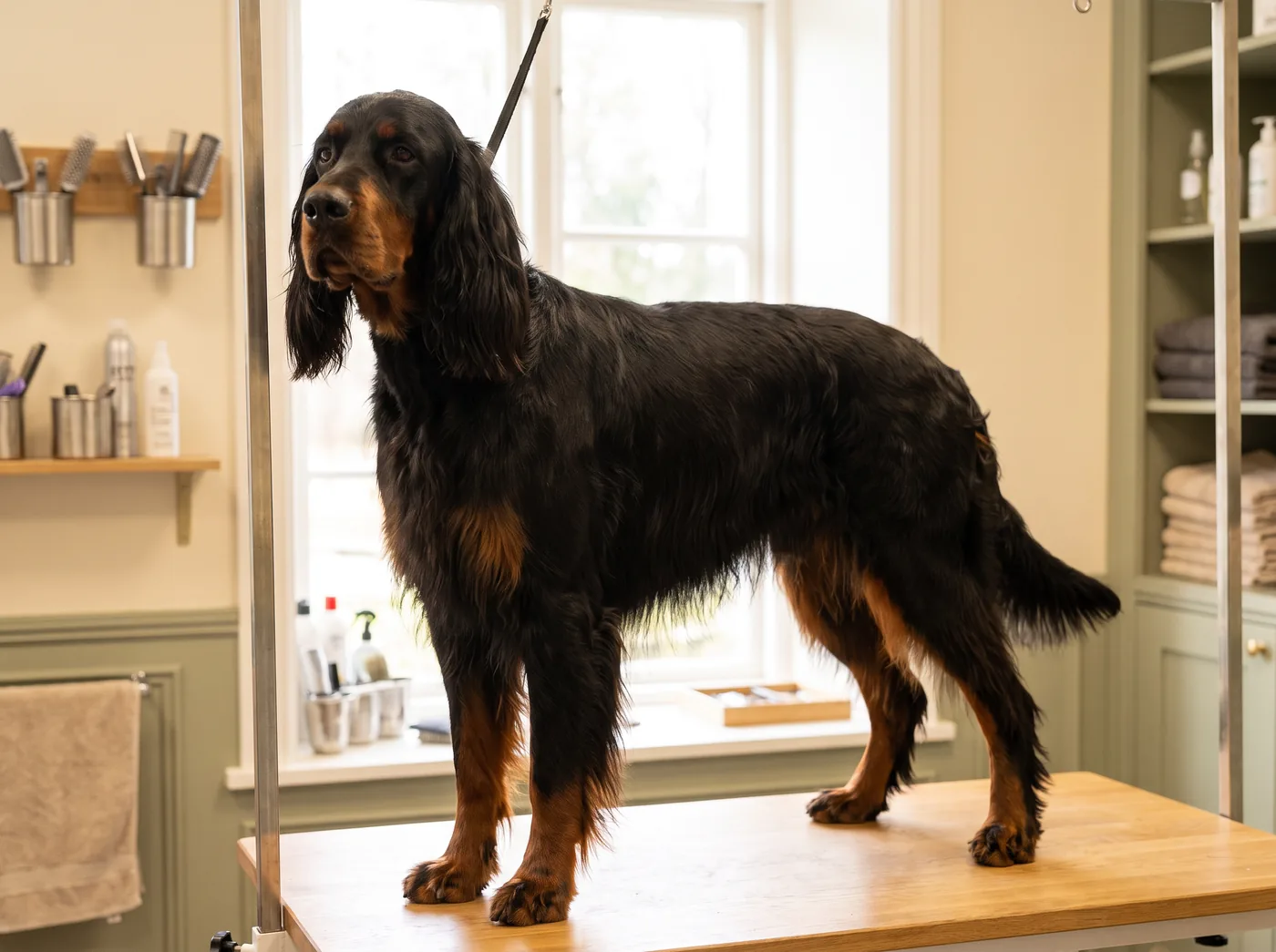
About the Gordon Setter
This finishes the setters. The Irish covers the general proposition, the English carries the most feathering on a white base that stains, and the Gordon is the heaviest and most substantial of the three.
The coat is soft, shining and either straight or slightly wavy, in a deep coal black with clearly defined mahogany tan markings on the muzzle, throat, chest, legs and under the tail. The feathering on the ears, chest, belly, backs of the legs and tail is long and abundant.
Everything the Irish Setter page says applies: comb the feathering every two or three days, groom every six to eight weeks, watch the ears. What is different here is bulk. A Gordon can weigh eighty pounds, carries more coat than an Irish, and takes longer at every stage.
This coat can be clipped, but the texture or the color may change and it will not always come back the same. Talk it through with your groomer before the first one.
Where the feathering mats
The body coat is comparatively short and easy. The feathering is the job, and it is heavier here than on either of the other setters.
Comb it through every two or three days with a metal comb, and use the comb rather than only a slicker, since a soft silky feathering tangles at the root while looking fine on the surface.
The reliable failure points, in order: behind and under the ears, which goes first on every setter, then the armpits, the chest between the front legs, the backs of the front legs, the britches, and the underside of the tail.
A collar or harness sitting in chest feathering will felt it within a week or two.
A working Gordon in cover collects burrs and grass seeds in the feathering and they become mats in days rather than weeks, so a dog that works needs combing more often than one that does not.
Anything left damp mats faster, so dry the feathering after wet walks and swims rather than letting it dry in a tangle.
Bathe every six weeks or so, comb out fully first, and brush while drying.
Trimming, and keeping the outline
A Gordon is trimmed rather than styled. The aim is a natural outline with the feathering tidied, not a shape cut into the dog.
What is normally done: the hair on the top of the ears and around the ear openings taken short, the throat and under the jaw tidied, the feet neatened and the hair between the pads cleared, the hocks tidied, and the feathering shortened where it drags.
Thinning shears rather than clippers for most of it, which keeps the coat lying naturally.
Clipping the body coat is possible and it is the usual trade: a soft coat with some undercoat comes back denser and softer, which mats more than what it replaced, and a black coat can lose depth of color. For a pet in a short trim it is a reasonable choice, and it is not what the breed is meant to look like.
Shortening the feathering substantially on a working dog is entirely sensible and is common.
Give a groomer a clear instruction on how short the feathering should be, since a setter tidy can mean anything from barely touched to half the length removed.
The ears, and the setter problem
Long, low set, heavily feathered drop ears lying flat over the canal, on a dog that hunts through cover and swims. That is the same architecture as any spaniel or setter and it produces the same result.
Lift the flap weekly, look and smell. Healthy smells of nothing.
Keep the hair on the underside of the flap and around the opening trimmed short at every appointment, which is the single most useful preventive measure.
Dry the ears and the ear feathering after every bath, swim and wet walk.
The ear feathering itself mats where it meets the head, and a mat there pulls on the ear and traps moisture underneath, so it is a grooming and a health problem at the same time.
Head shaking, scratching, a tilt, redness, dark discharge or a smell means a veterinarian rather than a cleaner.
Check between the toes after work in cover, since grass seeds burrow into a feathered foot and abscess.
The black coat, and a big slow maturing dog
A black and tan coat has a couple of practical quirks worth knowing.
Sun bleaches black to a reddish or brownish cast over a summer, particularly over the back and tail. It is normal and grows out.
Dandruff, dust and shed hair all show far more on black than on a pale coat, so a Gordon looks unkempt sooner, which is worth knowing before assuming a skin problem. If there is genuine flaking with itching or a smell, that is a veterinary question.
The tan points should be clearly defined and rich, and they are the part that shows staining from saliva or from a dog licking a sore spot.
Gordons are slow to mature, taking up to three years, and they are big, enthusiastic and quite capable of being difficult on a table as adolescents. Handling from puppyhood is the answer, as always.
Deep chested, so bloat is a risk: do not feed a large meal around an appointment, and know that unproductive retching with a swollen abdomen is an emergency.
Weight is worth watching, since feathering hides condition well.
What to tell your groomer
Ask for a natural outline with the feathering tidied rather than a shape scissored into the dog.
Say how short you want the feathering, in plain terms, because a setter tidy means very different things to different groomers.
Ask for the ear openings and the underside of the flaps kept short at every visit, and the ears dried and checked.
Ask for thinning shears rather than clippers where possible, and no body clip unless you have asked for one.
Ask for feet neatened, pads cleared and a check between the toes for grass seeds.
Say not to feed the dog around the appointment, because of bloat risk.
Keeping the coat between grooms
Comb the feathering to the root
Metal comb. Soft feathering tangles underneath while the surface looks brushed.
Every two to three days
Lift, look, smell, dry
Behind the ears mats first on every setter, and it traps moisture when it does.
Weekly
Check between the toes
Feathered feet in cover collect grass seeds, which burrow in and abscess.
After walks in cover
No big meal around grooming
Deep chested and prone to bloat. Unproductive retching is an emergency.
Every appointment
Common Questions About the Gordon Setter
How does a Gordon Setter compare with an Irish or English Setter?
It is the heaviest and most substantial of the three, and it carries more feathering than the Irish though the English is the most profusely feathered of all. The routine is the same for all three: comb the feathering every two or three days, tidy rather than sculpt, and watch the ears, which are the defining problem in every setter. The Gordon's black and tan coat adds two quirks, in that sun bleaches black to a reddish cast and dandruff shows far more than on a red or white coat.
Where do Gordon Setters mat?
Behind and under the ears first, always, then the armpits, the chest between the front legs, the backs of the front legs, the britches and under the tail. A collar or harness sitting in chest feathering will felt it within a week or two. The body coat is comparatively easy; the feathering is the whole job. Comb it with a metal comb rather than only a slicker, since soft feathering tangles at the root while the surface still looks brushed, and dry it after wet walks.
Why has my black Gordon Setter gone rusty looking?
Sun bleaching, most likely. A black coat exposed to strong summer sun develops a reddish or brownish cast over the back and tail, and it grows out with the next coat cycle. Black also shows dandruff, dust and shed hair far more than a pale coat, so a Gordon can look unkempt when nothing is wrong. What does warrant a vet is flaking that comes with itching, a smell, thinning coat or bare patches, since that points at a skin or thyroid problem rather than sunlight.
Similar breeds
Same coat, same schedule, or the breeds this one is crossed from.

Irish Setter
A fine silky coat with feathering everywhere, on a dog that wants to run through everything
Irish Setter
English Setter
The most heavily feathered setter, on a white base that shows every stain
English Setter
English Cocker Spaniel
A working spaniel with far less coat than the American, and a different trim
English Cocker SpanielFind a groomer who knows this coat
Search 37,863 groomers by town, or keep reading the breed guide.
Find a Local Groomer View All Breeds