Labrador Retriever Grooming
A short coat with a full undercoat under it, and the shedding to prove it
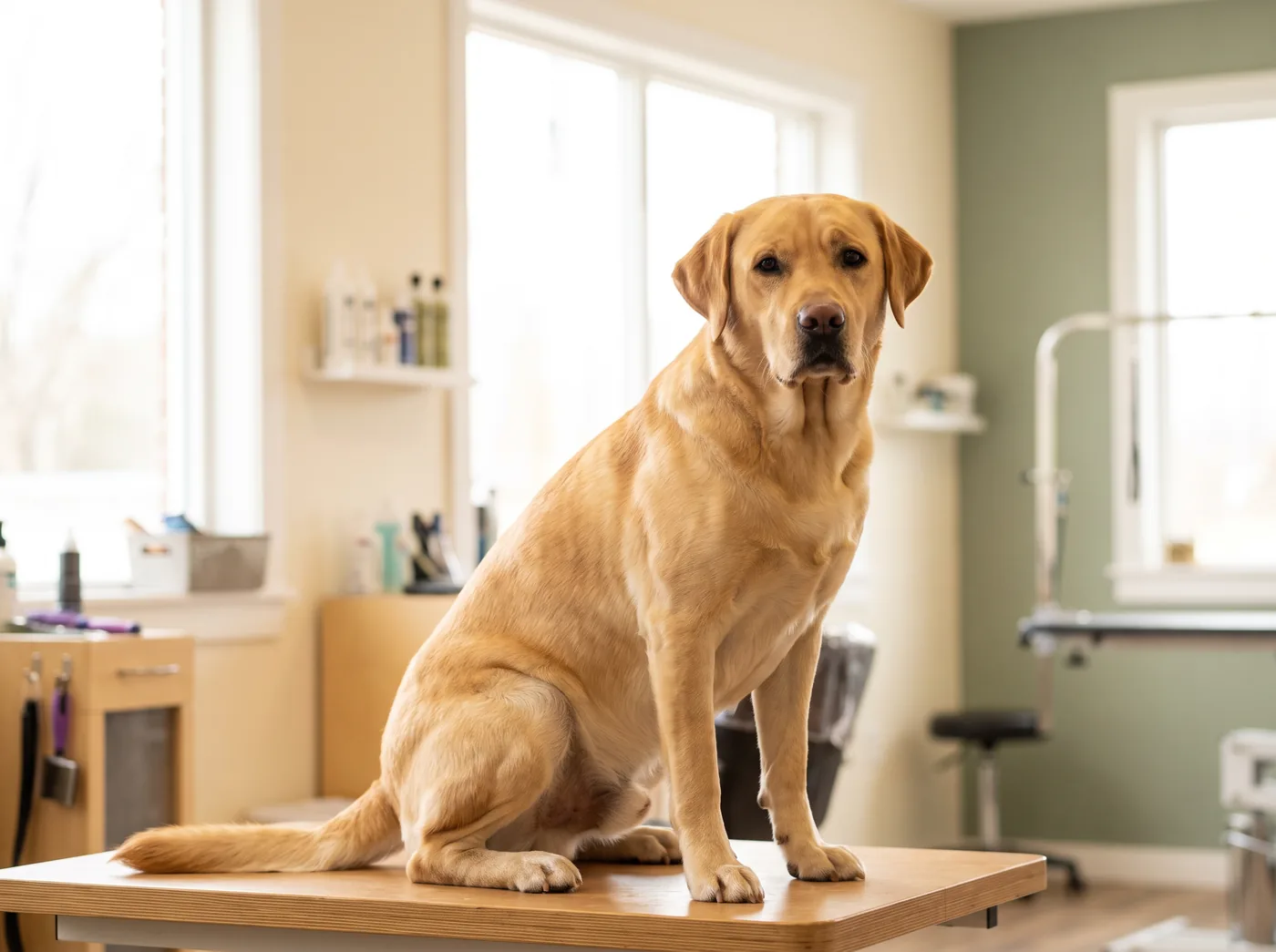
About the Labrador Retriever
A Labrador looks like a short coated dog and is not one, and almost every surprise owners get about the breed comes from that gap. Under that short, dense, slightly oily outer coat is a full soft undercoat, and it behaves exactly like the undercoat on a Husky: it insulates, it blows out seasonally, and it is the reason a Labrador sheds more hair than most long coated breeds.
The coat was built for a dog retrieving from cold water. It is water resistant rather than merely short, and the oil in it is doing a job.
There is no haircut here and there never should be. What there is, is a deshedding appointment, and the difference it makes to a house is larger than owners expect.
The Labrador Retriever has a double coat that regulates its own temperature. Shaving it does not keep the animal cooler, removes the protection against sun and insects, and the top coat often grows back patchy or never returns correctly. A thorough deshed takes out the undercoat and does the job the owner was actually asking for.
What a full groom involves
A bath, a deshed and the detail work. No cutting at any point.
It starts with a rubber curry or a slicker over the dry coat to lift what is already loose. Then a bath, usually with a deshedding shampoo and a conditioner, which on this coat is doing mechanical work rather than only cleaning: it swells and lifts the undercoat so it can be driven out.
Then the high velocity dryer, which is the part that cannot be done at home and the part that does the job. It blasts the loosened undercoat out while it dries, and the volume that leaves a Labrador at this stage is the thing that convinces skeptical owners the appointment is worth it.
Then a rake or a deshedding tool to take out what has been freed, then nails, ears, pads and anal glands if needed, plus a look over the skin.
Around ninety minutes, and it is one of the better value appointments in any salon.
How often, and what happens if you stretch it
Every eight to twelve weeks, and more often through a seasonal shed. Labradors blow coat twice a year like any double coated breed, and booking at the start of that rather than after it is the difference between a manageable fortnight and vacuuming daily.
Nothing dramatic happens to the coat if you stretch it, which is exactly why this breed gets skipped. The coat is too short to mat in any serious way, so there is never a visible crisis prompting a booking.
What accumulates instead is undercoat, which stays in the coat and ends up in your house, and everything else the appointment covers. Nails are the main casualty: a Labrador walked on grass does not wear them down, the quick grows longer the longer the nail is left, and correcting it takes several sessions rather than one.
At home, a rubber curry once a week and a rake during a blow is most of the job, and it works.
The coat problems a Labrador actually gets
Shedding, and the shape of the hair makes it worse than the volume alone would. A short, stiff, straight hair works into fabric point first and stays there, which is why Labrador hair weaves into a car seat and upholstery rather than sitting on top to be brushed off.
Hot spots second, and this breed is a textbook candidate. A dog that swims, an oily coat that holds water, and a dense undercoat that keeps the skin damp for hours is the exact setup for acute moist dermatitis. It can go from nothing to a raw painful patch the size of a hand inside a day, and it is most common in summer.
Ears third, for the same structural reason as every drop eared sporting breed: the flap seals the canal, air does not circulate, and a dog that swims adds water. Dry inside the flap after every swim.
And skin generally, because Labradors have a high rate of allergic skin disease. Recurrent itching, redness between the toes or repeated ear infections are a veterinary conversation rather than a grooming one, and they are commonly the same underlying problem.
What moves the price
Very little, which is the honest answer for a large dog with no haircut. Size sets the bath and dry time and that is most of the bill.
What does add to it: a heavy seasonal shed, where the deshed is genuinely more work; nails left long enough to need correcting over several visits; and anal glands.
Coat condition barely features, because there is no version of a neglected Labrador coat that costs more to groom. That is unusual, and worth saying.
This is among the cheapest large dogs in most salons, and the gap between what it costs and what it does for the hair in your house is the best value argument in dog grooming.
What to tell your groomer
Ask for a bath, a full deshed and a blow out, plus nails and ears. Naming it gets you the right appointment rather than being offered a trim you do not need.
Say whether the dog swims, because it changes the ear conversation entirely.
Mention any itching, recurrent ear trouble or licking at the feet. Groomers see these patterns constantly in the breed and will tell you when something has moved from grooming into veterinary territory.
Say when the nails were last done, honestly, and ask them to take a little now and book a follow up if it has been a long time.
And do not ask for a summer clip. There is far more coat there than it looks, and the same rules apply as to any double coat.
Keeping the coat between grooms
Curry brush the coat
A rubber curry in circles against the lie, then along it. Lifts loose undercoat before it reaches your car seats.
Weekly
Rinse and dry after swimming
Salt, chlorine and pond water all irritate skin, and moisture held under a dense coat is how a hot spot starts.
After every swim
Dry inside the ear flap
A sealed drop ear on a dog that swims is the classic setup for infection. Lift, dry, look and smell.
After every swim and weekly
Check the nails and between the toes
Nails go unnoticed on a dog with no haircut, and licking or redness between the toes is often the first sign of an allergy.
Monthly
Common Questions About the Labrador Retriever
Why does my Labrador shed so much when its coat is short?
Because it is not really a short coated dog. Under that short top coat is a full soft undercoat that sheds year round and heavily twice a year, exactly like a northern breed. Short hair also behaves worse once loose: a stiff straight hair works into fabric point first rather than sitting on top of it. A deshedding bath a few times a year plus a rubber curry weekly makes a large and immediate difference.
Can a Labrador be clipped or shaved?
It should not be. The coat is double, so clipping removes the water resistant outer layer and leaves the insulating undercoat against the skin, which makes the dog hotter and removes its sun protection. It also strips the oils that make the coat shed water. There is essentially never a grooming reason to clip a Labrador, and a deshed removes far more warmth than a clip would.
How often should I bathe my Labrador?
Every couple of months is plenty, and more during a coat blow when the bath is doing real work. Washing this coat too often strips the natural oils that give it its water resistance and can leave the skin dry and itchy. Rinsing after a swim in salt or chlorinated water is worth doing every time; a full shampoo is not.
Similar breeds
Same coat, same schedule, or the breeds this one is crossed from.

Golden Retriever
A coat that needs deshedding rather than cutting, and must never be shaved
Golden Retriever
Find a groomer who knows this coat
Search 37,863 groomers by town, or keep reading the breed guide.
Find a Local Groomer View All Breeds