Plott Hound Grooming
A German boarhound that became an American coonhound, with a five minute coat
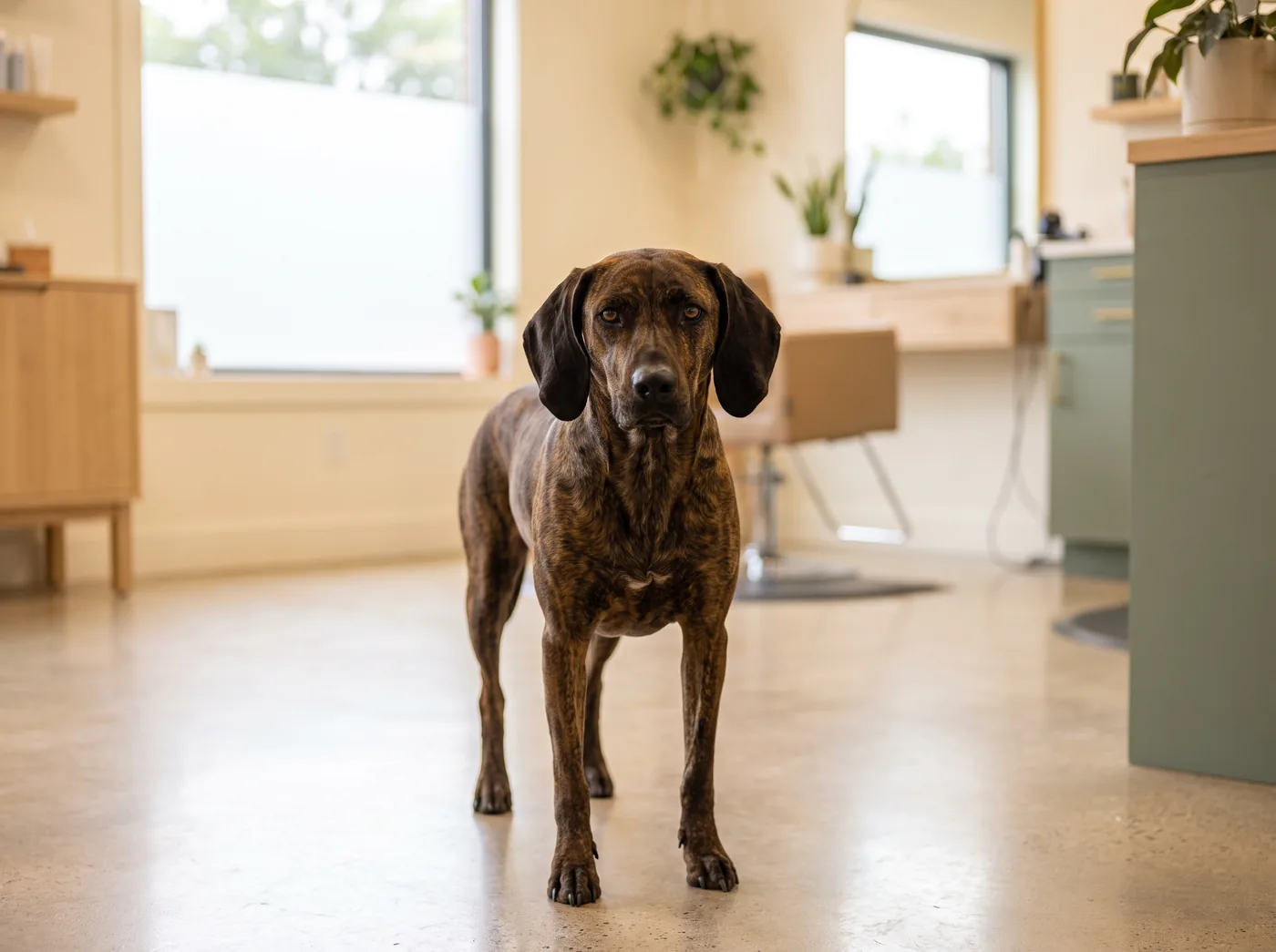
About the Plott Hound
North Carolina's state dog, and the odd one out among American coonhounds.
Every other coonhound descends substantially from English Foxhounds. The Plott does not: it comes from German boarhounds brought to the United States in the 1750s by the Plott family and kept as a distinct line for generations, and it was bred to hunt bear and boar rather than raccoon.
That history shows in the dog rather than the coat. Plotts are harder, more determined and more willing to face large game than the other coonhounds, and they are notably tenacious.
The coat is a five minute job: short, smooth, fine and glossy, usually brindle, occasionally with a slightly thicker double coat in some lines.
What actually takes time is the ears, the nails and the skin, and that is true of every hound there is.
The Plott Hound has a double coat that regulates its own temperature. Shaving it does not keep the animal cooler, removes the protection against sun and insects, and the top coat often grows back patchy or never returns correctly. A thorough deshed takes out the undercoat and does the job the owner was actually asking for.
Five minutes of coat
Go over the dog with a rubber curry mitt or a hound glove once a week. That lifts the loose hair, spreads the oils and gives the coat its shine.
Shedding is moderate and year round, with a heavier change in spring and autumn, when twice a week helps.
Bathe every couple of months or after a hunt, since a working Plott will come home covered in things a house dog does not.
Do not clip. There is nothing to take off and the coat protects the skin in cover.
Some lines carry a slightly heavier coat with a soft undercoat, which sheds more but changes nothing else.
Use the weekly session as the skin check. On a short coated hound everything is visible: ticks, scrapes, thorn punctures, lumps and the abrasions a working dog collects.
Thorn and bramble injuries are common in a dog that hunts in cover, and a puncture that closes over can abscess, so a small hole that swells needs a vet rather than watching.
The ears, which is the whole job
Every hound has the same ear problem, and it is worth understanding why rather than just being told.
The ear leather is long, hangs down and lies flat over the ear canal. That was selected for: a hanging ear sweeps scent up toward the nose as the dog works with its head down.
The cost is that the canal gets no airflow, stays warm and stays damp, which is what yeast and bacteria need.
So check the ears weekly. Lift the leather, look and smell. Wipe the visible part with a vet-approved cleaner. Dry thoroughly after every bath and every swim.
Do not push cotton buds into the canal and do not pour anything in without veterinary advice.
Head shaking, scratching at an ear, a yeasty smell, redness or a dark discharge all mean it has already started, and repeated infections need a vet rather than another bottle of cleaner.
A Plott that hunts is also collecting seeds, burrs and dirt in the ear on every outing, so check after work rather than only on schedule.
Nails, pads and a working dog's feet
A hunting Plott wears its nails down on rock and hard ground. A pet Plott on grass and carpet does not, and the nails get long enough to change the way the dog stands.
Trim every three to four weeks and do it little and often, since a hound nail that has been left long has a long quick that has to be receded gradually.
Check the pads after every hunt. Cuts, cracks, thorns and worn pads are routine in a dog working rough country, and a pad injury is easy to miss until the dog limps.
Clear the hair between the pads and check between the toes.
Interdigital cysts turn up in short coated hounds and look like a swollen red lump between the toes. They need veterinary treatment rather than home cleaning.
Teeth brushed. Hounds chew and lose teeth to fractures more than most.
Feel for ribs monthly. A Plott should be lean and hard, and this is a breed that gets fat quickly when it stops working.
The hard end of the hound group
Worth saying plainly, because the coat makes this look like an easy dog to book in.
Plotts were bred to hold bear and boar at bay, and the breed retains the determination that took. They are courageous, intense and physically strong, and they do not back down easily.
With people they are usually loyal and affectionate, and they are not aggressive by nature. But a Plott that has decided something is not happening is a genuinely difficult dog to move, and forcing it works badly.
They are also loud. The bay is what the breed is for, and a Plott in an unfamiliar salon is likely to use it.
Prey drive is extreme, so a salon with cats or small dogs loose is worth asking about, and doors matter.
Handling from puppyhood, and a calm groomer who is not in a rush, are the two things that make appointments easy.
They are otherwise healthy, with hip dysplasia and bloat the two worth knowing about, and bloat is a real emergency in a deep chested dog.
What to tell your groomer
Say a bath, a rubber mitt, nails, ears and pads. There is nothing to cut.
Ask for the ears lifted, checked and dried thoroughly, since that is the actual work.
Ask them to check the pads and between the toes, especially if the dog works.
Say the dog is loud by breed rather than distressed.
Say the prey drive is extreme, so cats and small dogs should not be loose.
Say forcing does not work with this breed and a calm slow appointment does.
Keeping the coat between grooms
Lift, look and smell the ear
This is the actual job on any hound. The coat is the easy part.
Weekly
Rubber mitt the coat
Five minutes. Lifts the loose hair and puts the shine back.
Weekly
Check the pads after work
Cuts, thorns and cracks are routine in a dog hunting rough country.
After every hunt
Nails little and often
A pet hound does not wear them down, and a long quick recedes slowly.
Every three to four weeks
Common Questions About the Plott Hound
How much grooming does a Plott Hound need?
About five minutes a week for the coat: a rubber curry mitt or hound glove to lift the loose hair and spread the oils. The real work is everything else. Ears weekly, because a long hanging ear lying flat over the canal gets no airflow and infects readily. Nails every three to four weeks, since a pet Plott does not wear them down. Pads and between the toes after any work in cover. Bathe every couple of months and never clip.
What makes a Plott different from other coonhounds?
Its ancestry. Every other American coonhound descends substantially from English Foxhounds, and the Plott does not: it comes from German boarhounds brought over in the 1750s by the Plott family and kept as a distinct line, bred to hunt bear and boar rather than raccoon. That shows in the dog rather than the coat. Plotts are harder, more determined and more willing to face large game, and a Plott that has decided something is not happening is difficult to move.
Why do hound ears get infected so often?
Because the shape that makes them good at the job is bad for the canal. A long ear that hangs and lies flat sweeps scent up toward the nose as the dog works with its head down, which is exactly what it was selected for. The cost is that the canal gets no airflow and stays warm and damp, which is what yeast and bacteria need. So check weekly, lift the leather, look and smell, and dry thoroughly after every bath and swim.
Similar breeds
Same coat, same schedule, or the breeds this one is crossed from.

Treeing Walker Coonhound
Ears longer than the muzzle, which is a design decision with a running cost
Treeing Walker Coonhound
Bluetick Coonhound
A ten minute coat under some of the longest ears in dogs, and a real hound smell
Bluetick Coonhound
Rhodesian Ridgeback
The ridge is a feature and a warning, and the rest of the coat takes ten minutes
Rhodesian RidgebackFind a groomer who knows this coat
Search 37,863 groomers by town, or keep reading the breed guide.
Find a Local Groomer View All Breeds