Russian Blue Grooming
A short coat dense enough to stand away from the body, and the silver tips that do the work
About the Russian Blue
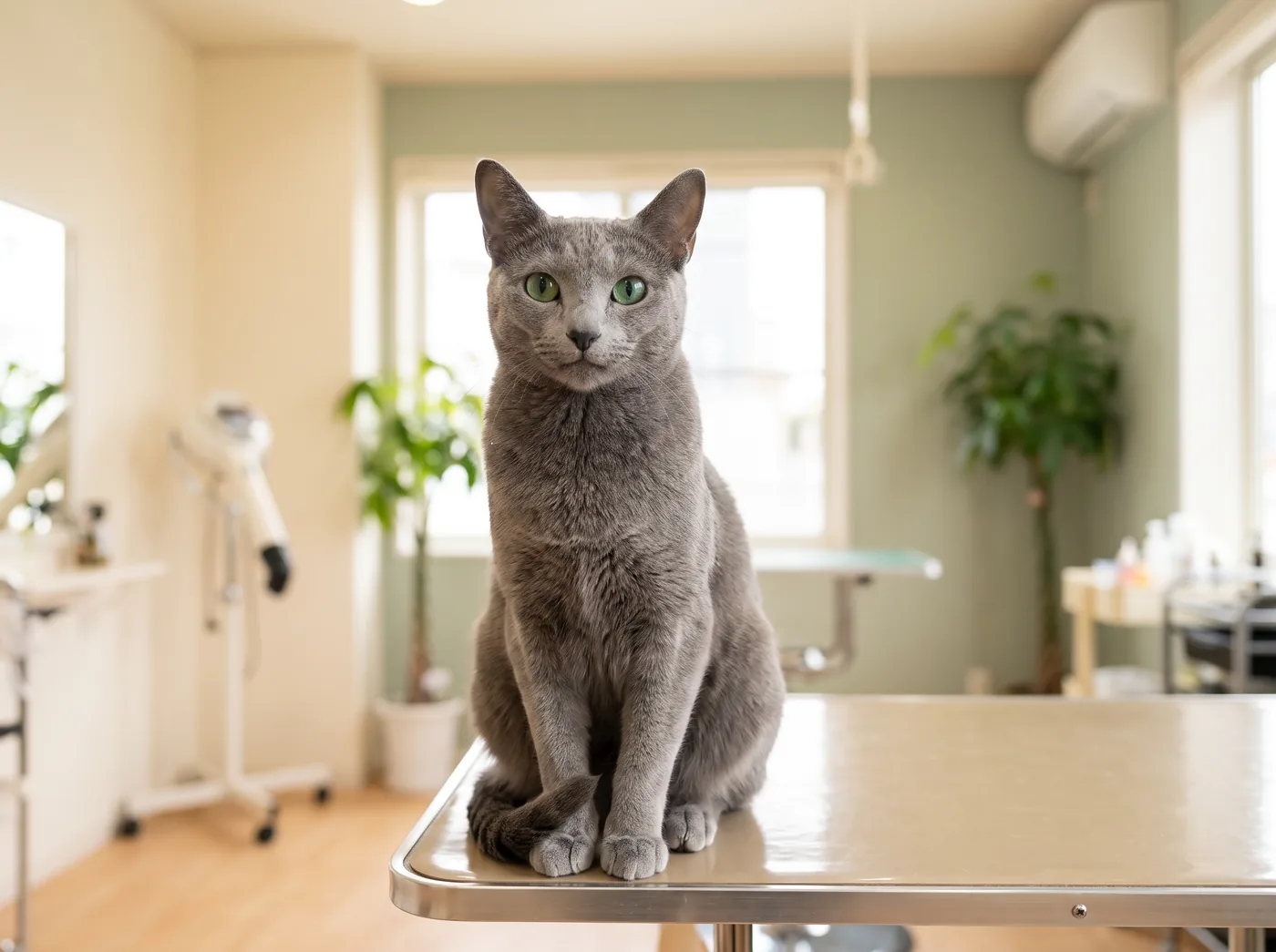
The Russian Blue carries one of the most distinctive coats in cats: short, but so dense and so evenly plush that it stands away from the body rather than lying flat, and firm enough that you can trace a line in it with a finger and have it hold.
It is a genuine double coat, with guard hairs and undercoat of almost equal length, which is what produces that upright plush texture. It is closer in structure to a British Shorthair coat than to the fine close coat of a Siamese.
The silver appearance is not a color. Each hair is solid blue gray along its length and tipped with silver, so light catches the tips and gives the coat its shimmer. It is a structural effect, like the ticking on an Abyssinian, and no product creates or improves it.
Grooming is about five minutes a week. Most of this page is about the two things owners actually ask about.
This coat can be clipped, but the texture or the color may change and it will not always come back the same. Talk it through with your groomer before the first one.
The double coat, and the routine it needs
What makes this coat unusual is that the undercoat is almost as long as the guard hairs. In most cats the guard coat is noticeably longer and lies over the top; here the two are close to equal, so the whole coat stands upright and evenly rather than lying down.
That density means two things. It sheds more than a coat this short suggests, particularly at the seasonal changes, and it can mat lightly in the places any dense coat does, which surprises people who chose a shorthaired cat to avoid that entirely.
The routine is a fine toothed comb through the coat once a week, reaching the skin rather than skimming the surface, followed by a rubber curry or a grooming glove worked in circles against the lie to lift loose undercoat. Five minutes.
Check behind the ears and in the armpits while you do it, which is where the light matting happens.
Bathing is almost never necessary. A dense coat with a healthy skin underneath keeps itself clean, and over bathing strips oils. Once or twice a year at most, and only with a reason.
Do not clip this coat as a routine matter. It provides real insulation, cat skin is thin, and clipping a plush double coat can change the texture of the regrowth.
Nails every three to four weeks, ears checked weekly, and teeth, which as with every cat is the item that matters most and gets done least.
The hypoallergenic question, answered honestly
The Russian Blue is one of a handful of breeds marketed as hypoallergenic, and the claim needs unpicking rather than repeating or dismissing.
No cat is hypoallergenic. Most people who react to cats are reacting to a protein called Fel d 1, which is produced in the saliva and skin glands and spread onto the coat when the cat grooms itself, then shed into a room on flakes of skin. Every cat produces it.
What is true is that cats vary in how much they produce, by a considerable margin, and there is reasonable evidence that Russian Blues sit toward the lower end. Some allergic people genuinely find them easier to live with, and the reports are consistent enough that they are unlikely to be entirely imagination.
What is also true is that the variation between individual cats is large enough that breed is a poor predictor for any one animal. Males generally produce more than females, and neutered males produce less than intact ones.
The practical answer: if you are allergic, spend real time with the specific cat before committing, rather than trusting the breed label. And do not buy a Russian Blue expecting no reaction, because plenty of allergic people react to them perfectly well.
The dense coat may help slightly in a different way, by holding dander rather than releasing it, which is an argument for that weekly comb being done somewhere other than the sofa.
Temperament, which decides how any appointment goes
Russian Blues are affectionate, strongly bonded to their own people, and genuinely shy with everyone else. This is not a nervous cat in a damaged sense; it is a reserved one, and it is a well documented breed characteristic rather than a training failure.
They are also unusually sensitive to change in routine. Furniture moved, a new schedule, visitors, a different food, a dirty litter box: this breed notices all of it and reacts more than most.
For grooming that has two consequences.
Home grooming is far preferable, and fortunately the coat needs so little that it is entirely realistic. A weekly comb in a familiar room from a familiar person is a completely different experience from a salon.
If a professional is needed, the requirements are stricter than for a confident cat: a groomer who takes cats regularly, a separate room away from dogs, no waiting in a busy reception area, and someone who will work slowly and stop rather than push through.
Handle the feet and ears from kittenhood, briefly and often, because nails are the one job that genuinely has to happen and a shy cat that has never had its feet touched makes that a fight for fifteen years.
A Russian Blue that hides for a day after an appointment is not unusual, and it is a reason to prefer doing the routine at home.
The coat as a health signal
Russian Blues live a long time, commonly fifteen to twenty years, which means many of the things worth watching for arrive slowly.
On a coat this even and this plush, changes show clearly, and a weekly comb is the best routine health check most owners will ever do.
A coat that becomes greasy, clumped, dull or dandruffy in an older cat is very often a grooming problem rather than a skin one: the cat has stopped grooming itself properly. Arthritis, dental pain and obesity all reduce how much of itself a cat can reach or is willing to twist to reach, and the coat is usually the first visible sign.
Thinning or bald patches, particularly on the belly or inner thighs, usually mean over grooming, which can be behavioral in a breed this sensitive to change, or can be fleas, allergy, pain or a bladder problem. Worth a veterinary check rather than an assumption.
Weight is the other one. Russian Blues have healthy appetites and a strong tendency to put on weight indoors, and a heavy cat cannot reach its own back end.
Weekly, while combing: run your hands over the whole cat, feel for lumps, check the belly and armpits, look at the gums, and notice whether the coat feels different from last week.
What to tell your groomer
Most Russian Blue owners never need one, and given the temperament that is the better outcome rather than a gap.
If you do book, say the cat is shy and ask for a quiet room away from dogs, no time in a busy reception, and someone who will stop rather than push through.
Say the coat is short but dense and double, and ask for a comb and a deshedding glove rather than a slicker used with pressure.
Ask for the nails, and say to take a few claws at a time.
Ask them not to clip the coat.
And mention any change in weight, mobility or coat condition, because on this breed the coat is usually the first thing to tell you something has changed.
Keeping the coat between grooms
Comb to the skin, then glove
Five minutes. Dense enough to shed heavily and to mat lightly behind the ears and in the armpits.
Weekly
Use the comb as a health check
On a coat this even, changes show. A greasy or clumped coat in an older cat usually means it has stopped grooming itself.
Weekly
Do it at home if you can
A shy breed that dislikes change. A familiar room and a familiar person beats any salon, and the coat needs little enough to allow it.
Weekly
Clip the nails, a few at a time
Handle the feet from kittenhood. A shy cat that has never had its feet touched makes this a fight for fifteen years.
Every three to four weeks
Common Questions About the Russian Blue
Are Russian Blues hypoallergenic?
No cat is, but the claim is not baseless either. Cat allergy is mostly a reaction to Fel d 1, a protein made in saliva and skin glands and spread onto the coat during grooming, and every cat produces it. Cats vary a great deal in how much, and there is reasonable evidence Russian Blues sit toward the lower end, with many allergic owners finding them easier to live with. But individual variation is large enough that breed is a poor predictor, so spend real time with the specific cat before committing.
Do Russian Blues shed?
More than the coat length suggests, because it is very dense and genuinely double, with the undercoat almost as long as the guard hairs. Shedding is moderate year round with heavier drops at the seasonal changes. A fine comb to the skin plus a rubber glove once a week takes out most of it in about five minutes and prevents the light matting that can happen behind the ears and in the armpits, which surprises people who chose a shorthaired cat to avoid matting entirely.
Why does my Russian Blue coat look silver?
Because it is tipped rather than silver colored. Each hair is solid blue gray along its length with a silver tip, so light catches the ends and produces the shimmer the breed is known for. It is a structural effect, much like the banded ticking on an Abyssinian, and no shampoo, supplement or diet creates or improves it. A dull looking coat in an older cat usually means the cat has stopped grooming itself properly, which is worth investigating rather than treating with a product.
Similar breeds
Same coat, same schedule, or the breeds this one is crossed from.

British Shorthair
A short coat that is denser than most long ones, and sheds accordingly
British Shorthair
Abyssinian
A ticked coat that needs almost nothing, on a cat that would not sit still for it anyway
AbyssinianFind a groomer who knows this coat
Search 37,863 groomers by town, or keep reading the breed guide.
Find a Local Groomer View All Breeds