Alaskan Malamute Grooming
A freighting coat rather than a racing one, and heavier work than the Husky it gets mistaken for
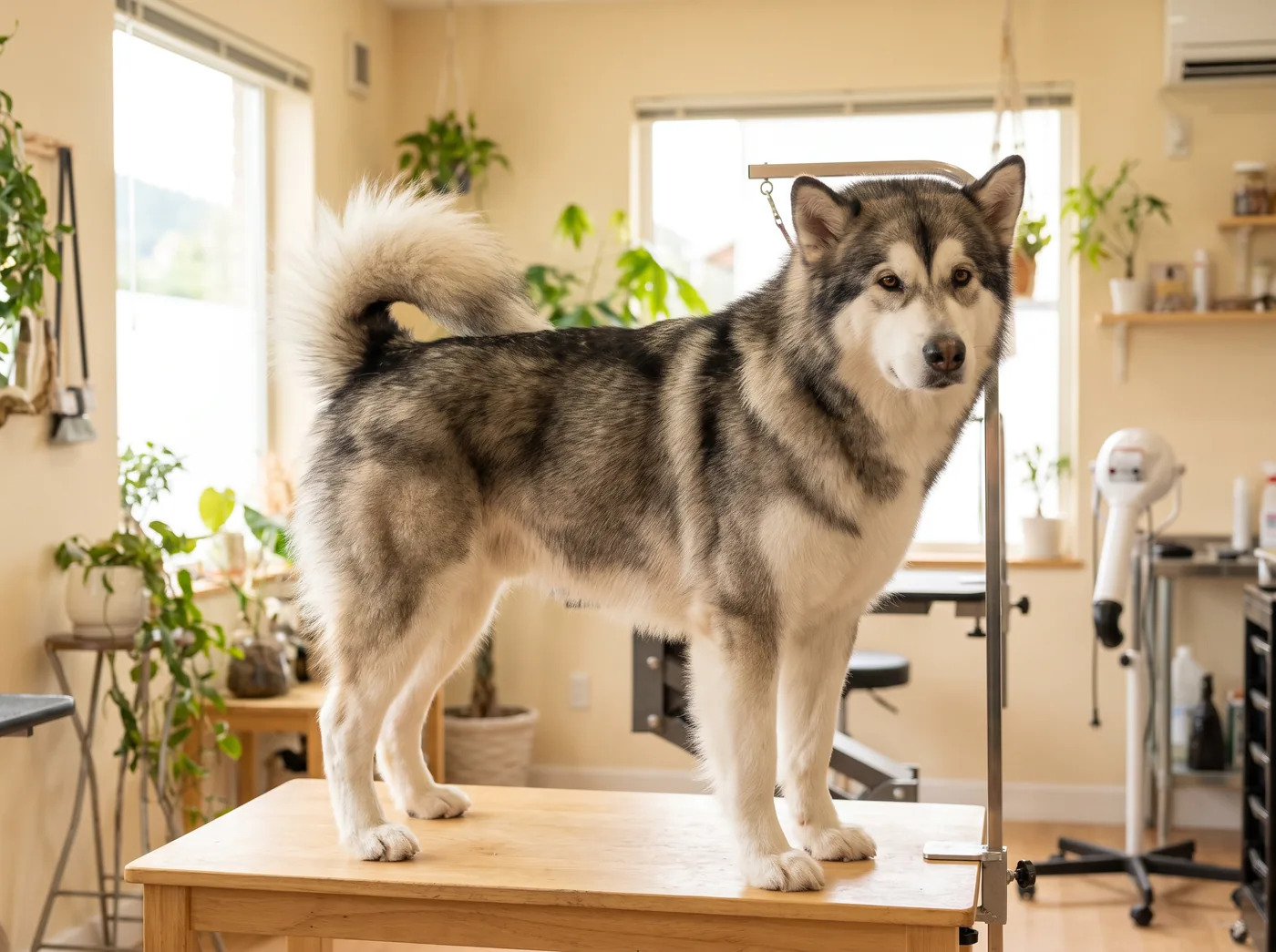
About the Alaskan Malamute
The Alaskan Malamute carries the heaviest of all the spitz coats: a coarse, thick, standing outer coat over a dense woolly undercoat that can be two inches deep, on a dog built to haul freight rather than to run fast.
It is constantly confused with the Siberian Husky, and for grooming the distinction genuinely matters. A Husky was bred for speed and endurance and carries a comparatively finer coat on a lighter frame. A Malamute was bred to move heavy loads over distance, is a substantially bigger dog, and carries more coat and considerably more undercoat.
So everything the Husky page says applies here with more of it. The twice yearly coat blow is on a scale that has to be experienced, the appointment is a premium three hour job, and shaving one causes the same permanent damage it does to every double coated breed.
The Alaskan Malamute has a double coat that regulates its own temperature. Shaving it does not keep the animal cooler, removes the protection against sun and insects, and the top coat often grows back patchy or never returns correctly. A thorough deshed takes out the undercoat and does the job the owner was actually asking for.
Malamute or Husky, and why it changes the appointment
People use the names interchangeably and salons book them the same, which is a mistake in one direction.
A Siberian Husky is a mid sized dog, typically 35 to 60 pounds, bred to run light loads at speed over long distances. The coat is dense but relatively fine and medium in length.
An Alaskan Malamute is 75 to 100 pounds and heavier boned, bred to haul serious weight. The outer coat is coarser and longer, especially over the shoulders and around the neck, and the undercoat is markedly deeper and more woolly.
Other giveaways: a Malamute has brown eyes and never blue, which is a reliable tell, and carries its tail as a plume over the back rather than in a Husky's straighter carriage.
Practically, that means more coat to get through, longer drying, more undercoat at every blow, and a bigger dog to hold still while doing it. A salon that has booked ninety minutes for a Husky and receives a Malamute is short by half.
Say which you have when booking.
The coat is also unevenly distributed, heaviest at the ruff around the neck and shoulders, on the trousers and the tail, and lighter over the flanks. Those heavy areas are where a Malamute mats and where a casual brush skims.
Blowing coat, which is the defining event
Twice a year, usually spring and autumn, the entire undercoat releases across two to four weeks. On a Malamute this is not a tidy seasonal shed, it is a structural event: the coat comes away in sheets that can be pulled off by hand, the dog looks visibly moth eaten while it happens, and the volume from one animal fills sacks.
An undercoat rake is the primary tool, worked in sections in the direction the coat lies, followed by a slicker to lift what the rake has loosened. Daily during a blow, and outdoors without exception.
A bath and a high velocity dry at the start of each blow is the most valuable appointment of the year. Warm water loosens the dead undercoat and the dryer drives it out, and one session removes more than a fortnight of brushing does.
Between blows, line brushing every two or three days keeps things in order, with the ruff and trousers checked every time.
Two tools to avoid. Anything with a cutting edge sold for deshedding takes outer coat along with undercoat and slowly damages the guard hairs. And a slicker used hard on the flanks reaches skin rather than coat.
The critical point is that dead undercoat left in place is what mats. It packs down against the skin, binds with the growing coat, and becomes a felted layer that traps moisture and produces hot spots underneath which are invisible until they are large. Almost every badly matted Malamute got there through a coat blow nobody kept up with.
Never shave a Malamute
The argument is identical to the Samoyed and the Husky, and Malamutes get shaved for the same reason: the shedding is genuinely exhausting and a clip looks like relief.
It is not, and it does not even work. The undercoat sheds in exactly the same quantity whether the outer coat has been cut off or not, so shaving does nothing about the hair in your house. It is simply shorter hair, which is harder to remove from fabric.
What it does do is remove the coarse outer layer that blocks sun and holds an insulating pocket of still air, while leaving the woolly undercoat that traps warmth. The dog is hotter, not cooler, and its skin sees direct sun for the first time.
The regrowth is the permanent part. Undercoat returns faster than guard hairs and comes to dominate, so the coat that grows back is frequently woolly, dull, patchy and far more prone to matting than the original, and on older dogs sections may never return.
Malamutes do struggle in real heat, being enormous and heavily coated. The answer is a thoroughly deshedded coat so air reaches the skin, plus shade, cool floors, water and exercise at the ends of the day.
The only legitimate exception is a coat so badly pelted that brushing it out would mean hours of dragging on skin, or a clip a veterinarian has asked for.
Trimming the feet, hocks and sanitary area is normal and is not the same thing.
The appointment, the feet and a dog with opinions
Three hours is normal and most of it is drying. Getting water and shampoo to the skin through that undercoat takes time, rinsing takes longer, and drying all the way down cannot be rushed. A Malamute that goes home damp underneath is a hot spot waiting to happen.
The order is: rake and line brush through dry, dealing with anything felted before water is involved, then bathe, then a high velocity dry with brushing throughout, then feet, hocks, nails, ears and sanitary area.
The feet deserve real attention. Malamutes have large, tough, well furred snowshoe feet, and the hair between the pads grows thickly, mats into hard pellets, and collects ice balls in winter and grit in summer. Keep it trimmed flush.
Nails are thick and grow fast on a heavy dog, and this is a breed where letting them go loads the joints of an animal already carrying a lot of weight.
Ears are small, thick and upright, which is the easy version: airflow is good and infections are uncommon.
And then temperament. Malamutes are friendly, independent, extremely strong and famously stubborn, and they were not bred to take direction the way a herding breed was. A Malamute that has decided it is finished is a hundred pounds of dog that simply stops cooperating, and force is not an option. Handle the feet from puppyhood, book short visits early, and work with a groomer who is patient.
Many are also poor with unfamiliar dogs, so ask about the salon floor.
What to tell your groomer
Say Malamute rather than Husky when you book, and say the weight. The appointment is meaningfully longer.
Ask whether they have a high velocity dryer and have booked three hours.
Ask for a deshedding treatment rather than a bath and brush, and book one at the start of each coat blow rather than partway through.
Say when the ruff and trousers were last brushed to the skin, since that is where the matting is.
Ask for the feet cleared and nothing else cut beyond hocks and the sanitary area, and decline any offer to shave the dog.
Say how the dog is with other dogs and with being restrained, because this is a very strong animal that cannot be pushed.
Keeping the coat between grooms
Rake the ruff and trousers
That is where the coat is deepest and where a casual brush never reaches. Daily and outdoors during a blow.
Every two or three days
Book a deshed at each coat blow
A bath and high velocity dry does in one session what a fortnight of brushing cannot.
Spring and autumn
Never shave the coat
It does not reduce shedding at all, and the regrowth is frequently permanently woolly, patchy and mat prone.
Always
Clear the snowshoe feet
Thick hair between the pads mats into hard pellets and collects ice balls in winter and grit in summer.
Every few weeks
Common Questions About the Alaskan Malamute
What is the difference between an Alaskan Malamute and a Siberian Husky?
Size and coat, and both matter for grooming. A Husky is 35 to 60 pounds, bred to run light loads fast, with a dense but relatively fine coat. A Malamute is 75 to 100 pounds and heavier boned, bred to haul freight, with a coarser longer outer coat and a markedly deeper undercoat. A Malamute always has brown eyes, never blue, which is a reliable tell. A salon that booked for a Husky and receives a Malamute is short by about half the time.
How much do Alaskan Malamutes shed?
Moderately year round, and then enormously twice a year. The whole undercoat releases over two to four weeks in spring and autumn, coming away in sheets that can be pulled off by hand, and on a dog this size it fills sacks. An undercoat rake daily during the blow, done outdoors, plus a bath and high velocity dry at the start of each one, which removes more than a fortnight of brushing. Between blows, every two or three days.
Can I shave my Malamute to reduce the shedding?
No, and it does not even achieve that. The undercoat sheds in exactly the same quantity whether the outer coat is cut off or not, so you get the same hair, just shorter and harder to lift off fabric. Meanwhile shaving removes the coarse outer layer that blocks sun and holds insulating air while leaving the undercoat that traps heat, so the dog gets hotter and burns, and the regrowth is frequently permanently woolly and patchy. A thorough deshed is what actually reduces the hair.
Similar breeds
Same coat, same schedule, or the breeds this one is crossed from.

Siberian Husky
The coat that shave downs ruin, and the one that needs almost nothing else
Siberian Husky
Samoyed
The heaviest coat in the working group, and the one most often ruined by a summer shave
Samoyed
Akita
A heavy spitz coat, twice yearly devastation, and a dog that will not be talked into anything
AkitaFind a groomer who knows this coat
Search 37,863 groomers by town, or keep reading the breed guide.
Find a Local Groomer View All Breeds