Samoyed Grooming
The heaviest coat in the working group, and the one most often ruined by a summer shave
About the Samoyed
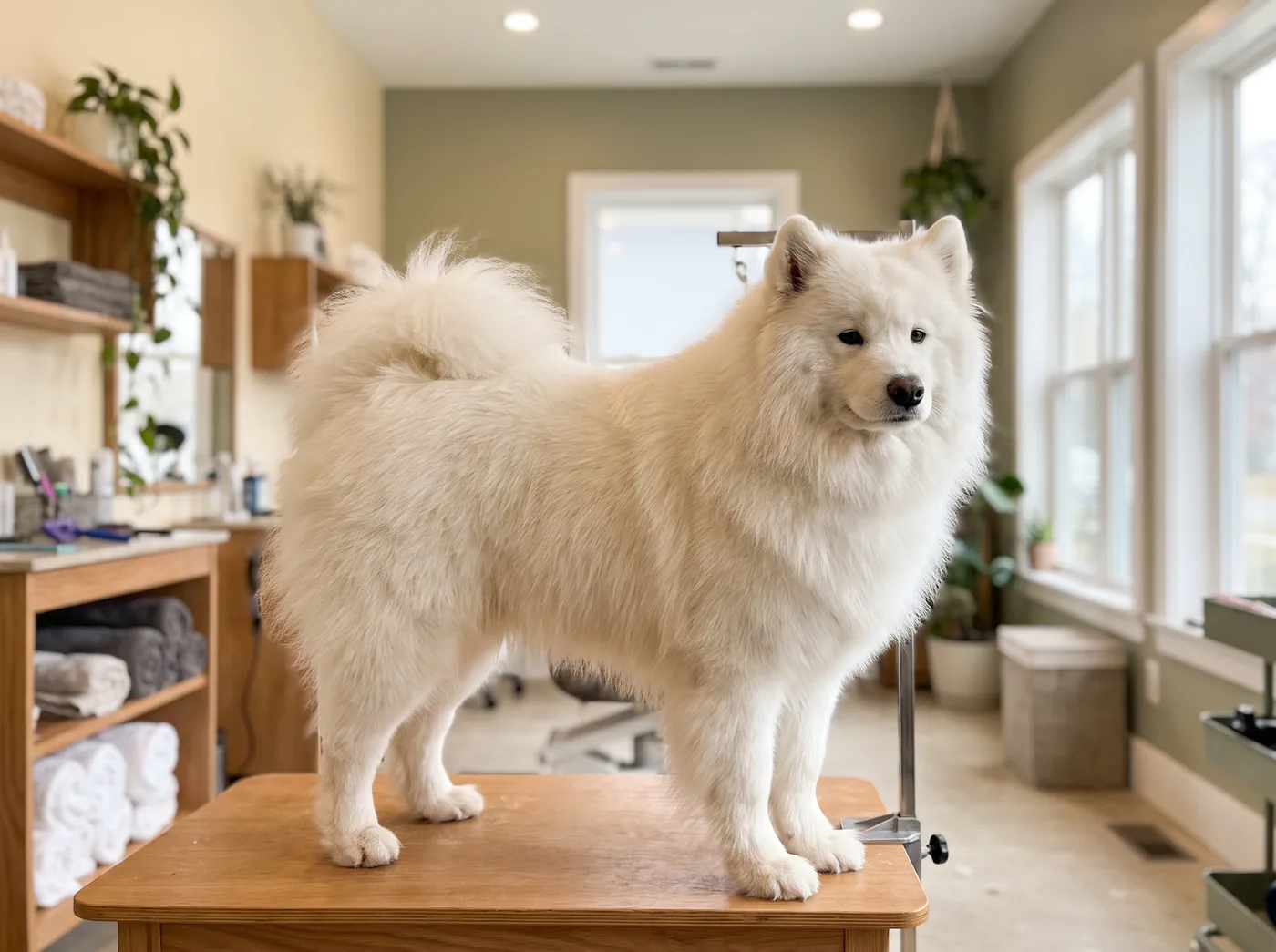
The Samoyed carries about the most extreme double coat there is: a dense, woolly, insulating undercoat with a long, harsh, straight outer coat standing away from it, giving the breed its characteristic silhouette. It was developed to work and to sleep outdoors in Siberian winters, and it does that job extraordinarily well.
It also does the opposite job. The same standing coat traps a layer of air that keeps heat out as well as in, which is why an intact Samoyed copes with summer far better than people expect and why shaving one is such a serious mistake.
The commitment is real and should not be understated. Line brushing to the skin every two or three days, a professional appointment every six to eight weeks, and twice a year a coat blow that produces an amount of loose undercoat that has to be seen to be believed. This is not a beginner coat, and the reason so many end up in a salon pelted is that the breed is bought on its appearance rather than on that paragraph.
The Samoyed has a double coat that regulates its own temperature. Shaving it does not keep the animal cooler, removes the protection against sun and insects, and the top coat often grows back patchy or never returns correctly. A thorough deshed takes out the undercoat and does the job the owner was actually asking for.
How the coat works, and why it stays white
A Samoyed coat has two clearly separate layers doing two different jobs.
The undercoat is short, dense and woolly, and it is the insulation. It traps air against the skin and it is what keeps the dog warm at temperatures that would kill most breeds.
The outer coat is long, straight and harsh, and it stands away from the body rather than lying flat. It sheds water and snow, blocks sun, and holds the insulating layer of air in place.
The harshness of that outer coat is also why Samoyeds stay clean. Dirt does not stick to it well, and mud that dries brushes straight out. Owners are routinely surprised that a white dog that has just crossed a muddy field is white again by evening with no intervention. That is worth knowing before anyone reaches for a whitening shampoo: a Samoyed rarely needs bathing on cleanliness grounds, and over bathing softens the coat and strips the oils that make it repel dirt in the first place.
Where discoloration does appear is around the mouth, the feet and the sanitary area, from saliva and licking rather than from dirt. That is the same porphyrin staining that marks a white Maltese, and the same rule applies: prevention by keeping those areas clean and dry, because it does not wash out.
Blowing coat, twice a year
Every double coated breed sheds its undercoat seasonally. A Samoyed does it on a scale that has to be experienced.
Twice a year, usually spring and autumn, the entire undercoat releases over two to four weeks. It comes out in sheets and clumps rather than as loose hair, the dog looks visibly moth eaten while it happens, and the volume removed from one dog will fill sacks. Spayed and neutered dogs often blow coat less predictably and can look permanently mid-shed.
The way through it is a proper bath and a high velocity dry. Warm water loosens the dead undercoat and a force dryer blasts it out in a way no brush matches, and a single appointment during a coat blow removes more undercoat than weeks of brushing. Most Samoyed owners book one at the start of each blow and it is money well spent.
Between appointments, line brushing daily during a blow rather than every few days, and do it outside.
The tools that matter are an undercoat rake and a slicker, used in sections. What does not belong anywhere near this coat is a stripping or thinning blade of the kind sold for deshedding, which cuts the outer coat while removing undercoat and does slow permanent damage to the guard hairs.
The critical part is that dead undercoat left in place is what mats. It packs down against the skin, binds with the live coat, and becomes a solid felted layer that traps moisture and causes hot spots underneath. That is how a Samoyed ends up shaved as a welfare measure, and it is entirely preventable.
Never shave a Samoyed
This is the most important paragraph on the page and the advice most often ignored.
Shaving a double coat removes the long outer guard hairs, which are the layer that blocks sun and holds the insulating air in place, while leaving the dense woolly undercoat that actually holds heat. The dog is left with the insulation and without the shade. It gets hotter, not cooler, and it is now exposed to direct sun on skin that has never seen any, which is a real sunburn and skin cancer risk on a white dog with pale skin.
The damage is also frequently permanent. Guard hairs and undercoat regrow at different rates, and cutting through both often results in the undercoat coming back faster and dominating. The coat that returns is woolly, dull, patchy, mats far more readily than the original, and in some dogs the guard hairs never fully return. That outcome is common enough to have a name in the grooming trade, and no reputable groomer will shave a Samoyed on request.
The correct answer to a hot dog is the correct coat, properly maintained. An intact, well brushed, deshedded Samoyed coat is a genuinely effective heat barrier. Add shade, cool water, walks at the ends of the day and air conditioning, and the dog will be more comfortable than a shaved one.
The single legitimate exception is a welfare emergency, where a coat is so badly pelted that working through it would mean hours of dragging on skin. In that case clipping underneath is the kind option, and the lesson is about the months that led to it rather than the clip itself.
What a full groom involves
Three hours is normal and more is common, which is why this is a premium appointment and why salons that take Samoyeds tend to limit how many they book in a day.
It starts with a line brush through the whole dog dry, checking for mats before any water is involved. Anything felted is dealt with now, because a bath will tighten it.
Then a thorough bath, which on a coat this dense is largely a question of getting water and shampoo all the way to the skin. Rinsing is the step that takes the longest and the one that matters most: residue left in an undercoat irritates the skin and dulls the coat.
Then the high velocity dry, which is the heart of the appointment. It drives water out and blows dead undercoat out with it, and it is the single most effective thing done to this coat all year.
Then a full line brush again while drying, working in sections from the skin outward, plus the feet cleared, nails, ears, and the sanitary area trimmed.
What is not involved is a haircut. Beyond tidying the feet, the hocks and the sanitary area, a Samoyed is not cut at all.
What to tell your groomer
Ask directly whether they are set up for a heavy double coat, meaning a high velocity dryer and enough time booked. A Samoyed dried badly goes home damp at the skin, and damp undercoat is where hot spots start.
Ask for a deshedding treatment rather than a plain bath and brush, especially during a coat blow.
Say honestly when the dog was last brushed to the skin and where you have found mats.
Ask for the feet, hocks and sanitary area tidied and nothing else cut.
Book at the start of each coat blow rather than in the middle of it.
And if anybody offers to shave the dog for summer, find another salon. It is the clearest signal available that they do not understand the coat.
Keeping the coat between grooms
Line brush to the skin
In sections, with a rake and a slicker. Daily during a coat blow. The surface tells you nothing about what is underneath.
Every two or three days
Book a deshed at each coat blow
A bath and a high velocity dry removes more dead undercoat in one appointment than weeks of brushing does.
Spring and autumn
Never shave the coat
It removes the sun barrier and leaves the insulation. The regrowth is often permanently woolly, patchy and mat prone.
Always
Dry all the way to the skin
A coat this dense holds water for hours. Damp undercoat against skin is where hot spots begin.
Any bath
Common Questions About the Samoyed
Should I shave my Samoyed in summer?
No, and this is the breed where it does the most harm. Shaving removes the long outer coat that blocks sun and holds an insulating layer of air in place, while leaving the dense undercoat that actually traps heat, so the dog gets hotter rather than cooler and is exposed to sunburn on pale skin. The regrowth is frequently permanently damaged: woolly, patchy, and matting far more readily than before, with guard hairs that sometimes never fully return. A well brushed, deshedded coat is genuinely effective cooling. Use shade, water and timing instead.
How much does a Samoyed shed?
Enormously, and in two modes. Year round there is a steady moderate drop. Then twice a year the entire undercoat releases over two to four weeks in sheets and clumps, filling sacks from a single dog. That is called blowing coat and it is unavoidable. The way through it is a bath and a high velocity dry at the start of each blow, which removes more undercoat in one appointment than weeks of brushing, plus daily line brushing while it lasts. Dead undercoat left in place is what mats.
How do I keep my Samoyed white?
Mostly by leaving it alone. The harsh outer coat repels dirt, and mud that dries brushes straight out, so a Samoyed that crossed a muddy field is usually white again by evening. Over bathing softens the coat and strips the oils that make it shed dirt in the first place, so bathe every couple of months rather than weekly. The discoloration that does appear, around the mouth, feet and rear, is saliva staining rather than dirt: it does not wash out, and the answer is keeping those areas clean and dry so it does not form.
Similar breeds
Same coat, same schedule, or the breeds this one is crossed from.

Siberian Husky
The coat that shave downs ruin, and the one that needs almost nothing else
Siberian Husky
Great Pyrenees
A white weatherproof coat built to live outdoors, on a dog that must not be clipped
Great Pyrenees
Norwegian Forest Cat
A weatherproof double coat on a cat, with a spring blow that startles owners
Norwegian Forest CatFind a groomer who knows this coat
Search 37,863 groomers by town, or keep reading the breed guide.
Find a Local Groomer View All Breeds