American Shorthair Grooming
The working cat that became a breed, and one of the least demanding coats there is
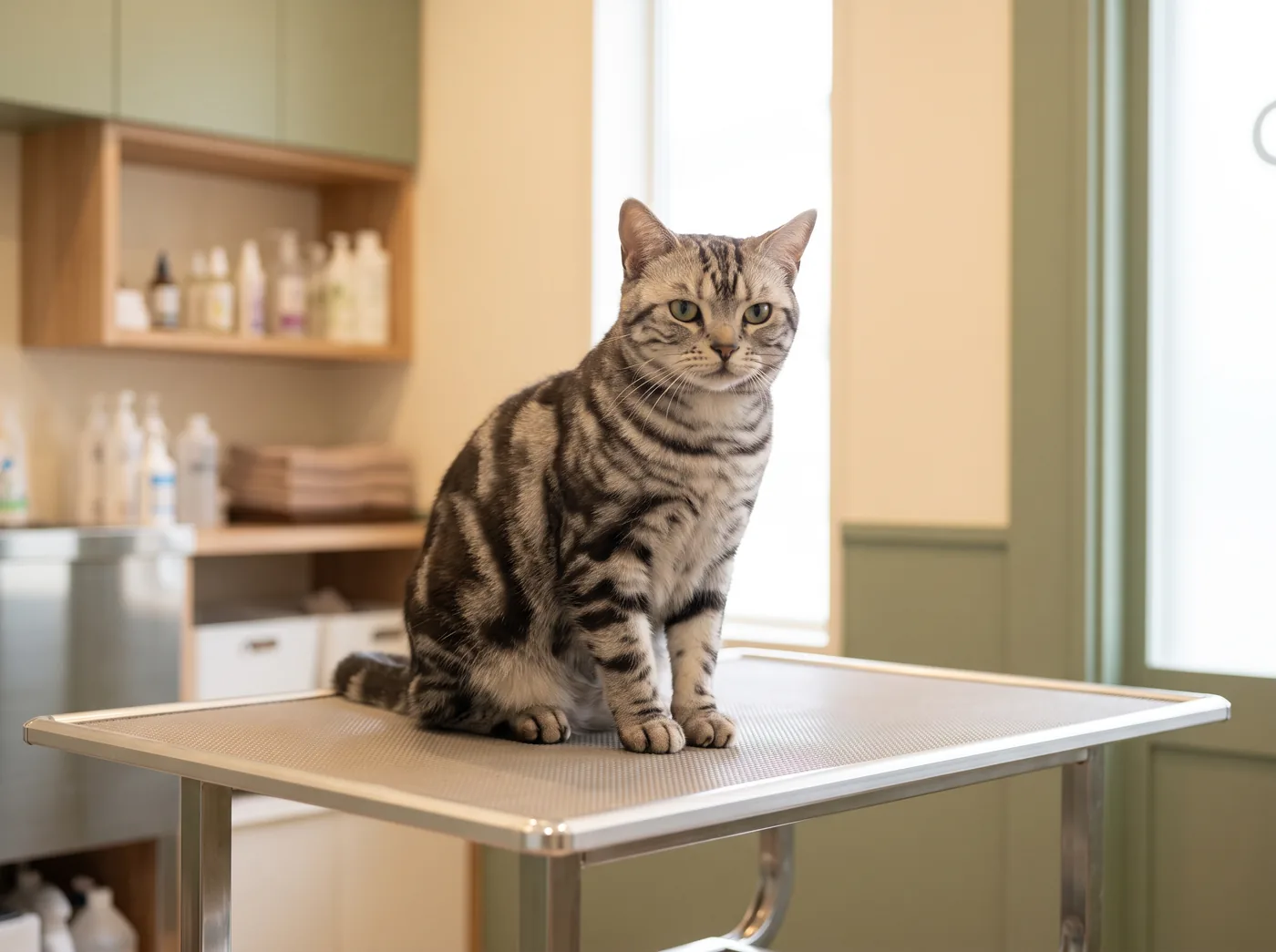
About the American Shorthair
The American Shorthair descends from the working cats that came over on ships with European settlers and earned their keep controlling vermin in barns and warehouses. Everything about the breed reflects that: a solid muscular build, an even temperament, a long healthy life, and a coat designed to need nothing from anybody.
That coat is short, thick and noticeably hard in texture, denser than it looks and quite unlike the fine close coat of a Siamese or the plush standing coat of a British Shorthair. It was built to keep a working cat warm and dry outdoors, and it sheds water, resists dirt and does not tangle.
A comb once a week covers it. The two things genuinely worth attention on this breed have nothing to do with the coat: what it actually is, since the name causes endless confusion, and weight, which is where most American Shorthairs eventually run into trouble.
This coat can be clipped, but the texture or the color may change and it will not always come back the same. Talk it through with your groomer before the first one.
Not the same thing as a domestic shorthair
This confuses almost everybody and it is worth settling, because it changes what advice applies.
A domestic shorthair is not a breed. It is what a shelter calls any short coated cat of unknown ancestry, in the same way a mixed breed dog is called a crossbreed. There is no standard, no predictable type and no registry.
An American Shorthair is a recognized pedigree breed with a written standard, bred deliberately for a specific build, head shape, coat texture and temperament. The silver classic tabby, with dense black swirls on a pale silver ground, is its signature.
They look alike because the breed was developed from exactly the same working cat population, so a well bred American Shorthair and a good looking moggie can be difficult to tell apart at a glance.
For grooming it hardly matters, which is the useful part: everything on this page applies just as well to an ordinary short coated cat, and most of the cats a groomer sees are the latter. The coat is easy either way.
Where it does matter is health. Pedigree American Shorthairs carry a known predisposition to hypertrophic cardiomyopathy, a heart muscle disease, which reputable breeders screen for. That is a veterinary conversation rather than a grooming one, but a cat with a heart condition should not be stressed by a long or forceful appointment.
The routine, which is five minutes
A fine toothed comb through the coat once a week, reaching the skin rather than skimming the surface, then a rubber curry or grooming glove worked against the lie to lift loose hair. Five minutes, and most American Shorthairs enjoy it.
The coat is thick enough to shed noticeably, and it thickens further in winter and releases in spring, so there is a genuine seasonal pattern even on indoor cats. During the spring shed, twice a week rather than once.
Hairballs follow from that. Hair a cat swallows while grooming itself has to come back up or pass through, and a thick coated cat in spring swallows a lot. The single most effective thing is combing, because hair removed by a comb is never swallowed at all.
Bathing is essentially never needed. The coat is weather resistant by design and a healthy cat keeps itself immaculate.
Nails every three to four weeks, ears checked weekly, and teeth, which on a cat that may live twenty years is the item with the most impact and the least attention.
Matting is rare and localized when it happens, usually behind the ears or in the armpits, and a weekly comb prevents essentially all of it.
Do not clip this coat. There is nothing to gain, it provides real insulation, and cat skin is thin enough that clipping is a professional job even when it is warranted.
Weight, which is where the coat problems start
American Shorthairs are placid, food motivated, and built solidly enough that early weight gain hides well under a thick coat. They are one of the breeds most prone to obesity, and it matters here because in cats, weight and coat condition are directly connected.
A cat grooms itself by twisting to reach its own back, sides and rear. A heavy cat physically cannot do that, and the first visible sign is almost always the coat: dandruff along the spine and at the base of the tail, a greasy or clumped look over the lower back, and eventually matting in exactly the places the cat can no longer reach.
So a coat that suddenly needs more attention on a middle aged cat is usually not a coat problem. It is a mobility problem, and the answer is weight, arthritis treatment or a dental check rather than a different brush.
Feel the ribs rather than judging by eye, since a thick coat disguises a great deal. You should be able to feel them easily under a thin layer, and see a waist from above.
Practically, the weekly comb is where you notice this first, which makes it the most useful routine health check most owners will ever do. Run your hands over the whole cat, feel for lumps, check the belly and armpits, and notice whether the lower back looks different from last month.
An older cat that has stopped grooming its rear needs help with it, and keeping the sanitary area trimmed short is a reasonable and kind thing to ask a groomer for.
A long lived cat, and what changes with age
Fifteen to twenty years is normal for this breed, which means most owners will care for a genuinely old cat at some point, and old cats groom themselves badly.
Arthritis is the usual culprit and it is enormously under-diagnosed in cats, because they do not limp obviously the way dogs do. What they do instead is stop jumping, stop using high places, sleep more, and stop twisting to groom. A cat that has become scruffy over its back end is very often a cat in pain.
Dental disease does the same thing by a different route: grooming is done with the mouth, and a cat with a sore mouth stops doing it.
Both are treatable, and both show up in the coat first.
Nails matter more in an older cat too. They grow thicker, the cat uses scratching posts less, and overgrown claws can curl into the pads, which is painful and surprisingly common. Check them every few weeks on any cat over ten.
Practical adjustments: a comb rather than a brush, since older skin is thinner and more sensitive; shorter more frequent sessions; a warm room; and keeping the rear and the pads trimmed.
And take a coat change seriously at any age. On a cat this easy to look after, a coat that starts needing work is telling you something has changed.
What to tell your groomer
Most owners never need one, and with a coat this easy that is the correct outcome.
If you do book, ask whether they take cats and whether cats are kept away from dogs.
Say the coat is short but thick, and ask for a comb and a deshedding glove rather than a slicker used with pressure.
Ask for the nails, and for the sanitary area trimmed if the cat is older or heavy.
Mention any weight change, any stiffness, or anything you have noticed about the cat grooming itself less, because that is what a coat change on this breed usually means.
And mention any diagnosed heart condition, since a long or stressful appointment is not appropriate for a cat with one.
Keeping the coat between grooms
Comb to the skin, then glove
Five minutes. Twice a week during the spring shed, which also cuts hairballs, since combed hair is never swallowed.
Weekly
Feel the ribs, do not judge by eye
A thick coat hides a lot of weight, and a heavy cat cannot twist to groom its own back end.
Monthly
Treat a coat change as a signal
On a coat this easy, one that suddenly needs work means the cat has stopped grooming. Usually weight, arthritis or teeth.
Weekly
Clip the nails
Every few weeks, and check them closely on any cat over ten, when claws thicken and can curl into the pads.
Every three to four weeks
Common Questions About the American Shorthair
Is an American Shorthair the same as a domestic shorthair?
No. A domestic shorthair is not a breed at all, it is what shelters call any short coated cat of unknown ancestry. An American Shorthair is a recognized pedigree breed with a written standard covering build, head shape, coat texture and temperament, and the silver classic tabby is its signature. They look alike because the breed was developed from the same working cat population. For grooming it makes no difference, which is handy, since everything here applies to an ordinary short coated cat too.
Do American Shorthairs need grooming?
Very little. A fine comb to the skin plus a rubber glove once a week takes about five minutes, twice a week during the spring shed. The coat is short, thick and hard textured, built to shed water and resist dirt, so it does not tangle and bathing is essentially never needed. Nails every three to four weeks and regular tooth brushing matter far more than the coat does, especially on a cat that may live twenty years.
Why has my American Shorthair coat gone greasy and scruffy?
Because the cat has probably stopped grooming itself properly, and on this breed that usually means weight or age. A cat grooms by twisting to reach its own back and rear, and a heavy cat physically cannot. Dandruff along the spine, a clumped look over the lower back and matting at the tail base are the classic signs. In an older cat the same picture usually means arthritis or a sore mouth, both badly under-diagnosed. It is a health signal rather than a coat problem.
Similar breeds
Same coat, same schedule, or the breeds this one is crossed from.

British Shorthair
A short coat that is denser than most long ones, and sheds accordingly
British Shorthair
Russian Blue
A short coat dense enough to stand away from the body, and the silver tips that do the work
Russian BlueFind a groomer who knows this coat
Search 37,863 groomers by town, or keep reading the breed guide.
Find a Local Groomer View All Breeds