Anatolian Shepherd Grooming
A working guardian coat that needs raking twice a year and almost nothing between
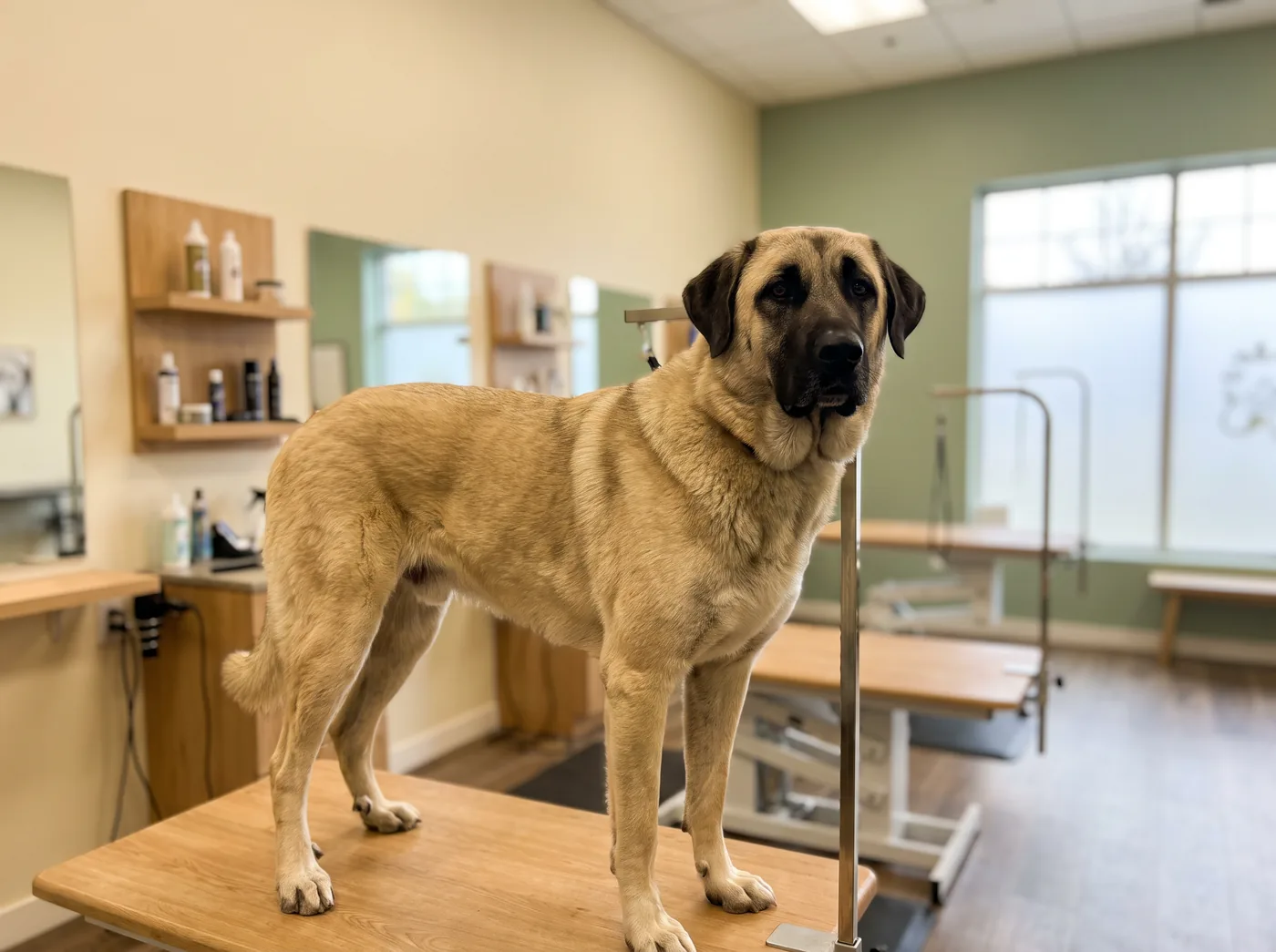
About the Anatolian Shepherd
A working livestock guardian from the Turkish plateau, and one of the lower maintenance giant coats there is.
The coat is short to medium, thick and coarse, over a dense undercoat, with a heavier ruff at the neck and some feathering on the tail and the backs of the legs. There is a longer coated variety, and both occur.
It is a functional coat rather than a decorative one: weather resistant, dirt shedding, and requiring almost nothing for most of the year. A weekly brush is enough. Twice a year the undercoat blows and that is the whole grooming commitment.
What takes more thought is the dog. Anatolians were bred to live with a flock and make independent decisions about threats, and a hundred and fifty pound guardian that has decided it does not want to be handled is not going to be talked round.
The Anatolian Shepherd has a double coat that regulates its own temperature. Shaving it does not keep the animal cooler, removes the protection against sun and insects, and the top coat often grows back patchy or never returns correctly. A thorough deshed takes out the undercoat and does the job the owner was actually asking for.
The coat, and the two blows
For most of the year an Anatolian needs a weekly brush with a slicker and an undercoat rake through the ruff, and nothing else. The coat is coarse and weather resistant, mud dries and falls out of it, and matting is genuinely rare.
Twice a year the undercoat comes out, over two to four weeks, and the volume from a dog this size is considerable.
Rake daily during a blow, working in sections with the lie of the coat, and concentrate on the ruff, the britches and the base of the tail where the undercoat is densest.
A bath and a high velocity blow out at the start of each blow makes a real difference and is one of the few times a professional is worth booking for this breed.
Bathe rarely otherwise, every twelve weeks or so. This is a coat that relies on its own oils for weather resistance and over-bathing strips them.
The longer coated variety needs a little more attention behind the ears and in the britches, but it is still a comparatively easy coat.
Do not clip. A working double coat that is clipped loses its weather protection, may not regrow correctly, and leaves a dog bred for sun and cold with neither.
Handling a livestock guardian
This is the part that matters more than the coat, and it is the same conversation as the Tibetan Mastiff and the Komondor.
Anatolians are independent, territorial and suspicious of strangers by design. That is the job they were bred for over thousands of years, and it is not a training failure. Many are calm and tolerant with their own people and quite unwilling to accept handling from anyone else.
So the whole approach has to be built early. Handle a puppy constantly and matter of factly: standing, feet held, ears looked at, brush and clippers running nearby. What is routine at forty pounds is negotiable at a hundred and forty.
Choose a groomer who will meet the dog before the first appointment, ask for a quiet slot, and be completely honest about temperament when booking rather than hoping it goes well. A groomer who is surprised may refuse the dog afterwards, and options for a giant guardian are limited.
Many owners do everything at home and use a professional only for the seasonal blow out, which is a perfectly sensible pattern.
Nails are a two person job at this size and are far easier if started in puppyhood.
A working dog outdoors, and what to check
Anatolians are usually outdoor working dogs or at least dogs that spend a great deal of time outside, and that changes what the weekly session is for.
Ticks and parasites are the first thing. A thick coat over a large body hides them, so a hands-on check over the whole dog weekly matters more than the brushing does. Pay attention to the ears, the neck, the armpits and between the toes.
Check the pads and between the toes for cuts, thorns and cracks, since a guardian covers a lot of rough ground.
Check the ears, which are drop ears, though better ventilated than a spaniel's. Weekly lift, look and smell.
Feel over the whole dog for lumps, and check the elbows and hips for calluses and sores from lying on hard ground.
Anatolians are also sensitive to some anesthetics, as several large sighthound-influenced guardian breeds are, which is a veterinary conversation to have before any procedure rather than during one.
Weight is worth watching, because the breed should be lean and powerful rather than heavy, and a heavy guardian on giant joints ages badly.
Heat, cold and the coat doing its job
The coat is built for a plateau climate with hot summers and cold winters, and it handles both, which is precisely why clipping it is a mistake.
In heat, what helps is getting the dead undercoat out, plus shade, water and cool ground. A properly raked coat is dramatically cooler than a neglected one, and the outer coat is what keeps sun off the skin.
In cold, the double coat is entirely sufficient and an Anatolian will often prefer to be outside in weather that seems unreasonable.
The one caution is a wet dog in cold weather, since a soaked undercoat on any dog loses its insulating value until it dries.
Dry the dog properly after a bath, especially the ruff and the chest where the coat is densest, because a damp dense coat grows yeast and hot spots.
A dog living outdoors needs its shelter checked as much as its coat: dry bedding matters more than any brushing schedule.
What to tell your groomer
Be honest about temperament when booking, and ask for a meeting before the first appointment.
Ask for a deshedding groom: bath, high velocity blow out and a full undercoat rake, especially in the ruff. No clipping.
Say the coat is never to be shaved, including for heat.
Ask for a quiet slot with no other dogs in the room, and expect to stay if that helps.
Ask them to check ears, pads, between the toes and for ticks, since this is often an outdoor dog.
Expect nails to need two people, and book the seasonal blow outs rather than a regular cycle.
Keeping the coat between grooms
Brush weekly, rake the ruff
A coarse working coat that rarely mats. The ruff holds the most undercoat.
Weekly
Book the two blow outs
Twice a year, two to four weeks each. The whole grooming commitment of the breed.
Twice a year
Check for ticks and pad damage
An outdoor working dog under a thick coat. This matters more than the brushing.
Weekly
Handle from puppyhood
Routine at forty pounds is negotiable at a hundred and forty. Start early.
Ongoing
Common Questions About the Anatolian Shepherd
How much grooming does an Anatolian Shepherd need?
Very little for most of the year. A weekly brush with a slicker and a rake through the ruff is enough, since the coat is coarse and weather resistant, mud dries and falls out of it, and matting is rare. Twice a year the undercoat blows over two to four weeks and that is the real commitment: rake daily and book a bath with a high velocity blow out at the start. Bathe otherwise only every twelve weeks or so, because over-bathing strips the oils the coat relies on.
Why will some groomers not take an Anatolian Shepherd?
Size combined with temperament. This is a livestock guardian bred over thousands of years to be independent, territorial and suspicious of strangers, and many are unwilling to accept handling from anyone outside their family. That is the job rather than a training failure, and a hundred and forty pound dog that has decided the appointment is over cannot be persuaded. Handle a puppy constantly so it is routine, choose a groomer who will meet the dog first, and be honest when booking.
Can I shave an Anatolian Shepherd in hot weather?
No. The coat is built for a climate with hot summers and cold winters and it works in both directions: the outer coat keeps sun and heat off the skin as well as keeping warmth in. Clipping removes that protection, exposes skin that has never seen sun, and on a working double coat often grows back patchy or soft. What genuinely cools the dog is raking the dead undercoat out, plus shade, water and cool ground to lie on.
Similar breeds
Same coat, same schedule, or the breeds this one is crossed from.

Great Pyrenees
A white weatherproof coat built to live outdoors, on a dog that must not be clipped
Great Pyrenees
Tibetan Mastiff
An enormous double coat that blows once a year and sheds very little in between
Tibetan Mastiff
Find a groomer who knows this coat
Search 37,863 groomers by town, or keep reading the breed guide.
Find a Local Groomer View All Breeds