Bearded Collie Grooming
A long flat coat over a soft undercoat, and a coat change at a year that undoes owners
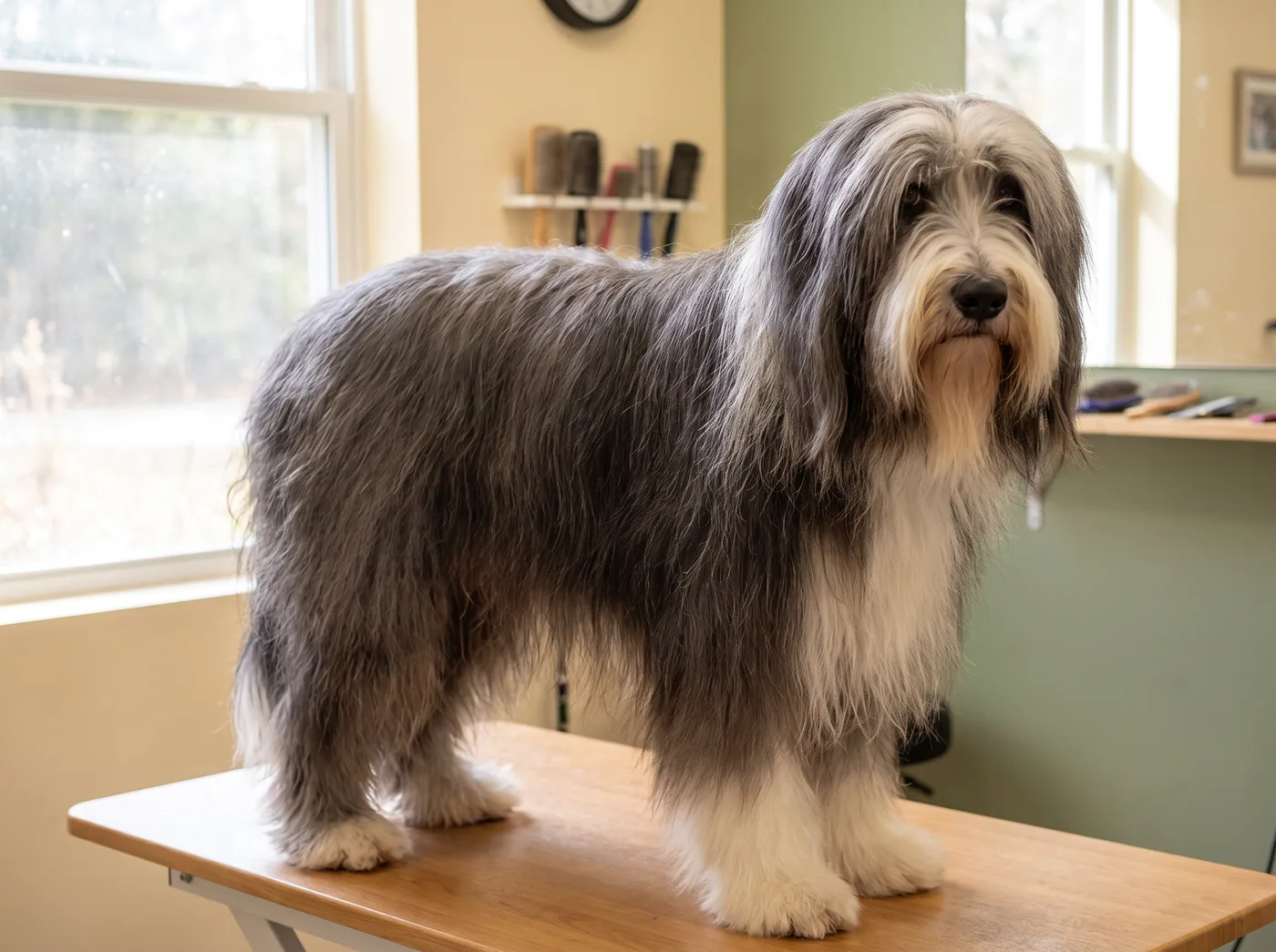
About the Bearded Collie
A Bearded Collie carries a long, flat, harsh outer coat that falls straight down from a natural parting along the back, over a soft close undercoat. There is no curl and no wave to speak of, and the beard under the chin gives the breed its name.
It is a working farm coat rather than a show construction, and it is a genuine commitment. The combination of a long outer coat and a soft undercoat is the one that felts, because the undercoat sheds into the outer coat and has nowhere to fall.
Two things catch owners out. The first is that a Beardie can look perfectly brushed and be solid at the skin. The second is the coat change at around a year old, which is the single most common reason a Beardie ends up shaved.
This coat can be clipped, but the texture or the color may change and it will not always come back the same. Talk it through with your groomer before the first one.
Line brushing, and why anything else fails
The only method that works on this coat is line brushing, and it is worth learning properly because the alternative is a shave down.
Lay the dog on its side. Part the coat in a horizontal line low down near the belly, brush the hair below that parting downward with a slicker or a long pinned brush, working to the skin. Move the parting up an inch and repeat. Work up the body, then the other side, then the legs, chest and neck.
Then prove it with a metal comb. If the comb will not travel from skin to tip in a section, that section is not brushed however good the surface looks.
Every two or three days, and expect forty five minutes to an hour done properly.
Sweeping a brush over the top of a Beardie is close to useless. The outer coat parts and lies back down looking immaculate while the undercoat felts into a sheet underneath, and owners genuinely do not know until a groomer shows them.
The places that go first: behind and under the ears, the armpits, the chest between the front legs, the britches at the back of the hind legs, around the tail and under a collar or harness.
The coat change, which is the reason most Beardies get shaved
Somewhere between about nine and eighteen months a Bearded Collie changes from puppy coat to adult coat, and it is brutal.
The soft puppy coat is shed out while the harsh adult coat grows in, and because the outer coat traps it, the dead puppy coat stays in the dog and felts fast. Owners who have brushed comfortably for a year suddenly find that the same routine no longer keeps up, and mats appear between one session and the next.
Through those months, brush daily rather than every two or three days, and expect it to take longer. Many owners move to a four week grooming interval for that period rather than eight, which is money well spent.
It is also the point at which a great many Beardies are clipped down, often as an emergency rather than a decision.
If you want to keep a long coat, the coat change is the part you have to get through deliberately. If you do not, this is the natural and honest moment to choose a shorter trim and keep it.
The colors change too, and separately. Beardies are born dark, often slate, brown or black, lighten dramatically as puppies, and then darken again toward maturity. A puppy that looks like it is turning gray is doing exactly what the breed does.
Long, shorter or clipped
A full length Beardie coat is a show commitment: an hour of line brushing every couple of days and a groom every eight weeks, with no room to let it slip.
A shorter trim, taking the coat down to two or three inches while leaving the head and beard, is what most companion Beardies wear and is entirely reasonable. It cuts the brushing to something a working owner can sustain.
Clipping does change the coat. With a soft undercoat present, a clipped Beardie often comes back softer and denser, and a soft coat mats more readily than the harsh one it replaced. That is a real cost, and it is still much better than a pelted dog.
Whatever the length, keep the pads cleared, the sanitary area short and the hair around the eyes trimmed enough that the dog can see and that hair is not resting on the eye surface.
Beardies are bouncy, outdoor, mud loving dogs by temperament, and a coat that is put away wet and dirty mats within a day. Drying the dog after wet walks is not optional on a long coat.
Comb out completely before any bath, always. Water tightens felt, so a matted Beardie that is bathed can no longer be saved with a brush.
The beard, the ears and the shedding
The beard is the same job it is on every bearded breed. It goes into the water and the food, it holds saliva, and it needs combing daily, wiping and drying after meals, and washing far more often than the dog. A shallow wide bowl helps.
Ears are drop ears under a heavy coat, so lift weekly, look and smell, and keep the hair around the opening trimmed so air reaches the canal.
Shedding is moderate rather than heavy, which surprises people given the volume of coat, and it is exactly why matting is the problem instead: what comes out stays in.
There is a heavier seasonal shed twice a year, and daily brushing through those weeks is what keeps it manageable.
Bathe every eight weeks or so, dry with a dryer while brushing, and make sure the dog is dry at the skin. A dense damp undercoat grows yeast and hot spots.
Expect a full groom to take two hours and to be priced accordingly, more if there is dematting to do.
What to tell your groomer
Say whether you want the coat long or in a shorter trim, and give a length in numbers.
Ask for line brushing with a comb check to the skin, not a surface brush.
Say the dog must be combed out before the bath, never bathed while matted.
Say if the dog is between nine and eighteen months, because the coat change needs a longer appointment and a shorter interval.
Ask for the beard washed and dried, the ears checked, the pads cleared and the eyes kept clear.
Book the next appointment before you leave, on eight weeks or four during the coat change.
Keeping the coat between grooms
Line brush on the side
Part low, brush below the parting, move up an inch. An hour, properly done.
Every two to three days
Comb to prove it
If the comb will not reach skin, the section is not brushed however good it looks.
Every session
Dry after wet walks
A bouncy mud loving dog in a long coat mats within a day if put away wet.
After wet walks
Daily through the coat change
Nine to eighteen months. This is when most Beardies get shaved for good.
Nine to eighteen months
Common Questions About the Bearded Collie
Why does my Bearded Collie mat when I brush it every day?
Because brushing over the top of the coat does almost nothing. The long harsh outer coat parts and falls back looking immaculate while the soft undercoat felts into a sheet at the skin underneath. The only method that works is line brushing: lay the dog on its side, part the coat low down, brush the hair below the parting to the skin, move the parting up an inch and repeat. Then prove it with a metal comb, because a comb that will not reach skin means that section is not brushed.
What happens to a Beardie coat at a year old?
It changes from puppy coat to adult coat, somewhere between about nine and eighteen months, and it is the reason most Bearded Collies get clipped down. The soft puppy coat sheds out while the harsh adult coat grows in, and the outer coat traps the dead hair so it felts quickly. A routine that worked for a year suddenly cannot keep up. Brush daily through that period rather than every two or three days, and consider a four week grooming interval instead of eight until it passes.
My Beardie puppy is turning gray. Is something wrong?
No, that is what the breed does. Bearded Collies are born dark, often slate, brown or black, lighten dramatically through puppyhood sometimes to almost silver, and then darken again as they mature. A puppy that appears to be going gray is following the normal color cycle rather than fading or greying early. It is separate from the coat change in texture that happens around the same age, though the two often overlap and make a young Beardie look like a different dog every few months.
Similar breeds
Same coat, same schedule, or the breeds this one is crossed from.

Old English Sheepdog
The one herding coat most owners genuinely do keep clipped, and why that is defensible
Old English Sheepdog

Rough Collie
A Sheltie coat at twice the size, and one drug warning worth knowing before any sedation
Rough CollieFind a groomer who knows this coat
Search 37,863 groomers by town, or keep reading the breed guide.
Find a Local Groomer View All Breeds