Belgian Malinois Grooming
A short coat that sheds like a long one, on a dog that needs a job far more than a salon
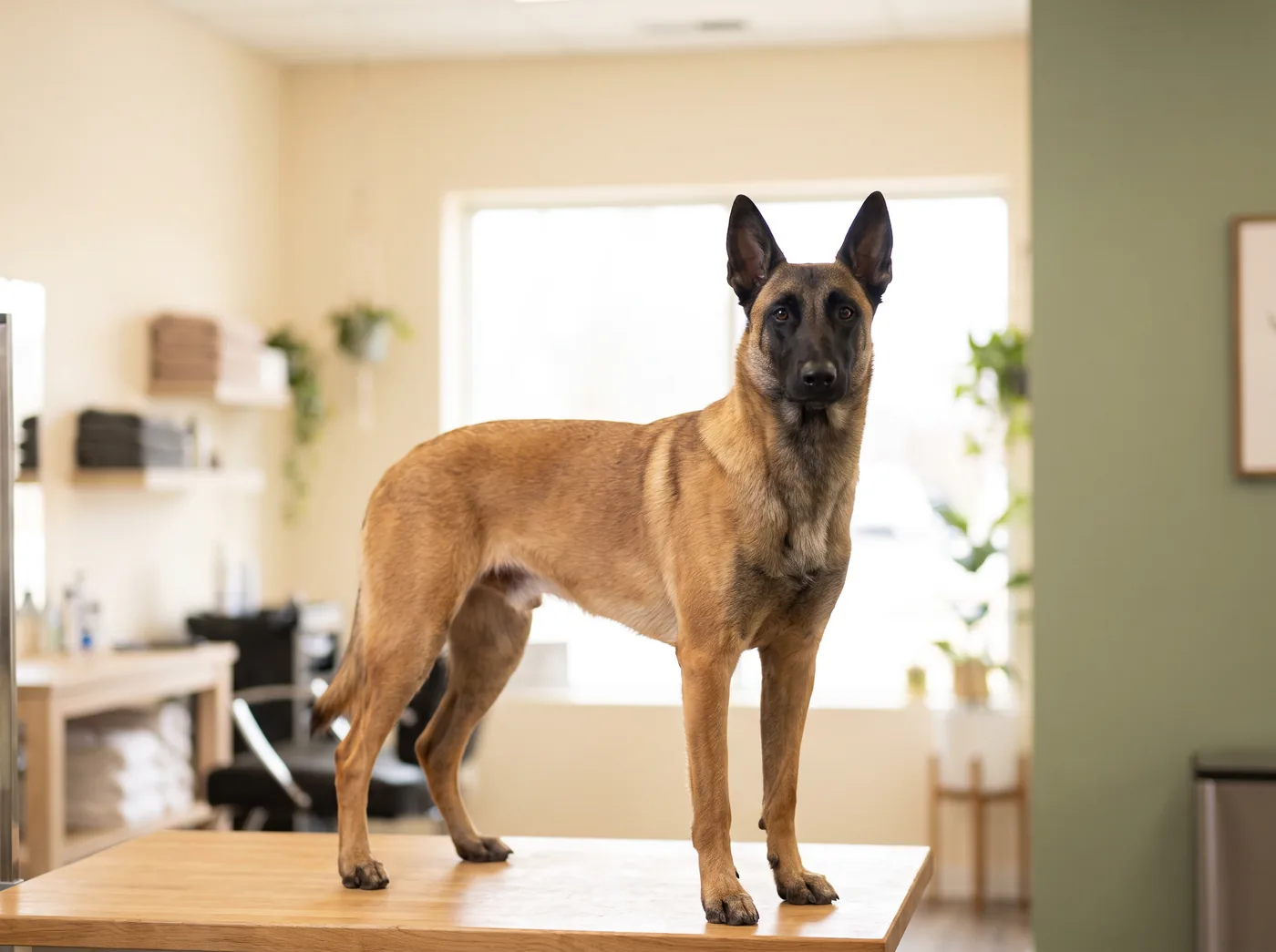
About the Belgian Malinois
The Belgian Malinois carries a short, straight, hard, weather resistant outer coat over a dense undercoat, thicker at the neck, on the trousers and along the tail. It is a working coat on a working dog, and it needs about ten minutes a week.
What catches owners out is the shedding. A Malinois looks like a short haired dog and sheds like a long haired one, because shedding is driven by undercoat density rather than by length, and this breed has a full one. Year round it is moderate; twice a year it is remarkable.
The other thing to understand is that a Malinois is not a pet coat on a pet dog. It is one of the highest drive breeds in existence, bred for police and military work, and a Malinois without a serious job is a difficult animal in every setting including a grooming table. That shapes an appointment far more than the coat does.
The Belgian Malinois has a double coat that regulates its own temperature. Shaving it does not keep the animal cooler, removes the protection against sun and insects, and the top coat often grows back patchy or never returns correctly. A thorough deshed takes out the undercoat and does the job the owner was actually asking for.
Short, double, and heavier work than it looks
The mistake is reading the length and stopping there, exactly as with the Australian Cattle Dog. A Malinois coat is short, but structurally it is the same thing a Husky carries: a harsh weatherproof outer layer over a dense insulating undercoat, compressed into an inch or so.
So the shedding follows undercoat density rather than coat length. Year round it is a steady moderate drop. Twice a year, spring and autumn, the whole undercoat releases over two to four weeks and the volume from a short coated dog is genuinely surprising.
The tools are an undercoat rake first, worked in the direction the coat lies, then a rubber curry to lift what the rake loosened. Ten minutes weekly; daily and outdoors during a blow.
A bath and a high velocity dry at the start of each blow is the single most effective thing available and worth booking twice a year even on a dog that never otherwise sees a salon.
Matting is essentially a non-issue. There is nothing long enough to tangle, so a neglected Malinois produces a great deal of loose hair rather than a felted coat. The exception is the ruff and trousers on a dog carrying a heavier than average coat.
Avoid a deshedding blade with a cutting edge, which takes outer coat along with undercoat, and avoid a slicker used hard, which reaches skin rather than coat at this length.
Do not clip it, short as it is
This comes up with short double coated breeds precisely because the coat looks trivial. Taking an inch down to a quarter sounds harmless for a working dog in summer. It is not.
The outer guard hairs block sun and hold a layer of still air against the dog, which insulates against heat as well as cold. The undercoat traps warmth. Clipping cuts through both, removing the sun barrier while leaving much of the insulation, so the dog gets hotter rather than cooler and its skin sees direct sun for the first time.
The regrowth is the lasting part. Guard hairs and undercoat return at different rates, undercoat usually wins, and the coat comes back softer, duller, patchier and less weather resistant. On a dog expected to work outdoors in all conditions that is a functional loss rather than a cosmetic one.
The correct answer to a hot Malinois is a thoroughly deshedded coat so air can reach the skin, plus shade, water, and working the dog at the ends of the day.
The exception is veterinary: a surgical site or a skin condition where a vet asks for an area to be clipped. That is a medical decision and it is fine.
Trimming is limited to the feet, the hocks and the sanitary area, and no reputable groomer will confuse that with a clip down.
The four Belgian shepherds, which are four different appointments
This causes real confusion at booking, because depending on the registry these are either four varieties of one breed or four separate breeds, and their coats could hardly be less alike.
The Malinois is short coated and fawn with a black mask. This page.
The Tervuren is long coated in the same fawn coloring, with a heavy ruff, feathering and a plumed tail. It is a line brushing and dematting proposition much closer to a Rough Collie.
The Groenendael is the long coated black one, and needs exactly the same work as the Tervuren.
The Laekenois is the rare one and the surprise: it carries a harsh, tousled wire coat, and it is stripped or tidied like a terrier jacket rather than brushed like a shepherd.
So one family of dogs spans three completely different coat types and three different appointments. Anyone describing a dog simply as a Belgian Shepherd has told a groomer almost nothing.
Say which one you have when you book. A salon expecting a Malinois and receiving a Tervuren has booked a quarter of the time it needs.
Drive, and what it means on a table
The Malinois is bred for work at an intensity that is difficult to overstate. It is the dominant breed in police, military and protection work worldwide, selected for enormous energy, extreme focus, high pain tolerance and a willingness to engage rather than avoid.
In a working home with a real job, a Malinois is a superb, biddable, highly trainable dog and generally straightforward to handle.
In a pet home without one, it is frequently a serious problem: relentless, frustrated, mouthy, and quick to escalate. Groomers meet both versions and the difference is not the dog's temperament, it is what the week looks like.
Practically, for an appointment: exercise and work the dog hard beforehand, and be honest about how it handles strangers and restraint. A Malinois that has decided to object is fast, strong and does not bluff.
Handle the feet, ears and mouth daily from puppyhood, and take the dog to a salon early for nothing more than nails, so the building is unremarkable.
Ask about other dogs on the floor, since many working line Malinois are not sociable with unfamiliar dogs.
And accept that a dog which genuinely cannot be handled safely may need nails done under sedation at a veterinarian, which is a legitimate outcome rather than a failure.
What to tell your groomer
Say which Belgian you have. Malinois, Tervuren, Groenendael or Laekenois are three different coat types and four different appointment lengths.
Ask for a deshedding bath with a high velocity dry rather than a bath and brush, and book one at each coat blow.
Decline any offer to clip the coat down for summer.
Be honest about drive, about how the dog is with strangers and restraint, and about other dogs.
Ask for the nails, and say how the dog is about having its feet held.
And work the dog properly before you come. On this breed it is not a courtesy, it is the difference between a routine appointment and a difficult one.
Keeping the coat between grooms
Rake then curry
The rake pulls the dead undercoat up and the curry lifts it out. Ten minutes weekly, daily and outdoors during a blow.
Weekly
Book a deshed at each coat blow
Worth doing twice a year even on a dog that never otherwise sees a salon.
Spring and autumn
Never clip it for summer
A short double coat is still a double coat. It removes the sun barrier and leaves the insulation behind.
Always
Work the dog first
On the highest drive breed there is, this is the difference between a routine appointment and a difficult one.
Every visit
Common Questions About the Belgian Malinois
Do Belgian Malinois shed a lot?
Far more than the coat length suggests. It is short but genuinely double, with a dense undercoat, and shedding follows undercoat density rather than length. Year round it is a steady moderate drop, then twice a year the entire undercoat releases over two to four weeks and the volume is startling for a short coated dog. An undercoat rake then a rubber curry weekly, daily and outdoors during a blow, plus a deshedding bath at each seasonal change.
Can I clip my Malinois in summer?
No, and the short coat is exactly why people ask. It is still a double coat: the outer guard hairs block sun and hold insulating air, while the undercoat traps heat, so clipping removes the sun barrier and leaves the insulation, making the dog hotter and exposing skin to burning. The regrowth typically comes back softer, patchier and less weather resistant, which on a working dog is a functional loss. Deshed it thoroughly and use shade, water and timing instead.
What is the difference between a Malinois, Tervuren, Groenendael and Laekenois?
Coat, mostly, and depending on the registry they are four varieties of one breed or four separate breeds. The Malinois is short coated fawn with a black mask. The Tervuren is long coated in the same coloring and the Groenendael is the long coated black one, both needing line brushing like a Collie. The Laekenois is the rare one and carries a harsh wire coat that is stripped like a terrier jacket. One family, three coat types, four quite different appointments.
Similar breeds
Same coat, same schedule, or the breeds this one is crossed from.

German Shepherd
The heaviest shedder most people ever own, and a coat that must not be clipped
German Shepherd
Australian Cattle Dog
A short coat that sheds like a long one, on a dog that needs a job more than it needs a salon
Australian Cattle DogFind a groomer who knows this coat
Search 37,863 groomers by town, or keep reading the breed guide.
Find a Local Groomer View All Breeds