Bloodhound Grooming
The longest ears and the deepest folds on any dog, and a great deal of drool underneath them
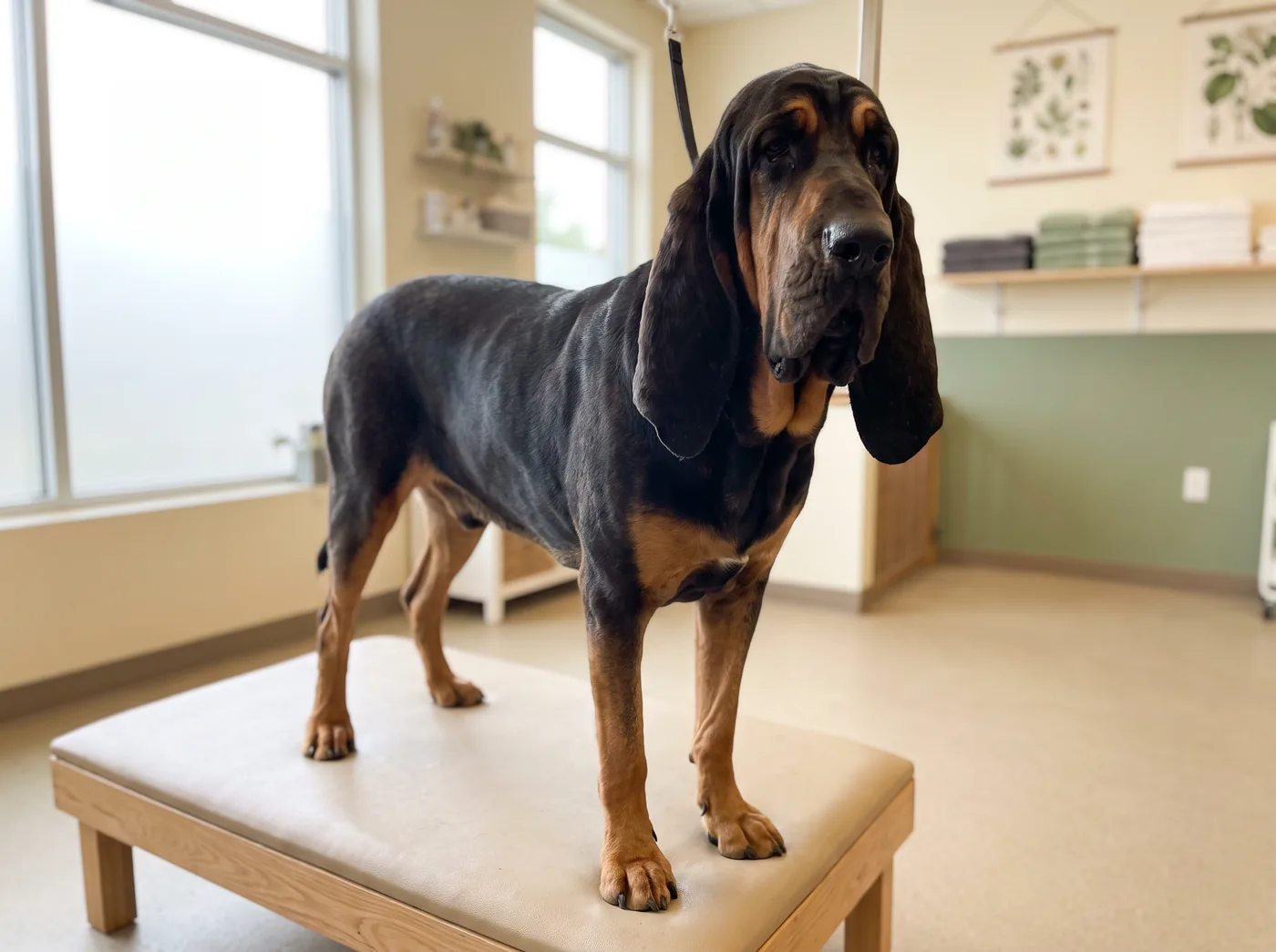
About the Bloodhound
The Basset Hound page argues that coat length predicts nothing, and uses a short coated dog with a long routine to prove it. The Bloodhound is that argument taken as far as it goes.
The coat is short, dense and takes ten minutes a week. Everything else is a daily job, and there is more of it than on almost any other breed: the longest ears in dogs, the deepest facial folds, heavy flews that produce a genuinely remarkable quantity of drool, and loose lower eyelids that leave the eye exposed.
All of it was bred in deliberately. The ears sweep scent up from the ground, the folds trap and hold it around the face, and the loose skin lets the dog push through cover. It is the most specialized scenting equipment in dogs and it is why this breed can follow a trail days old. It also means the dog needs a level of routine care that most owners are not warned about.
The Bloodhound has a double coat that regulates its own temperature. Shaving it does not keep the animal cooler, removes the protection against sun and insects, and the top coat often grows back patchy or never returns correctly. A thorough deshed takes out the undercoat and does the job the owner was actually asking for.
The ears, which are the longest in dogs
A Bloodhound ear hangs well below the jaw, is thin, heavy and completely seals the canal against the head. It is longer than a Basset ear on a considerably larger dog, and it is the single biggest routine job on the breed.
The canal underneath runs down and then turns inward, so it does not drain by gravity, and a heavy flap over the opening means no airflow at all. Warm, dark and damp is what yeast and bacteria need, and chronic ear disease is the most common veterinary problem in this breed by a wide margin.
The ears also physically drag. They go into food bowls, water bowls, mud, puddles and whatever the dog is scenting, which on a Bloodhound is everything. A wet ear against a sealed canal is the worst version of the problem, and the ear leather itself gets sore where it stays damp.
The routine is weekly at minimum and it has two halves: lift each flap, look and smell, and then dry the ear leather itself, especially after eating, drinking and any wet walk. Healthy smells of nothing. Yeast is sweet and musty and unmistakable.
Head shaking, scratching an ear, a head tilt, redness or dark discharge means a veterinarian rather than a bottle of cleaner. Untreated ear disease thickens the canal permanently and eventually needs surgery.
Practical measures that genuinely help: a narrow deep bowl or a snood at mealtimes, and drying after every walk.
Also check the ear tips, which trail on the ground and pick up cuts and sores that go unnoticed.
The folds and the drool, which are one job
The face and neck carry deep loose folds, and the flews, the hanging upper lips, are heavier than on any other breed. Those two things combine into a single daily task, because the drool ends up in the folds.
A Bloodhound produces a startling quantity of saliva and flings it when it shakes. What matters for the dog is not the walls and the ceiling but that the skin under the jaw, along the lower lip and inside every facial fold stays permanently damp.
Damp skin in an enclosed fold reddens, smells, grows yeast, and eventually becomes raw and painful. The progression is always the same and the smell arrives before anything is visible.
The routine is a damp cloth right into each fold and along the flews, and then drying it. Daily, and it takes a couple of minutes. The drying is the half that gets skipped and the half that matters.
Check under the jaw and the throat particularly, which is where saliva pools on a dog with this head shape and where the worst infections start.
Anything red, sore, weeping or persistently smelly is a veterinary matter before any cleaning routine will hold.
And a practical note: a sudden increase in drooling is a veterinary sign rather than a grooming one. In a deep chested giant breed it can mean bloat, which is a life threatening emergency, so restlessness, a distended abdomen or unproductive retching needs immediate attention.
The eyes, which are the part people miss
This is where the Bloodhound differs most from the Basset, and it is the job owners are least often told about.
The loose skin of the head pulls the lower eyelids down and away from the eye, exposing the inner surface, which is why a Bloodhound has that characteristic red rim showing beneath each eye. The technical term is ectropion, and in this breed it is written into the standard rather than being a defect.
The consequence is that the eye has lost part of its protection. Tears do not drain properly, dust, grass seeds and debris land directly on exposed tissue, and the surface dries more easily. Some dogs also have entropion, where a section of lid rolls inward and the lashes rub the cornea, and it is possible to have both on the same eye.
Practically that means wiping around and under each eye daily with a clean damp cloth, working outward and using a different part of the cloth for each eye, and looking properly while you do it.
What to escalate: squinting, holding an eye closed, pawing at the face, a discharge that is thick or colored, visible cloudiness, or an eye that looks dry. All of those are veterinary matters and corneal damage in this breed progresses quickly.
Never use a shampoo near the face, and ask a groomer to wipe rather than rinse the head.
The coat, the smell, and the rest
The coat is short, dense and hard, and it sheds steadily all year. A rubber curry or hound glove once a week lifts most of it and spreads the skin oils.
The famous hound smell is real and has three sources, and only one is unavoidable. The skin produces a lot of oil, which oxidizes and cannot be eliminated, only managed with a bath every three to four weeks. The other two, the ears and the folds, are usually the real cause when a dog smells worse than it should, and both are fixable.
Bathing more often than every three weeks backfires, because stripping the skin makes it produce more oil rather than less.
Nails every three to four weeks, thick and fast growing on a heavy dog. Overlong nails matter here because this is a large breed with a lot of weight and a short life span.
Elbow and hock calluses appear as on any heavy dog, and the answer is thick bedding rather than cream.
Skin folds elsewhere on the body, particularly around the neck and shoulders where the skin is loosest, want the same check as the face.
And a handling note: a Bloodhound on a scent is effectively deaf to everything else, which is a breed characteristic rather than disobedience. It matters at a salon door, where a dog that catches a trail will simply go.
What to tell your groomer
Ask for the ears cleaned and dried as part of every appointment, and mention any ear history at all.
Ask for every fold cleaned and dried: the face, under the jaw, the throat and the neck. Name them, because a groomer new to the breed will not find them all.
Ask them to wipe the face rather than rinse it, and to keep shampoo well away from the eyes given the exposed lower lids.
Point out anything sore in a fold or on an ear tip so they are worked around and so you get told what it looks like.
Ask for the nails, and say the dog is heavy and must be supported rather than lifted.
Mention when the dog last ate, given the bloat risk, and make sure the dog is secured at the door.
Keeping the coat between grooms
Lift, look, smell and dry the ears
The longest ears in dogs over a canal with no airflow, dragging through everything. The breed's defining problem.
Weekly, dry after every meal
Clean and dry the folds and flews
Saliva keeps the skin under the jaw and in every fold permanently damp. Two minutes, and the drying is the half that matters.
Daily
Wipe and check the eyes
Loose lower lids leave the eye exposed to dust and debris. Wipe outward, and look properly while you do it.
Daily
Bathe monthly, not weekly
The skin oil is what makes the smell, and stripping it makes the skin produce more. Every three to four weeks.
Every three to four weeks
Common Questions About the Bloodhound
How do I look after Bloodhound ears?
Weekly at minimum, in two parts. Lift each flap, look and smell, since healthy smells of nothing and yeast is sweet and musty. Then dry the ear leather itself, particularly after eating, drinking and wet walks, because the ears drag through everything. A narrow deep bowl or a snood at mealtimes helps a great deal. Head shaking, a head tilt, redness or dark discharge means a vet, not a cleaner: untreated ear disease permanently thickens the canal and can end in surgery.
Why are my Bloodhound eyes so droopy and red underneath?
That is ectropion, where the loose skin of the head pulls the lower lids away from the eye and exposes the inner surface. In this breed it is part of the standard rather than a defect, but it does mean the eye has lost some protection: tears drain poorly, debris lands on exposed tissue and the surface dries more easily. Wipe around and under each eye daily with a clean damp cloth. Squinting, thick discharge, cloudiness or pawing at the face needs a vet promptly.
Why does my Bloodhound smell?
Three reasons and only one is unavoidable. The skin produces a lot of oil which oxidizes into the classic hound smell, and that is managed with a bath every three to four weeks rather than eliminated. The other two are the sealed ears and the drool soaked skin folds, and those are usually the real culprit when the smell is worse than usual. Bathing more often than every three weeks makes the oil worse, because stripping the skin increases production.
Similar breeds
Same coat, same schedule, or the breeds this one is crossed from.

Basset Hound
A very short coat and a very long list, because none of the work is on the hair
Basset Hound
English Bulldog
The definitive fold breed, where the coat takes ten minutes and the face takes every day
English BulldogFind a groomer who knows this coat
Search 37,863 groomers by town, or keep reading the breed guide.
Find a Local Groomer View All Breeds