Chinese Crested Grooming
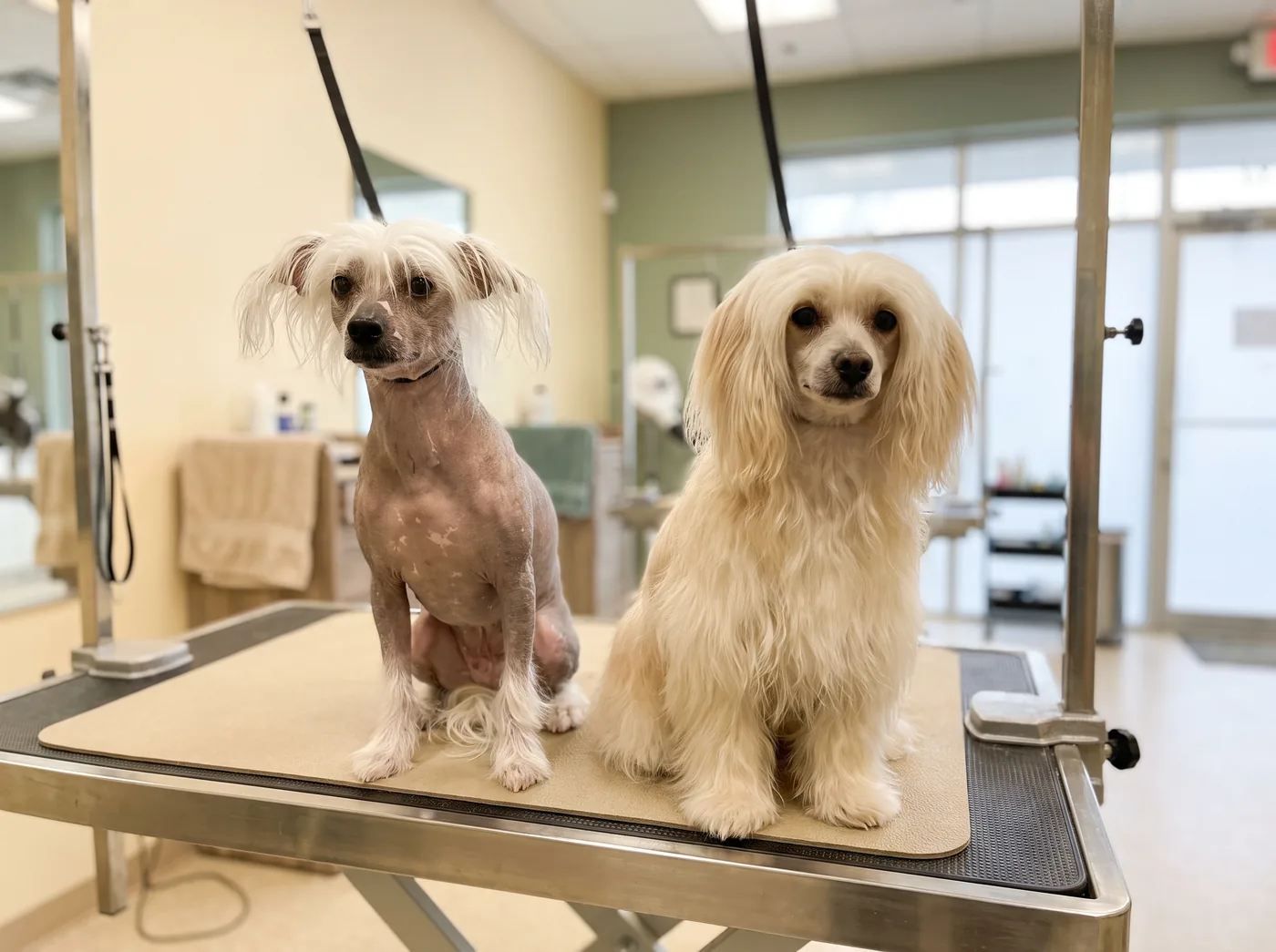
Two varieties out of one litter, one with no coat at all and one with a full silky one
About the Chinese Crested
The Chinese Crested is one of the very few dogs that belongs on the hairless coat page at all, and it is a strange breed to file anywhere, because it comes in two varieties that could hardly be less alike and both arrive in the same litter.
The hairless has bare, soft, warm skin over most of the body, with long silky hair remaining only on the head, the feet and the tail. The powderpuff is covered all over in a long, soft, silky double coat and looks like an entirely different dog.
They are one breed, and the difference is a single gene. That gene is dominant, which is why breeding two hairless dogs does not produce all hairless puppies and why powderpuffs keep appearing. The same gene also affects tooth development, which is the part of this page most owners have never been told about.
One breed, two completely different jobs
Work out which you have, because almost nothing on one half of this page applies to the other.
The hairless has smooth bare skin over the body with tufts of long fine hair on the head, the lower legs and feet, and the tail. The amount of body hair varies a great deal: some are close to entirely bare and some carry a considerable amount of soft fuzz. Its care is skin care, and it is closer to a Sphynx than to any dog.
The powderpuff has a full double coat: a soft silky outer coat over a fine undercoat, long all over. Its care is coat care, and it is closer to a Havanese. It needs combing to the skin two or three times a week and it does mat, particularly behind the ears, in the armpits and on the trousers.
Both come from the same litter, both are shown, and neither is a fault. Breeding two hairless dogs does not produce all hairless puppies, because the gene involved is dominant and the version that produces a fully hairless dog appears not to be viable in a double dose. So powderpuffs are a permanent and necessary part of the breed rather than an accident.
Both varieties shed very little, and both are frequently described as suiting some allergy sufferers, with the usual caveat that no dog is genuinely hypoallergenic.
The hairless: skin care instead of grooming
Skin that is not covered by coat does everything a coat would normally handle, and it needs help with all of it.
Bathing on a schedule. Roughly every one to two weeks, with a gentle unscented shampoo and a thorough rinse. Skin oil that would normally be absorbed and carried away by a coat sits on the surface instead, collects dust and lint, and blocks follicles. Do not overdo it: stripping the skin makes it produce more oil, not less.
Moisturizing after. A light, unscented, non-comedogenic lotion on damp skin. Heavy or greasy products block pores and cause the exact problem you are trying to avoid.
Acne and blackheads. Genuinely common in this breed, particularly on the back, chest and around the muzzle, and worst in adolescence. Blocked follicles come up as blackheads and small pimples. Do not squeeze them. Regular gentle washing helps, and anything red, spreading or sore needs a veterinarian, since secondary infection follows easily.
Sun. Bare skin burns, and a dog that sunbathes will burn its back. Shade, avoiding midday sun, and a sunscreen formulated for dogs, never one containing zinc oxide, which is toxic if licked.
Cold. No coat and very little body fat on a small dog. Fleeces indoors and coats outdoors are practical equipment, not dressing up.
And watch for scrapes. Skin with no coat over it takes every knock directly.
The teeth, which are part of the same gene
This is the fact most Chinese Crested owners are never told, and it is not trivia.
Hair, teeth, nails and skin glands all develop from the same embryonic tissue, and the gene that produces hairlessness in this breed affects that development more broadly. The result is that hairless Cresteds commonly have abnormal dentition: teeth missing altogether, teeth that are peg or cone shaped rather than properly formed, crowding and misalignment, and roots that are shallower than they should be.
Practically, hairless Cresteds tend to lose teeth early and to lose more of them than other small dogs, and there is often nothing an owner did wrong.
Powderpuffs, which do not carry the hairless gene, generally have a normal set of teeth and a normal small breed dental risk, which is already meaningful.
What this changes: daily tooth brushing matters more here than in almost any other breed, and it should start in puppyhood. Expect veterinary dental checks to be a routine part of this dog's life, and expect extractions to be more likely than usual.
Do not panic at missing teeth in a hairless adult. Do take a sore mouth, dropping food, drooling or reluctance to chew seriously, because a dog with fewer teeth needs the remaining ones looked after.
Groomers see a lot of mouths and are often the first to mention a problem, so ask yours to look.
The powderpuff, and the parts both varieties share
A powderpuff coat is soft, fine and long over a light undercoat, and it behaves like any soft coat that does not shed out: it holds every dead hair until a comb takes it out, and it felts if left.
Comb to the skin with a metal comb two or three times a week, working in sections. Behind and under the ears goes first, then the armpits, the trousers and around the rear. A slicker over the top skims it and leaves the mat underneath.
Most pet powderpuffs are kept in a trim rather than at full length, which is entirely reasonable and does no harm.
Both varieties share the rest. The crest, the plume on the tail and the socks on a hairless dog are ordinary silky hair and need combing and trimming like any furnishing. The feet want the hair between the pads kept clear. Nails every three to four weeks on a small dog that wears nothing down.
Ears stand upright on most Cresteds, which is good for airflow, though powderpuffs are more often drop eared and want the weekly check.
One thing worth flagging: this breed is prone to luxating patella and to eye conditions including progressive retinal atrophy, both common in toy breeds. Neither is a grooming matter, but a dog that yelps when a leg is moved, or that is losing confidence in dim light, needs a veterinarian rather than gentler handling.
What to tell your groomer
Say which variety you have when you book, because a hairless and a powderpuff are completely different appointments.
For a hairless: say what shampoo and moisturizer you use, ask them not to use anything heavily scented, and ask them to look at the skin and tell you about any spots or sore areas.
For a powderpuff: say honestly when it was last combed to the skin and whether you want a trim or full length.
Ask for the crest, tail plume and foot hair trimmed and combed on either variety.
Ask them to look at the teeth and say what they see, particularly on a hairless dog.
Mention any knee trouble or history of limping, and say the dog gets cold, so it should be dried properly and not left damp.
Keeping the coat between grooms
Bathe and moisturize the skin
Hairless only. Gentle unscented shampoo, thorough rinse, light non-greasy lotion. Not more often, or the skin overproduces oil.
Every one to two weeks
Brush the teeth
The hairless gene affects tooth development too. This breed needs it more than almost any other on the site.
Daily
Sun and warmth
Bare skin burns and a small dog with no coat gets cold. Shade and dog sunscreen without zinc oxide; fleeces indoors.
Always
Comb the coat or the furnishings
Powderpuffs need a metal comb to the skin. Hairless dogs still have a crest, tail plume and socks that mat.
Two or three times a week
Common Questions About the Chinese Crested
What is the difference between a hairless and a powderpuff Chinese Crested?
A single gene, and they come from the same litter. The hairless has bare skin over the body with long silky hair only on the head, feet and tail, and its care is skin care: bathing every week or two, light moisturizing, sun protection and warmth. The powderpuff is covered all over in a long soft silky coat and needs combing to the skin two or three times a week because it mats. Both are shown, and neither is a fault: the gene is dominant, so powderpuffs are a permanent part of the breed.
How do I care for a hairless Chinese Crested skin?
Bathe every one to two weeks with a gentle unscented shampoo, rinse thoroughly, and follow with a light non-comedogenic moisturizer on damp skin. Heavy or greasy products block pores. Do not over bathe, because stripping the skin makes it produce more oil. Expect blackheads and acne, especially in adolescence, and never squeeze them. Use shade and a dog-formulated sunscreen without zinc oxide, and keep the dog warm, since there is no coat and very little body fat.
Why does my hairless Chinese Crested have missing teeth?
Because the same gene causes both. Hair, teeth, nails and skin glands develop from the same embryonic tissue, so the hairless gene affects tooth development too. Hairless Cresteds commonly have teeth missing, peg or cone shaped teeth, crowding and shallow roots, and they tend to lose teeth earlier and in greater numbers than other small dogs. It is not something you caused. Powderpuffs, which lack the gene, generally have normal dentition. Daily brushing matters more here than in almost any breed.


Find a groomer who knows this coat
Search 37,863 groomers by town, or keep reading the breed guide.
Find a Local Groomer View All Breeds