Havanese Grooming
A long soft wavy coat that mats quietly, and a puppy coat change that catches everyone
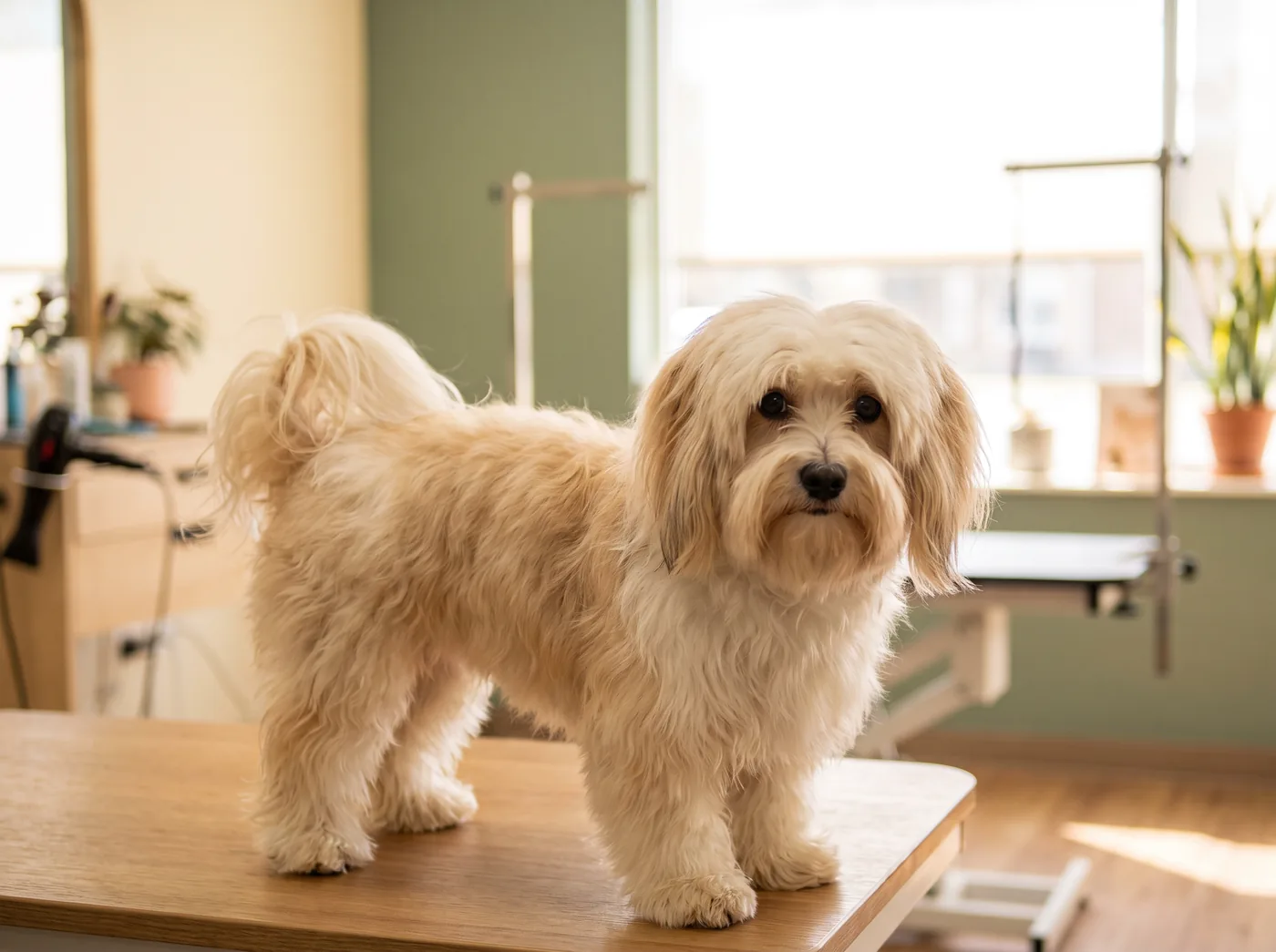
About the Havanese
A Havanese carries a long, soft, light, wavy double coat that is unusual among the toy breeds: it is neither the dead straight silk of a Maltese nor the tight curl of a Bichon, but something looser and airier in between.
That texture is the whole problem. It is soft enough to tangle easily and light enough that it moves constantly, and it mats quietly, without the coat ever looking bad from the outside. Havanese owners are among the most likely to be genuinely surprised when a groomer shows them what is underneath.
They are also among the least likely to have been warned about the puppy coat change, which on this breed is as dramatic as on any doodle and arrives at roughly the same age.
What a full groom involves
A full comb through, dry, before anything else, and on this coat it is diagnostic rather than a formality: the surface tells you very little.
Then a bath, then a full blow dry with a brush working through. A Havanese coat dried without brushing goes frizzy and tangles as it dries, and a coat dried flat cannot be scissored to a line.
Then the detail work, which is most of the appointment on a dog this small. Eyes cleaned and the hair around them dealt with, ears checked and cleaned, pads cleared, nails, sanitary trim.
Then the trim itself: a clipper length over the body on a pet cut, scissored legs, and a decision about the face, which on this breed is the biggest visual choice you make.
Around two hours, and almost none of it is the body coat.
Why this coat mats quietly
A Maltese coat is straight and heavy enough that it hangs, so a tangle tends to show. A Bichon coat is dense enough that a groomer can feel the felting through it. A Havanese coat is light and wavy, and it does neither: it lifts and moves and looks full and healthy from above while the layer against the skin quietly tangles.
The result is that Havanese owners get caught by mats they had no visual warning about, and often while brushing regularly, because a brush passes over this coat with almost no resistance.
The test is the same as for any other coat and it takes a minute. Take a metal comb, part the coat to the skin behind an ear and in an armpit, and draw it outward from the skin. If it stops or will not reach, there is a mat regardless of what the surface looks like.
The usual places: behind and under the ears, the armpits, under a collar or harness, the trousers, and around the feet. On a Havanese the ears and armpits are almost always first.
Line brushing rather than surface brushing is the fix: work in sections from the skin outward, holding the coat above your working line up, and prove each section with a comb.
The puppy coat change, and the pet trim decision
Somewhere between eight and fourteen months a Havanese swaps its soft puppy coat for a heavier adult one, and both are present at once. The old coat is pushed out and, because this coat holds rather than drops hair, it tangles into the new growth.
A dog that has been easy to comb becomes difficult in a few weeks, usually with nothing else having changed. It is exactly the same event doodle owners go through and it is just as predictable, but Havanese owners are far less often warned about it.
What gets you through is frequency rather than effort: short daily sessions with a comb and appointments moved closer together for that period, not further apart.
It is also the point where most owners make the long coat versus pet trim decision, and it is a fair moment to make it honestly. A full length Havanese coat is a daily commitment. A pet trim looks like the breed, is far easier, and takes nothing away permanently: the coat grows back with the same texture and color.
The face is the separate choice. Full furnishings with the hair over the eyes is traditional and needs daily attention; a shorter face or a topknot is practical. Hair growing into the eye is a welfare issue whichever look you pick.
What moves the price
Coat condition first. Fine soft mats are slow to work out and frequently have to be cut, and a Havanese that has been left three months usually comes back much shorter than the owner wanted.
Then the finish: a short uniform pet cut is quicker and holds its shape far longer than a scissored trim with a longer skirt.
Then the face, because scissoring around the eyes of a small wriggly dog is careful work.
Size barely features, as with every toy breed. This is a quick dog to bathe and dry, and it is priced above plenty of much larger dogs because almost none of the appointment is bathing.
What to tell your groomer
Say the age if the dog is under about eighteen months. Anybody who works with these coats will know what stage it is at and book accordingly.
Be honest about the combing you do rather than the combing you plan to. This coat punishes optimism more than most, because it gives no visual warning.
Say what you want on the face and bring a photograph. Full furnishings, a topknot and a short face are three quite different dogs.
Mention the collar or harness if worn all day, because the mat under it is invisible on this coat.
And if the answer that day is a shorter cut than you wanted, take it. It grows back true, the dog is comfortable immediately, and the thing to change is the interval rather than the coat.
Keeping the coat between grooms
Line comb to the skin
Work upward in sections, holding the coat above your line up. Prove each section with a metal comb, because this coat gives no visual warning.
Daily
Check ears and armpits first
On a Havanese those two are almost always where it starts, before the trousers or the feet.
Weekly
Keep hair out of the eyes
A topknot or a short face trim. Hair growing into the eye is a welfare problem, not a styling question.
Daily check
Comb more, not less, at a year old
The puppy coat change arrives between eight and fourteen months and is as dramatic as any doodle's. Shorten the interval through it.
8 to 14 months
Common Questions About the Havanese
Do Havanese shed?
Very little, and that is the trade rather than a bonus. The coat holds shed hair instead of dropping it, so it stays out of your house and stays on the dog, which is exactly why it mats and why it needs combing daily and cutting every four to six weeks. Low shedding and low maintenance are close to opposites in dogs and this breed is a clear example.
My Havanese coat looks fine but the groomer found mats. How?
Because this coat is light and wavy, so it lifts and looks full while the layer against the skin tangles, and a brush passes over it with almost no resistance. It gives less visual warning than a Maltese or Bichon coat does. Use a metal comb, part the coat to the skin behind an ear and in an armpit, and draw it outward. That takes a minute and tells you what the surface will not.
Should I keep my Havanese in a long coat?
Only if you genuinely want a daily grooming routine. A full length coat needs combing to the skin every day plus regular bathing and blow drying. A pet trim looks like the breed, is far more comfortable for the dog, and closes nothing off, because the coat grows back with the same texture and color whenever you want it long again. Most pet Havanese wear a trim and are none the worse for it.


Find a groomer who knows this coat
Search 37,863 groomers by town, or keep reading the breed guide.
Find a Local Groomer View All Breeds