Dalmatian Grooming
The most relentless shedder for its coat length, and stiff white hairs that weave into everything
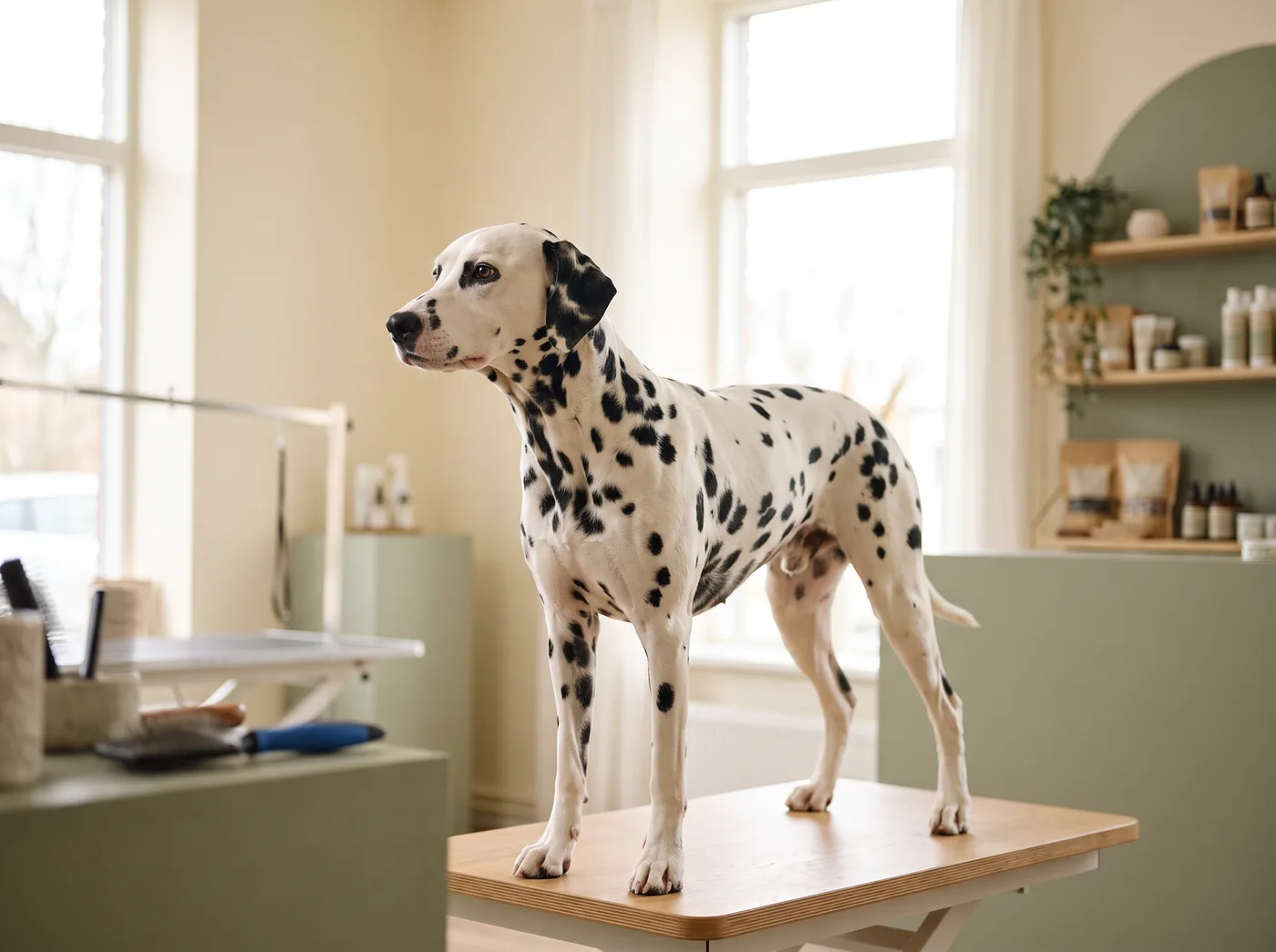
About the Dalmatian
The Dalmatian has a very short, dense, fine, hard coat with a distinctive glossy sheen, and it takes ten minutes a week. There is nothing to cut, nothing to untangle and no schedule to keep.
It is also, pound for pound and hair for hair, one of the most relentless shedders in dogs. Dalmatians shed heavily, constantly, all year round with no seasonal break, and the hairs themselves are short, stiff and needle straight, which means they do not lie on fabric waiting to be picked up. They weave into it, point first, and stay there.
Owners who have kept long coated breeds are consistently taken aback, because a Dalmatian produces more visible mess than dogs with ten times the coat. That, plus the skin underneath it and one important thing about how the dog hears, is what this page is about.
The shedding, and why the hairs are so hard to remove
Two things make Dalmatian shedding worse than the coat length suggests.
The first is that there is no cycle. Most heavy shedding breeds blow their undercoat twice a year and are comparatively quiet between times. A Dalmatian sheds at the same steady, substantial rate every week of the year, so there is no period where the house catches up.
The second is the structure of the individual hair. Dalmatian hairs are short, very straight and stiff, almost like tiny quills, and rather than resting on the surface of fabric they work themselves in point first. A lint roller lifts a fraction of them. They stay in upholstery, car seats, carpet and clothing, and white hairs on dark fabric are as visible as it gets.
What actually helps is removing the hair before it lands. A rubber curry or a hound glove, worked in circles against the lie of the coat and then finished along it, pulls out a genuinely startling quantity in ten minutes. Do it two or three times a week rather than once, and do it outside.
A deshedding bath a few times a year helps as well, because warm water and a proper dry release hair that brushing alone leaves behind.
What does not help is a shave, which achieves nothing on a coat this short, or any product promising to stop shedding.
Skin, allergies and bronzing
The coat is short enough that the skin is effectively on display, which makes a Dalmatian easy to monitor and means nothing hides for long.
Dalmatians have a high rate of allergic skin disease, showing as itching, licking the paws, redness in the armpits and groin, and recurring ear trouble. Persistent scratching is a veterinary matter rather than a shampoo problem.
The specific thing to know is bronzing, which is close to unique to the breed and alarms owners who have not heard of it. The white areas of the coat develop a rusty, bronze or pinkish discoloration, usually starting on the back and flanks, sometimes with small pink or crusty patches and thinning hair underneath.
It is a symptom rather than a disease. It happens when the skin under the white areas becomes inflamed and infected, most often as a consequence of an underlying allergy, and the staining comes from the inflammation and from the dog licking the area. Dalmatian skin appears to be particularly reactive in the unpigmented parts.
It is treatable, and it responds to dealing with the underlying cause plus medicated washes prescribed by a vet. It does not respond to whitening shampoos, and it is not a stain to be scrubbed out.
Sun matters too. The white areas have unpigmented skin underneath, which burns, so a Dalmatian that sunbathes needs shade and a thin coated dog needs watching in strong sun.
Deafness, which changes how the dog is handled
This belongs on a grooming page because it changes what happens on a table, and because a great many groomers are never told.
Congenital deafness is common in Dalmatians, linked to the same genetics that produce the white coat and unpigmented skin. A meaningful proportion of the breed is deaf in one ear, and a smaller but real proportion is deaf in both. Responsible breeders test puppies, but plenty of pet Dalmatians have never been tested and unilateral deafness in particular is easy to miss for years.
A deaf dog, or a dog deaf on one side, startles when it is touched unexpectedly, because there was no warning sound. On a grooming table that is exactly how a calm dog becomes a snapping one, and the dog gets blamed for it.
The handling is simple once it is known. Approach from the front and within sight. Let the dog see and smell a hand before it lands. Wake a sleeping dog by touching it gently on the shoulder rather than the head. Get the dog's attention with a vibration through the floor or a hand movement rather than a voice. And never work behind a deaf dog without a hand kept in contact so it knows where you are.
Tell your groomer. If you are not sure whether your dog hears, say that too, because a dog that ignores you from the next room is worth a hearing test rather than a training class.
The rest of the routine, and one thing about water
The coat routine is short. A rubber curry two or three times a week, a bath every couple of months or when the dog is dirty, and that is all. Over bathing dries the skin on a breed that is already prone to trouble.
Nails every three to four weeks. Dalmatians are athletic and their feet matter, and a dog that runs on grass wears very little down.
Ears are drop and want a weekly lift and smell, particularly given the allergy rate.
Teeth as with any breed.
The one thing specific to Dalmatians is water access, and it belongs here because a long appointment is exactly when it gets forgotten. Dalmatians have a unique quirk of purine metabolism: unlike other dogs they excrete uric acid rather than converting it further, which means they are prone to forming urate stones in the urinary tract. Constant access to fresh water and frequent opportunities to urinate are the main practical defenses, and both are worth mentioning to a groomer keeping the dog for a few hours.
Straining to urinate, blood in the urine or an inability to pass any is a veterinary emergency in this breed, particularly in males.
What to tell your groomer
Say whether the dog is deaf or deaf on one side, or that you are not certain. This is the most useful thing you will tell them and it changes how the whole appointment is handled.
Ask for a deshedding bath rather than a bath and brush, because the deshed is the entire value on this coat.
Point out any bronzing or pink patches on the white areas and say whether a vet has looked at them, so nobody treats it as a stain.
Mention any allergy history and any medicated shampoo you use.
Ask that the dog has water available and a chance to go out during a longer visit.
And ask for the nails, which is the other thing worth paying for on a breed with no haircut.
Keeping the coat between grooms
Rubber curry, outside
Against the lie then along it. Short stiff hairs weave into fabric point first, so the win is removing them before they land.
Two or three times a week
Approach from the front
Deafness is common in the breed and often undiagnosed. A dog that did not hear you coming startles when touched.
Every time
Look at the white areas
Rusty or pink discoloration is bronzing, which signals inflamed skin underneath and needs a vet, not a whitening shampoo.
Weekly
Keep water available
A breed prone to urate stones. Constant water and frequent chances to urinate are the practical defense.
Always
Common Questions About the Dalmatian
Do Dalmatians shed a lot?
Enormously, and worse than the coat length suggests for two reasons. There is no seasonal cycle, so they shed at the same heavy rate every week of the year with no quiet period. And the hairs are short, straight and stiff, so instead of resting on fabric they work into it point first and a lint roller barely touches them. A rubber curry or hound glove two or three times a week, done outside, removes a startling amount before it lands. Owners coming from long coated breeds are routinely shocked.
Why is my Dalmatian white coat turning rusty or bronze?
That is bronzing, and it is close to specific to the breed. The white areas discolor to a rusty or pinkish tone, usually starting on the back and flanks, sometimes with crusty patches and thinning hair. It is a symptom rather than a disease: the unpigmented skin underneath becomes inflamed and infected, most often driven by an underlying allergy, and the staining follows. It responds to treating the cause plus medicated washes from a vet, and it does not respond to whitening shampoo. Do not treat it as a stain.
Are Dalmatians deaf, and does it matter for grooming?
Congenital deafness is common in the breed, linked to the genetics that produce the white coat, with a meaningful proportion deaf in one ear and a smaller proportion in both. Unilateral deafness in particular goes unnoticed for years. It matters a great deal for handling: a dog that cannot hear you approach startles when touched unexpectedly, which is how a calm dog becomes a snapping one on a table. Approach from the front, let the dog see your hand, and tell your groomer, including if you are simply unsure.
Similar breeds
Same coat, same schedule, or the breeds this one is crossed from.


Australian Cattle Dog
A short coat that sheds like a long one, on a dog that needs a job more than it needs a salon
Australian Cattle DogFind a groomer who knows this coat
Search 37,863 groomers by town, or keep reading the breed guide.
Find a Local Groomer View All Breeds