Flat-Coated Retriever Grooming
A flat glossy coat with heavy feathering, and a breed where the weekly check matters
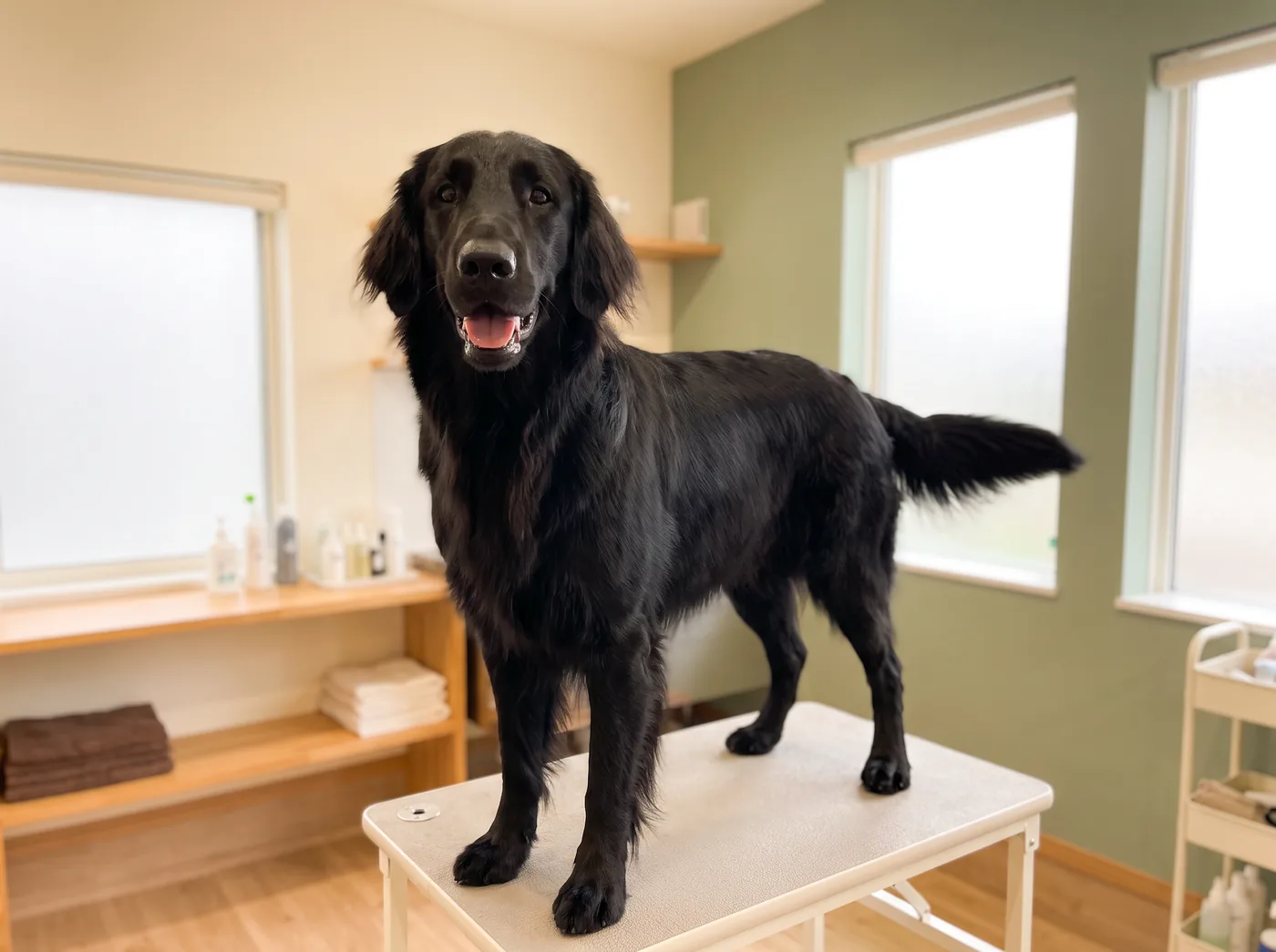
About the Flat-Coated Retriever
A Flat-Coated Retriever carries a moderately long, dense, flat lying coat with a high natural shine, and heavy feathering on the ears, chest, backs of the legs, underside and tail. The coat should lie flat rather than wave, which is where the name comes from.
As grooming goes it is straightforward: a weekly brush and comb, feathering tidied, ears watched, and no clipping. Considerably less work than a Golden Retriever in full coat, and much less than any of the setters.
Health matters more here than the coat does, because the breed has an unusually high rate of cancer and an unusually short life, often eight to ten years. A weekly hands-on session is the most useful early warning an owner has, and on this breed it is worth doing deliberately rather than casually.
The Flat-Coated Retriever has a double coat that regulates its own temperature. Shaving it does not keep the animal cooler, removes the protection against sun and insects, and the top coat often grows back patchy or never returns correctly. A thorough deshed takes out the undercoat and does the job the owner was actually asking for.
The coat, and keeping it flat
The body coat is dense and lies flat against the dog with a natural gloss that comes from condition rather than from product. There is a light undercoat, heavier in winter, but nothing like a Labrador or a northern breed.
Brush weekly with a slicker or a pin brush, then comb the feathering through with a metal comb. That is the routine for most of the year.
The feathering is where the work is: behind and under the ears first, then the chest, the backs of the front legs, the britches and the underside of the tail. Those tangle rather than pelt, and a comb takes them out if you keep up.
A dog that swims and works in cover needs the feathering combed more often than weekly, since burrs, seeds and mud all collect there and turn into mats within days.
Bathe every eight weeks or so with a plain shampoo. The coat sheds water and dirt well, and much of what a Flatcoat picks up brushes out once dry.
Shedding is moderate with two heavier seasonal periods, and an undercoat rake during those weeks is worth having.
Why it is not clipped
Flatcoats are shown in a natural coat, and the breed standard is explicit that the dog should not be sculpted. Trimming is limited to tidying: the hair between the pads, around the feet, the sanitary area, and neatening the feathering and the hair around the ears so it does not drag.
Clipping the body coat is a bad idea for the ordinary reason. There is an undercoat present, so a clipped coat frequently returns softer, denser and duller, losing the flat lie and the shine that define the breed, and a softer coat holds shed hair and mats where the flat one did not.
It also removes protection on a dog built to go through water and cover.
Owners occasionally ask for a Flatcoat to be shaved for summer, and the answer is the same as for every coated working breed: what actually helps is getting the dead undercoat out, plus shade and water.
If the feathering is genuinely a nuisance on a working dog, shortening it is fine and normal. Removing the body coat is not.
Ask for a tidy rather than a trim when booking, and be specific that the outline should stay natural.
The weekly check, and what it is for
Flat-Coated Retrievers have one of the highest cancer rates of any breed, and it is the main reason the average life span is around eight to ten years rather than the twelve a dog this size might otherwise manage. Soft tissue tumors and a specific aggressive form affecting several sites are both over-represented.
That is not a reason to avoid the breed, and it is a very good reason to make the weekly brush a real examination.
Run your hands over the whole dog: down each limb, over the ribs and spine, under the chest, around the shoulders and hips, and along the belly. You are feeling for anything new, firm or growing.
Flatcoats are also stoic and famously cheerful, so a dog can be unwell without changing its behavior much.
Any new lump that is firm, fixed to underlying tissue or growing over a few weeks needs a veterinarian promptly, and prompt genuinely matters in this breed. So does a sudden lameness that does not resolve, a swelling on a limb, or unexplained weight loss.
Because there is little coat work to do, this is the part of the routine that earns its place. Ten minutes a week, done properly.
Ears, feet and a dog that never grows up
Ears are moderately feathered drop ears on a dog that swims constantly, which is the usual recipe for trouble. Lift weekly, look and smell, keep the hair around the opening trimmed, and dry the ears after every swim and bath.
Feet want checking after work in cover, since feathered feet collect grass seeds that burrow between the toes and abscess.
Keep the hair between the pads cleared, which also improves grip on hard floors.
Nails every three to four weeks.
Flatcoats are famous for maturing slowly and staying puppyish for years, which is charming and does mean a large, bouncy, enthusiastic dog on a grooming table for longer than most. Teach standing still early and keep sessions short and positive.
They are also strong swimmers who will get into any water, so drying properly is a routine part of life rather than an occasional job, particularly at the chest and behind the ears where the coat is densest.
What to tell your groomer
Ask for a tidy rather than a trim, and say the outline stays natural: no sculpting and no body clip.
Ask for feathering combed and lightly neatened, feet tidied, pads cleared and the sanitary area trimmed.
Ask for the ears dried and checked and the hair around the opening kept short.
Say the coat is never to be clipped, including in summer.
Ask them to tell you about any lump they find while working over the dog, since that is genuinely valuable in this breed.
Mention if the dog has been in cover recently, so the feet get checked for grass seeds.
Keeping the coat between grooms
Hands over the whole dog
Limbs, ribs, spine, chest, belly. In this breed the weekly check is the point.
Weekly
Comb the feathering
Behind the ears, chest, britches and tail. The body coat needs a brush and no more.
Weekly
Dry the ears after swimming
A feathered drop ear on a dog that gets into every body of water it sees.
After every swim
Check between the toes
Feathered feet in cover collect grass seeds, which burrow in and abscess.
After walks in cover
Common Questions About the Flat-Coated Retriever
How much grooming does a Flat-Coated Retriever need?
Not much, and less than a Golden Retriever. A weekly brush with a slicker or pin brush and a comb through the feathering keeps it, with more frequent combing if the dog swims or works in cover, since burrs and mud collect in the feathering and mat within days. Bathe every eight weeks or so. Trimming is limited to tidying the feet, pads, sanitary area and stray feathering, because the breed is shown in a natural coat and should not be sculpted.
Should I check my Flatcoat for lumps?
Yes, weekly, and it is the most useful thing in this page. Flat-Coated Retrievers have one of the highest cancer rates of any breed and a shorter than expected life of around eight to ten years. Use the weekly brush as a real examination: hands down each limb, over the ribs and spine, under the chest, around the shoulders and hips and along the belly. Anything new, firm, fixed or growing over a few weeks needs a vet promptly, as does a lameness that will not resolve.
Can a Flat-Coated Retriever be clipped in summer?
No. There is an undercoat, so a clipped coat often comes back softer, denser and duller, losing the flat lie and the shine that define the breed, and a softer coat mats where the flat one did not. It also removes protection from a dog built to work in water and cover. What actually helps in heat is raking the dead undercoat out during the seasonal sheds, plus shade and water. Shortening the feathering on a working dog is fine; removing the body coat is not.
Similar breeds
Same coat, same schedule, or the breeds this one is crossed from.

Golden Retriever
A coat that needs deshedding rather than cutting, and must never be shaved
Golden Retriever
Labrador Retriever
A short coat with a full undercoat under it, and the shedding to prove it
Labrador Retriever
English Setter
The most heavily feathered setter, on a white base that shows every stain
English SetterFind a groomer who knows this coat
Search 37,863 groomers by town, or keep reading the breed guide.
Find a Local Groomer View All Breeds