Goldendoodle Grooming
The busiest coat in any grooming salon, and the one owners are warned about least
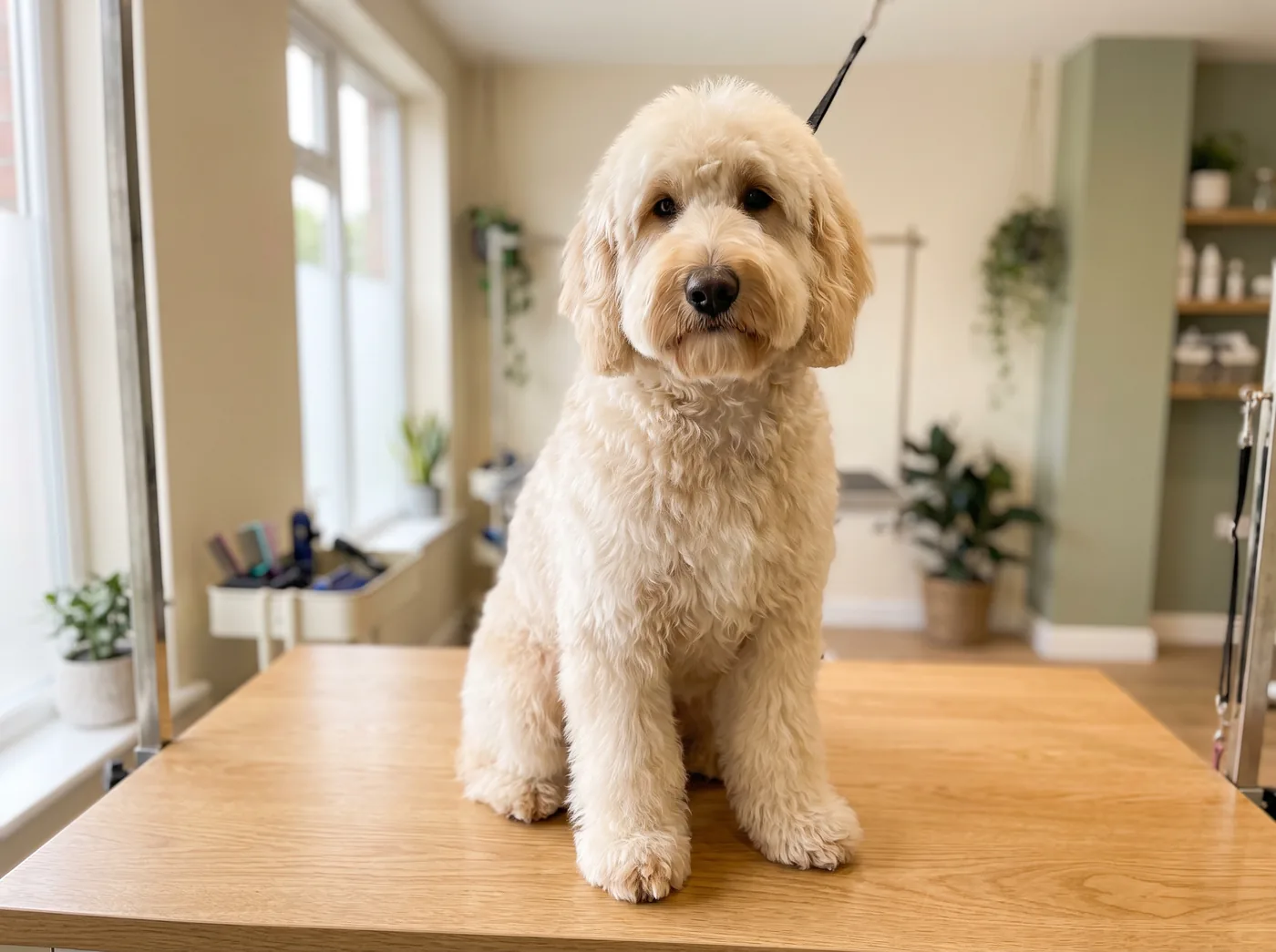
About the Goldendoodle
A Goldendoodle is a Golden Retriever crossed with a Poodle, and the reason it exists is the Poodle side: a coat that holds shed hair instead of dropping it. That is what gets sold as low shedding, and it is true. What is less often explained is the other half of the same fact, which is that the hair that would have ended up on your sofa is still on the dog, and somebody has to take it out.
This is the most common dog on a grooming table in the country and the one that most often arrives matted. Not because owners neglect them, but because a doodle coat can be brushed daily and still felt solid against the skin, and because almost nothing about the puppy prepares an owner for the adult coat.
None of that makes it a bad dog to own. It makes it a dog with a grooming bill and a schedule, and both are entirely manageable once you know what you are dealing with.
What the Goldendoodle is crossed from
What a full groom involves
A Goldendoodle groom is one of the longer appointments in a salon and very little of it is the haircut.
It starts dry, with a full brush and comb through. Anything tangled has to come out before water touches it, because bathing a coat with tangles in it sets them, and a mat that could have been combed out beforehand often cannot be afterward. On a coat that has grown out, this stage alone can take an hour.
Then a rough pre clip to take off bulk, so the bath and the dry are not spent on hair that is about to be removed. Then a double bath, one to lift dirt and oil and one for the shampoo to work on clean hair, plus conditioner.
Then the dry, done with a high velocity dryer and a brush working together. This part matters more on a curly coat than on almost anything else: a doodle coat dried flat sets flat and cannot be scissored to a true line, and any undercoat left damp is where the next mat starts.
Only then the haircut. Clipper work to set the length on the body, then scissor work on the legs, the head, the ears and the tail, which is where the shape actually comes from and where most of the skill sits. Nails, ears, pads and a sanitary trim round it out.
Three hours is normal for a coat in good condition. A matted one takes longer and usually ends up shorter.
How often, and what happens if you stretch it
Every four to six weeks, and the number is not padding. It is the interval at which the coat can still be cut to the length you asked for rather than to the length the mats allow.
Stretch it to eight weeks and most doodles are still recoverable, with a longer appointment and a shorter finish than you wanted. Stretch it to twelve and the honest outcome is usually a strip down: the coat comes off short, because dematting a felted coat means pulling repeatedly on hair anchored in living skin and no reputable groomer will put a dog through hours of that to preserve a length.
The interval and the length have to move together, and this is the part owners most often get wrong. A long fluffy trim and a ten week booking are not compatible. If you want the coat left long, brush it properly every day and book at four weeks. If you would rather book at eight, ask for it shorter and enjoy the fact that it holds its shape the whole time.
There is no version of this where a doodle is left alone for three months and comes out looking like the photograph you chose it from.
The coat problems a Goldendoodle actually gets
The first is the one that catches conscientious owners: a slicker brush glides beautifully over the top of a curly coat while a dense felted layer builds underneath it, against the skin, out of reach. The coat effectively grows a lid. Owners who brush every day are genuinely surprised, and they are not doing anything wrong except brushing the wrong part.
The test takes a minute. Take a metal comb, part the coat to the skin behind an ear and in an armpit, and draw the comb outward from the skin. If it stops or will not reach, the coat is matted whatever the brush says. Check behind both ears, both armpits, the trousers and either side of the tail base.
The second is the puppy coat change, between about eight and fourteen months. The soft puppy coat is pushed out by the adult coat arriving underneath, and because a curly coat does not drop hair, the old coat tangles into the new one. A dog that has been easy to brush its whole life becomes impossible in about three weeks. This is the single most common reason a young doodle arrives for its first shave down, and it is completely predictable.
The third is the places that mat regardless: behind the ears, the armpits, the collar or harness line, the trousers, and the beard, which gets wet at every drink.
What moves the price
Coat condition, by a long way. A maintained coat is a haircut. A felted one is a strip down, which takes longer, is harder work, and often needs a second pair of hands. This is why salons quote a range rather than a figure and why the quote can move when the dog is actually in front of them.
Coat type is second, and it is invisible over the phone. A wool coated dog closest to the Poodle is meaningfully more work than a hair coated one closest to the Retriever, and the word Goldendoodle covers both. Generation labels give a rough prior: an F1b is bred back to the Poodle and tends to be curlier, lower shedding and higher maintenance, which is the opposite of what many buyers understand they are getting.
Then size, which sets the bath and dry time. Then the finish you ask for: a scissored outline with rounded legs and a shaped head is an hour of handwork that a short uniform clip is not.
Then behavior, because a dog that cannot be handled safely needs two people or a slower session.
The lever you actually control is the interval and the brushing between. Everything else is fixed by the dog you have.
What to tell your groomer
Bring a photograph rather than a style name. Teddy bear, puppy cut and doodle cut mean different things in different salons and a picture does not.
Say a length in inches or in blade numbers if you know them, and be honest about the brushing you will actually do rather than the brushing you intend to. A groomer who knows you brush twice a week will recommend a length that survives twice a week, and you will be happier with the result.
Say the age. Anybody who works with these coats hears "eleven months" and knows exactly what is coming.
Book the next appointment before you leave. Doodles on a standing four to six week cycle are a predictable job at a predictable price, every time, and almost every bad outcome with this breed traces back to a gap that got away from somebody.
And if the answer that day is that the coat has to come off short, take it. It grows back true on this coat with no regrowth risk, the dog is comfortable within a day, and the thing to fix afterward is the interval rather than the coat.
Keeping the coat between grooms
Line brush, then comb
Work in sections from the skin outward, holding the coat above your working line up and letting it down a layer at a time. Prove each section with a metal comb before moving up.
Daily, or every other day at minimum
Check the six hot spots
Behind both ears, both armpits, the trousers and either side of the tail base. If a comb will not reach skin there, a mat is forming.
Weekly
Dry the beard and legs
The beard is soaked at every drink and the legs after every wet walk. Damp curly hair is where mats start, so towel them properly rather than letting them air dry.
After every walk in wet weather
Check the ears
Drop ears with hair in them hold moisture. Lift the flap, look, and smell. Smell arrives before anything is visible.
Weekly
Common Questions About the Goldendoodle
Are Goldendoodles really hypoallergenic?
No dog is truly hypoallergenic. Most reactions are to a protein in dander and saliva rather than to hair itself, and every dog produces it. What a doodle coat does is hold shed hair instead of releasing it into the room, which does reduce how much allergen circulates, and many allergy sufferers genuinely do better with one. It varies by individual and by coat type, so spend real time with the specific dog before committing.
Why did my groomer shave my Goldendoodle when I asked for a trim?
Almost certainly because the coat was matted to the skin. Removing tight mats by brushing means pulling repeatedly on hair anchored in living skin, and an hour of that is genuinely painful. The professional standard is humanity over vanity: if the coat can only be removed safely by clipping short, it comes off short. The skin underneath is often red or sore, which is the reason for the clip rather than the result of it.
When should a Goldendoodle puppy have its first groom?
Earlier than most people think, and before there is much to cut. Around sixteen weeks, once vaccinations allow, book a short introductory appointment: a bath, a dry, nails and a tidy. The point is not the haircut, it is that being handled, bathed and dried becomes ordinary before it also becomes necessary. A puppy that has done it four times by ten months handles the coat change far better.
Similar breeds
Same coat, same schedule, or the breeds this one is crossed from.


Golden Retriever
A coat that needs deshedding rather than cutting, and must never be shaved
Golden RetrieverFind a groomer who knows this coat
Search 37,863 groomers by town, or keep reading the breed guide.
Find a Local Groomer View All Breeds