Greyhound Grooming
Five minutes of coat, and four things that are genuinely specific to the breed
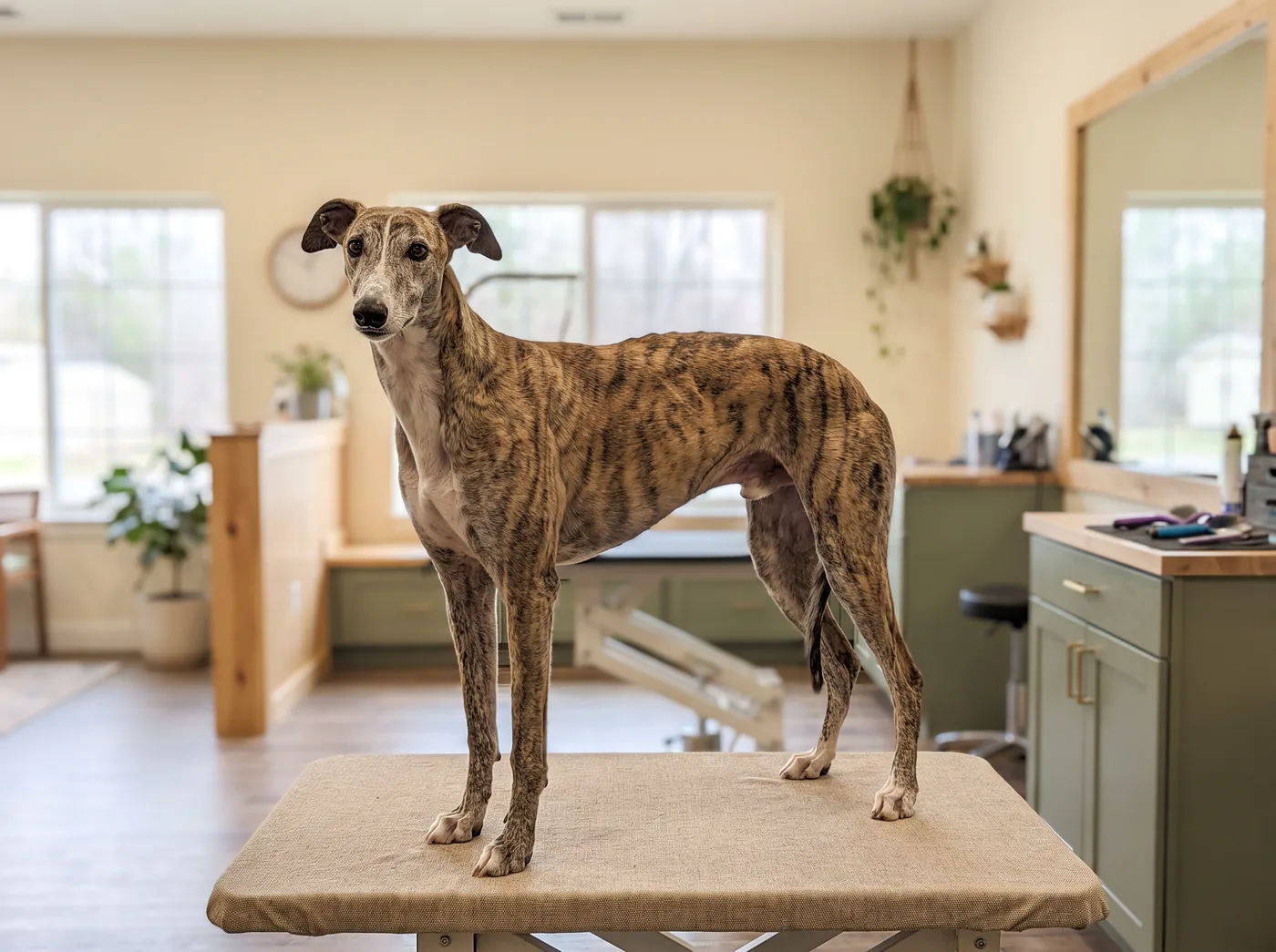
About the Greyhound
The Greyhound has one of the least demanding coats in dogs: extremely short, fine, single, lying tight to the body with no undercoat, no feathering and nothing that mats. Five minutes a week and there is genuinely nothing else to do to it.
Everything worth knowing about a Greyhound is therefore not about hair, and this page is mostly a list of four things that are specific to the breed and that new owners, especially of retired racers, are routinely not told.
The teeth are among the worst in dogs. The pads develop a painful lesion almost unique to sighthounds. The thighs go bald and it usually means nothing. And the skin is thin enough to tear on things another breed would walk through. A groomer clipping nails is looking directly at two of those, which is why they belong on a grooming page rather than only in a veterinary one.
The teeth, which are the real job
Greyhounds have a deserved reputation for the worst dental health of any breed, and in retired racers it is frequently severe on arrival.
Several things combine. There appears to be a genuine breed predisposition to periodontal disease. Racing kennel diets have often been soft, giving no mechanical cleaning. Dental care during a racing career is rarely a priority. And the narrow muzzle crowds the teeth.
The result is that a four year old ex-racer can arrive with heavy tartar, inflamed gums, bone loss and teeth that need extracting, and the dog will have shown almost no sign of it, because dogs conceal oral pain extremely well.
What to do: get the mouth assessed by a veterinarian early, expect a scale and polish under anesthesia to be part of settling a retired racer in, and start daily brushing as soon as the mouth is comfortable. Daily brushing with a dog toothpaste is the only thing with real evidence behind it; chews and additives help a little and replace nothing.
Ask your groomer to look and tell you what they see. Groomers handle a lot of mouths and are often the first to notice a problem.
One caution that belongs here: Greyhounds are unusually sensitive to anesthesia, so any dental work needs a practice that knows sighthound protocols. That is covered again below.
Corns, which almost only happen to sighthounds
This is the one most owners have never heard of, and it is genuinely findable during a nail trim.
A corn is a hard, dense plug of keratin that forms within a pad, usually a front weight bearing toe pad. It looks like a small pale circular callus set into the pad, often slightly raised, and it is painful because the dog is walking on it with every step.
It is almost exclusive to sighthounds and Greyhounds most of all, and the reason is thought to be the very thin pad tissue over a bony foot with almost no fat padding, which is exactly what makes them fast.
The classic presentation is an intermittent limp that is worse on hard surfaces and better on grass, with no obvious injury. That pattern is very characteristic and it is frequently misdiagnosed as a shoulder or leg problem for months.
How to check: with the dog relaxed, press each pad gently with a thumb. A corn produces a clear reaction where the surrounding pad does not. Look for a small circular area that is smoother, paler or slightly proud of the pad around it.
Treatment is a veterinary matter and there is no single reliable cure: hulling, surgical removal, and protective boots are all used, and recurrence is common. Getting it identified is the valuable part.
Ask your groomer to look at the pads whenever they do the nails, and to tell you about anything circular and firm.
Bald thighs, thin skin and the cold
Three coat and skin points, and the first is the one that causes unnecessary worry.
Bald thighs are close to universal in racing bred Greyhounds: a symmetrical loss of coat on the outside of both thighs, sometimes extending to the chest and belly. It is cosmetic, the dog is untroubled, and the cause is debated, with kennel bedding friction, stress and thyroid factors all proposed. In many retired racers it partially regrows once the dog is in a home with soft bedding and a settled routine. It is not mange and it does not need treating, though a sudden or asymmetric loss is worth a veterinary look.
Thin skin is real and it is the reason to be careful. Sighthound skin is thinner than that of comparable breeds, with less fat beneath and almost no coat over it, so brambles, wire, sharp branches and rough play produce long open tears where another breed gets a scratch. They look dramatic and are usually less serious than they appear, because the skin lifts cleanly, but they generally need stitching. Check the dog over after any run in the countryside, and use soft tools only when grooming.
Cold follows from the same architecture: no undercoat, minimal body fat, a large lean frame. A Greyhound genuinely feels the cold, and a coat in cold or wet weather is practical equipment. Shivering, hunching and lifting feet off cold ground are real signals.
They also get pressure sores on the hips and elbows from lying on hard floors, so thick soft bedding matters more here than for most dogs.
Anesthesia, and the rest of the routine
The coat routine is five minutes: a hound glove or soft rubber mitt once a week along the lie, which lifts the loose hair and spreads the skin oils. Shedding is light. A bath every couple of months at most, since over bathing dries thin skin. No slickers and no stiff bristles.
Nails every three to four weeks, and they grow fast. Doing them is also when the pads get checked.
Ears are rose shaped and folded back, open and well ventilated, so problems are uncommon and a weekly look is enough.
The item that is not grooming but belongs on any Greyhound page: sighthounds are unusually sensitive to anesthesia and to some sedatives. Low body fat, high muscle mass and differences in how they metabolize certain drugs mean standard protocols can leave a Greyhound taking far longer to recover. It matters directly here because dental work is so often needed, and because a dog that cannot be handled for nails is sometimes sedated. Use a practice that knows sighthound protocols, and say so.
Also worth knowing: a Greyhound at a healthy weight looks underfed to anyone used to other breeds. You should see the last few ribs, the hip bones and a deep tuck. That is correct and a stranger commenting on it is not a reason to feed more.
What to tell your groomer
Ask them to look at the pads while doing the nails and tell you about anything small, circular and firm. Explain what a corn is, because many groomers have not met one.
Ask them to look at the teeth and say what they see, particularly on a recently retired racer.
Say the skin is thin and tears easily, and ask for soft tools only, no slicker.
Ask for a proper dry rather than a towel and out, because this dog gets cold.
Explain the bald thighs so nobody treats them as a skin condition, and point out any pressure sores on the hips or elbows.
And say the dog is a sighthound if the salon is not used to them, because the build, the skin and the handling are all different from what a groomer expects at that size.
Keeping the coat between grooms
Brush the teeth
The worst dental health of any breed, and severe on arrival in most retired racers. Daily, once the mouth is comfortable.
Daily
Press each pad for corns
A limp that is worse on pavement and better on grass is the classic sign, and it gets misdiagnosed for months.
Every nail trim
Hound glove, soft tools only
Five minutes along the lie. No slicker and no stiff bristle: the skin is too thin for either.
Weekly
Keep the dog warm and padded
No undercoat and no fat. A coat in cold weather, and thick bedding so the hips and elbows do not go sore.
Always
Common Questions About the Greyhound
Do Greyhounds need grooming?
Barely, for the coat. A hound glove or soft mitt once a week along the lie is the whole routine, and a bath every couple of months at most since over bathing dries thin skin. There is no undercoat, no matting and nothing to cut. What is genuinely worth a professional is the nails, which grow fast, and having somebody look at the pads and the teeth while they do it, because both are where this breed actually has problems.
What is a corn and how do I know if my Greyhound has one?
A hard plug of keratin that forms inside a pad, usually on a front weight bearing toe, and it hurts because the dog walks on it constantly. It is almost exclusive to sighthounds, because their pads are thin over a bony foot with little padding. The classic sign is an intermittent limp that is worse on hard surfaces and better on grass, with no obvious injury, and it is often misdiagnosed for months. Press each pad gently: a corn gives a clear reaction where the surrounding pad does not.
Why does my Greyhound have bald thighs?
It is close to universal in racing bred Greyhounds and it is cosmetic. Symmetrical hair loss on the outside of both thighs, sometimes reaching the chest and belly, with the dog entirely untroubled by it. The cause is debated, with kennel bedding friction, stress and thyroid factors all proposed, and it often partially regrows once a retired racer settles into a home with soft bedding. It is not mange and needs no treatment, though sudden or asymmetric loss is worth a veterinary check.
Similar breeds
Same coat, same schedule, or the breeds this one is crossed from.


Doberman Pinscher
The shortest coat on the site, and the dog most likely to get cold
Doberman PinscherFind a groomer who knows this coat
Search 37,863 groomers by town, or keep reading the breed guide.
Find a Local Groomer View All Breeds