Whippet Grooming
The least coat on the site, over skin thin enough to tear on a bramble
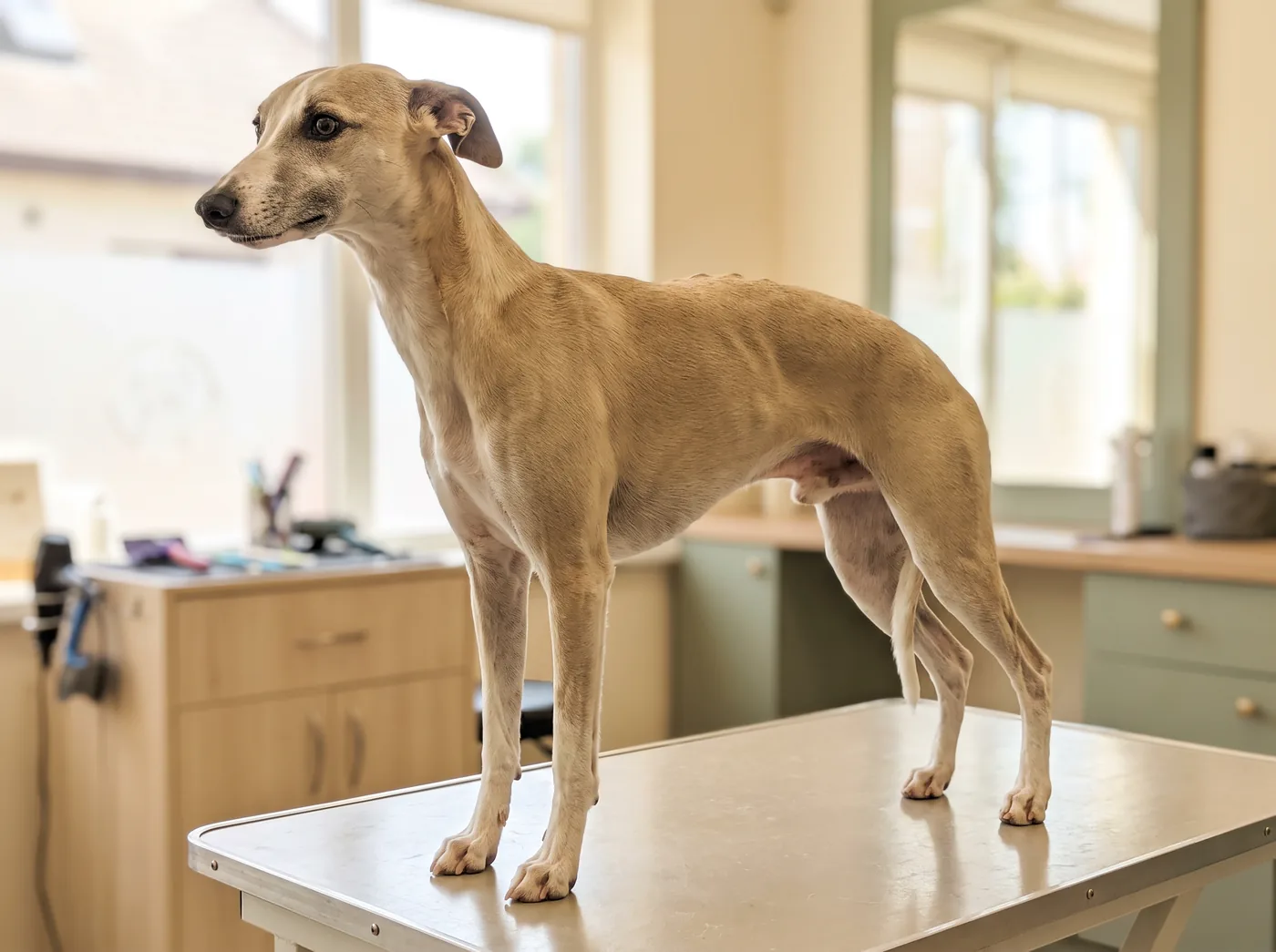
About the Whippet
The Whippet has less coat than almost any other dog: extremely short, fine, single, lying tight to the body, with no undercoat, no feathering and no seasonal blow.
The grooming routine is about five minutes a week and there is nothing a salon can offer that an owner cannot do at home, apart from the nails. It is genuinely one of the easiest dogs to keep clean anywhere.
What the breed does have is skin, and very little between that skin and the world. A Whippet is a sighthound built to run flat out, with a lean frame, minimal body fat and skin that is noticeably thinner and more delicate than a normal dog's. It tears on brambles and fences that another breed would walk through, and those tears frequently need stitches. That, and the fact that the dog is genuinely cold most of the year, is what this page is about.
The coat, and the five minutes it takes
Short, fine, close lying and genuinely single. There is no undercoat, no seasonal cycle and nothing to cut, comb or untangle.
A hound glove or a soft rubber mitt once a week, run along the lie of the coat, lifts what is loose and spreads the skin oils. That produces the sheen the breed is known for, and it is the entire brushing conversation.
Shedding is light and constant. The hairs are very fine and short, so they are much less troublesome in fabric than a Dalmatian or Jack Russell hair, and most Whippet owners consider the shedding a non-issue.
A bath every couple of months, or when the dog rolls in something. Over bathing strips a fine coat and dries skin that is already delicate, so less is genuinely more here.
Use a gentle shampoo and rinse thoroughly. Whippets react to residue more visibly than most breeds because there is no coat mass to hide it.
The one thing to be careful with is a slicker brush or any stiff bristle, which on skin this thin is uncomfortable and can scratch. Soft tools only.
The skin, which is the real subject
Sighthound skin is thinner than that of comparable breeds, with less subcutaneous fat under it and less coat over it. On a Whippet, all three are true at once.
The practical consequence is that Whippets tear. A bramble, a barbed wire fence, a sharp branch, a stone at speed, or another dog's tooth in play all produce injuries that would be a scratch on a Labrador and are a long open wound needing stitches on a Whippet. Owners of running sighthounds learn quickly to check the dog over after a run in the countryside.
The tears are usually far less serious than they look, because the skin lifts cleanly rather than the injury going deep, but they generally do need veterinary attention and they should not be left. Any tear longer than a scratch, anything that gapes, and anything on a leg is a call to the vet.
Practically, at grooming time: soft tools, no sharp edges near the skin, and care with clipper blades if any area needs shaving for a veterinary reason, because there is very little margin.
The skin also shows everything. Callused elbows on a bony dog that lies on hard floors, pressure sores on the hips of a thin dog with no padding, and every scrape and old scar are all visible. Thick soft bedding matters more for a Whippet than for most dogs of its size, and a bony dog on a hard floor will develop sore points.
Sunburn is possible on pale dogs, particularly on the thin coated belly, which a sunbathing Whippet presents to the sky.
Cold, which is not a costume
A Whippet has no undercoat, almost no body fat, a large surface area and a lean frame. It loses heat faster than nearly any dog its size, and coats for this breed are practical equipment rather than an affectation.
The signs are unmistakable once you know them: shivering, standing hunched with the back arched, lifting feet off cold ground, refusing to go outside, and burrowing under any available blanket. A Whippet that has dug itself into the duvet is not being spoiled, it is being warm.
A fitted fleece indoors in a cool house and a waterproof coat outdoors in cold or wet weather covers most of it. Shorter walks in freezing conditions, and a warm bed, preferably one with sides or a blanket the dog can get under.
It matters at bath time as well. A wet Whippet gets cold fast, so warm water, a warm room, and a prompt thorough dry on a low setting. This is one of the few very short coated breeds where drying properly is about the dog rather than the coat.
Whippets are also unusually sensitive to anesthesia and to some drugs, a sighthound characteristic related to low body fat and differences in how they metabolize certain compounds. That is a veterinary matter rather than a grooming one, but it is worth knowing before any procedure and worth telling any vet who is not familiar with sighthounds.
Nails, teeth and the rest
Nails are the job that genuinely needs doing and the one Whippets most object to. They grow fast, the quick is long, and a dog that runs on grass wears very little down. Overlong nails change the angle of the toes on a breed whose feet take a great deal of load at speed.
Every three to four weeks, small amounts frequently. Many Whippets tolerate a grinder better than clippers, and handling the feet from puppyhood is what makes this possible at all.
Teeth matter more here than in many breeds. Sighthounds as a group have a reputation for dental disease and Whippets are no exception, so daily brushing is genuinely worth establishing, and professional cleanings should be expected across a twelve to fifteen year life.
Ears are rose shaped and folded back, open enough that airflow is good and problems are uncommon. A weekly look is enough.
Check the feet and legs after any run in the countryside, for tears, thorns and grass seeds.
And keep the dog lean but not thin. A Whippet is supposed to show the last two or three ribs and have a visible waist and tuck, which alarms people who are used to other breeds. A Whippet at a healthy weight looks underfed to a stranger and is not.
What to tell your groomer
Most Whippet owners never need a salon for the coat, and that is the right outcome rather than a gap.
If you do book, say the skin is thin and easily torn, and ask for soft tools only, no slicker and nothing with a stiff bristle.
Ask for a proper dry rather than a towel and out, because this dog gets genuinely cold.
Ask for the nails, which is the main practical reason to go, and say honestly how the dog is about its feet.
Point out any scars, tears or sore pressure points on the elbows and hips so they are worked around.
And say the dog is a sighthound if the salon is not used to them, because the build, the skin and the temperament are all different from what a groomer expects at that size.
Keeping the coat between grooms
Hound glove, soft tools only
Along the lie of the coat. No slicker and no stiff bristle: the skin is too thin for either.
Weekly
Check the skin after a run
Brambles and wire produce tears that need stitches on this breed. Anything that gapes goes to a vet.
After countryside walks
Keep the dog warm
No undercoat, no fat, no bulk. A fleece indoors and a waterproof coat out, plus a bed it can burrow into.
Cold weather
Brush the teeth
Sighthounds have a real reputation for dental disease, over a twelve to fifteen year life.
Daily
Common Questions About the Whippet
Do Whippets need grooming?
Barely. A hound glove or soft rubber mitt once a week along the lie of the coat is the whole routine, and a bath every couple of months at most, since over bathing dries delicate skin. There is no undercoat, no seasonal shed, nothing to cut and nothing that mats. The only job genuinely worth a salon is the nails, which grow fast and are hard to do on a dog that objects. Avoid slickers and stiff bristles entirely: the skin is too thin for them.
Does a Whippet need a coat in winter?
Yes, and it is practical rather than decorative. No undercoat, almost no body fat, a lean frame and a large surface area mean a Whippet loses heat faster than nearly any dog its size. Shivering, hunching with an arched back, lifting feet off cold ground and burrowing under blankets are all genuine signals. A fleece indoors in a cool house and a waterproof coat outdoors in cold or wet weather, plus a bed the dog can get under, solves it.
Why does my Whippet skin tear so easily?
Because sighthound skin is genuinely thinner than that of comparable breeds, with less fat beneath it and almost no coat over it, and a Whippet has all three at once. Brambles, wire, branches and rough play produce long open tears where another breed would get a scratch. They usually look worse than they are, since the skin lifts cleanly rather than the injury going deep, but anything that gapes or is longer than a scratch needs veterinary attention. Check the dog over after any run in the countryside.
Similar breeds
Same coat, same schedule, or the breeds this one is crossed from.

Doberman Pinscher
The shortest coat on the site, and the dog most likely to get cold
Doberman Pinscher
Find a groomer who knows this coat
Search 37,863 groomers by town, or keep reading the breed guide.
Find a Local Groomer View All Breeds