LaPerm Grooming
A curl you wash and leave to dry untouched, where a Selkirk is combed and a Cornish is not
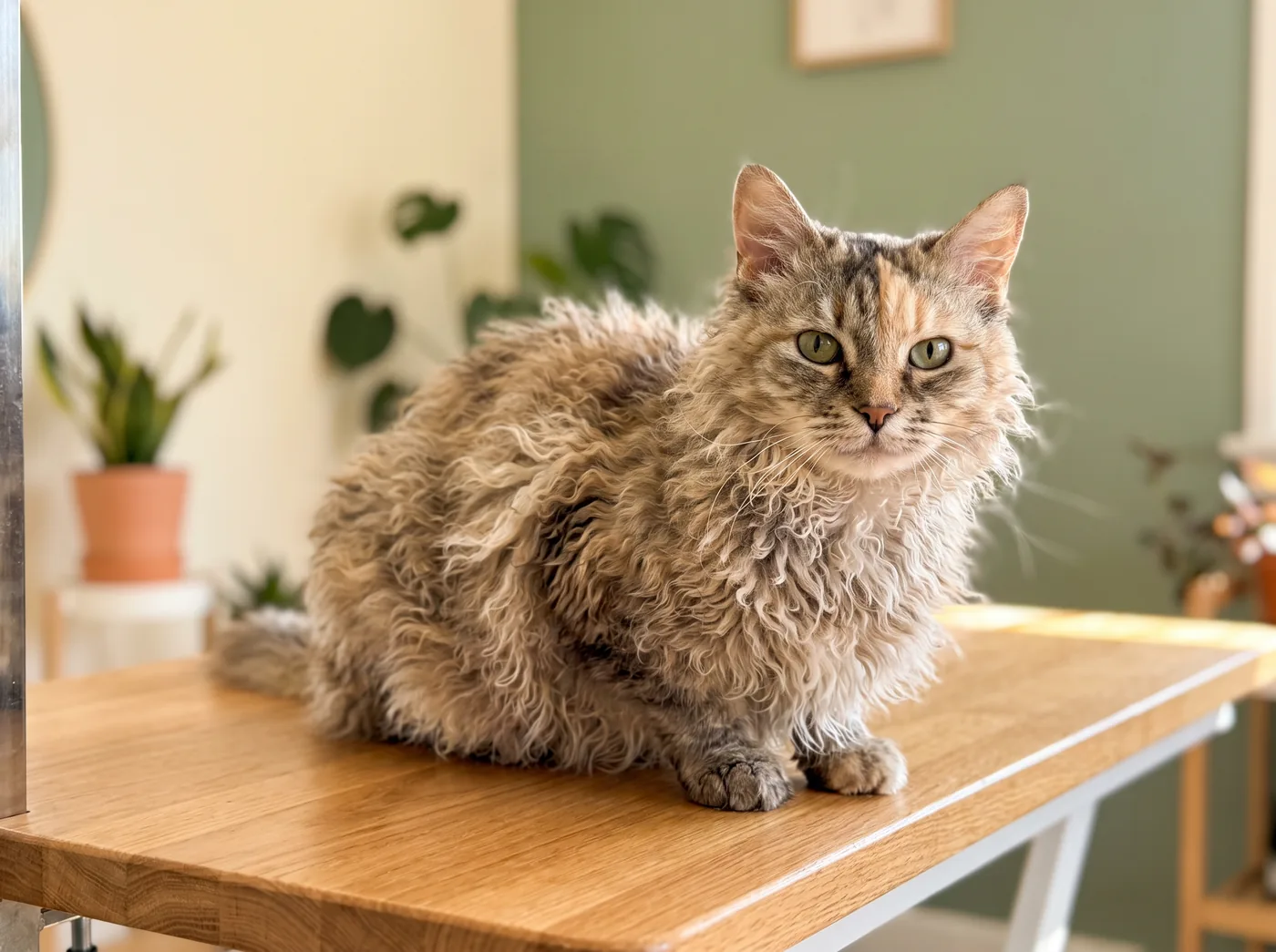
About the LaPerm
The four curly cats do not take the same treatment, which is exactly why the coat matters more than the name on the pedigree.
A Cornish Rex has a deformed, fragile down coat that breaks if you work it, so it is barely touched. A Devon Rex is similar and needs its skin oil managed instead. A Selkirk Rex has a thick plush curl over a real undercoat and does need combing, because it genuinely mats.
A LaPerm is the fourth answer. The coat is a full length curl, springy and light, forming ringlets and loose corkscrews, and it is not fragile like a Cornish. But brushing it out destroys the curl pattern and leaves a frizz that takes weeks to settle, so the instruction is different again: wash it, squeeze it, and leave it alone to dry.
The LaPerm has a double coat that regulates its own temperature. Shaving it does not keep the animal cooler, removes the protection against sun and insects, and the top coat often grows back patchy or never returns correctly. A thorough deshed takes out the undercoat and does the job the owner was actually asking for.
Wash, squeeze, leave alone
The coat is a genuine curl rather than a wave: springy ringlets and loose corkscrews, tightest around the neck, the belly and the base of the ears, with a curly plumed tail. Whiskers curl too, and they are brittle and break, which is normal.
The routine is minimal and it is specific.
Comb gently once a week with a wide toothed comb, working slowly and only as far as the coat allows, to catch tangles early. Do not use a slicker, and do not brush the coat out to make it look tidier. A slicker straightens and separates the curl, which is precisely the wrong outcome, and the frizz it leaves can take weeks to curl back.
If the cat is bathed, and most LaPerms rarely need it, do not rub it dry with a towel. Squeeze the water out of the coat in your hands, blot gently, and then let it air dry undisturbed. The curl re-forms as it dries, and interfering with that is what wrecks it. No dryer, no brushing while damp.
Some LaPerms have a light undercoat and some do not, and the ones that do can tangle at the armpits and britches. That is what the weekly comb is for.
Shedding is low, and this is a coat that mostly looks after itself if left to.
The four curls, side by side
Worth setting out plainly, because a groomer who has met one rex will reasonably assume the others behave the same way and they do not.
Cornish Rex: a very short, fine, fragile down coat with no guard hairs. The hair breaks if it is worked, so it is stroked with a hand or a piece of silk and effectively never brushed. Bald patches from over-grooming are a real risk.
Devon Rex: similar fragility, plus notably greasy skin and nail beds that need regular attention. Skin care rather than coat care.
Selkirk Rex: thick, plush, full curls over a genuine undercoat. This one does mat, and it does need combing, which makes it the outlier among the rexes.
LaPerm: a full length springy curl that is robust enough to comb gently but is ruined cosmetically by brushing it out. Wash and leave.
The common thread across all four is that a slicker brush is the wrong tool, for four different reasons. That is worth saying to any groomer who has not handled the breed.
The other common thread is that none of them should be clipped. A curl that is clipped can come back with a different texture, and on the fragile coats it may not come back evenly at all.
The coat that comes and goes
LaPerms do something that alarms owners who have not been warned: they moult dramatically, sometimes going nearly bald in patches, and then grow the coat back.
Kittens are often born bald or with a straight coat, lose what they have, and go through one or more coat changes before the adult curl settles, which can take up to two or three years. A kitten that is bald or straight coated at eight weeks may still end up in full ringlets.
Adults can also shed heavily after a season, an illness or a stress, and regrow.
None of that is a health problem in itself, and it is worth knowing so it is not treated as one.
What is a health problem, and needs a veterinarian, is hair loss that is symmetrical on both flanks, comes with itching, scaling, redness or a smell, or is accompanied by a cat that seems unwell. Those point at parasites, allergy, or a hormonal condition rather than a breed coat cycle.
Coat texture also varies with the season and with the individual, and two LaPerms from the same litter can look quite different.
Ears, claws and an affectionate cat
With almost no coat work, the rest of the routine is what matters.
Ears are large and fairly open on this breed and the curl at the base of the ear can trap a little debris, so wipe the visible part weekly with a soft damp cloth and never push anything into the canal.
Claws want tipping every two to three weeks: the sharp tip only, well clear of the quick. Provide a post and do not consider declawing, which is an amputation of the last bone of each toe.
Teeth as for every cat, and dental pain is one of the main reasons a cat stops grooming itself.
LaPerms are notably people oriented and demonstrative, often described as wanting to be on a shoulder or in a lap continuously, which makes the weekly handling straightforward if it starts in kittenhood. Keep sessions short and stop before the cat has had enough.
Because they are so affectionate they are also good candidates for regular home health checks: run your hands over the whole cat weekly and you will notice a lump, a scab or weight change early.
What to tell your groomer
Say the curl is never brushed out and a slicker is not to be used, since that is the reflex with any curly coat.
Say that if the cat is bathed it must be squeezed and left to air dry, not towel rubbed or blown dry.
Ask for a wide toothed comb only, gently, to check for tangles at the armpits and britches.
Say the coat is not to be clipped.
Mention the moult if the cat is mid way through one, so patchy hair loss is not recorded as a skin problem.
Ask for claws tipped and the ears wiped on the visible part only.
Keeping the coat between grooms
Wide toothed comb, gently
Once a week, armpits and britches. Never a slicker: it frizzes the curl for weeks.
Weekly
Squeeze, blot, air dry
If bathed at all. No towel rubbing and no dryer. The curl re-forms as it dries.
If bathed
Tip the claws
Sharp tip only, clear of the quick. A post, never declawing.
Every two to three weeks
Hands over the whole cat
A demonstrative lap cat makes weekly health checks easy. Lumps, scabs, weight.
Weekly
Common Questions About the LaPerm
How do you groom a LaPerm's curly coat?
As little as possible, and never with a slicker. Comb gently once a week with a wide toothed comb to catch tangles at the armpits and britches, and otherwise leave it. Brushing the coat out straightens and separates the ringlets and leaves a frizz that can take weeks to curl back. If the cat is bathed, squeeze the water out by hand, blot gently, and let it air dry undisturbed rather than towel rubbing or using a dryer, because the curl re-forms as it dries.
Is a LaPerm groomed like a Cornish or Selkirk Rex?
No, and all four curly cats take different handling. A Cornish Rex has a fragile down coat that breaks if worked, so it is barely touched. A Devon Rex is similar plus greasy skin needing attention. A Selkirk Rex has plush curls over a real undercoat and genuinely does need combing because it mats. A LaPerm is robust enough for a gentle weekly comb but is ruined cosmetically by brushing out. The one thing all four share is that a slicker brush is the wrong tool.
My LaPerm has gone bald in patches. Is that normal?
Often yes, and it is worth knowing in advance. LaPerms moult dramatically and regrow, and kittens are frequently born bald or straight coated and go through one or more coat changes before the adult curl settles, sometimes taking two or three years. Adults can shed heavily after a season, illness or stress and grow it back. What is not normal is hair loss that is symmetrical on both flanks, or comes with itching, scaling, redness, a smell or a cat that seems unwell, and that needs a vet.
Similar breeds
Same coat, same schedule, or the breeds this one is crossed from.

Selkirk Rex
The one Rex with a coat dense enough to mat, which is why the other Rex advice will ruin it
Selkirk Rex

Find a groomer who knows this coat
Search 37,863 groomers by town, or keep reading the breed guide.
Find a Local Groomer View All Breeds