Devon Rex Grooming
A curl on a cat, and a coat too fragile to brush the way you would a dog
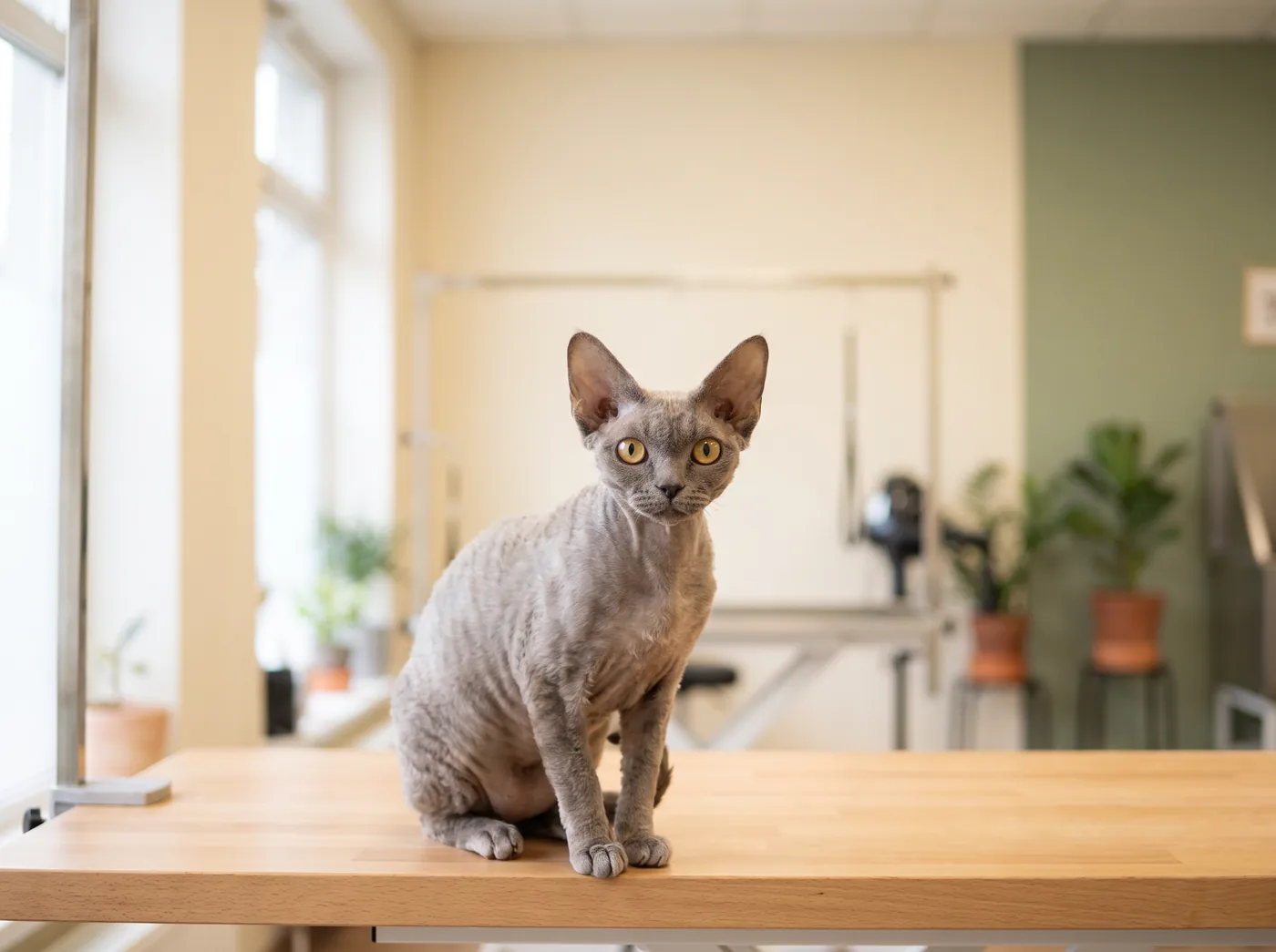
About the Devon Rex
The Devon Rex is the clearest reason coat types are worth grouping across both animals rather than splitting dogs from cats. It carries a genuine curl, produced by a mutation affecting the hair shaft, and it sits on the same coat type page as the Poodle and the Bichon Frise.
What it does not share with them is anything about the routine. A Poodle coat is dense, grows continuously and must be combed to the skin daily. A Devon Rex coat is short, sparse, extremely fine and fragile, and brushing it the way you would brush a dog snaps the hair and leaves thin patches.
So this is a curly coat that needs almost no coat work and a fair amount of skin work, which is the opposite of every dog on that page. It has more in common with its Sphynx cousin than with a Poodle, and that is worth knowing before somebody reaches for a slicker.
This coat can be clipped, but the texture or the color may change and it will not always come back the same. Talk it through with your groomer before the first one.
A curly coat that must not be brushed
The Devon Rex coat is the product of a mutation that affects the structure of the hair itself. The hairs are short, thin, loosely waved and considerably weaker than a normal cat's, and in places the coat is genuinely sparse, particularly on the chest, the belly and behind the ears.
That fragility is the operative fact. A slicker brush, a comb with any pressure behind it, or vigorous stroking will break the hair and leave thin or bald patches, and it grows back slowly.
The correct tool is your hand, or at most a very soft cloth or a rubber grooming mitt used gently along the way the coat lies. That is genuinely the whole coat routine, and once a week is plenty.
Some Devon Rex cats also go through a natural moult as kittens or young adults where the coat thins noticeably before filling back in. That is a known feature of the breed rather than a health problem, though sudden thinning in an adult cat is worth a veterinary check.
If a groomer reaches for a slicker on a Devon Rex, stop them. That is the single most useful thing on this page.
The skin, which is where the actual work is
A normal coat absorbs the oil the skin produces and wicks it along the hair shaft, spreading it and eventually shedding it away. A Devon Rex coat is too short and too sparse to do much of that, so the oil stays on the skin, and this breed shares that problem with the Sphynx rather than with any dog on the curly coat page.
The result is skin that feels tacky or greasy to the touch, particularly along the back, under the chin and in the folds at the neck and armpits. It picks up dust and lint, and left long enough it produces blocked follicles and, in some cats, blackheads along the chin and tail.
Bathing on a schedule is the answer, roughly every two to four weeks depending on the individual cat, using a gentle unscented shampoo for sensitive skin and rinsing thoroughly, because residue on this skin irritates it directly.
Do not over bathe. Stripping the skin makes it produce more oil rather than less and the routine escalates. If the skin looks dry or flaky, extend the interval before you add any product.
Between baths a damp cloth over the folds and the back handles most of what accumulates. Water and room should be comfortably warm: these are small, lean cats with almost no coat and they get cold fast.
Ears and nail beds, and the parts owners miss
Devon Rex ears are enormous, low set and relatively bare inside, and they produce a striking amount of dark waxy debris, considerably more than a normal cat. The same oil that collects on the skin collects there, and there is little hair in the canal to slow it down.
Weekly cleaning with a cotton pad and a proper ear cleaner is routine for this breed, never a cotton bud pushed into the canal. Left alone it builds into a plug and it is a common route into an infection.
Nail beds are the part owners miss entirely, exactly as with the Sphynx. Oil and dirt collect in the fold of skin around the base of each claw and harden into a brown waxy ring. It is uncomfortable, it smells, and it can become infected. Wipe around each nail bed at bath time and clip the nails while you are there.
The same applies to any skin fold: the neck, the armpits and the groin. Damp cloth, then dry.
What moves the price
Very little, because most of this is a home routine and there is no coat work to speak of. Many Devon Rex owners never book a groomer at all, which is a reasonable choice.
Where a groomer earns their money is on a cat that objects to being bathed, and on knowing not to brush the coat, which is a genuinely breed specific piece of knowledge.
The other factor is availability. Cat grooming is a smaller specialism and cat-only groomers are thinner on the ground.
What costs money over a Devon Rex lifetime is not grooming: it is heating, and the veterinary attention that a breed with known heart and skin issues warrants.
What to tell your groomer
Say the breed clearly and say the coat must not be brushed with a slicker or combed hard. A groomer used to Persians will reach for a comb by reflex.
Say what shampoo you use and how often you bathe, because the wrong product on this skin causes a reaction that takes a fortnight to settle.
Ask about water and room temperature. A wet Devon Rex gets cold very quickly and any groomer who works with the rex and hairless breeds will already have thought about it.
Ask that ears and nail beds are done as part of the appointment rather than as extras, because on this breed they are the appointment as much as the bath is.
And if you are doing it yourself, which most owners do, the skin routine is on the hairless page in more detail, because that is genuinely the closer relative here.
Keeping the coat between grooms
No slicker, no hard combing
The hair is fragile and snaps. Your hand, a soft cloth or a gentle rubber mitt along the coat is the entire routine.
Weekly
Bathe on a schedule
Every two to four weeks with a gentle unscented shampoo, rinsed thoroughly. Warm water, warm room, prompt drying.
Every two to four weeks
Clean the ears
Large, bare and heavy on wax. A cotton pad and proper cleaner, never a bud into the canal.
Weekly
Wipe the nail beds
A brown waxy ring collects around each claw base, exactly as on a Sphynx. The part owners miss completely.
At every bath
Common Questions About the Devon Rex
Do I brush a Devon Rex like a Poodle?
No, and this is the most important thing to know about the breed. They share a curl and nothing else. A Devon Rex coat is short, sparse and fragile, and brushing or combing it with any pressure snaps the hair and leaves thin patches. Use your hand, a soft cloth or a gentle rubber mitt along the coat, once a week. The work on this cat is skin and ears, not coat.
Why does my Devon Rex feel greasy?
Because there is not enough coat to absorb and spread the oil the skin produces, so it sits on the skin instead. It is the same problem a Sphynx has and it is normal for the breed rather than a sign of poor health. Bathe every two to four weeks with a gentle unscented shampoo and rinse thoroughly. Do not over bathe: stripping the skin makes it produce more oil, not less.
Are Devon Rex cats hypoallergenic?
No. The allergen is a protein in dander and saliva rather than in hair, and a Devon Rex produces both. Some people react less because there is less coat to hold and distribute dander around a room, and the breed sheds very little, but plenty of allergy sufferers react to one exactly as they would to any cat. Spend real time with an individual cat before committing.


Find a groomer who knows this coat
Search 37,863 groomers by town, or keep reading the breed guide.
Find a Local Groomer View All Breeds