Otterhound Grooming
An oily rough double coat you must not wash the oil out of, on webbed feet
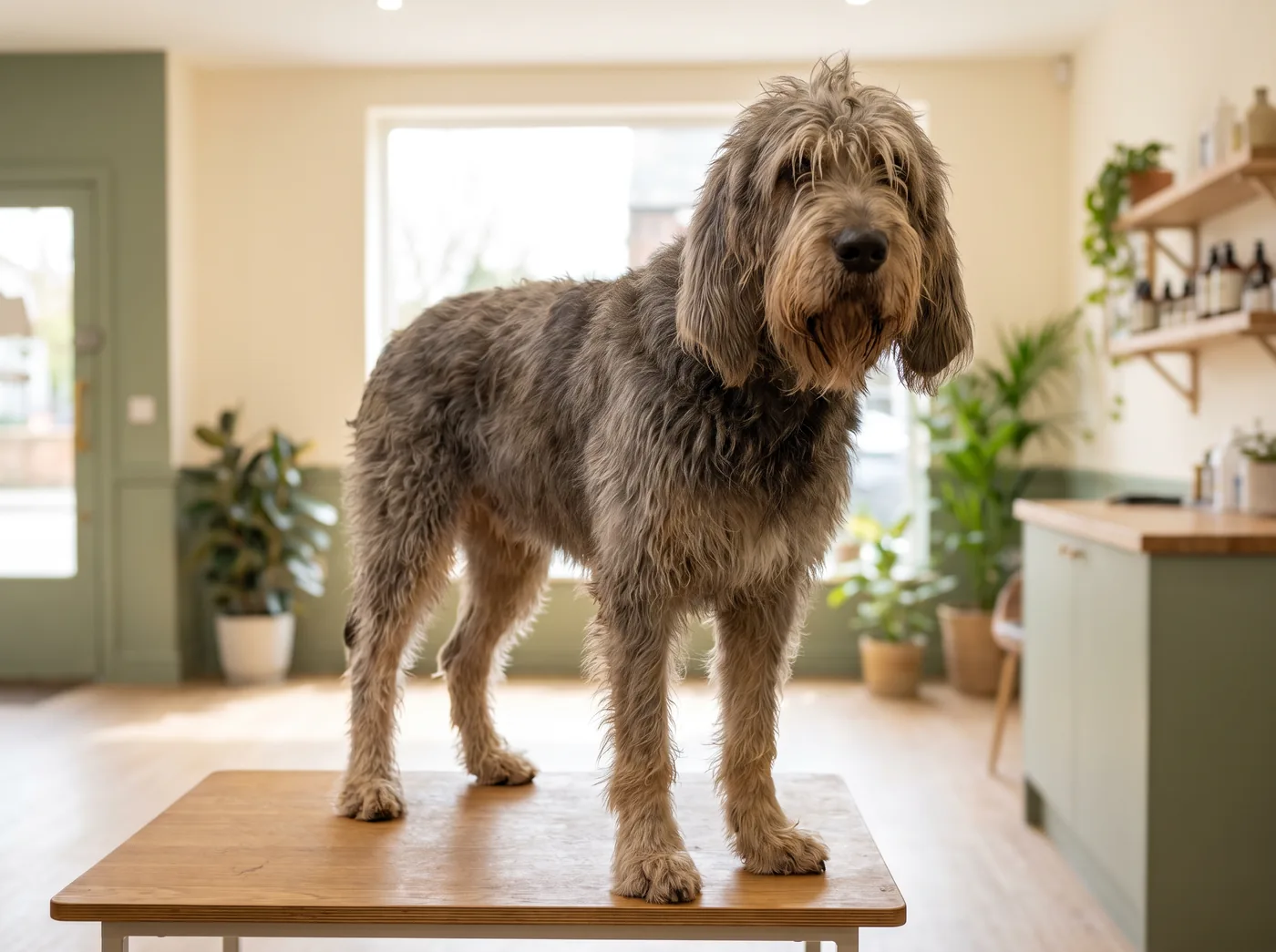
About the Otterhound
One of the rarest breeds in the world, with only a few hundred left, and a coat built for a job nobody does any more: hunting otters in cold British rivers.
That job produced three unusual features. The outer coat is rough, dense and noticeably oily, three to six inches long, over a woolly water resistant undercoat. The feet are fully webbed, more so than almost any other dog. And the nose is one of the best in dogs.
The oil is the part that changes the grooming, and it works exactly like the Toller page describes but more so: shampoo strips it, the coat loses its water resistance, and it takes weeks to come back.
So this is a large shaggy dog that is bathed rarely on purpose, and yes, it smells houndy. That is the trade.
The Otterhound has a double coat that regulates its own temperature. Shaving it does not keep the animal cooler, removes the protection against sun and insects, and the top coat often grows back patchy or never returns correctly. A thorough deshed takes out the undercoat and does the job the owner was actually asking for.
The oil, and bathing rarely
The outer coat carries a natural oil that makes water bead and run off, which is what let a hound work in cold water for hours without chilling. It is more pronounced here than on any other breed.
Shampoo removes oil, and a coat washed regularly loses the water resistance, goes flat and soft, and takes weeks to rebuild it.
So bathe every three months or so, and less if you can. Use a plain gentle shampoo rather than anything degreasing, and rinse thoroughly.
Rinsing with plain water after a swim in salt or chlorinated water is fine and worth doing, since neither strips oil the way shampoo does.
The consequence owners have to accept is smell. An Otterhound is a houndy dog and the oily coat holds it, and bathing more often makes it worse rather than better, exactly as on the Bluetick page.
What genuinely helps between baths is the weekly brush, keeping the beard clean, drying the dog properly after water, and washing the bedding.
A sudden change in smell is different and points at ears, teeth, skin or anal glands.
Brushing a shaggy coat with an undercoat
The outer coat is rough and shaggy rather than harsh and tight, and there is a woolly undercoat beneath it. That combination mats.
Brush weekly, working in sections with a slicker and then a comb, and rake the undercoat when it is shedding. On a coat this length that is a real forty minute job rather than a token going over.
The places that fail: the beard first, then behind and under the ears, the armpits, the chest, the britches and around the tail.
Dry the dog properly after every swim. A woolly undercoat left damp under an oily outer coat sours and grows hot spots, and on a dog this size the chest and armpits stay wet longest.
Do not clip. It is a double coat with the usual consequences, and clipping also removes the oily outer layer that the whole coat depends on. Regrowth on this breed is slow and often comes back soft.
Trimming is functional only: pads, sanitary area, and tidying the hair around the ear openings.
Some owners tidy the beard shorter, which helps considerably and is fine.
Webbed feet, and the beard
The feet are large and fully webbed, with substantial membrane between the toes, and they are one of the defining features of the breed.
They need checking, because webbing traps things. Grit, mud, grass seeds and ice all collect between the toes and against the membrane, and the skin there can get sore and infected without being obvious.
Check and clear the feet after every walk and swim, and keep the hair between the pads trimmed level rather than shaved out from between the toes.
The beard is the other daily job. It is large, rough and absorbent, it goes fully into the water bowl at every drink, and an Otterhound carries a good deal of that water off with it.
Comb it daily, wipe and dry after meals and drinks, and wash it far more often than you bathe the dog. A shallow wide bowl helps.
A permanently damp beard on a dog with an oily coat sours quickly, and the skin under the chin gets sore.
The ears are very long, low set and heavily coated, hanging over the canal on a dog that swims, so lift weekly, look and smell, and dry after water.
A very rare breed, and a large one
There are only a few hundred Otterhounds in the world, and the breed is on multiple vulnerable breed lists. Most groomers will never see one, and most vets will not either.
That makes the owner the source of information. Say what the coat is and what it needs, and expect the default assumption to be that a shaggy large dog wants clipping.
At eighty to a hundred and fifteen pounds, size matters too: confirm the salon can handle it, ask for a non slip surface and breaks, and expect nails to need two people.
Deep chested, so bloat is a risk: no large meal around an appointment.
The breed has real rates of hip dysplasia and a bleeding disorder, and the latter is worth telling a vet about before any procedure.
Temperamentally they are amiable, boisterous and independent, with an enormous voice, and they are not naturally obedient. Handling has to be routine from puppyhood on a dog this size.
Their nose means an Otterhound that catches a scent stops listening, which is a door safety point at a salon.
What to tell your groomer
Say the coat is oily on purpose and must not be bathed more than about every three months, and no degreasing shampoo.
Say the coat is never clipped, and expect that to be the default suggestion on a shaggy dog this size.
Ask for the beard washed and dried and the hair around the mouth kept short.
Ask them to check between the webbed toes, which trap grit and seeds against the membrane.
Ask for the ears dried and checked, since these are long low ears on a dog that swims.
Say not to feed the dog around the appointment, and mention the bleeding disorder if any procedure is discussed.
Keeping the coat between grooms
Bathe about every three months
The oil is the coat's whole point and shampoo strips it. Less is genuinely more.
Every three months
Brush and rake in sections
A shaggy outer coat over a woolly undercoat. Forty minutes, not a token pass.
Weekly
Check between the webbed toes
Membrane traps grit, seeds and ice, and the skin gets sore without showing.
After walks and swims
Wash and dry the beard
It empties the water bowl across the room and sours if left damp.
Daily
Common Questions About the Otterhound
How often should an Otterhound be bathed?
About every three months, and less if you can manage it. The outer coat carries a pronounced natural oil that makes water bead and run off, which is what let the breed work in cold rivers, and shampoo strips it. A coat washed regularly loses its water resistance, goes flat and soft, and takes weeks to rebuild. Rinsing with plain water after a swim is fine. The trade you accept is smell: this is a houndy dog, and washing it more makes that worse rather than better.
Do Otterhounds really have webbed feet?
Yes, fully webbed, with substantial membrane between the toes and more of it than almost any other dog. It is a defining feature of the breed and part of what made it a serious swimmer. For grooming it means the feet need checking, because webbing traps things: grit, mud, grass seeds and ice all collect between the toes and against the membrane, and the skin there gets sore without being obvious. Check after every walk and swim, and trim the hair level with the pad rather than shaving between the toes.
Can an Otterhound be clipped to make it easier?
No, on two counts. It is a double coat, so clipping removes the protective outer layer and leaves the insulating undercoat, with the usual patchy or permanently soft regrowth. It also removes the oily outer coat the whole thing depends on for water resistance, which is the breed's defining coat property. Expect a groomer unfamiliar with the breed to suggest it, since a shaggy dog this size looks like a clipping candidate. Weekly brushing with a rake through the undercoat is the answer instead.
Similar breeds
Same coat, same schedule, or the breeds this one is crossed from.

Bloodhound
The longest ears and the deepest folds on any dog, and a great deal of drool underneath them
Bloodhound
Nova Scotia Duck Tolling Retriever
A water repellent coat that frequent bathing strips, on the smallest retriever
Nova Scotia Duck Tolling Retriever
Bluetick Coonhound
A ten minute coat under some of the longest ears in dogs, and a real hound smell
Bluetick CoonhoundFind a groomer who knows this coat
Search 37,863 groomers by town, or keep reading the breed guide.
Find a Local Groomer View All Breeds