Persian Grooming
The cat that genuinely needs a groomer, and the one owners realize it about too late
About the Persian
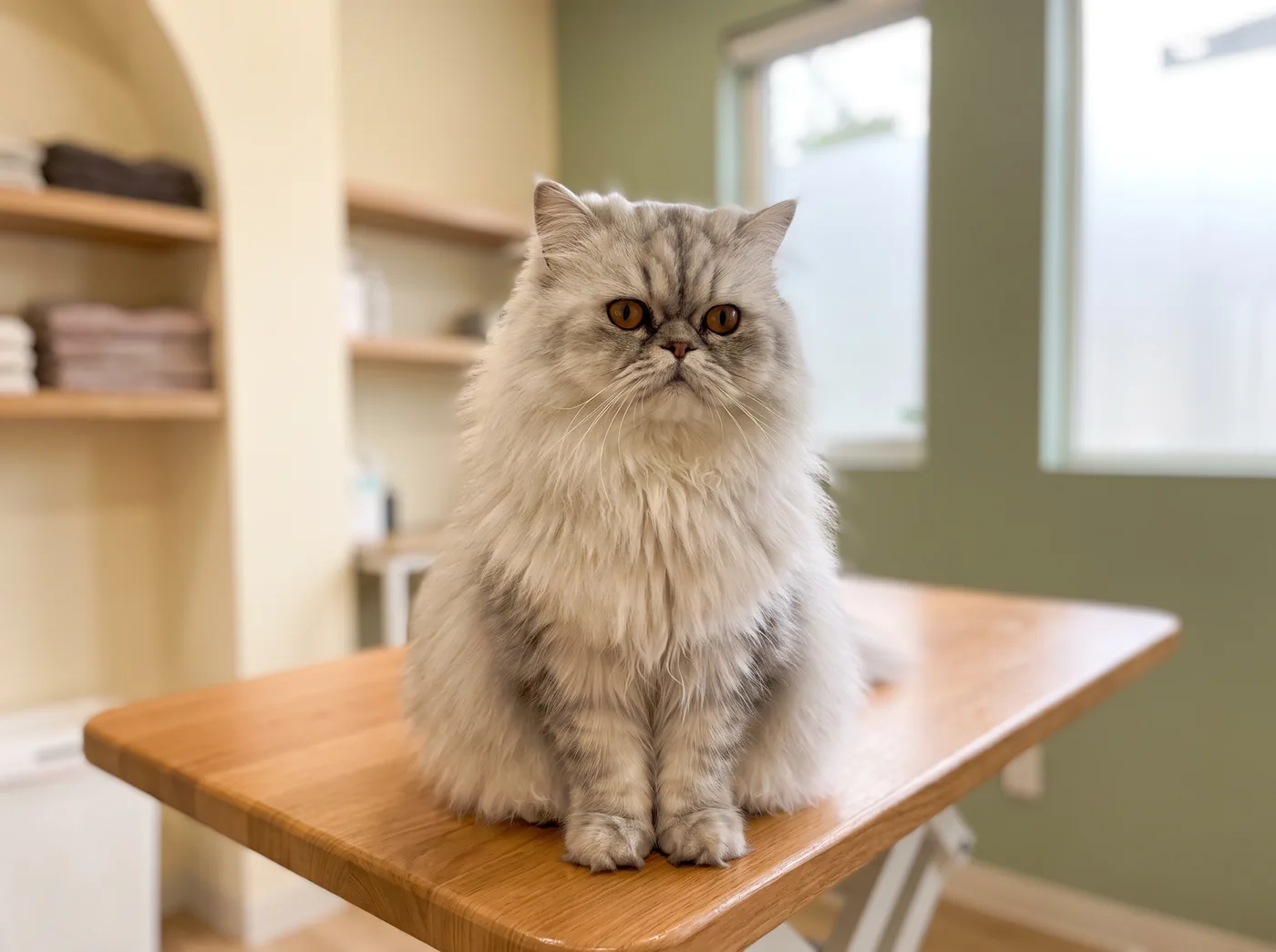
The Persian carries a long, fine, dense silky coat with a heavy ruff, and it is the one cat breed that genuinely cannot maintain itself. That is not a criticism of the cat. The coat is longer and finer than anything a cat's tongue was designed to manage, and the flat face makes it physically harder for a Persian to reach parts of its own body than it is for other breeds.
The result is the situation that brings most Persians to a groomer: a cat that looks immaculate from above and is felted solid underneath, in the armpits, on the belly and behind the ears, where nobody has looked.
The second half of the job is the face, and on this breed the face is a daily task rather than a styling question.
What a full groom involves
Slower and quieter than a dog appointment, and the pace is part of the technique rather than a courtesy.
It starts with a full comb through, dry, working in sections to find what is actually there. On a Persian this is the diagnostic stage: the coat over the back and sides is usually fine and the trouble is underneath, so the groomer works the armpits, the belly, the ruff under the chin, behind the ears and the base of the tail before deciding what the appointment is.
Anything felted is clipped out flat against the skin rather than cut with scissors. Then a bath, which most Persians tolerate better than owners expect, with a degreasing shampoo because the coat holds oil, then a thorough rinse and a full dry with a comb working through. A Persian coat left damp mats as it dries.
Then the detail work: the face wiped and the fold cleaned and dried, eyes cleaned, ears checked, nails clipped, the sanitary area trimmed short, and the hair between the pads removed.
Around two hours, and a good cat groomer will stop and come back rather than push a cat that has had enough.
How often, and what happens if you stretch it
Combed at home daily, professionally every four to six weeks. The daily part matters more than the appointment, and a Persian that is genuinely combed to the skin every day needs the groomer for tidying rather than rescue.
What happens when it slips is faster than most owners expect and it is invisible while it happens. Mats form against the skin in the places the cat cannot reach, they tighten, and because they pull on the skin every time the cat moves, the cat starts avoiding being touched there, which removes the last chance you had of noticing.
Left long enough the coat pelts: individual mats join into a solid sheet lifted off the skin. That is a welfare problem rather than a cosmetic one. The skin underneath is inflamed, sometimes broken, and occasionally has sores. A pelted cat is a clip off under a groomer or a veterinarian, and it is not a job for an owner.
Anything that reduces a cat's flexibility accelerates all of this sharply: weight gain, arthritis, dental pain that makes grooming uncomfortable, or a spell of illness. A Persian that has been fine for years can pelt within one season after any of those.
The coat problems a Persian actually gets
Hidden matting is the whole story, and the locations are consistent: the armpits, the inside of the back legs, the belly, the ruff under the chin, behind the ears and the base of the tail. Every one of those is out of sight when the cat is standing, and every one is somewhere a Persian struggles to reach.
Check weekly by running a comb through those six places rather than by looking at the cat. If the comb will not pass from the skin outward, a mat is forming.
The face is the second job and it is daily. The flat face compresses the tear duct, so the eyes water constantly, and the discharge runs into the facial fold, oxidizes and stains the hair reddish brown. That fold is warm, dark and permanently damp, which is a description of what yeast and bacteria need. Wipe it with a damp cloth and then dry it, and the drying is the half that gets skipped.
Then the sanitary area, which on a long coated cat is a genuine hygiene matter. Keeping it clipped short is standard and the cat is more comfortable for it.
And hairballs, because everything a cat pulls out of its coat it swallows. On a long coated breed that is a lot of hair, and combing is a better answer than any dietary product because hair removed by a comb is never swallowed.
What moves the price
Coat condition, overwhelmingly. A maintained Persian is a bath, a comb and a tidy. A pelted one is a clip off that takes far longer, needs more care, and sometimes has to be done in two sessions or under veterinary supervision.
Then temperament, which is a bigger factor with cats than with dogs. A cat that tolerates handling is a straightforward two hour appointment. One that does not needs a slower session, two people, or a different approach entirely, and a good groomer will price for the time rather than rush it.
Then whether the salon takes cats at all, which is the real constraint. Cat grooming is a smaller specialism, cat-only groomers are less common, and scarcity shows in the price.
What does not move it is size. Persians are all much the same size and it is irrelevant next to coat condition.
What to tell your groomer
Say honestly when the cat was last combed properly and whether you have found mats. A groomer who knows what is under the coat books the right amount of time; one who finds out at the start of a booked hour cannot.
Ask whether they work without sedation and what they do when a cat says no. The answer tells you a great deal. Sedation is a veterinary decision rather than a grooming one, and a badly pelted cat sometimes does need to be clipped under veterinary supervision. A groomer who suggests that is looking after your cat.
Ask whether the cat can be kept away from dogs and noise. It matters more than it does for a dog and any cat groomer will already have thought about it.
Say if the cat has put on weight, become less mobile, or had dental trouble recently, because all three change what the coat is about to do.
And if the answer that day is a lion cut, take it. It removes the whole problem in one session instead of putting the cat through a long dematting, the coat grows back true with no regrowth risk, and the goal afterward is simply to get back to a coat that can be combed.
Keeping the coat between grooms
Comb the six hidden places
Armpits, inside the back legs, belly, ruff under the chin, behind the ears and the base of the tail. Not the back, which is fine.
Daily
Clean and dry the face fold
A damp cloth through the fold and under each eye, then dry it. The drying is the half people skip and the half that matters.
Daily
Never scissors, never a bath on a matted coat
Scissors cut lifted skin. Water tightens a mat like a wet knot, so a coat that could have been combed out sometimes cannot be after a bath.
Always
Watch the weight
A heavier cat reaches less of itself, and the areas it stops reaching are exactly the ones that mat. Weight gain shows up in the coat first.
Ongoing
Common Questions About the Persian
My Persian grooms itself constantly. Why does it still need a groomer?
Because it keeps the parts it can reach immaculate, and those are not the parts that mat. The armpits, belly, ruff and area behind the ears are out of a cat's reach, and a flat faced breed reaches less than most. That is why a Persian can look perfect from above and be felted underneath. Check with a comb rather than by looking, in those specific places, and you will find it long before it becomes a problem.
Can I cut a mat out of my Persian with scissors?
No, and this is the most important thing on the page. Cat skin is thin, loose and mobile, and a tightening mat pulls the skin up into a fold underneath itself, directly where a blade comes in. The skin feels like part of the mat. Lacerations from exactly this are one of the most common home grooming injuries veterinarians see in cats, they are often long, and they happen to careful people. Clippers used flat, or a groomer, are the answer.
Is a lion cut cruel?
No. It removes a whole matted coat in one session instead of subjecting the cat to hours of painful dematting, and unlike a dog's double coat a Persian coat grows back true with the same texture and color. It is best used as a reset, with the aim of getting back to a combable coat, though it is also a reasonable ongoing choice for a cat that will not tolerate combing at all. Keep a shaved cat warm and out of direct sun while the coat regrows.
Similar breeds
Same coat, same schedule, or the breeds this one is crossed from.

Maine Coon
A working double coat on a very large cat, and the same rules a Golden Retriever gets
Maine Coon
Find a groomer who knows this coat
Search 37,863 groomers by town, or keep reading the breed guide.
Find a Local Groomer View All Breeds