Maltese Grooming
Pure white, floor length, and a full time job if you keep it that way
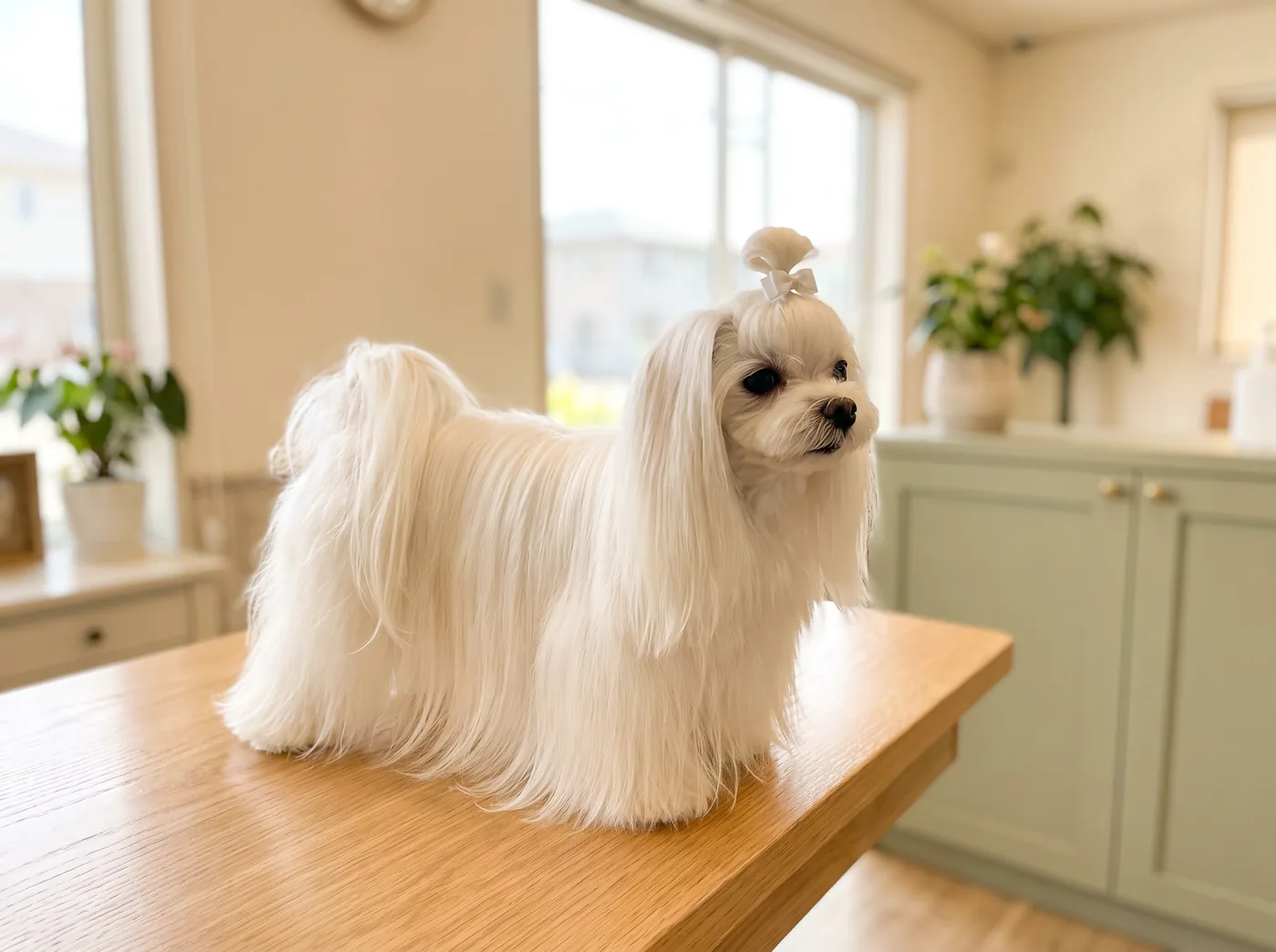
About the Maltese
The Maltese carries a single coat of long, fine, dead straight white hair with no undercoat behind it. It grows continuously and, left alone, reaches the floor. There is no seasonal shed and very little loose hair, which is why the breed suits many allergy sufferers and why the coat needs so much attention.
Two things make this a harder coat than the numbers suggest. It is pure white, so every stain shows. And it is fine enough to break if it is brushed dry, which is why so many pet Maltese coats look thin and ragged at the ends despite an owner working at them daily.
Almost every Maltese in a home wears a pet trim, and that is the right call rather than a compromise.
What a full groom involves
Quick to bathe, slow to finish, which is the pattern for the whole toy group.
A comb through dry first. Then a bath, which takes minutes on a five pound dog, with a whitening shampoo on most Maltese because the coat shows everything. Then a full blow dry with a brush working the coat straight as it dries, which is what makes a Maltese coat lie the way it should. Air dried, it goes wavy and tangles while it dries.
Then the detail work, which is the substance of the appointment. The face: eyes cleaned, the hair around them either trimmed short or gathered up, and the staining under the eyes dealt with. Ears checked and cleaned. Nails, which are tiny and where the quick sits proportionally close to the tip. Pads cleared and the hair between the toes removed. A sanitary trim, which on a long coated small dog is not optional.
Then the trim itself, which on a small dog in a pet cut is the quickest part of the whole thing.
Around an hour and a half.
How often, and what happens if you stretch it
Four to six weeks in a pet trim, and the face needs attention well before the body does.
What fails first is predictable and it is not the haircut. Hair grows into the eyes, which is a welfare problem rather than an untidy one. Then the sanitary area, which becomes a hygiene issue on a long coated small dog faster than owners expect. Then the feet.
Because there is no undercoat, a Maltese mats less readily than a doodle and in fewer places: the armpits, behind the ears, under a collar or harness, and anywhere a knot has been left long enough to tighten. Combed daily to the skin it stays clear more or less indefinitely. Left a month it develops the small, tight, close mats that a fine coat produces, and those are slow and uncomfortable to work out.
A full show length coat is a different proposition entirely, involving daily work plus wrapping the coat to stop it breaking, and it is a hobby rather than a maintenance routine.
The coat problems a Maltese actually gets
Breakage first, because it is the one nobody warns you about. Maltese hair is fine and long, and brushing a dry coat snaps it, especially at the ends. A light detangling spray or a leave in conditioner before every brushing session makes a visible difference over months. Plenty of coats that look thin and ragged are not thin, they are broken.
Tear staining second, and on a white dog it is unavoidable rather than a sign of neglect. The eyes water, the discharge oxidizes in the hair, and the area below each eye turns reddish brown. Prevention beats removal completely: wipe daily with a damp cloth and keep the hair there short or tied back. Hair that is already stained will not bleach out and has to grow out or be trimmed off. Sudden or heavy watering deserves a veterinary look, because blocked ducts, an inward turning lash or a scratch all present this way.
Then general staining, because everything shows on white. Beard staining from food and water, foot staining from licking, and staining around the sanitary area are all normal and all easier to manage with the hair kept short in those places.
And the usual matting sites: armpits, behind the ears, and under the collar, which is completely hidden.
What moves the price
Not the size, which is what owners expect. A Maltese is among the quickest dogs in any salon to bathe and dry, and it is rarely the cheapest appointment, because everything after the bath is detail work at a small scale with no margin.
What does move it: the finish. A short uniform puppy cut is quicker than a scissored trim with a longer skirt and a topknot, and it holds its shape for longer, which is a real saving across a year.
Coat condition, as always. Fine mats in a silky coat are slow to work out and frequently have to be cut.
And the whitening work, honestly. Getting a stained white coat genuinely clean takes longer than washing a dark one, and some salons price it in.
What to tell your groomer
Say what you want on the face, because it changes the dog more than any body length. A full rounded face reads softer and younger and needs daily wiping to stay clean. A short muzzle reads neater, stays much cleaner, and asks far less of you.
Say whether you want a topknot kept. It is not decoration on this breed; it is the alternative to a short face trim for keeping hair out of the eyes.
Mention the tear staining and whether it is new. A groomer will manage established staining; a sudden change is something they will tell you to have looked at.
Say if the dog wears a collar all day, because the mat underneath is invisible.
And use a harness rather than a collar for walking. Toy breeds are prone to collapsing trachea and steady pressure at the throat aggravates it.
Keeping the coat between grooms
Mist before you brush
Never brush this coat dry. A light detangling spray first is the difference between a coat that looks full and one that looks ragged at the ends.
Every time you brush
Wipe under the eyes
A damp cloth under each eye, then dry. Prevention is the whole game with tear staining; removal afterward barely works.
Daily
Comb to the skin
Pin brush through, then a metal comb from the skin outward. Armpits, behind the ears and under the collar first.
Daily
Lift, do not let them jump
A loose kneecap is common in toy breeds and a fall from table or sofa height is a serious injury on a five pound dog.
Every time
Common Questions About the Maltese
How do I stop my Maltese coat going yellow?
Most discoloration is stain rather than a change in the hair: tears under the eyes, saliva on the beard and feet, and urine around the sanitary area. Daily wiping of the face, keeping the hair short in the staining zones, and a whitening shampoo at bath time handle nearly all of it. Hair already stained does not bleach out and has to grow out or be trimmed. Never use a human bleaching product on a dog.
Is it cruel to cut a Maltese coat short?
The opposite, for most pet dogs. A full length coat needs daily brushing to the skin plus wrapping and a weekly bath and blow dry, and a coat kept long without that work mats, pulls on the skin and ends up shaved anyway. A short trim is comfortable, practical and looks like the breed. The coat grows back with exactly the same texture and color, so nothing is lost permanently.
Why does my Maltese coat look thin at the ends?
Usually breakage rather than thinning. Fine long hair snaps when it is brushed dry, and the damage accumulates at the tips where the hair is oldest. Mist the coat with a detangling spray or leave in conditioner before you brush, use a pin brush rather than a slicker on a long coat, and work in sections from the skin outward instead of dragging through from the top.
Similar breeds
Same coat, same schedule, or the breeds this one is crossed from.


Find a groomer who knows this coat
Search 37,863 groomers by town, or keep reading the breed guide.
Find a Local Groomer View All Breeds