Pharaoh Hound Grooming
A ten minute coat on a dog whose ears and nose genuinely flush pink when it is happy
About the Pharaoh Hound
One of the easiest coats there is, and one of the most unusual pieces of breed trivia, which happens to be genuinely useful at a grooming table.
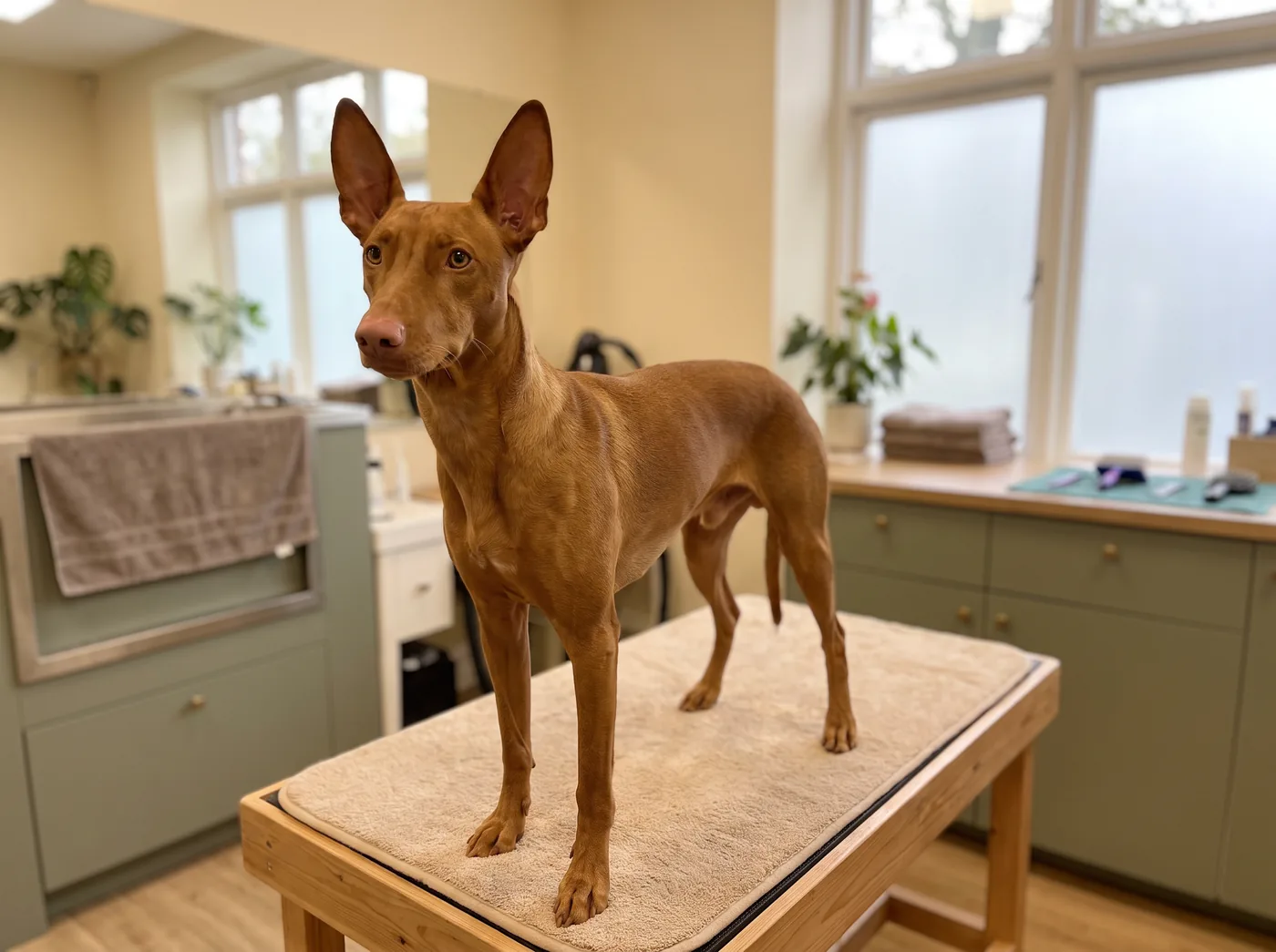
A Pharaoh Hound blushes. When it is excited or happy, the nose, the ears and the insides of the ears flush a deep rose pink, visibly and reliably, and the eyes seem to glow. It is a real, documented breed characteristic rather than a story, and it is one of the few things in dogs that is genuinely charming and genuinely diagnostic.
It matters practically because a pink or flesh colored nose on this breed is correct and required by the standard. On most breeds a nose losing pigment is a reason to look into it; here it is the breed.
The coat itself is short, fine and glossy with no undercoat, and takes about ten minutes a week.
The Pharaoh Hound has a double coat that regulates its own temperature. Shaving it does not keep the animal cooler, removes the protection against sun and insects, and the top coat often grows back patchy or never returns correctly. A thorough deshed takes out the undercoat and does the job the owner was actually asking for.
The blush, and the pink nose
The blushing is caused by the flesh colored nose and the thin, lightly pigmented skin of the ears filling with blood when the dog is excited, and it is pronounced enough to be obvious across a room.
The breed standard calls for a flesh colored nose that blends with the coat, and a solid black nose is actually a disqualifying fault. That is the reverse of most breeds and it is worth saying to anyone unfamiliar.
So: a pale or pink nose here is correct, not a sign of depigmentation, not nasal hyperkeratosis and not an autoimmune problem. A groomer or a new vet seeing it for the first time occasionally raises it as a concern.
What the pink nose does mean practically is sunburn. Unpigmented skin on the nose and inside the ears burns, and this is a Mediterranean breed that will lie in the sun given the chance. Use a dog formulated sunscreen on the nose and ear tips before extended sun, never a human product containing zinc oxide, and provide shade.
The blush itself needs nothing done about it. Enjoy it.
A nose that becomes crusted, ulcerated or loses tissue is a veterinary matter regardless of color.
Thin skin, and how to handle a sighthound
Like any sighthound, the Pharaoh Hound has very little body fat, thin skin and a coat that provides essentially no padding.
The skin tears more easily than on a thicker coated dog. Scrapes from undergrowth, a crate door or a rough surface can open a wound that needs veterinary attention rather than a wipe, and this is a fast dog that runs into things at speed.
Check the whole dog over weekly, since a short coat shows everything and there is no reason to miss it.
At a salon, the practical points are padding and gentleness: a hard table surface is uncomfortable on bony hips and elbows, so ask for a mat, and be careful with clippers, which sit almost directly on skin.
Nails need doing every three to four weeks and the quick often runs long in sighthounds, so small frequent trims are far better than occasional big ones.
Sighthounds are also famously sensitive to some anesthetics and sedatives because of their low body fat, which is a veterinary conversation rather than a grooming one, but worth raising before any procedure.
Cold, and a dog that will get under the blanket
No undercoat, a very short coat and almost no body fat mean a Pharaoh Hound loses heat quickly and feels the cold badly.
A coat outdoors in cold or wet weather is a genuine need rather than a costume, and most Pharaoh Hounds will seek out the warmest place in the house and burrow into blankets.
Bath water should be comfortably warm, drying should be warm rather than hot, and the dog should not be left damp in a cool room.
Bathe every ten weeks or so with a plain gentle shampoo. There is nothing between the product and the skin, so anything harsh or perfumed shows up as irritation quickly.
The coat needs a rubber curry mitt or a hound glove once a week, working against the lie and then with it, which lifts the modest amount of loose hair and spreads the oils that give the coat its shine.
Shedding is low, which is unusual for a smooth coat and is one of the practical attractions of the breed.
There is no clipping, trimming or styling on this dog beyond nails and pads.
The ears, the teeth and the rest
The ears are large, upright and thin, which is the best ventilated shape there is, so infection is uncommon. Wipe the visible part weekly with a soft damp cloth and do not push anything into the canal.
The thin ear leather is worth checking for scrapes and for sunburn on the tips.
Teeth need brushing. Pharaoh Hounds are long lived at twelve to fourteen years and the breed is generally healthy, so dental disease has plenty of time to become the thing that limits comfort.
Weight matters in the other direction from most breeds: a Pharaoh Hound should look lean, with the last couple of ribs faintly visible, and an owner used to thicker set breeds often thinks a correctly conditioned sighthound is underweight. Ask a vet what to aim for rather than guessing.
Ask for a padded surface at the salon and short sessions, since a lean dog on a hard table gets uncomfortable rather than difficult.
Beyond that this is a genuinely low maintenance dog, and the interesting parts of owning one are all outside the grooming.
What to tell your groomer
Say the flesh colored nose is correct for the breed and required by the standard, not a pigment problem.
Mention that the ears and nose flush pink when the dog is excited, so nobody worries about it.
Ask for a padded surface and short sessions, since a lean dog on a hard table is uncomfortable.
Ask for a plain unscented shampoo, warm water and warm rather than hot drying, and no damp dog in a cool room.
Ask for nails little and often, since the quick runs long in sighthounds.
Say the skin is thin and tears easily, so clippers and rough handling need care.
Keeping the coat between grooms
Curry mitt, ten minutes
Against the lie then with it. That is the entire coat routine.
Weekly
Sunscreen the nose and ear tips
Unpigmented skin burns, and this is a Mediterranean breed that seeks the sun.
Before sun exposure
Keep it warm
No undercoat and no body fat. A coat outdoors in winter is a need.
In cold weather
Nails little and often
The quick runs long in sighthounds, so small frequent trims beat occasional big ones.
Every three to four weeks
Common Questions About the Pharaoh Hound
Do Pharaoh Hounds really blush?
Yes, genuinely. When the dog is excited or happy, the flesh colored nose and the thin lightly pigmented skin of the ears fill with blood and flush a deep rose pink, obviously enough to see across a room. It is a documented breed characteristic rather than a story. It needs nothing done about it, and it is worth mentioning to a groomer or a new vet so nobody mistakes it for irritation or an allergic reaction.
Is a pink nose normal on a Pharaoh Hound?
Yes, and it is required. The breed standard calls for a flesh colored nose that blends with the coat, and a solid black nose is a disqualifying fault, which is the reverse of most breeds. So a pale nose here is not depigmentation or an autoimmune problem. What it does mean is sunburn risk: unpigmented skin on the nose and inside the ears burns, so use a dog formulated sunscreen before extended sun, never one containing zinc oxide, and give the dog shade.
How much grooming does a Pharaoh Hound need?
About ten minutes a week. A rubber curry mitt or hound glove against the lie of the coat and then with it, plus a bath every ten weeks or so with a plain gentle shampoo. There is no clipping, trimming or styling at all, and shedding is low for a smooth coated dog. What needs more attention is everything else: nails little and often since the quick runs long, teeth brushed, and warmth, because a coat with no undercoat over almost no body fat means the dog chills quickly.
Similar breeds
Same coat, same schedule, or the breeds this one is crossed from.


Find a groomer who knows this coat
Search 37,863 groomers by town, or keep reading the breed guide.
Find a Local Groomer View All Breeds