Pomsky Grooming
The designer cross with no Poodle in it, so there is no low shedding outcome available
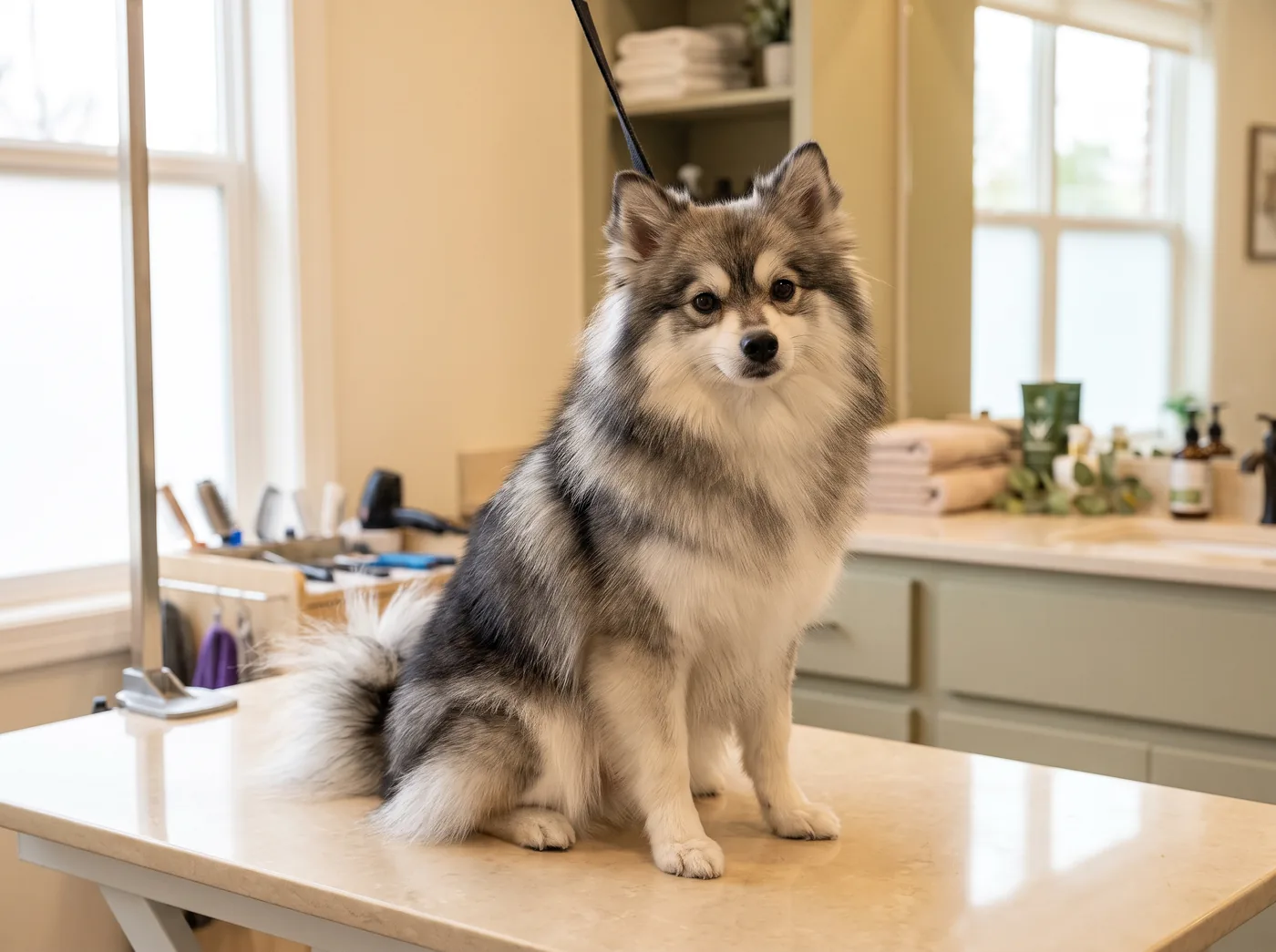
About the Pomsky
Almost every other popular cross pairs a Poodle with something else, so however the lottery falls there is at least a chance of a low shedding coat. The Pomsky has no Poodle in it at all.
It is a Pomeranian crossed with a Siberian Husky, which means it is two spitz double coats crossed with each other. Both parents carry a dense woolly undercoat under a harsh standing outer coat. Both shed heavily. Both blow their undercoat twice a year. And neither should ever be shaved.
So there is no easy outcome and no lucky puppy. A Pomsky sheds enormously for its size, needs line brushing every two or three days, needs a professional deshed twice a year, and carries every rule the double coat page sets out. Anyone who bought one on a general sense that a designer cross means less hair was misled.
The Pomsky has a double coat that regulates its own temperature. Shaving it does not keep the animal cooler, removes the protection against sun and insects, and the top coat often grows back patchy or never returns correctly. A thorough deshed takes out the undercoat and does the job the owner was actually asking for.
What the Pomsky is crossed from
Two double coats, and what that actually means
The usual doodle question, which coat did it inherit, does not apply here in the way people expect. Both parents have the same kind of coat, so the answer is always some version of a spitz double coat.
What varies is length and density. A Pomsky leaning to the Pomeranian side has a shorter, denser, more profuse standing coat with an enormous ruff. One leaning to the Husky side has a slightly longer, coarser outer coat with a deeper undercoat. Most are somewhere between, and all of them shed.
Line brushing is the method: part the coat to the skin and work outward in sections, using a slicker and an undercoat rake, then a metal comb to prove it. If the comb will not pass freely from skin to tip, that section is not brushed however good it looks.
Every two or three days. The places that fail are the standard ones for a heavily coated small dog: behind and under the ears, the ruff at the neck and chest, the armpits, the trousers, the tail and around the rear.
Twice a year the undercoat blows completely over two to four weeks, and the volume from a twenty five pound dog is startling. Daily raking during a blow, outdoors, plus a bath and high velocity dry at the start of each one, which does more than a fortnight of brushing.
Dead undercoat left in place is what mats, and a felted layer against the skin holds moisture and causes hot spots.
Never shave a Pomsky, and this one has an extra reason
Everything on the double coat page applies: shaving removes the outer coat that blocks sun and holds insulating air while leaving the undercoat that traps heat, so the dog gets hotter, burns more easily, and the regrowth is frequently permanently woolly, patchy and mat prone.
The Pomsky has a second, more specific reason, and it comes from the Pomeranian side.
Pomeranians are the breed most strongly associated with post clipping alopecia, sometimes called alopecia X or black skin disease: coat that is clipped short simply does not grow back, or grows back thin and patchy, sometimes for years and sometimes permanently, often with the exposed skin darkening. The underlying cause is not fully settled, but the association with clipping a spitz coat is well recognized and Pomeranian ancestry carries it.
So on this cross, a shave down is not merely bad practice with a risk attached. It is bad practice on a dog with an inherited predisposition to exactly the outcome you are risking.
Any groomer who offers to shave a Pomsky down for summer has told you they do not know the breeds involved.
The correct response to a hot Pomsky is a thoroughly deshedded coat so air can move to the skin, plus shade, water and walking at the ends of the day. Trimming the feet, hocks and sanitary area is normal and is not the same thing.
Size, which nobody can promise you
This matters for grooming because the appointment and the price depend on it, and because buyers are routinely told a number that turns out to be wrong.
A Pomsky crosses a three to seven pound dog with a thirty five to sixty pound one, which is a very wide gap. First generation puppies are produced by artificial insemination with a Husky mother, for the obvious safety reason, and the resulting adults commonly land anywhere between fifteen and thirty five pounds. Later generations vary further.
Nobody can tell you the adult size of a Pomsky puppy with confidence, and anyone offering a guarantee of a particular weight is overselling. Breeders quote parent averages, and littermates still differ substantially.
Practically: do not book on the basis of a promised size, and expect the price band to be set by the dog in front of the groomer rather than by the label. A thirty five pound heavily coated Pomsky is a two hour appointment, not a small dog groom.
Coat volume tracks size only loosely too. Some of the smallest Pomskies carry the most profuse coats, because that is the Pomeranian side expressing itself.
The other thing worth saying: this cross is popular enough to attract poor breeding, and health and temperament vary as widely as size. That is not grooming advice, but it is worth knowing before buying.
The appointment, and a small dog with a big dog attitude
Two hours is normal and most of the second one is drying, because a dense double coat holds water for a long time and a Pomsky that goes home damp at the skin is a hot spot risk.
The order is: rake and line brush through dry, dealing with any felting before water is involved, then bathe, then a high velocity dry with brushing throughout, then feet, hocks, nails, ears and sanitary area. Nothing else is cut.
Ears are small, upright and open on most Pomskies, which is the easy version. A weekly look is enough.
Nails every three to four weeks. Teeth matter here, because Pomeranian ancestry brings the toy breed dental problem with it: crowding in a small jaw and fast tartar buildup. Daily brushing from puppyhood.
On temperament, both parents are vocal, busy, intelligent and opinionated, and a Pomsky is usually all of those. They are not naturally still, they object loudly, and many are wary of strangers.
The answer is the usual one and it has to start early: handle the feet, ears and mouth daily from puppyhood, and book short uneventful salon visits before anything needs doing. A dog that grew up with the high velocity dryer treats it as normal; one meeting it at three does not.
What to tell your groomer
Say it is a Pomsky and give the actual weight, not the promised one. The appointment length depends on the dog rather than the label.
Ask for a deshedding treatment with a high velocity dry rather than a bath and brush, and book one at the start of each coat blow.
Decline any offer to shave the dog down, and say why: Pomeranian ancestry carries a real risk of coat that never grows back.
Say when the ruff and behind the ears were last combed to the skin.
Ask for the feet, hocks and sanitary area tidied and nothing else cut.
And say how the dog is about handling and about the dryer, because both parents are breeds with opinions.
Keeping the coat between grooms
Line brush the ruff and trousers
Part to the skin, rake and slicker, then prove it with a comb. Behind the ears fails first.
Every two or three days
Never shave the coat
Pomeranian ancestry carries a real risk of coat that never grows back properly. This is not just the usual warning.
Always
Deshed at each coat blow
The undercoat releases completely twice a year, and the volume from a small dog is startling.
Spring and autumn
Brush the teeth
Pomeranian ancestry brings the toy breed dental problem: crowding in a small jaw and fast tartar.
Daily
Common Questions About the Pomsky
Do Pomskies shed?
Heavily, and there is no version of this cross that does not. Unlike every doodle, there is no Poodle involved: a Pomsky is a Pomeranian crossed with a Siberian Husky, so it is two spitz double coats crossed with each other. Both parents carry a dense woolly undercoat and both blow it completely twice a year. Expect line brushing every two or three days, daily raking during a coat blow, and a professional deshed twice a year.
Can I shave my Pomsky in summer?
No, and this cross has an extra reason beyond the usual ones. Shaving any double coat removes the sun barrier and leaves the insulation, making the dog hotter. But Pomeranians are the breed most associated with post clipping alopecia, where clipped coat does not grow back or returns thin and patchy, sometimes permanently. A Pomsky inherits that predisposition, so a shave down risks exactly that outcome. Deshed thoroughly instead and use shade, water and timing.
How big will my Pomsky get?
Nobody can tell you reliably. The cross pairs a three to seven pound Pomeranian with a thirty five to sixty pound Husky, so adults commonly land anywhere from fifteen to thirty five pounds and littermates differ substantially. Anyone guaranteeing a particular adult weight is overselling. Coat volume tracks size only loosely as well, since some of the smallest Pomskies carry the most profuse coats from the Pomeranian side.
Similar breeds
Same coat, same schedule, or the breeds this one is crossed from.

Pomeranian
A northern double coat on a five pound dog, and the breed shave downs ruin most often
Pomeranian
Siberian Husky
The coat that shave downs ruin, and the one that needs almost nothing else
Siberian HuskyFind a groomer who knows this coat
Search 37,863 groomers by town, or keep reading the breed guide.
Find a Local Groomer View All Breeds