Rat Terrier Grooming
A ten minute coat on a working farm terrier, in two sizes and two coat lengths
About the Rat Terrier
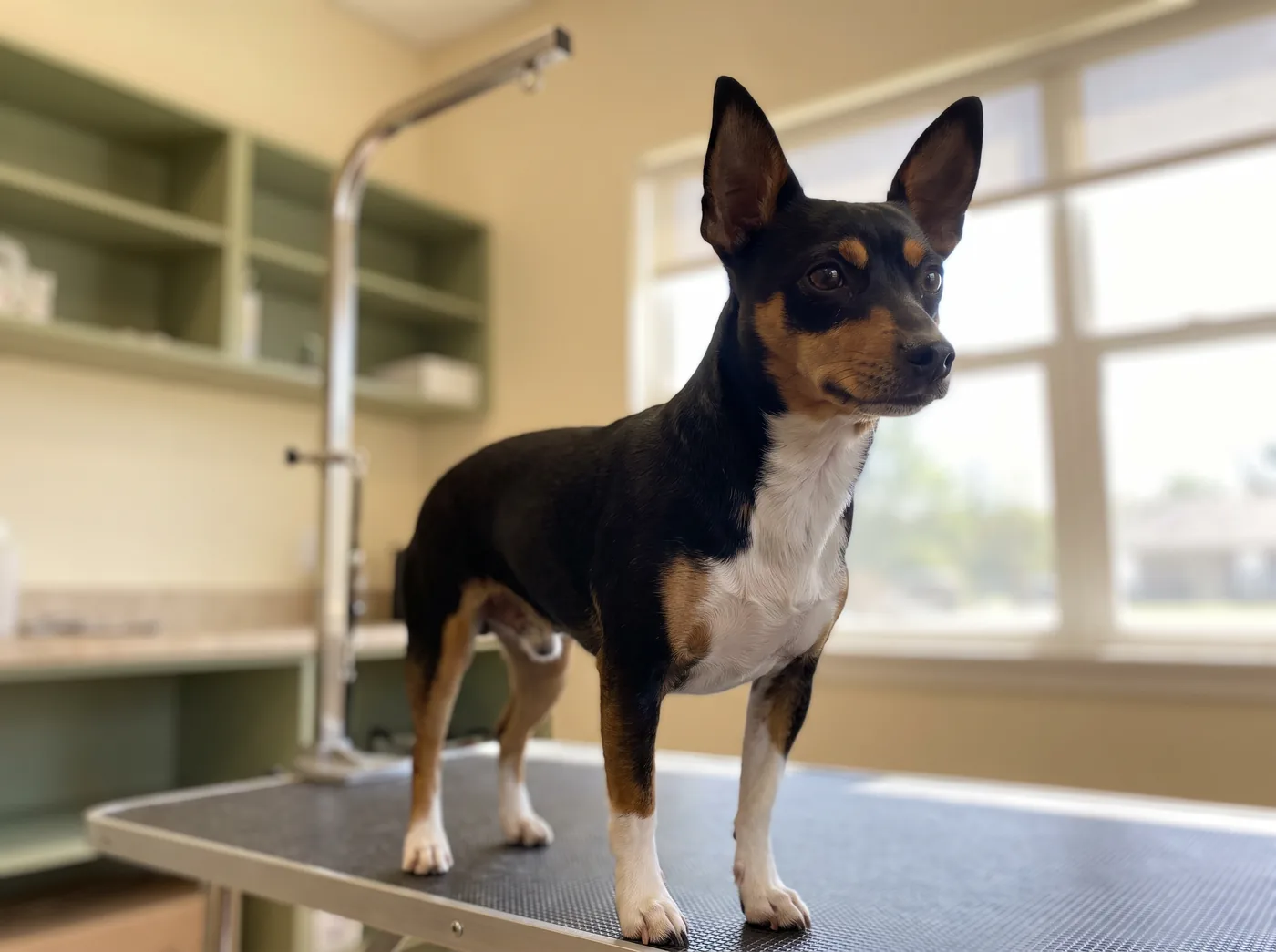
An American farm terrier, and about as straightforward as grooming gets: a short, dense, smooth coat lying close to the body, needing a rubber curry mitt once a week and nothing cut, ever.
There are two size varieties, standard and miniature, and a rarer long haired variety exists as well, though the smooth is the norm.
The breed matters for a second reason. In 1972 a hairless puppy appeared in a Rat Terrier litter, and from that single recessive mutation the American Hairless Terrier was developed. They are the same dog underneath, and the hairless one behaves very differently precisely because the coat is gone.
Everything else is terrier: busy, bright, driven, and covered in whatever it has been digging through.
The Rat Terrier has a double coat that regulates its own temperature. Shaving it does not keep the animal cooler, removes the protection against sun and insects, and the top coat often grows back patchy or never returns correctly. A thorough deshed takes out the undercoat and does the job the owner was actually asking for.
Ten minutes a week, done properly
Go over the dog once a week with a rubber curry mitt or a hound glove, working against the lie of the coat and then with it. That lifts the dead hair, which a short dense coat holds on to more than people expect, and it spreads the skin oils that give the coat its sheen.
Rat Terriers shed more than the coat length suggests, steadily year round with heavier periods in spring and autumn, and the short stiff hairs weave into upholstery. Weekly currying is the only thing that meaningfully reduces it.
Bathe every eight weeks or so with a plain gentle shampoo. Over-bathing a coat this short strips the skin, and there is nothing between the shampoo and the skin to buffer it.
There is no clipping, trimming or styling on this breed at all, beyond nails and keeping the pads clear.
Use the weekly session as the health check. A short coat shows everything, so there is no excuse for missing a lump, a scab, a tick or a change in weight.
The long haired variety, where it occurs, needs a comb through the feathering weekly and is still a very easy dog.
Skin, sun and a mostly white dog
Rat Terriers are frequently white with colored patches, and pale skin under a thin coat needs thinking about.
Dogs with pink skin on the nose, ear tips, belly or groin can burn, and this is an outdoor working dog that will lie in the sun. Use a dog formulated sunscreen on exposed pink areas before extended sun, never a human product containing zinc oxide, and provide shade.
The breed is generally healthy with few skin problems, but demodectic mange turns up occasionally in young dogs and shows as patchy hair loss, usually starting around the face. That needs a veterinarian rather than a shampoo.
Allergies are less common here than in the bull breeds but do occur, and the pattern is the same: chewing feet, rubbing the face, recurrent ear trouble.
Check the ears weekly. They may be erect, button or tipped, and an erect ear is well ventilated while a folded one needs more attention.
Nails every three to four weeks. These dogs are active but not usually on abrasive surfaces enough to wear them down.
The hairless connection
The American Hairless Terrier is a Rat Terrier without a coat, descended from a single hairless puppy born in a Rat Terrier litter in 1972, and the two are still very close.
It is worth knowing because it makes a clean natural experiment in whether the coat, or the dog, decides the care.
Same dog, same temperament, same build, same drive. Remove the coat and the grooming changes completely: no brushing at all, sunscreen becomes essential, a sweater becomes necessary in winter, and the dog needs bathing every two to four weeks because it sweats through the skin.
The Rat Terrier, with its coat intact, needs ten minutes a week and no sunscreen unless it is pink skinned, and it is comfortable outdoors in weather the hairless one cannot manage.
Nothing about the dog changed. Only the coat did.
Coated puppies still occur in American Hairless Terrier litters because the gene is recessive, and those dogs are groomed exactly like this page describes.
A working farm dog, and the after walk check
Rat Terriers were bred to clear vermin on farms and they are still doing it. They dig, they hunt, they go into holes, and they come home carrying things.
The after walk check matters more than the brushing: ticks on the ears, neck and between the toes, grass seeds in the feet, cuts and scrapes from wire and undergrowth.
Grass seeds are the one that causes real trouble, burrowing into the skin between the toes and abscessing.
Keep the hair between the pads cleared, which helps with both seeds and grip.
They are long lived, often into their mid to late teens, so teeth matter: full sized teeth in a smallish jaw, brushed daily from puppyhood.
Watch the weight. A busy dog kept as a house pet without the work it was bred for gains easily, and a short coat hides less than most but still hides some.
They are quick, driven and prone to bolting after something, which is a salon door safety point worth mentioning.
What to tell your groomer
Ask for a bath, a curry, nails, ears and a skin check. There is no haircut on this breed.
Ask for a plain unscented shampoo, since there is nothing between the product and the skin.
Say if the dog has pink skin on the nose, ear tips or belly, which is a sunburn risk rather than a grooming one.
Ask them to check between the toes and over the skin for ticks and grass seeds, especially on a working dog.
Say the dog is quick and will take an open door.
Ask them to look at the mouth, since this is a long lived small breed.
Keeping the coat between grooms
Curry mitt, ten minutes
Against the lie then with it. The whole coat routine, and the health check.
Weekly
Check after every walk
Ticks, cuts and grass seeds. A working terrier comes home carrying things.
After walks
Brush the teeth
Often lives into its mid to late teens on a smallish crowded jaw.
Daily
Sunscreen pink skin
Often mostly white. Pink nose, ear tips and belly burn in an outdoor dog.
Before sun exposure
Common Questions About the Rat Terrier
How much grooming does a Rat Terrier need?
About ten minutes a week. A rubber curry mitt or hound glove against the lie of the coat and then with it lifts the dead hair and spreads the skin oils, and a bath every eight weeks with a plain shampoo is the rest of it. There is no clipping, trimming or styling at all. What matters more is the after walk check on a working terrier, plus nails every three to four weeks and teeth brushed daily, since the breed often lives into its mid to late teens.
Do Rat Terriers shed?
More than people expect from a coat that short. It is steady all year with heavier periods in spring and autumn, and the hairs are short, stiff and often pale, so they work into upholstery and are hard to remove. A rubber curry mitt once a week is the single most effective thing. What does not help is bathing more often, which strips a short coat and irritates the skin, since there is nothing between the shampoo and the skin to buffer it.
How is a Rat Terrier related to the American Hairless Terrier?
Directly. A hairless puppy was born in a Rat Terrier litter in 1972 and the American Hairless Terrier was developed from it, so they are the same dog with and without a coat. It makes a clean illustration of how much the coat decides: same temperament, build and drive, but the hairless one needs sunscreen, a sweater in winter and bathing every two to four weeks because it sweats through the skin, while the coated one needs ten minutes with a mitt.
Similar breeds
Same coat, same schedule, or the breeds this one is crossed from.

American Hairless Terrier
A hairless breed that genuinely sweats, from a recessive gene and a Rat Terrier
American Hairless Terrier
Jack Russell Terrier
Three coats in one breed, and only one of them behaves the way a terrier coat should
Jack Russell Terrier
Miniature Pinscher
No relation to the Doberman it resembles, and older than it by centuries
Miniature PinscherFind a groomer who knows this coat
Search 37,863 groomers by town, or keep reading the breed guide.
Find a Local Groomer View All Breeds