Sloughi Grooming
The North African sighthound that gets confused with the Azawakh, and is not the same
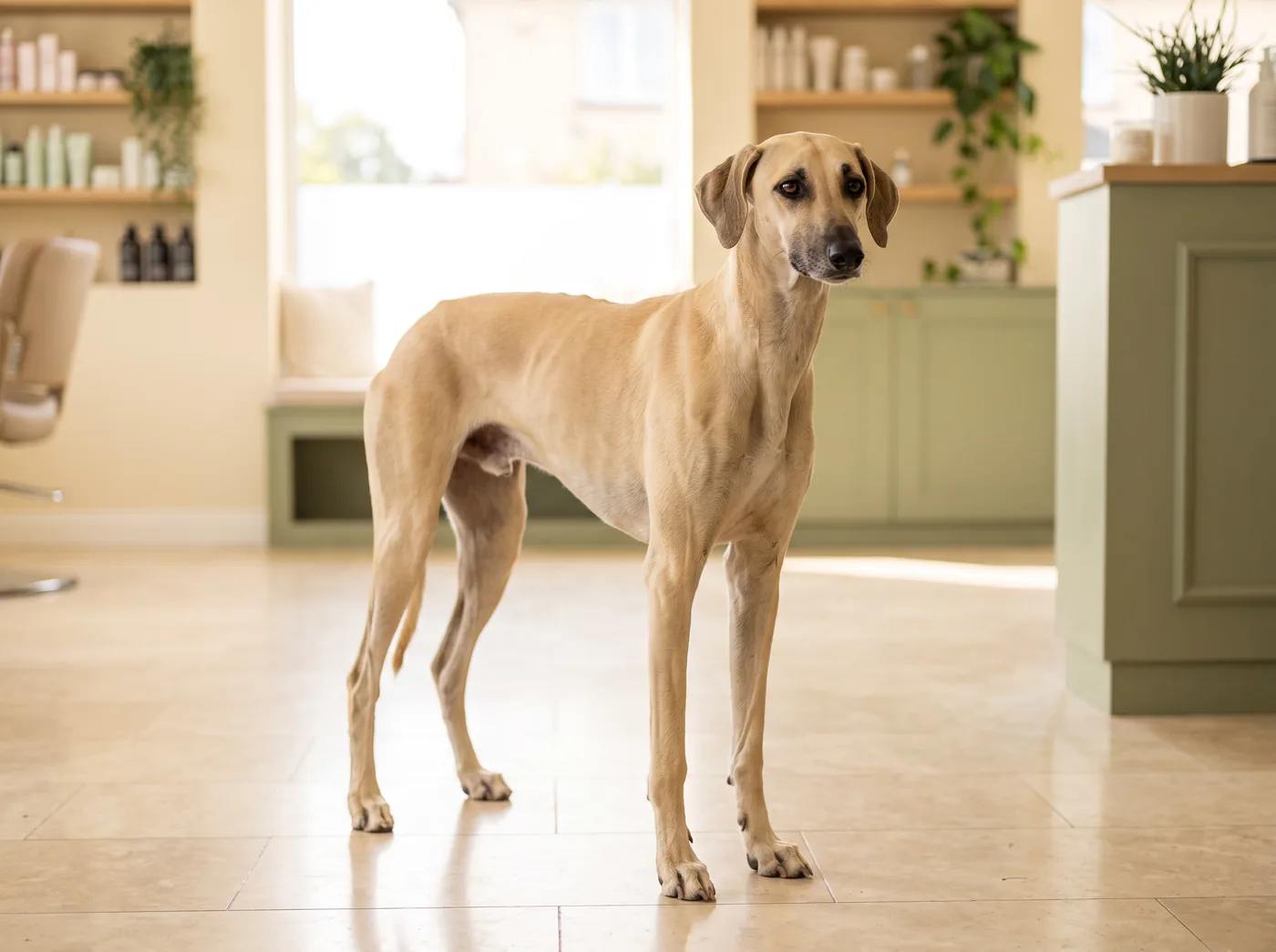
About the Sloughi
A sighthound from Morocco, Tunisia, Algeria and Libya, and the breed the Azawakh is most often confused with, including by people who should know better.
They are separate breeds from different regions and different peoples, and genetic work groups them apart.
The practical difference for handling is that a Sloughi, while lean, is not built as extremely as an Azawakh. It carries a little more muscle and covering over the bone, it is longer and lower in outline rather than tall and vertical, and its skin is not quite as thin.
That matters because the Azawakh page sets out real handling cautions, and applying all of them to a Sloughi overstates the case, while applying none of them understates it.
The coat is the same five minute job on both: very short, fine, smooth and close lying.
The Sloughi has a double coat that regulates its own temperature. Shaving it does not keep the animal cooler, removes the protection against sun and insects, and the top coat often grows back patchy or never returns correctly. A thorough deshed takes out the undercoat and does the job the owner was actually asking for.
Five minutes of coat, and a warm room
Go over the dog with a hound glove or a rubber mitt once a week. There is no feathering, no undercoat and nothing to trim.
Shedding is low and the coat is close enough that it barely shows.
Bathe rarely, every three months or so, since there is very little coat and washing it does nothing useful.
Do not clip. There is nothing to remove and the skin underneath is thin.
The real instruction is warmth. A lean sighthound with almost no coat and little body fat loses heat quickly, so a wet Sloughi in a cool room chills fast.
Ask for warm water, a warm room and a proper warm dry rather than a cool blow, and use a coat in cold weather.
Padding matters too. There is not much between skin and bone over the hips, elbows and spine, so a bare table for an hour leaves a dog sore, and pressure sores on hard floors are a real thing in lean hounds.
Not as extreme as an Azawakh, but the same direction.
Telling the two apart
Worth setting out, because the confusion is constant and it changes how carefully a dog is handled.
The Azawakh comes from the Sahel, in Mali, Niger and Burkina Faso, and was kept by the Tuareg. It is extremely tall and vertical, with a very short back, hip bones set higher than the withers, and almost no subcutaneous fat at all. The bone structure is meant to show plainly.
The Sloughi comes from the Maghreb, further north and west, and is longer and lower in outline, with a more conventional sighthound topline and slightly more covering over the frame.
Both are lean by any normal standard and both get accused of being underfed.
For grooming, treat both as thin skinned and cold sensitive, pad both, and clip neither. Apply the strongest cautions, about bruising from ordinary restraint, to the Azawakh specifically.
Both are reserved with strangers, which separates them from a Greyhound and matters more than the coat does.
How lean is correct
The same conversation every lean sighthound owner has, and the same answer.
A Sloughi should show the last ribs and the hip bones, with a deep chest, a marked tuck up and visible muscle definition. That is correct.
A Sloughi at a body condition that looks right on a Labrador is overweight, and weight is genuinely bad for a dog built to gallop.
What is not normal is muscle wastage, a dull or scurfy coat, lethargy, or a dog whose spine and ribs feel sharp rather than covered with muscle.
Judge by muscle rather than fat: run a hand along the topline and thighs, which should be hard.
Weigh monthly and record it, because a trend matters more than a number.
Sloughis are also prone to a hereditary eye disease, progressive retinal atrophy, which has a DNA test and is worth asking a breeder about.
Like other sighthounds they metabolize some anesthetics differently, so tell any new veterinarian it is a sighthound before a procedure.
Reserved, and what that means at a salon
Sloughis are gentle and deeply attached to their own people, and noticeably reserved and undemonstrative with strangers.
That is a breed characteristic, not a training failure, and it is not aggression. A Sloughi meeting a groomer will typically go still and withdrawn rather than friendly.
Pushing through that produces a dog that dreads the next visit, so slow, quiet handling and continuity of groomer are worth more than efficiency here.
They are also sensitive to tone and to rough handling and remember both.
Prey drive is extreme and a Sloughi is very fast, so an open door is a serious risk and a lead should stay on until the dog is contained.
Handling from puppyhood is the single most useful thing an owner can do, exactly as with the Azawakh.
They are long lived, at twelve to sixteen years.
Nails every three to four weeks, ears wiped weekly, teeth brushed.
What to tell your groomer
Say it is a Sloughi and not an Azawakh or a Greyhound, since all three get handled differently.
Ask for a padded table, since there is little between skin and bone over the hips and elbows.
Ask for warm water, a warm room and a warm dry, since it chills quickly.
Say the dog is meant to look this lean and is not underfed.
Say it is reserved with strangers by breed, and that slow beats efficient.
Say the dog is fast and prey driven, so doors and gates matter.
Keeping the coat between grooms
Hound glove, five minutes
No feathering, no undercoat, nothing to trim and nothing to strip.
Weekly
Warm water, warm dry
Very little coat and very little fat. It chills fast when wet.
Every bath
Pad the table
Not as extreme as an Azawakh, but the same direction over hips and elbows.
Every visit
Slow beats efficient
Reserved with strangers by breed. Rushing it costs you the next visit.
Every visit
Common Questions About the Sloughi
What is the difference between a Sloughi and an Azawakh?
They are separate breeds from different regions and peoples. The Azawakh comes from the Sahel and was kept by the Tuareg: extremely tall and vertical, very short backed, hip bones set higher than the withers, and almost no subcutaneous fat at all. The Sloughi comes from the Maghreb further north and west and is longer and lower in outline with slightly more covering over the frame. Both are thin skinned and cold sensitive, but the strongest handling cautions belong to the Azawakh.
Is my Sloughi too thin?
Probably not. The breed should show the last ribs and the hip bones, with a deep chest, a marked tuck up and visible muscle definition, and a Sloughi at a body condition that looks right on a Labrador is overweight. Judge by muscle rather than fat: run a hand along the topline and thighs, which should feel hard. What is not normal is muscle wastage, a dull coat, lethargy, or a spine that feels sharp rather than covered.
Why is my Sloughi so distant with the groomer?
Because it is a breed trait rather than a problem. Sloughis are gentle and deeply attached to their own people and noticeably reserved and undemonstrative with strangers, so one meeting a groomer typically goes still and withdrawn rather than friendly. It is not aggression. Pushing through it produces a dog that dreads the next visit, so slow quiet handling and the same groomer every time are worth more than a fast appointment.
Similar breeds
Same coat, same schedule, or the breeds this one is crossed from.


Find a groomer who knows this coat
Search 37,863 groomers by town, or keep reading the breed guide.
Find a Local Groomer View All Breeds