Xoloitzcuintli Grooming
Hairless skin that is tough and dry, and gets worse with the routine a Sphynx needs
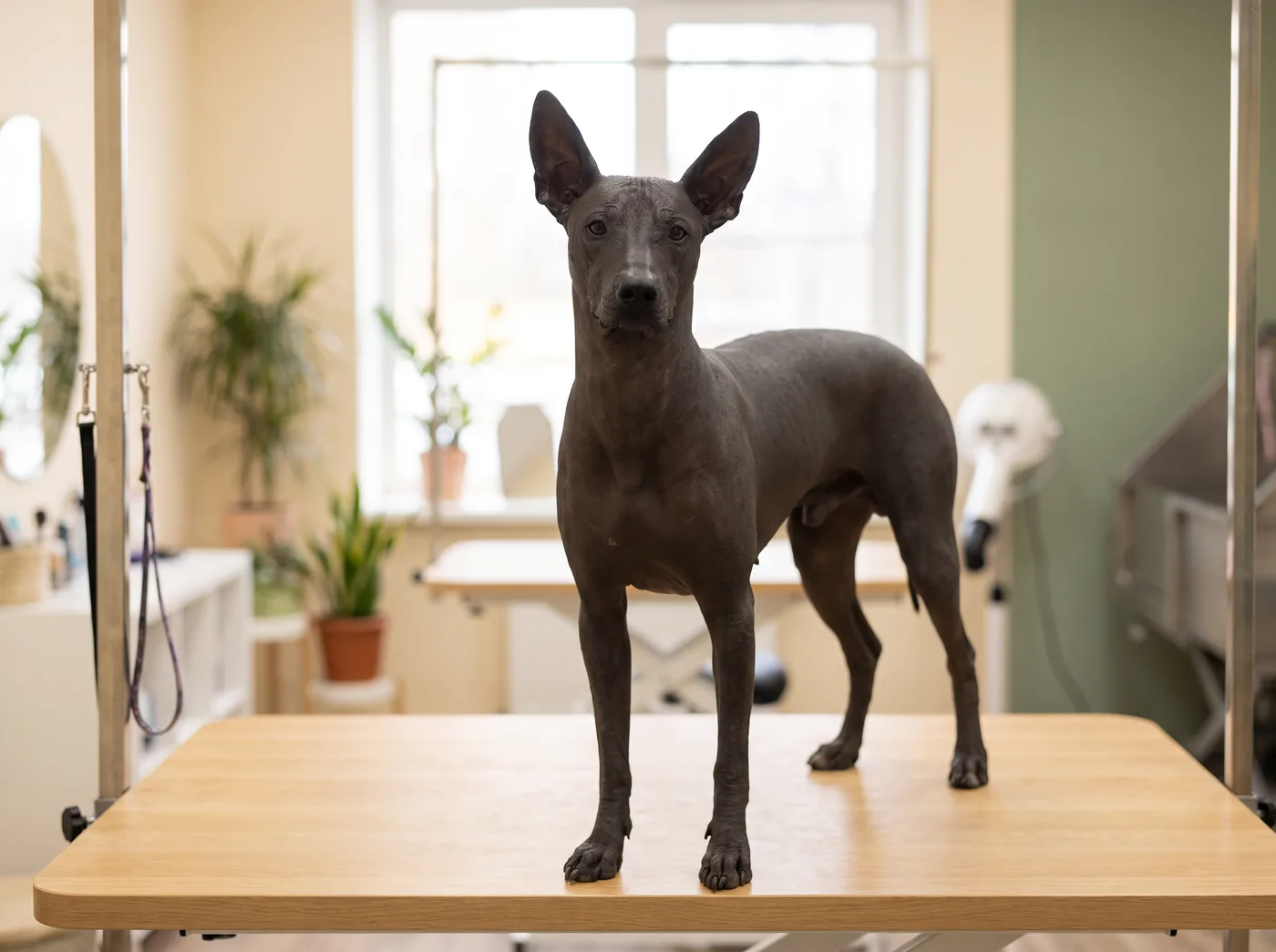
About the Xoloitzcuintli
Hairless usually means one thing. The Sphynx and the Chinese Crested both produce skin oil that has no coat to spread into, so it collects, and both need bathing on a schedule to manage the grease.
A Xolo is hairless and the opposite is true. The skin is thick, tough, dry and closer to leather than to a Sphynx's, it produces far less oil, and the routine that keeps a Sphynx comfortable will give a Xolo blocked pores and acne.
So the two most common pieces of advice given to hairless owners, bathe weekly and moisturize daily, are both wrong here. This is one of the lowest maintenance breeds on the site, and the skill is knowing when to leave it alone.
The Xoloitzcuintli has a double coat that regulates its own temperature. Shaving it does not keep the animal cooler, removes the protection against sun and insects, and the top coat often grows back patchy or never returns correctly. A thorough deshed takes out the undercoat and does the job the owner was actually asking for.
The skin, and why it is not Sphynx skin
A Xolo's hairless skin is thick and tough. It evolved as protection in a hot climate, it is smooth rather than greasy, and it feels warm and dry to the hand. There may be a few coarse hairs on the top of the head, the tail and the feet, and that is the whole coat.
The Sphynx problem is oil. A cat's skin produces sebum expecting a coat to distribute it, so without one it collects on the skin and in the nail beds and needs washing off regularly. That reasoning does not transfer to a Xolo, whose skin produces much less and holds it much less.
What a Xolo needs is a wipe with a damp cloth every few days and a bath about every four to six weeks, with a plain gentle shampoo. Bathing weekly strips what little natural oil there is, and the skin responds by drying out or overproducing, both of which end in blackheads and pimples.
Moisturizer is the other common mistake. A thick or greasy lotion, or anything perfumed, blocks pores on this skin and causes exactly the acne the owner is trying to prevent. If the skin is genuinely dry, a light unscented lotion occasionally is enough, and most Xolos need none at all.
Adolescent Xolos often get acne on the chest and back regardless, in the same way and at the same age as teenagers. It usually settles. Do not squeeze it, keep the area clean, and ask a veterinarian if it spreads or the spots look infected.
Sun, cold and the things that replace grooming
With no coat, the skin is exposed to everything a coat would normally handle, and sun is the serious one.
A Xolo can sunburn, and repeated burning carries a real risk of skin cancer over a life that often runs to fifteen years or more. Pale and pink skinned dogs are at the highest risk, but dark skinned dogs burn too. Use a sunscreen made for dogs, never a human product containing zinc oxide, which is toxic if licked off, and apply it to the back, shoulders, ears and nose before time outside. Better still, avoid the middle of the day in summer.
Cold is the mirror image. A Xolo has no insulation at all and genuinely needs a coat or sweater outdoors in cold weather, and often a blanket indoors. This is a breed that seeks out warmth and will get under the covers.
Scratches and scrapes show more than they would on a coated dog and heal well, but check after rough play or walks in undergrowth.
Because there is no coat work, the remaining routine is what matters and it is easy to neglect precisely because appointments are rare: nails, teeth, ears and pads.
The teeth, and the gene that explains them
This is the fact that surprises most people, including some groomers, and it is worth knowing because it changes what you watch for.
The hairlessness comes from a dominant gene affecting ectodermal development, and teeth develop from the same tissue. So hairless Xolos very commonly have incomplete dentition: missing premolars, teeth that never erupt, and sometimes teeth of an unusual shape. This is normal and expected for the variety, not a sign of disease or bad breeding, and the breed standard accepts it.
Coated Xolos, which do not carry the gene in the same way, generally have a full set of teeth.
What it means practically is that dental care matters more rather than less. Gaps change how the remaining teeth wear and how food collects, and a mouth with fewer teeth doing the same work is a mouth worth brushing daily and having checked properly at least once a year.
The same gene is why the two varieties appear in one litter, which is covered in the next section.
A missing tooth is normal here. A loose tooth, a swollen gum, bad breath or a dog favoring one side of its mouth is not, and needs a veterinarian.
The coated variety, and the three sizes
Xolos come in two varieties and both are the same breed. Hairless and coated puppies appear in the same litter, because the hairless gene is dominant and the coated version is what you get without it.
A coated Xolo has a short, flat, close lying coat and is groomed like any other smooth coated dog: a rubber mitt or hound glove weekly, a bath every couple of months, and nothing else. It sheds lightly, it does not need sunscreen in the way the hairless does, and it tolerates cold much better.
Owners are sometimes disappointed by a coated puppy, which is worth naming: it is not a fault, it is not less of a Xolo, and it is genuinely the easier dog to own in a cold climate.
The breed also comes in three sizes, and they are the same dog at different scales. Toy stands about ten to fourteen inches, miniature about fourteen to eighteen, and standard about eighteen to twenty three, with weight running from around ten pounds to around fifty five.
Grooming does not change with size. The handling does, since a standard Xolo is a substantial athletic dog and a toy is a lap dog, and the sunscreen bill differs.
What to tell your groomer
Say the dog is hairless but not a Sphynx, because the assumption from other hairless animals is weekly bathing and that is wrong here.
Ask for a plain unscented gentle shampoo and no heavy lotion, oil or perfumed product on the skin.
Say if the dog is prone to acne on the chest or back, and ask that spots are left alone rather than worked at.
Ask for nails, ears, pads and teeth, since there is no coat work and these are the whole appointment.
Mention missing teeth if the dog has them, so nobody records it as a problem, and ask for the mouth to be looked at.
Say if the dog is pale skinned, and keep it out of a sunny window in the salon.
Keeping the coat between grooms
Wipe the skin down
A damp cloth. This replaces brushing, and it replaces most of the bathing too.
Every few days
Sunscreen before going out
Dog formulated, never zinc oxide. Back, shoulders, ears and nose.
Before sun exposure
Brush the teeth
Missing premolars are normal here, which makes the remaining teeth matter more.
Daily
Bathe sparingly, plain shampoo
Every four to six weeks. Weekly bathing and heavy lotion are what cause the acne.
Every four to six weeks
Common Questions About the Xoloitzcuintli
How often should a Xolo be bathed?
About every four to six weeks, with a wipe down using a damp cloth in between. That is much less often than a Sphynx, and the difference matters. A hairless cat produces skin oil with no coat to spread it into, so it collects and has to be washed off weekly. Xolo skin is thick, tough and comparatively dry, so weekly bathing strips it and the skin reacts by drying out or overproducing oil, which is what causes the blackheads and pimples owners then try to treat with more washing.
Does a Xolo need sunscreen?
Yes, and it is the single most important part of caring for the hairless variety. There is no coat between the skin and the sun, a Xolo can burn, and repeated burning over a life that often reaches fifteen years or more carries a real risk of skin cancer. Use a sunscreen formulated for dogs and never a human product containing zinc oxide, which is toxic if the dog licks it off. Apply to the back, shoulders, ears and nose, and avoid the middle of the day in summer. Cold is the other side of it: no insulation means a sweater outdoors in winter.
Why does my hairless Xolo have missing teeth?
Because the same gene causes both. Hairlessness in this breed comes from a dominant gene affecting ectodermal development, and teeth form from the same tissue, so hairless Xolos very commonly lack premolars or have teeth that never erupt. It is normal for the variety and the breed standard accepts it, and coated Xolos usually have a full set. It does mean dental care matters more, not less: brush daily and have the mouth checked yearly, because fewer teeth are doing the same work.
Similar breeds
Same coat, same schedule, or the breeds this one is crossed from.


Chinese Crested
Two varieties out of one litter, one with no coat at all and one with a full silky one
Chinese Crested
Find a groomer who knows this coat
Search 37,863 groomers by town, or keep reading the breed guide.
Find a Local Groomer View All Breeds