American Water Spaniel Grooming
A waved oily coat built to shed water, which frequent bathing takes straight off
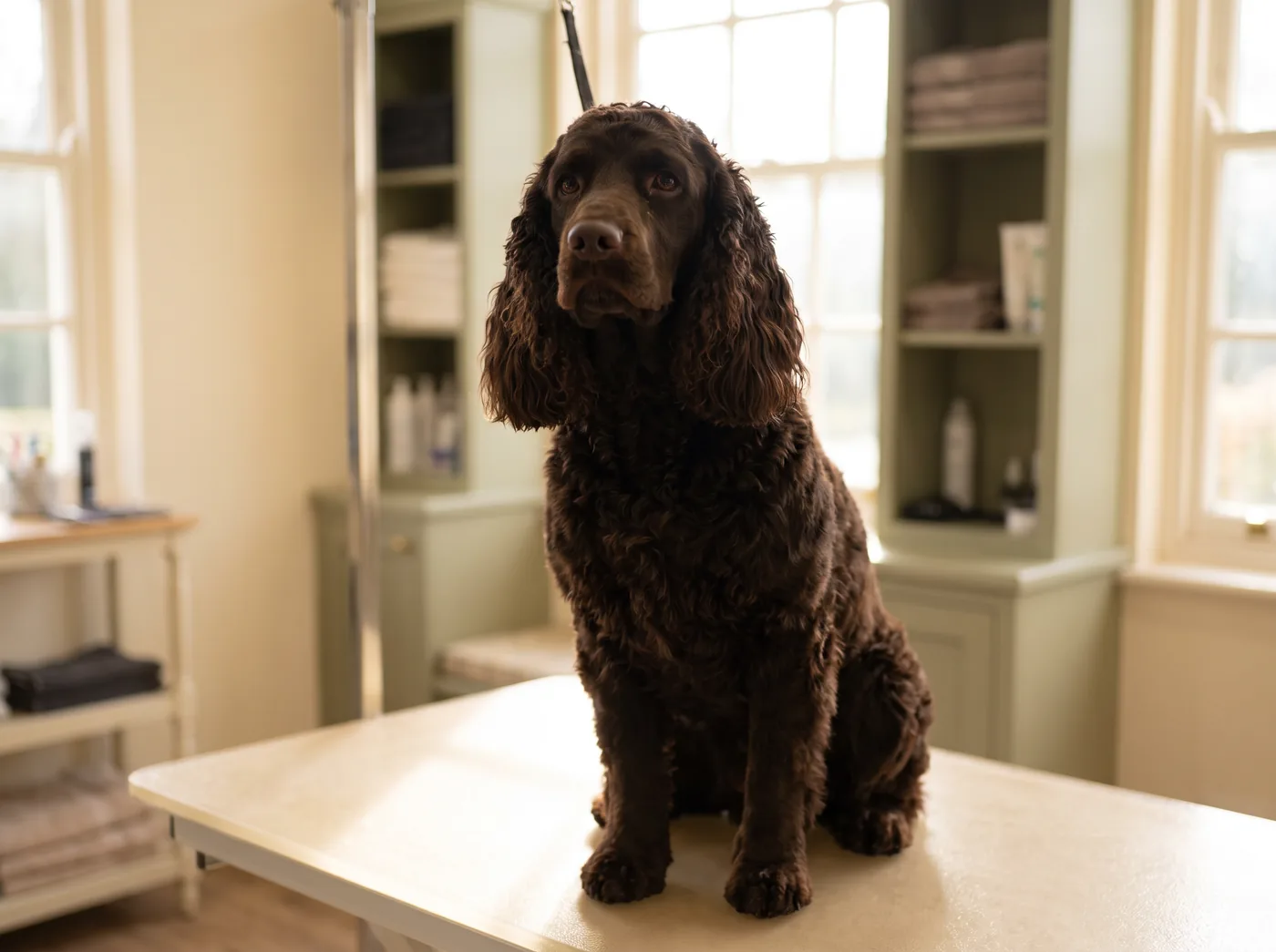
About the American Water Spaniel
Wisconsin's state dog, developed on the upper Mississippi and Fox River valleys to hunt from a small boat in cold water, and one of the rarest breeds native to the United States.
The coat is the interesting part. It is a double coat with a marcel wave or tight curl on the outside, a dense undercoat beneath, and a distinctly oily feel that owners new to the breed often mistake for a dirty dog.
That oil is the equipment. It is what keeps freezing water off the skin, and washing it away with frequent baths leaves a working dog with no protection and, usually, worse odor rather than better.
The breed does have a characteristic musky smell, and the instinct to bathe it away every fortnight is the single most common mistake made with the coat.
It is the same principle the Chesapeake page sets out, on a much smaller and much rarer dog.
The American Water Spaniel has a double coat that regulates its own temperature. Shaving it does not keep the animal cooler, removes the protection against sun and insects, and the top coat often grows back patchy or never returns correctly. A thorough deshed takes out the undercoat and does the job the owner was actually asking for.
The oil is the point
An American Water Spaniel feels slightly greasy to the hand, and it should.
The coat produces oil that coats the wave and the undercoat, so cold water runs off rather than soaking through to the skin. A dog stripped of it by weekly shampooing gets wet to the skin, chills faster and, in the medium term, produces more oil rather than less as the skin compensates.
So bathe every three months or so, and only with a plain dog shampoo. No degreasing shampoo, no conditioner, no leave-in products.
The musky odor is a breed characteristic. It reduces with a bath and comes back, and chasing it with more baths makes it worse.
What does reduce it genuinely is drying the dog properly after swimming, keeping the ears clean and dry, and feeding well. Odor that changes character, or arrives with itching or greasy scurf, is a skin problem rather than the breed.
Brush weekly with a slicker or a pin brush and follow with a comb, working to the skin.
Do not clip. A working double coat loses its water resistance and the wave often regrows soft.
The ears, and why water makes them worse
Every spaniel has the same ear problem, and a dog that swims for a living has it worse.
The ears are long, low set, heavily feathered and lie flat against the head over a canal that does not drain, on a dog whose entire purpose is to swim.
That is close to a worst case for ear infection.
Dry the inside of the ear flap and the visible part of the canal after every swim and every bath. Check weekly for redness, smell or head shaking.
Keep the feathering on the ear trimmed back a little if the dog swims often, since a heavy wet ear holds water against the head for hours.
Do not pour anything into the canal without veterinary advice and do not push cotton buds in.
An ear that smells yeasty, looks red, or that the dog will not let you touch needs a veterinarian rather than a home remedy, and repeated infections in this breed often trace back to swimming rather than to allergy.
Clear the hair between the pads too, since a dog working wet ground picks up everything.
Trimming, which is minimal by design
The standard asks for a natural dog, so the trimming is tidying rather than styling.
Neaten the feet, take stray hair off the ears and hocks, and clear the sanitary area. That is essentially it.
The coat can range from a soft marcel wave to a tight curl, and both are correct, so a groomer should not be trying to make one look like the other.
A little length taken off overall is acceptable on a pet dog for practicality. A short all-over clip is not, for the coat reasons above.
Matting is a moderate risk in the curl, behind the ears, in the armpits and in the feathering, so the weekly comb has to reach the skin rather than skate over the top.
Shedding is moderate and the curl holds a lot of what comes loose, which is another reason the comb matters.
Nails every three to four weeks and teeth brushed.
It is a rare breed, so bring a photograph and expect to explain the coat.
Where it sits among the water dogs
The water breeds all keep an oily or curled coat for the same reason, and their instructions overlap more than usual.
Chesapeake Bay Retriever: a short harsh oily wavy coat, bathed as little as possible, never clipped.
Irish Water Spaniel: dense ringlets and a topknot, scissored regularly, a much bigger coat job.
Portuguese Water Dog: a single non-shedding coat that is clipped and needs regular professional work.
American Water Spaniel: an oily waved double coat, minimal trimming, bathed rarely.
So of the four, two are essentially left alone and two are regular salon dogs, which again is not predictable from the group they share.
The common instruction is the ear, and the common mistake is bathing the oil out.
The AWS is also the smallest and by far the rarest of the four.
What to tell your groomer
Say the coat is supposed to feel oily and that the oil is the water protection.
Ask for a plain shampoo, no degreaser and no conditioner.
Say the musky smell is the breed rather than dirt, and that extra baths make it worse.
Ask for tidying only: feet, ear edges, hocks and sanitary. No clipping.
Ask for the ears dried thoroughly and checked, since the dog swims.
Bring a photograph, since the breed is genuinely rare and most groomers will not have met one.
Keeping the coat between grooms
Bathe rarely, plain shampoo
The oil is the cold water protection. Degreasers take it straight off.
Every three months
Dry the ears after every swim
Long, low set, feathered, flat over a canal that does not drain.
Every swim
Comb to the skin
The curl hides tangles at the base and holds the loose undercoat.
Weekly
Tidy only, never clip
Feet, ear edges, hocks and sanitary. A clipped working coat regrows soft.
As needed
Common Questions About the American Water Spaniel
Why does my American Water Spaniel feel greasy?
Because it is supposed to. The coat produces oil that coats the wave and the undercoat so cold water runs off instead of soaking through to the skin, which is what the breed was built to do from a duck boat in Wisconsin. Washing it off with frequent shampooing leaves the dog unprotected, chilling faster, and often producing more oil as the skin compensates. Bathe roughly every three months with a plain dog shampoo, and skip degreasers and conditioners entirely.
How do I stop the musky smell?
Mostly you do not, because it is a breed characteristic rather than dirt, and bathing it away every fortnight makes it worse by stripping the coat. What genuinely reduces it is drying the dog properly after swimming, keeping the ears clean and dry, and good feeding. What should not be ignored is a smell that changes character or arrives alongside itching, redness or greasy scurf, since that is a skin or ear problem and needs a vet rather than a different shampoo.
Does an American Water Spaniel need professional grooming?
Not really, which makes it one of the easier sporting spaniels. The standard asks for a natural dog, so trimming is limited to neatening the feet, ear edges and hocks and clearing the sanitary area. The real work is a weekly brush and comb that reaches the skin, since the curl hides tangles at the base, plus ear care after every swim. It is a rare breed, so bring a photograph and expect to explain the coat to a groomer who has not seen one.
Similar breeds
Same coat, same schedule, or the breeds this one is crossed from.

Chesapeake Bay Retriever
An oily harsh coat where the oil is the waterproofing, so washing it out is the mistake
Chesapeake Bay Retriever
Irish Water Spaniel
Crisp ringlets over the whole dog except the tail, which is bare by design
Irish Water Spaniel
Boykin Spaniel
A compact brown water spaniel with light feathering and a serious ear problem
Boykin SpanielFind a groomer who knows this coat
Search 37,863 groomers by town, or keep reading the breed guide.
Find a Local Groomer View All Breeds