Boykin Spaniel Grooming
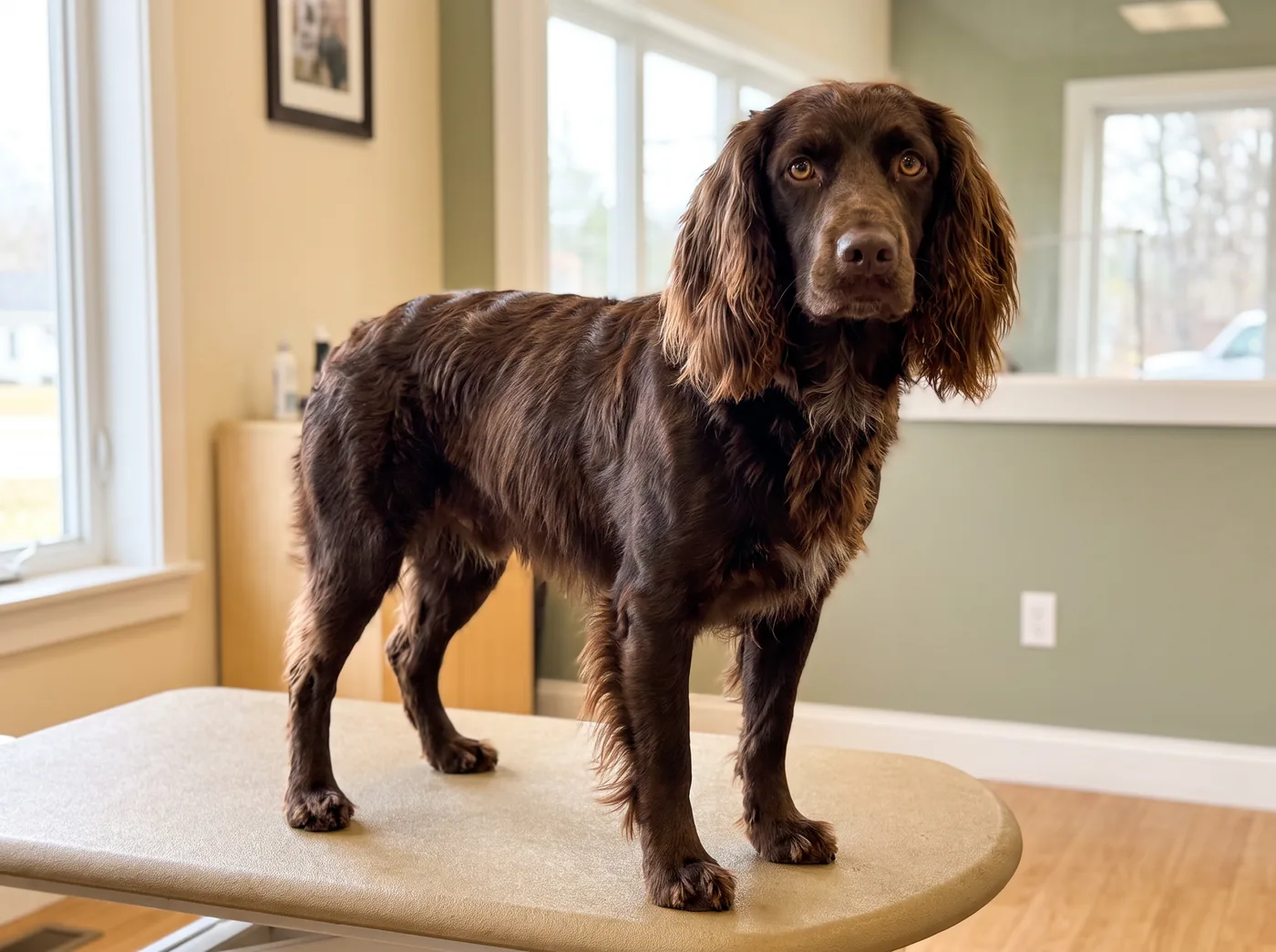
A compact brown water spaniel with light feathering and a serious ear problem
About the Boykin Spaniel
A South Carolina water spaniel bred to be small enough to sit in a section boat on the Wateree River, and it is a genuinely light grooming proposition for a spaniel.
The coat is medium length, flat to slightly wavy, with a water resistant outer layer and a modest undercoat, and the feathering is light: on the ears, the chest, the belly, the backs of the legs and lightly on the tail. Nothing like a show bred English Springer.
A weekly brush and a comb through the feathering keeps it, and there is no real haircut, only a tidy.
What is not light is the ears. This is a dog that spends its working life in water, with long feathered drop ears, and ear disease is the defining health problem of the breed as it is in every spaniel here.
This coat can be clipped, but the texture or the color may change and it will not always come back the same. Talk it through with your groomer before the first one.
The ears, on a dog that lives in water
The ears are long, set at eye level and feathered, lying flat over the canal, on a dog that is in and out of water constantly.
That combination is the worst there is for ear health, and Boykins get a lot of ear disease.
Dry the ears after every swim, every bath and every wet outing. That single habit prevents most of the trouble and it is the most useful thing on this page.
Lift the flap weekly, look and smell. Healthy smells of nothing; yeast is sweet, musty and unmistakable.
Ask a groomer to keep the hair on the underside of the flap and around the opening trimmed short at every appointment.
Head shaking, scratching at an ear, a head tilt, redness, dark discharge or a smell means a veterinarian rather than an ear cleaner. Cleaning an infected ear without treating it does not work.
The ear feathering mats where it meets the head, which pulls on the ear and traps moisture, so it is a grooming and a health problem at once.
Rinse with fresh water after swimming in salt, chlorinated or stagnant water.
The coat, and drying it
Brush weekly with a slicker and comb the feathering through. On a working dog in cover, comb the feathering more often, since burrs and grass seeds turn into mats within days.
The coat carries a water resistant quality, so bathe every ten weeks or so rather than frequently, and use a plain shampoo. Frequent washing strips the property the coat exists for, the same point the Toller page makes.
Drying matters more than washing. A wavy coat with an undercoat left damp at the skin grows hot spots, and this dog is wet most days in season.
Some Boykins carry a noticeably curlier coat, which mats a little more readily and wants the same comb.
Trimming is a tidy: the hair around the ear openings, the feet neatened, pads cleared, hocks tidied and the sanitary area trimmed. The breed is shown in a natural coat.
Clipping the body is possible on a working dog kept short and carries the usual trade with an undercoat present.
A hard working dog, and the checks
Boykins are compact, energetic and genuinely used, and they cover rough ground and water.
Check the feet after work in cover, since a feathered foot collects grass seeds that burrow between the toes and abscess.
Check the skin over the whole dog for thorn scratches, cuts and ticks.
Keep the hair between the pads cleared, both for seeds and for grip.
Nails every three to four weeks.
Hip dysplasia is common enough in the breed to be worth asking a breeder about, along with an eye condition and a heart defect.
Exercise induced collapse is documented in Boykins: a dog that becomes weak or wobbly after intense exercise needs a veterinary assessment and a genetic test exists.
Weight is worth watching, since feathering hides condition and a spaniel not working gains easily.
Where it sits among the spaniels
The spaniels differ mostly in how much coat they carry, which is worth setting out in one place.
American Cocker: the most coat, with a heavy skirt, and the highest maintenance of them.
English Cocker: flatter, no skirt, considerably lighter.
English Springer: heavier feathering on a bigger frame, show bred dogs much more than working ones.
Welsh Springer: moderate feathering, lighter again, always red and white.
Clumber: the heaviest dog with the most drool and the deepest set eyes.
Boykin: the lightest coat of the lot, and the most water.
What every single one of them shares is the ear. Long, feathered, low set, lying flat over a canal that does not drain, on a dog that puts its head into wet undergrowth. If you learn one thing about spaniels, learn the ear.
What to tell your groomer
Ask for the hair under the ear flaps and around the openings kept short at every visit, and the ears dried and checked.
Say the coat is water resistant and should not be bathed more than about every ten weeks.
Ask for a natural tidy rather than a scissored outline: feet, pads, hocks and sanitary area.
Ask them to check between the toes for grass seeds after a working outing.
Say the dog is wet most days in season, so drying to the skin matters.
Mention any ear history, since it is the breed group's defining problem.
Keeping the coat between grooms
Dry the ears after every swim
The single most useful habit on this breed, and it is most days in season.
After every swim
Brush weekly, comb the feathering
Light feathering for a spaniel. Behind the ears, chest, britches and belly.
Weekly
Bathe about every ten weeks
Washing strips the water resistance the coat exists for. Rinsing is fine.
Every ten weeks
Check between the toes
A feathered working foot in cover collects grass seeds, which abscess.
After walks in cover
Common Questions About the Boykin Spaniel
Why do Boykin Spaniels get so many ear infections?
Because the ear architecture and the job are the worst possible combination. The ears are long, set at eye level and feathered, lying flat over a canal that runs down and then turns inward so it does not drain, and the dog is in and out of water constantly. Drying the ears after every swim, bath and wet outing is the single most useful habit. Keep the hair under the flap and around the opening trimmed short, and any smell or discharge needs a vet rather than a cleaner.
How often should a Boykin be bathed?
About every ten weeks. The coat carries a water resistant quality that frequent washing strips, the same point that applies to the Toller and the Otterhound, and a stripped coat then soaks instead of shedding water. Rinsing with plain water after swimming in salt, chlorinated or stagnant water is fine and worth doing. What matters far more than washing is drying: a wavy coat with an undercoat left damp at the skin grows hot spots, and this dog is wet most days in season.
How much coat does a Boykin have compared with other spaniels?
The least of them. An American Cocker carries the most, with a heavy skirt; an English Springer is heavy in show lines; a Welsh Springer and an English Cocker are moderate; a Clumber is the heaviest dog with the most drool. A Boykin has a medium flat to wavy coat with light feathering and no skirt, so a weekly brush and a comb through the feathering keeps it. What it shares with all of them, without exception, is the ear problem.
Similar breeds
Same coat, same schedule, or the breeds this one is crossed from.

Welsh Springer Spaniel
A working spaniel with noticeably less coat than the English, and the same ear problem
Welsh Springer Spaniel
English Cocker Spaniel
A working spaniel with far less coat than the American, and a different trim
English Cocker Spaniel
Nova Scotia Duck Tolling Retriever
A water repellent coat that frequent bathing strips, on the smallest retriever
Nova Scotia Duck Tolling RetrieverFind a groomer who knows this coat
Search 37,863 groomers by town, or keep reading the breed guide.
Find a Local Groomer View All Breeds