Bernedoodle Grooming
A doodle coat on a giant frame, which is the most expensive combination in grooming
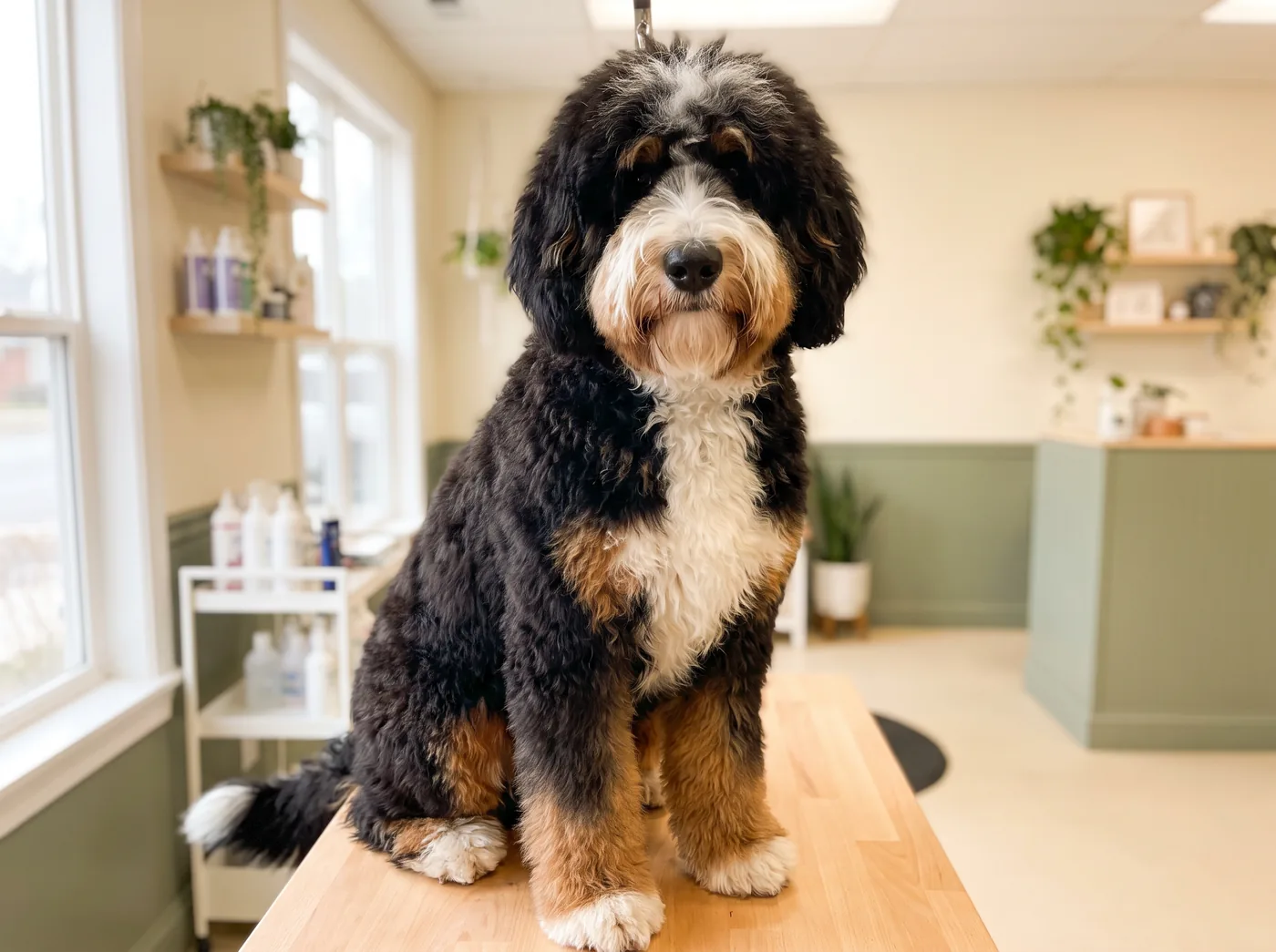
About the Bernedoodle
A Bernedoodle is a Bernese Mountain Dog crossed with a Poodle, and it combines the two things that independently make a grooming appointment long: a continuously growing coat that mats, and a very large dog.
Those two multiply rather than add. A doodle coat needs combing to the skin and a full scissor finish. A large dog takes a long time to bathe and considerably longer to dry. Put them together and you have one of the longest and most expensive routine appointments in any salon.
None of that is a reason not to have one. It is a reason to know the number before the puppy arrives rather than at the first groom, because it is the single most common thing Bernedoodle owners are unprepared for.
What the Bernedoodle is crossed from
What a full groom involves
Three and a half hours is normal, and on a big one in poor coat it runs longer.
It starts dry with a full brush and comb through, and on a dog this size carrying a fleece coat that stage alone can be well over an hour. Anything tangled comes out before water touches it, because bathing a coat with tangles sets them.
Then a rough pre clip to take off bulk, so the bath and the dry are not spent on hair that is about to be removed. On a Bernedoodle this step saves real time and a good groomer will always do it.
Then a double bath and conditioner, then the dry, which on a large dog with a dense coat is the bottleneck and takes a long time. The coat has to be blown out and brushed straight as it dries or it cannot be scissored to a line.
Then clipper work to set the body length, and scissor work on the legs, head, ears and tail, which is where the shape comes from.
Nails, ears, pads and a sanitary trim throughout.
Why this is the most expensive routine groom on the site
It is worth being direct about, because the surprise is the problem rather than the price.
A doodle coat on a small dog is expensive because of the handwork. A large dog with no haircut is expensive because of the drying. A Bernedoodle has both at once, and neither discount applies.
There is no version of this coat that is cheap to maintain, and there is no interval at which it becomes cheap. What there is, is a choice between a predictable cost every five weeks and a much larger cost every twelve when the coat has to be stripped off and started again. The second is worse for the dog and worse for your money.
The lever that genuinely works is length. A shorter trim is quicker to scissor, quicker to dry, holds its shape for longer and needs less daily combing from you. Plenty of Bernedoodles are kept in a short practical trim year round and look perfectly good. A long fluffy coat is a choice with a running cost attached, and it is fair to make it with the number in front of you.
The coat problems a Bernedoodle actually gets
The same felting trap every curly coat has, with more surface area to hide in. A slicker glides over the top while the layer against the skin builds up solid, so brushing daily and being matted are entirely compatible.
Use a metal comb, part the coat to the skin, and draw it outward. Behind both ears, both armpits, the collar line, the trousers and either side of the tail base. On a dog this size, add the chest and the area where a harness sits.
Then the puppy coat change between eight and fourteen months, which arrives on schedule and is the most common reason a young Bernedoodle has its first short clip.
And two things that come from the Bernese side. These dogs are heavy coated and they overheat readily, so a wet coat that is not dried properly holds moisture against the skin and hot spots follow. And the drool, which on a dog with any Bernese jaw structure collects in the chest feathering and sours if it is not wiped.
Joints, heat and the practical side
Both parent breeds carry joint risk and the cross does not escape it. Hip and elbow dysplasia are common enough that a full groom, which asks a dog to stand for hours on a hard surface, is genuinely the hardest part of the appointment for some of these dogs.
Tell the salon if your dog is older, stiff or has a diagnosis. Splitting a bath and dry from the trim across two visits is completely normal and much better than one long session the dog struggles through.
Heat is the other. A dark, heavy, dense coat on a large dog under a dryer in a warm room is a combination worth managing, and a good salon keeps the room cool and works in shorter bursts.
And book ahead. A three and a half hour appointment does not slot easily into a schedule built around ninety minute ones, and the salons that take them well have limited capacity.
What to tell your groomer
Send photographs and give the weight before booking, because a thirty pound mini and an eighty five pound standard are completely different appointments and the same breed name covers both.
Say the age if the dog is under eighteen months.
Be honest about the combing. On a coat with this much surface area, the gap between what an owner intends and what they do is where the cost comes from.
Say whether you want a practical short trim or a longer coat, and understand that the second is a standing commitment rather than a one time preference.
Mention any joint diagnosis or heat intolerance, and be open to splitting the appointment.
And book the next one before you leave. On this cross more than any other, a schedule is the whole difference between a manageable dog and a strip down every visit.
Keeping the coat between grooms
Line comb to the skin
More surface area than any other doodle, and the same felting trap. Work in sections and prove each one with a metal comb.
Daily
Dry the chest and beard
Drool from the Bernese side collects in the chest feathering and sours, and damp fleece is where matting starts.
Daily
Say what the joints are doing
Both parent breeds carry joint risk, and standing for three hours is the hardest part of the appointment.
Every booking
Keep the schedule, shorten the coat
A predictable five week trim costs less than a twelve week strip down, and it is far better for the dog.
Every visit
Common Questions About the Bernedoodle
Why is grooming a Bernedoodle so expensive?
Because it combines the two things that independently make an appointment long. A doodle coat needs combing to the skin and a full scissor finish, which is handwork that does not get quicker. A large dog takes a long time to bathe and much longer to dry. Neither discount applies, so you pay for both. A shorter trim genuinely reduces it: less scissoring, faster drying, and it holds its shape longer.
Do Bernedoodles shed?
Wool and fleece coated ones shed very little, which is what most people are buying. That is also exactly why they mat: the shed hair stays in the coat instead of dropping, so it has to be combed out. A hair coated Bernedoodle, closer to the Bernese side, sheds noticeably and needs far less grooming. You do not get both, and which one you have is settled by the individual dog rather than the paperwork.
How short should I keep a Bernedoodle?
Shorter than most owners first want, and there is no shame in it. A short practical trim is quicker to groom, dries faster, holds its shape for weeks longer and needs far less daily combing. A long fluffy coat is achievable but it is a daily commitment plus a four week appointment cycle. Decide based on the routine you will actually keep rather than the photograph you liked.
Similar breeds
Same coat, same schedule, or the breeds this one is crossed from.

Bernese Mountain Dog
A giant double coat with feathering, on a dog with a famously short life
Bernese Mountain Dog
Goldendoodle
The busiest coat in any grooming salon, and the one owners are warned about least
GoldendoodleFind a groomer who knows this coat
Search 37,863 groomers by town, or keep reading the breed guide.
Find a Local Groomer View All Breeds