Bichon Frise Grooming
One of the fastest matting coats there is, under one of the most forgiving surfaces
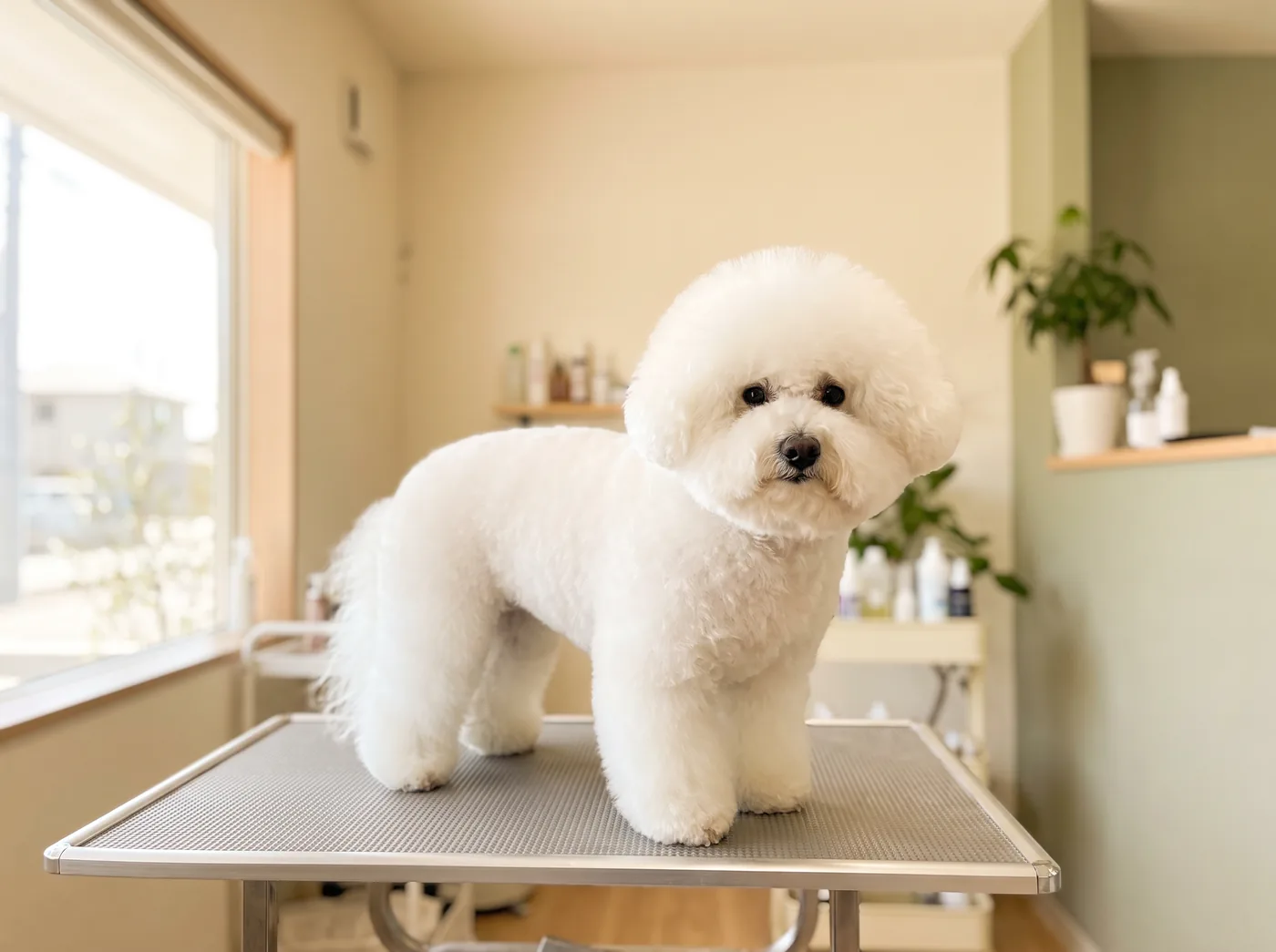
About the Bichon Frise
The Bichon Frise carries a soft, dense, curled double coat, and it is one of the fastest matting coats in dogs. It is also one of the most deceptive: the surface stays springy and immaculate while a felted layer builds underneath against the skin, so a Bichon can look perfect and be solid to the touch when you actually reach through it.
The breed look is entirely scissor work. That rounded powder puff outline is not a clipper length, it is an hour of handwork, and it is most of what you are paying for.
People choose this breed because it is small, white, cheerful and barely sheds. All of that is true. The part that gets undersold is that it is a genuinely high maintenance coat needing daily work and a groomer every month.
What a full groom involves
A full comb through, dry, before anything else. This stage is diagnostic on a Bichon: the coat has to be checked to the skin all over, because the surface tells you nothing.
Then a rough pre clip if there is length to remove, a double bath with a whitening shampoo because the coat shows everything, and conditioner.
Then the dry, and on this breed it is a craft in itself. The coat has to be blown out and brushed straight as it dries so it stands away from the body, because a Bichon coat dried flat cannot be scissored into the round outline at all. Fluff drying is the term and it is the foundation of the whole finish.
Then the scissor work: the body shaped, the legs scissored into columns, the head cut into the characteristic round with the ears blended in. Almost none of a Bichon groom is clipper work and that is why it takes as long as a much larger dog.
Eyes cleaned, ears checked and cleaned, nails, pads, sanitary trim. Two and a half hours is normal.
How often, and what happens if you stretch it
Four to six weeks, and four if you want the coat left long. There is no version of this coat that holds for three months.
What happens when it slips is not gradual. A Bichon coat felts, and it felts against the skin where you cannot see it, so the dog looks fine right up until a groomer parts the coat and shows you. At that point the honest answer is a short clip, because dematting a felted coat means pulling repeatedly on hair anchored in living skin and no reputable groomer will spend two hours doing that to preserve a length.
The skin underneath a felted Bichon coat is frequently red and sometimes broken, which is the reason for the clip rather than the result of it.
It grows back true with the same texture and color, so it is a setback and not damage. The thing to change afterward is the interval and the daily comb, because otherwise it simply happens again.
The coat problems a Bichon actually gets
The surface trap is the central one and it catches the most conscientious owners. A slicker brush glides over a Bichon coat beautifully and can do so indefinitely while the layer against the skin felts solid. Brushing every day and being matted are entirely compatible on this breed.
The test takes a minute. Take a metal comb, part the coat to the skin behind an ear and in an armpit, and draw it outward from the skin. If it stops or will not reach, the coat is matted whatever the brush is telling you. Check behind both ears, both armpits, the trousers and either side of the tail base.
Tear staining is the second, and on a white dog it is close to universal rather than a sign of neglect. The eyes water, the discharge oxidizes in the hair, and the area below each eye goes reddish brown. Daily wiping prevents it; nothing much removes it once it is there.
Then general staining, because everything shows on white: the beard from food and water, the feet from licking, the sanitary area. Keeping the hair short in those places is the practical answer.
What moves the price
The scissoring, more than on almost any other small breed. The rounded outline is handwork and it does not scale down with the dog, which is why a twelve pound Bichon costs more to groom than plenty of dogs four times its weight.
Coat condition second, and on this coat it swings the bill hard: a maintained coat is a scissor trim, a felted one is a strip down.
Then the length you ask for. A shorter, simpler outline is quicker, holds its shape longer and is a completely legitimate choice for a pet. It is not a lesser groom.
Then the whitening work. Getting a stained white coat genuinely clean takes longer than washing a dark one and some salons price it in.
What to tell your groomer
Be honest about the combing. A groomer told the truth will recommend a length that survives your actual routine, and you will be happier with it than with a long trim that mats in three weeks.
Bring a photograph if you want the full rounded breed outline, and understand it is the most labor intensive version. Say so if you would rather have something shorter and lower maintenance, which most pet Bichons wear.
Mention the tear staining and whether it has changed. Established staining is managed; a sudden increase is worth having the eye looked at, because blocked ducts and inward turning lashes both present this way.
Ask them to keep the sanitary area and the feet short between grooms if you are stretching the interval, because those two cause problems before the body coat does.
Keeping the coat between grooms
Comb, do not just brush
A slicker tidies the surface. A metal comb from the skin outward is the only thing that tells you what is really there.
Daily
Wipe under the eyes
Daily prevention is the only thing that works on tear staining. Once the hair has stained it has to grow out.
Daily
Check the four hot spots
Behind both ears, both armpits, the trousers and the tail base. Those account for most of the felting.
Weekly
Dry the beard and feet
Damp curly hair is where a mat starts, and this coat is white so it stains as well as tangles.
After walks and meals
Common Questions About the Bichon Frise
Are Bichons low maintenance because they do not shed?
No, and the two things are close to opposites. The coat holds shed hair instead of dropping it, so it stays out of your house and stays on the dog, which is exactly why it felts. A Bichon needs combing to the skin daily and a full groom every four to six weeks. It is one of the highest maintenance coats in dogs and one of the lowest shedding, and both facts have the same cause.
I brush my Bichon every day and the groomer still says it is matted. Why?
Because a slicker brush passes over the surface of this coat and leaves the layer against the skin untouched, and that is where mats form. Both of you are telling the truth. Use a metal comb, part the coat to the skin, and draw it outward: behind the ears, in the armpits, the trousers and the tail base. If the comb will not reach skin there, the coat is matted whatever the brush suggests.
Why does a Bichon cost more to groom than a bigger dog?
Because almost all of it is scissor work, and scissoring does not get quicker on a smaller dog. The rounded outline is shaped entirely by hand after the coat has been fluff dried to stand away from the body, and that is well over an hour on its own. Size sets the bath and dry time, which is the short part. Coat and finish set everything else.


Find a groomer who knows this coat
Search 37,863 groomers by town, or keep reading the breed guide.
Find a Local Groomer View All Breeds