Clumber Spaniel Grooming
The heaviest spaniel, with the most feathering, the most drool and deep set eyes
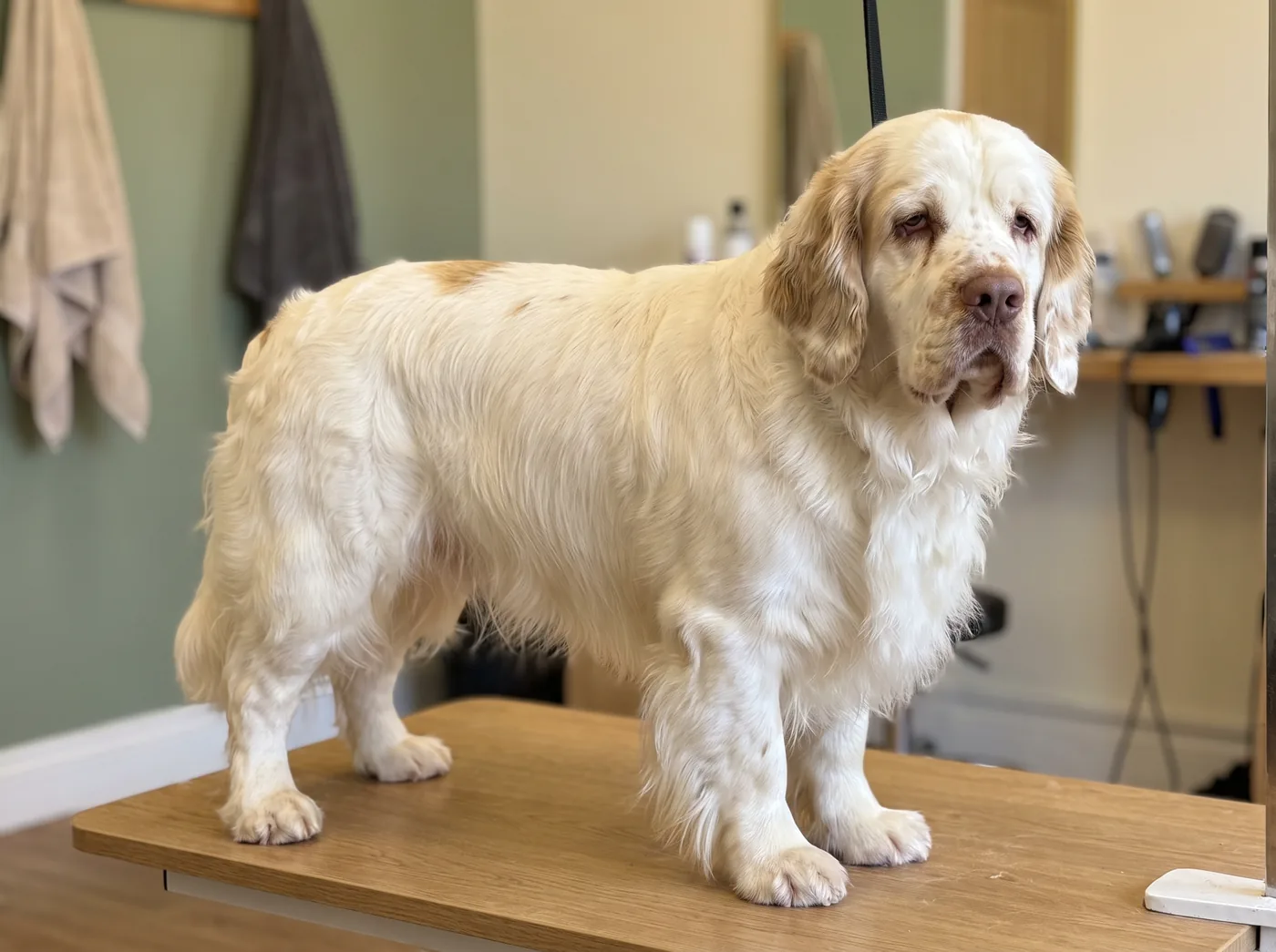
About the Clumber Spaniel
The Clumber is the heaviest of the spaniels by a distance: a long, low, massive dog that can weigh eighty five pounds on seventeen inch legs, built to push through dense cover rather than to range.
The coat is dense, straight and silky, weather resistant, with heavy feathering on the chest, belly, legs and ears. Everything the English Cocker page says about spaniel ears and feathering applies, with more of it.
Two things are specific to this breed and both are daily jobs rather than grooming appointments. The Clumber drools substantially, from heavy flews and loose lips, and it has deep set eyes with loose lower lids that collect debris and are prone to problems.
It also sheds heavily, which surprises people who assume a spaniel coat means low shedding.
This coat can be clipped, but the texture or the color may change and it will not always come back the same. Talk it through with your groomer before the first one.
The feathering, and the shedding nobody expects
The body coat is dense and flat and comparatively easy. The feathering is where the work is: long on the chest and belly, heavy on the backs of the legs, and abundant on the ears.
Comb it through every two or three days with a metal comb, working to the skin. Behind and under the ears first, then the armpits, the chest, the backs of the front legs and the britches.
A low slung dog with a belly skirt drags that skirt through everything it walks over, so mud, burrs and seeds collect there, and a wet skirt put away damp mats fast.
Shedding is the surprise. Clumbers shed heavily and continuously, and white hair shows on everything. Weekly brushing with a slicker over the body plus the feathering comb is what keeps it manageable, and a bath and blow out twice a year genuinely helps.
Bathe every six weeks or so, comb out first, and dry thoroughly including the feathering and under the belly.
Trimming is a tidy: feet, pads, hocks, the hair around the ear openings and shortening the feathering where it drags. The breed is not sculpted.
The drool, and what it does to the coat
Clumbers drool, and owners should expect it rather than hope to train it away. Heavy flews and loose lips mean saliva collects and falls, and it increases around food and exercise.
For grooming, the consequence is that the chest feathering and the hair around the mouth are permanently damp, and permanently damp hair on a white dog sours, stains rust brown and eventually irritates the skin underneath.
Wipe the mouth and jowls after meals and drinks, and dry them. Keep a cloth where the dog eats.
Wash the chest feathering more often than the rest of the dog, and check the skin under it for redness.
Trimming the hair around the mouth and on the upper chest shorter helps considerably and does not change the look much.
Check inside the lip folds at the corners of the mouth, where food debris packs in and rots.
A dog that suddenly drools much more than usual, or that drools with a head tilt, a change in appetite or a smell from the mouth, is a veterinary matter rather than a laundry one.
The eyes, which need daily attention
The Clumber has deep set eyes with loose, often drooping lower eyelids, and a visible haw at the inner corner. That is breed type, and it comes with real consequences.
A loose lower lid rolls slightly outward, leaving the eye exposed and collecting dust, grass seed and debris, and the pocket it forms holds discharge against the eye. Some dogs also have lids that roll inward so lashes rub the surface, and a good many Clumbers have some of both.
Wipe each eye daily with a damp cloth, wiping outward and away, and dry after. Keep the hair on the face and around the eyes short so it is not falling into them.
Never spray anything toward the face.
What needs a veterinarian: squinting, a thick or colored discharge, redness, cloudiness, pawing at the face or a visible mark on the eye surface. Entropion and ectropion are both surgically correctable and both are common enough in the breed that they should be checked for rather than waited for.
A dog working in cover with exposed eyes is at genuine risk from grass seeds, so check after every outing.
The ears, the weight and a heavy dog on a table
The ears are large, heavy, low set and thickly feathered, lying flat over the canal on a dog that works in wet cover. That is the spaniel ear problem in its most extreme form.
Lift weekly, look and smell. Keep the hair under the flap and around the opening trimmed short at every appointment. Dry after every bath, swim and wet walk.
Weight is the other constant. Clumbers gain very easily, they are already heavy for their frame, and the breed is prone to hip dysplasia and to a spinal condition affecting the neck. A heavy Clumber is a genuinely unhealthy Clumber.
Feel for ribs rather than judging by outline, since a dense coat and a naturally massive build hide a great deal.
At a salon, ask for a non slip surface and as much done lying down as possible. This is a heavy dog on short legs that finds standing for a long appointment hard, and older ones especially.
Nails every three to four weeks, and check between the toes for grass seeds after work in cover.
What to tell your groomer
Ask for a tidy rather than a sculpted trim: feet, pads, hocks, ear openings and the feathering shortened where it drags.
Ask for the hair under the ear flaps and around the openings kept short every visit, and the ears dried and checked.
Say the chest feathering is permanently damp from drool and needs washing and drying more than the rest of the dog.
Ask for the hair around the mouth and eyes kept short, and nothing sprayed toward the face.
Mention any eyelid problem, since deep set loose lids are common in the breed.
Ask for a non slip surface and work done lying down where possible.
Keeping the coat between grooms
Wipe each eye, outward and dry
Deep set eyes with loose lids collect debris and hold discharge against the surface.
Daily
Wipe the jowls and chest
Drool keeps the mouth hair and chest feathering permanently damp on a white dog.
After every meal
Lift, look, smell, dry
Large heavy low set feathered ears on a dog that works in wet cover.
Weekly
Feel for the ribs
Already heavy for the frame, gains easily, and prone to hip and neck problems.
Monthly
Common Questions About the Clumber Spaniel
Do Clumber Spaniels shed a lot?
Yes, heavily and continuously, which surprises people who assume a spaniel coat is low shedding. The coat is dense and the hair is white, so it shows on everything. Brush the body weekly with a slicker, comb the feathering through every two or three days, and book a bath and blow out twice a year, which removes far more than home brushing. What you cannot do is reduce it by bathing more often, which strips the coat and irritates the skin.
How do I deal with a Clumber's drooling?
Manage it rather than expect it to stop, because heavy flews and loose lips mean it is structural. The grooming consequence is that the hair around the mouth and the chest feathering stay permanently damp, which on a white dog sours, stains rust brown and irritates the skin underneath. Wipe and dry the jowls after meals and drinks, wash the chest feathering more often than the rest of the dog, and have the hair around the mouth and upper chest trimmed shorter, which helps a lot.
Why do Clumber Spaniels have such droopy eyes?
It is breed type: deep set eyes with loose lower lids and a visible haw at the inner corner. The consequence is that the lid can roll slightly outward, leaving the eye exposed and forming a pocket that collects dust, grass seed and discharge, and some dogs also have lids that roll inward so lashes rub the surface. Wipe each eye daily outward and away and keep the facial hair short. Squinting, discharge, redness or pawing needs a vet, since both conditions are correctable.
Similar breeds
Same coat, same schedule, or the breeds this one is crossed from.

English Cocker Spaniel
A working spaniel with far less coat than the American, and a different trim
English Cocker Spaniel
Basset Hound
A very short coat and a very long list, because none of the work is on the hair
Basset Hound
English Springer Spaniel
The ears are the appointment, and the show and working coats are two different dogs
English Springer SpanielFind a groomer who knows this coat
Search 37,863 groomers by town, or keep reading the breed guide.
Find a Local Groomer View All Breeds