Brittany Grooming
A sporting coat with a fraction of the feathering, and that is deliberate rather than accidental
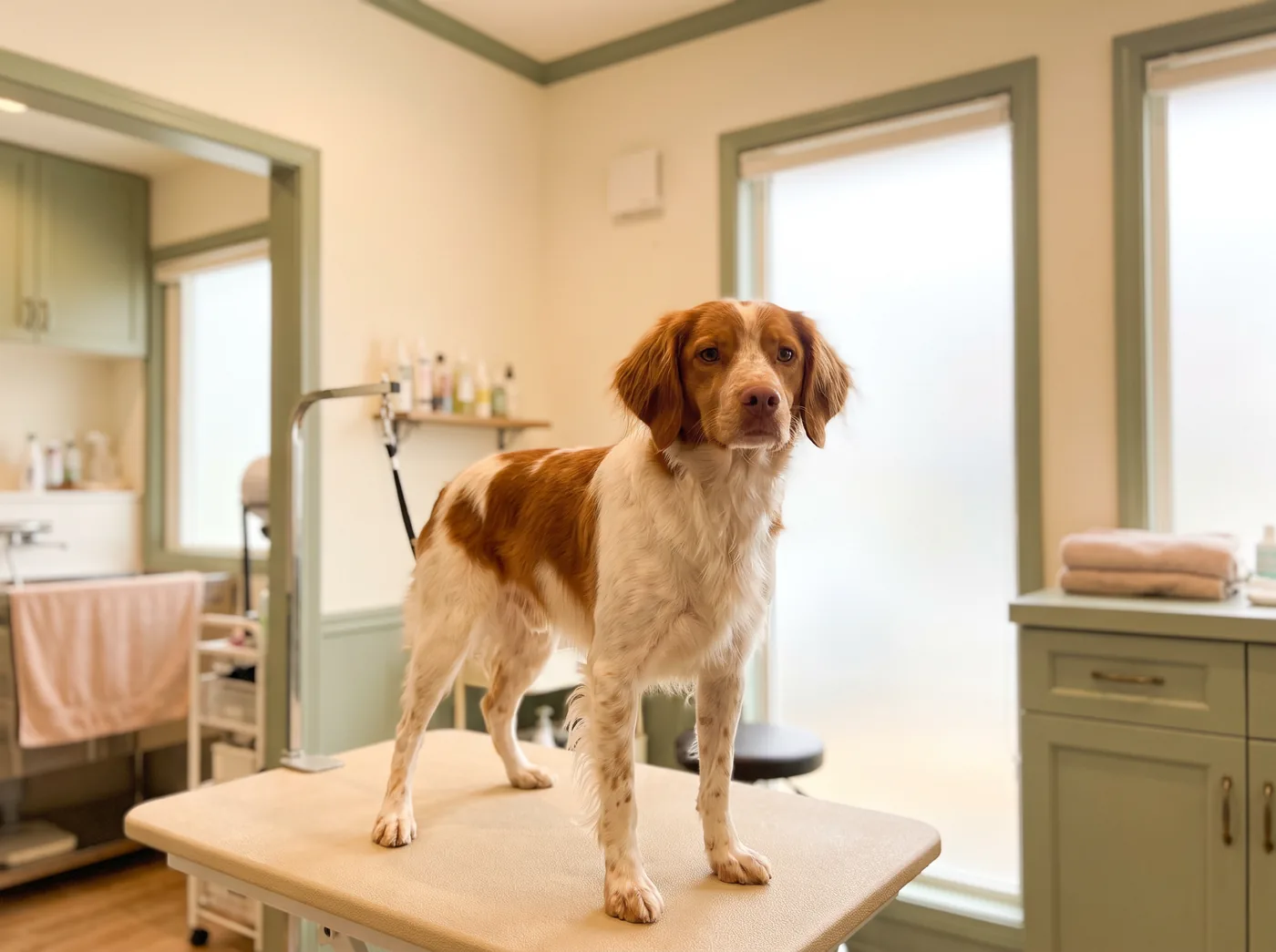
About the Brittany
Almost every other sporting breed carries substantial feathering. The Irish Setter has it everywhere, the Springer and Cocker have heavy ears and skirts, and all three pages spend most of their length on combing it.
The Brittany carries a flat, dense, medium length coat with only light feathering on the ears, the chest and the backs of the legs, and that is a deliberate breed decision rather than an accident. The standard actively penalizes heavy feathering, because a dog bred to quarter through dense French cover all day is hindered by anything that catches burrs and holds water.
So this is the easy end of the sporting group: a brush once a week, a groom every couple of months if you want one, and no dematting to speak of. It is worth knowing before choosing a gundog, because the difference in weekly effort between this and a Setter is substantial.
This coat can be clipped, but the texture or the color may change and it will not always come back the same. Talk it through with your groomer before the first one.
Less coat on purpose, and what that saves you
The coat is flat or slightly wavy, dense enough to protect the dog in cover, and short enough that nothing hangs. Feathering exists on the ears, the chest and the backs of the front and hind legs, but it is light, and the standard treats excessive feathering as a fault.
The reasoning is practical. A Brittany was developed to hunt on foot over rough Breton country, quartering through gorse and bracken, and long feathering in that environment collects burrs, seeds and water and slows the dog down. Breeders selected against it.
What it means for an owner is a genuinely light routine. A brush through with a slicker or a pin brush once a week, ten minutes, with a comb through the light feathering behind the legs and ears. Matting is close to a non-issue and the places that do tangle, behind the ears and in the armpits, are small.
Shedding is moderate and year round with a heavier drop twice a year. There is a light undercoat, so a deshedding bath at the seasonal change is worth having.
Bathe every couple of months at most. The coat has natural water resistance and frequent washing softens it.
Trimming is minimal: the feet cleared, the hair between the pads kept flush, the sanitary area tidied, and on some dogs a light tidy of the ear feathering. The body coat is never clipped, and there is no outline to build.
The ears, which are still a drop ear
Less feathering does not mean no ear problem. A Brittany has a moderately long drop ear set high on the head, lying flat over the opening, and the canal underneath runs down then turns inward and does not drain by gravity.
What helps is that the ear is shorter, lighter and far less densely feathered than a Springer or Setter ear, so airflow is better and the ear dries faster. Ear disease is meaningfully less common in this breed than in the heavily eared spaniels.
The routine is still weekly. Lift the flap, look, and smell. Healthy is pale and smells of nothing; yeast is sweet and musty.
Dry the ears after every swim and every wet walk. This is a hunting breed that will get into water, and a damp ear under a flap is the problem regardless of how much hair is on it.
Head shaking, scratching, a head tilt, redness or dark discharge means a veterinarian rather than a cleaner.
Ask a groomer to keep the hair on the underside of the flap trimmed short, which costs nothing and helps airflow.
The other thing a working Brittany brings home is seeds. Check between the toes, in the ears and through the light leg feathering after any walk in long grass in summer, because grass seeds work in fast and need veterinary removal.
The name, and the two types
Worth clearing up because it causes confusion at booking.
The breed was called the Brittany Spaniel for most of its history, and the American Kennel Club dropped the word spaniel in 1982. The reason is functional: spaniels flush game, and a Brittany points it, working much more like a setter or pointer. The name change reflected what the dog actually does.
Elsewhere it is the Epagneul Breton, which does still translate as Brittany spaniel, so both names remain in use.
For grooming purposes it matters only in this respect: somebody booking a spaniel may expect a Springer or Cocker appointment with heavy ears and feathering, and a Brittany is nothing like that.
There are also two types worth knowing. The American Brittany is slightly taller and leggier and is most often orange and white. The French Brittany is a little smaller and more compact and commonly black and white as well, a color the American standard does not accept.
Neither differs meaningfully in coat, so the grooming is the same.
One more practical note: many Brittanys are born with a naturally short tail or are docked in working homes, and neither affects the routine beyond keeping the sanitary area tidy.
Energy, skin and the rest
The Brittany is one of the highest energy breeds in the sporting group, bred to hunt on foot all day, and a dog that has not had serious exercise will not stand still for anything. Walk or run the dog properly before an appointment; on this breed it makes more difference than any tool a groomer owns.
They are also generally sensitive and soft, more so than most gundogs, and they respond badly to being handled roughly or rushed. A patient groomer gets a straightforward dog; a firm one gets a worried dog that remembers.
Nails every three to four weeks, and this matters on a dog that runs this much.
Skin is generally sound. The coat is short enough to inspect easily, so check the belly and legs after work in cover for scrapes, thorn punctures and ticks.
Teeth, as with any breed.
Watch the feet in particular. A Brittany covers ground on rough terrain and pad injuries, split nails and grass seeds between the toes are the routine hazards, all of which a groomer doing nails is well placed to spot.
What to tell your groomer
Say Brittany rather than spaniel, because a salon expecting a Springer will have booked far more time than the coat needs.
Ask for the feet cleared, the pads kept flush, the sanitary area tidied and the ear underside trimmed for airflow, and nothing else cut.
Ask for a deshedding bath at the seasonal change rather than a plain wash.
Say if the dog swims or works in cover, and mention any ear or grass seed history.
Say the dog is sensitive and should not be rushed.
And exercise it properly beforehand, because this is one of the highest energy breeds in the group.
Keeping the coat between grooms
Brush through, comb the feathering
Ten minutes. Behind the ears and the armpits are the only places that tangle, and they are small.
Weekly
Lift, look, smell and dry the ears
A lighter ear than a Springer, but still a drop ear over a canal that does not drain. Dry after every swim.
Weekly
Check the feet and toes
Pad injuries, split nails and grass seeds are the routine hazards on a dog that covers this much rough ground.
After every outing
Exercise before the appointment
One of the highest energy breeds in the sporting group. It makes more difference than any tool a groomer owns.
Every visit
Common Questions About the Brittany
How much grooming does a Brittany need?
Far less than almost any other sporting breed. A brush through once a week with a comb through the light feathering, a deshedding bath at the seasonal change, and a tidy of the feet, pads, sanitary area and ear underside every couple of months if you want one. There is no dematting to speak of and the body coat is never clipped. That is deliberate: the standard penalizes heavy feathering because it catches burrs and holds water on a working dog.
Is a Brittany a spaniel?
It was called the Brittany Spaniel until the American Kennel Club dropped the word in 1982, because the dog points game rather than flushing it, which is how setters and pointers work rather than spaniels. In France it is still the Epagneul Breton, so both names remain in use. For grooming it matters because somebody booking a spaniel may expect the heavy ears and feathering of a Springer or Cocker, and a Brittany carries nothing like that.
Do Brittanys shed?
Moderately and year round, with a heavier drop twice a year, since there is a light undercoat under the flat body coat. It is far less noticeable than a heavy shedding double coated breed and there is no dramatic seasonal blow. A weekly brush handles most of it, and a deshedding bath at each seasonal change is worth booking. There is nothing that mats and nothing to cut.
Similar breeds
Same coat, same schedule, or the breeds this one is crossed from.

English Springer Spaniel
The ears are the appointment, and the show and working coats are two different dogs
English Springer Spaniel
Irish Setter
A fine silky coat with feathering everywhere, on a dog that wants to run through everything
Irish SetterFind a groomer who knows this coat
Search 37,863 groomers by town, or keep reading the breed guide.
Find a Local Groomer View All Breeds