Pointer Grooming
One of the shortest coats in dogs, and a weekly session that is really a health check
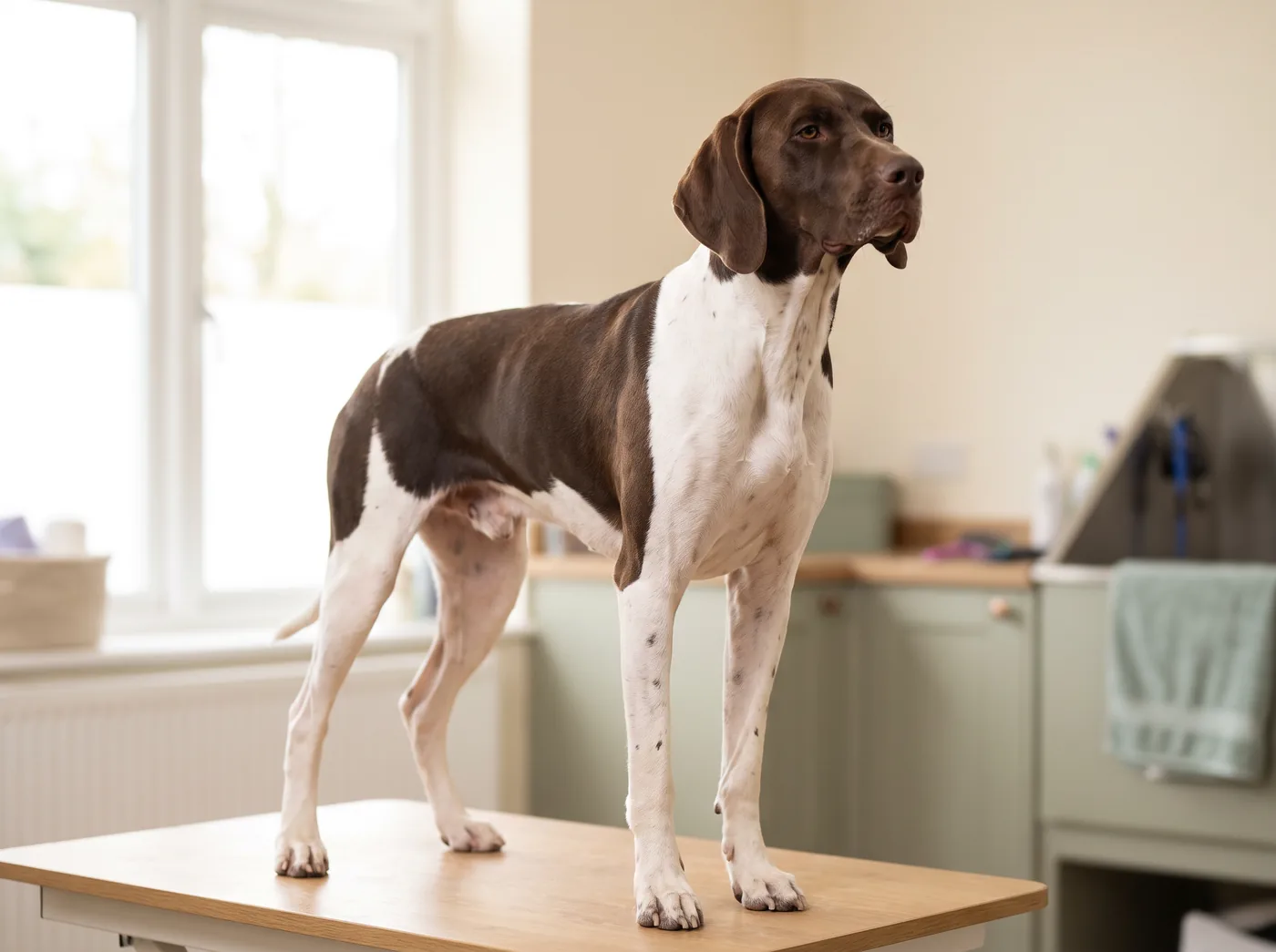
About the Pointer
About as little coat as a dog can have: short, dense, fine and hard, lying flat with a distinct sheen, and no undercoat to speak of.
A rubber curry mitt once a week and a bath every ten weeks is the entire grooming routine. Nothing is cut, ever, and matting is not a concept that applies.
That makes this a page about everything except the coat, and there is a genuine amount to say. A Pointer is a hard running gundog that covers enormous ground, comes home carrying whatever it went through, and has skin with almost nothing protecting it.
The parts that matter are sunburn on pink skin, feet, ears, and using the weekly ten minutes as an actual examination rather than a token brush.
The Pointer has a double coat that regulates its own temperature. Shaving it does not keep the animal cooler, removes the protection against sun and insects, and the top coat often grows back patchy or never returns correctly. A thorough deshed takes out the undercoat and does the job the owner was actually asking for.
Ten minutes, done properly
Go over the dog once a week with a rubber curry mitt or a hound glove, working against the lie of the coat and then with it. It lifts the dead hair, which a short hard coat holds more than people expect, and spreads the skin oils that give the coat its shine.
Pointers shed moderately and steadily rather than seasonally, and the short stiff hairs weave into fabric and are hard to remove. Weekly currying is the only thing that meaningfully reduces it.
Bathe every ten weeks or so with a plain gentle shampoo. Over-bathing a coat this short strips the skin, and there is nothing between the product and the skin to buffer it.
There is no clipping, trimming or styling on this breed beyond nails and keeping the pads clear.
Dry properly after a bath or a wet day, since a lean dog with no coat chills faster than a thick coated one.
The ten minutes is the whole coat commitment, which is why the rest of this page is about what else to do while you are there.
Pink skin and sun
Pointers are usually white with liver, black, orange or lemon patches, and the white areas frequently have pink skin underneath with very little coat over it.
That skin burns. The nose, the ear tips, the belly and the groin are the usual places, and a gundog working in open country in summer gets a great deal of exposure.
Use a sunscreen made for dogs on exposed pink areas before extended sun, never a human product containing zinc oxide, which is toxic if licked off. Provide shade and avoid the middle of the day where you can.
Repeated burning over a life that often runs to fifteen years or more carries a real skin cancer risk, and this is a long lived breed.
The same thin coat means scrapes, thorn scratches and cuts show immediately, which is an advantage. Check the dog over after every working day.
Elbows and hocks develop calluses on a lean dog that lies on hard floors, and soft bedding is the fix.
Feet, ears and a dog that covers ground
A working Pointer runs further in a day than most dogs run in a week, and the feet take it.
Check the pads after every outing for splits, cuts and worn areas, and check between the toes for grass seeds and thorns, which burrow into the skin and abscess.
Keep the hair between the pads cleared, though there is not much of it.
Nails every three to four weeks. A dog that runs on soft ground does not wear them down as much as you would think, and long nails change how a fast dog loads its feet.
Ears are moderately long drop ears lying flat over the canal on a dog that runs through wet cover, which is the standard recipe. Lift weekly, look and smell, and dry them after a wet day or a swim.
Head shaking, scratching an ear, redness or a smell needs a veterinarian rather than a cleaner.
Check the ear leather for tears too, since thin ears catch on wire and undergrowth.
The weekly examination
With no coat work to speak of, the weekly session earns its place as a physical check, and a short coat makes it easy: nothing is hidden.
Run your hands over the whole dog, down each limb, over the ribs and spine, around the shoulders and hips, and along the belly. You are feeling for anything new, firm or growing, and for soreness.
Feel for ribs to judge weight. A Pointer should be lean and athletic, and owners used to heavier breeds often overfeed one.
Watch for lameness that does not resolve, which on a hard running dog is worth taking seriously rather than resting and hoping.
Deep chested, so bloat is a risk: no large meal around exercise or an appointment, and unproductive retching with a swollen abdomen is an emergency.
Pointers are long lived, often twelve to seventeen years, so the habits set early run a long time.
They are also friendly, biddable and easy to handle, which makes all of this straightforward.
What to tell your groomer
Ask for a bath, a curry, nails, ears and a skin check. There is no haircut on this breed.
Ask for a plain unscented shampoo, since there is nothing between the product and the skin.
Say if the dog has pink skin on the nose, ear tips or belly, which is a sunburn risk rather than a grooming one.
Ask them to check the pads and between the toes for splits, thorns and grass seeds.
Ask for the ears dried and checked, and the ear leather looked at for tears.
Say not to feed the dog around the appointment because of bloat risk.
Keeping the coat between grooms
Curry mitt, ten minutes
Against the lie then with it. The whole coat routine, and the health check.
Weekly
Sunscreen the pink skin
Nose, ear tips and belly on a mostly white dog working in open country.
Before sun exposure
Check pads and between the toes
A dog that runs this far splits pads and collects thorns and grass seeds.
After every outing
Hands over the whole dog
Nothing is hidden on a coat this short, so there is no excuse for missing it.
Weekly
Common Questions About the Pointer
How much grooming does a Pointer need?
About ten minutes a week, which is close to the least of any dog there is. A rubber curry mitt or hound glove against the lie of the coat and then with it, plus a bath every ten weeks or so with a plain shampoo. There is no clipping, trimming or styling at all and matting does not happen. What the weekly session is really for is the hands-on check: nails, ears, pads, and feeling over the whole dog, which a short coat makes easy because nothing is hidden.
Does a Pointer need sunscreen?
If it has pink skin showing through, which most do. Pointers are usually white with patches, and the white areas often have unpigmented skin with very little coat over it, particularly on the nose, ear tips, belly and groin. That skin burns, and a gundog working in open country gets a lot of exposure. Use a sunscreen made for dogs, never a human product containing zinc oxide, and give shade. Repeated burning over a life of twelve to seventeen years is a real skin cancer risk.
What should I check after a Pointer has been working?
The feet first. A working Pointer covers enormous ground, so check the pads for splits, cuts and worn areas, and between the toes for grass seeds and thorns, which burrow into the skin and abscess. Then the ear leather for tears from wire and undergrowth, and the ears themselves if the dog has been in wet cover. Then run your hands over the whole dog for thorn scratches and cuts, which show immediately on a coat this short and are easy to find.
Similar breeds
Same coat, same schedule, or the breeds this one is crossed from.

German Shorthaired Pointer
A short harsh coat built for cold water, that sheds far more than it looks like it should
German Shorthaired Pointer
Vizsla
The thinnest coat in the sporting group, on the dog least able to be left alone at a salon
Vizsla
Wirehaired Pointing Griffon
A harsh straight gundog jacket that is plucked, with eyebrows and a beard
Wirehaired Pointing GriffonFind a groomer who knows this coat
Search 37,863 groomers by town, or keep reading the breed guide.
Find a Local Groomer View All Breeds