Cavapoo Grooming
A Cavalier ear and a Poodle coat, which is a harder combination than either parent
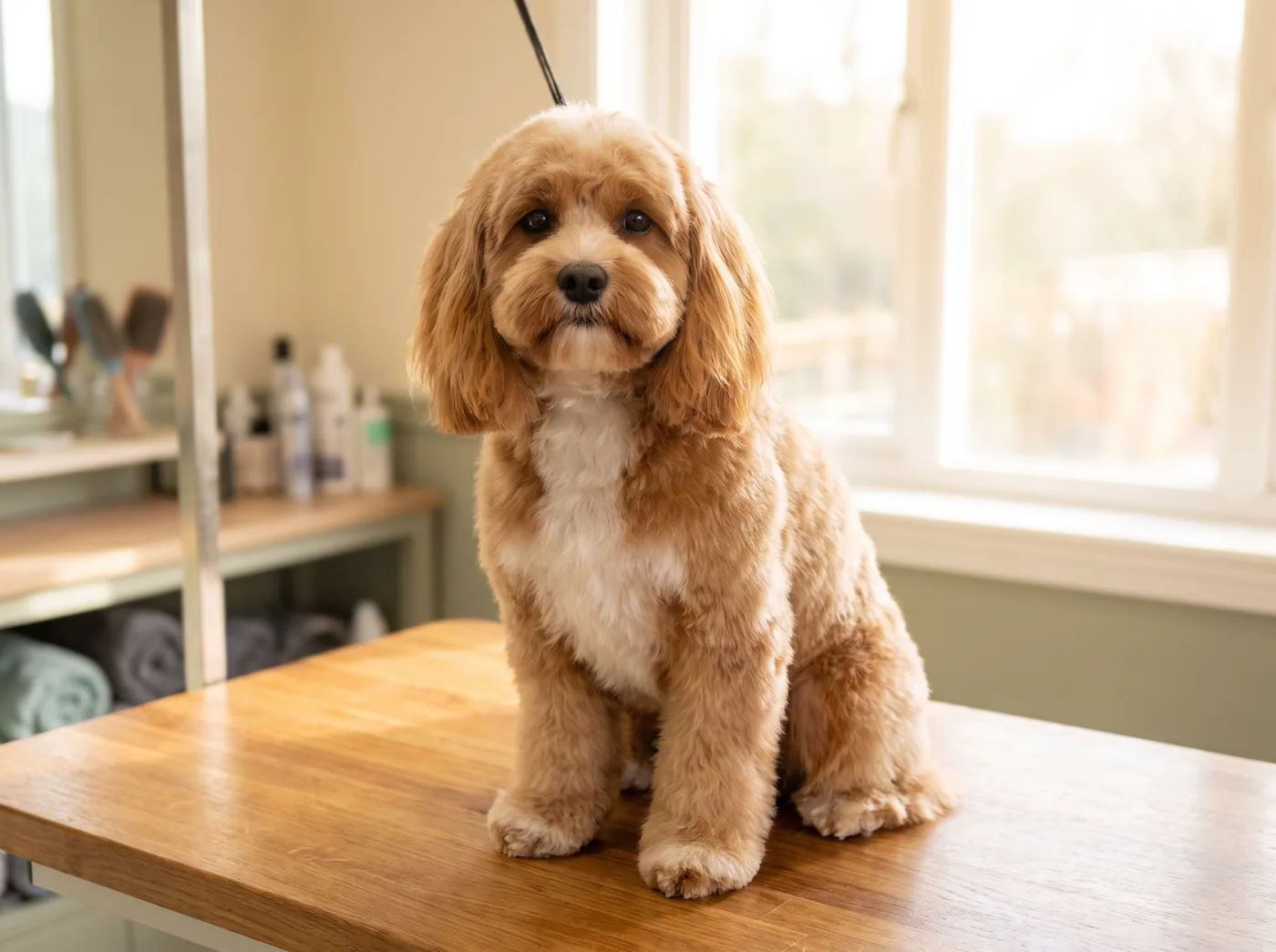
About the Cavapoo
The Cavapoo is a Cavalier King Charles Spaniel crossed with a Poodle, usually a toy or miniature, and it is one of the most popular small crosses in both the United States and Australia.
Most of what it needs is what any doodle cross needs, and the Maltipoo page sets out the general case: an unpredictable coat somewhere between the two parents, a coat that grows continuously rather than shedding, daily combing to the skin, and a professional groom every four to six weeks.
What makes the Cavapoo genuinely different, and what this page is mostly about, is the ear. A Cavalier contributes a long, heavy, densely feathered drop ear that seals the canal. A Poodle contributes hair that grows inside the canal itself. Put those together and you have an ear that is worse than either parent's, on a dog whose owners are rarely warned about it.
What the Cavapoo is crossed from
The ears, which are the real problem
Every doodle cross has some version of the ear problem. The Cavapoo has the worst version, and it is worth understanding why rather than just being told to check them.
A dog ear canal runs down and then turns inward, so it does not drain by gravity. Three things make that worse and a Cavapoo has all three.
From the Cavalier: a long, heavy drop ear that lies flat over the opening and seals it, with dense feathering on both surfaces that blocks what little airflow remains.
From the Poodle: hair that grows inside the ear canal itself, which very few breeds do. That hair traps wax and debris where nothing can reach it and holds moisture directly against the canal wall.
And from the cross generally: a coat that holds water. A wet ear over a sealed canal full of hair is close to a perfect incubator.
So the routine is weekly and non negotiable. Lift the flap, look, and smell. Healthy is pale and smells of nothing; yeast is sweet and musty and unmistakable. Dry the ears and the feathering after every bath, swim or wet walk.
Head shaking, scratching at an ear, a head tilt, redness, or brown or black discharge means a veterinarian rather than a bottle of cleaner.
Ask the groomer to keep the hair under the flap and around the opening trimmed short, every visit. Whether hair should be plucked from inside the canal is genuinely debated and is a decision for your vet on that specific dog, not a default.
What coat to expect, and why nobody can tell you
A Cavalier carries a silky, medium length, straight or slightly wavy coat that sheds normally. A Poodle carries a dense, tightly curled coat that barely sheds at all. A Cavapoo can land anywhere between, and littermates frequently differ from each other.
The generation labels tell you probabilities rather than facts. F1 means one parent of each breed and is the most variable. F1b means an F1 bred back to a Poodle, which raises the odds of a curlier, lower shedding coat and also of the denser coat that mats hardest. F2 and later are cross to cross, and variability does not settle.
The coat also changes once, usually between eight and eighteen months, as the soft puppy coat is replaced by the adult one. That transition is when most Cavapoos mat badly for the first time, because the shedding puppy coat comes out into the growing adult coat and has nowhere to go. Owners who were managing fine suddenly are not, and the dog arrives at a salon pelted at around a year old. Expect it and increase the combing rather than being caught out.
Whatever coat you end up with, the routine is the same: comb to the skin daily and book every four to six weeks. Plan for that, and treat an easier coat as luck.
Combing, and why a brush is not enough
A low shedding coat does not produce less dead hair. It produces the same amount and keeps it, tangled among the growing hairs, until something takes it out.
That something has to be a metal comb. A slicker brush skims the outer coat and feels productive while mats form at the skin underneath, which is why owners who brush conscientiously every day still arrive at a salon with a pelted dog. Work in sections, on a dry coat, from the skin outward. If the comb will not pass freely from skin to tip, that section is not brushed.
The six places to check every time: behind and under the ears, the armpits, the inside of the back legs, under the collar or harness, the chest, and around the rear.
Behind the ears is first on this cross, for the same reason the ears cause trouble: heavy feathering that moves against the head.
Never bathe a matted coat. Water tightens a mat the way it tightens a knot, so any groomer who bathes before dematting is working in the wrong order.
And keep the harness in mind. A dog wearing one all day gets friction mats under the straps, and it is a common cause of a matted chest on an otherwise well kept dog.
The face, and something worth mentioning to your groomer
Tear staining is common, particularly on cream and apricot dogs. The cause is porphyrin in tears, which oxidizes and permanently stains the hair it dries on, so prevention is the only thing that works: wipe under each eye daily, dry it, and keep the hair around the eyes trimmed short so tears reach air rather than sitting in a fringe.
Keep the beard dry too. A permanently damp muzzle stains and smells.
One thing specific to this cross that is worth raising with a groomer. Cavaliers have a high incidence of syringomyelia, a condition where a malformation at the base of the skull disrupts the flow of fluid around the spinal cord, and it can be inherited by crosses. The classic signs are scratching at the neck and shoulder without making contact, particularly when excited or when a collar is touched, yelping for no obvious reason, and sensitivity around the head, neck and ears.
That matters here because it looks exactly like a grooming problem. A dog scratching at its neck gets treated for fleas, or assumed to be objecting to handling. If your dog reacts badly to having its head, neck or ears touched, or air scratches at one shoulder, that is a veterinary conversation and not a behavior one.
Cavaliers also have a very high rate of heart disease, which matters for older dogs asked to stand for a long appointment.
What to tell your groomer
Book the next appointment before you leave. Four to six weeks, standing.
Ask specifically for the ears: hair under the flap and around the opening kept short, ears checked and dried, and tell them any ear history.
Say honestly when the dog was last combed to the skin and where you found mats.
Bring a photograph rather than saying teddy bear trim, and give a length in numbers if you can.
Mention if the dog is around eight to eighteen months old, because a groomer who knows the coat is changing will check more carefully and book more time.
Say if the dog is sensitive around the head or neck, or has any heart or mobility history, both of which change how long the dog should be asked to stand.
Keeping the coat between grooms
Lift, look, smell and dry the ears
A sealed drop ear with hair growing inside the canal. This cross has the worst ear architecture of the small doodles.
Weekly
Comb to the skin, in sections
A metal comb, not a slicker. Behind the ears first. If it will not pass freely from the skin out, that section is not brushed.
Daily
Keep a standing booking
Four to six weeks. Add extra combing between eight and eighteen months, when the coat changes and most Cavapoos first mat.
Every four to six weeks
Wipe and dry under the eyes
Porphyrin stains permanently once it dries in the hair. Keep the hair around the eyes short so tears reach air.
Daily
Common Questions About the Cavapoo
Why does my Cavapoo keep getting ear infections?
Because the cross inherits the worst of both parents. The Cavalier contributes a long heavy drop ear that seals the canal with dense feathering blocking airflow, and the Poodle contributes hair growing inside the canal itself, which very few breeds do and which traps wax and moisture where nothing can reach it. Add a coat that holds water and you have close to an ideal environment for yeast. Check weekly by lifting and smelling, dry the ears after every bath or wet walk, and have the hair under the flap kept short at every groom.
What coat will my Cavapoo have?
There is no way to know in advance. A Cavalier coat is silky, medium and straight to wavy, a Poodle coat is dense and tightly curled, and a cross can land anywhere between, with littermates often differing. F1b puppies bred back to a Poodle are more likely to be curly and low shedding, and also more likely to carry the coat that mats hardest. The coat then changes once between eight and eighteen months, which is when most Cavapoos mat badly for the first time. Plan for daily combing regardless.
Is a Cavapoo easier to groom than a Cockapoo or Maltipoo?
No, they are much the same on the coat: all three are Poodle crosses with an unpredictable coat that grows continuously, needs combing to the skin daily and a groom every four to six weeks. Where the Cavapoo is harder is the ears. The Cavalier drop ear is heavier and more densely feathered than a Maltese or Cocker ear, and combined with Poodle hair growing in the canal it gives this cross a notably higher rate of ear trouble than the others.
Similar breeds
Same coat, same schedule, or the breeds this one is crossed from.

Cavalier King Charles Spaniel
A tidy rather than a haircut, and a set of ears that need watching
Cavalier King Charles Spaniel
Maltipoo
A coat you cannot predict from the name, which is the whole difficulty with the cross
Maltipoo
Find a groomer who knows this coat
Search 37,863 groomers by town, or keep reading the breed guide.
Find a Local Groomer View All Breeds