Chartreux Grooming
A woolly blue coat that breaks and mats, where the other blue cat does neither
About the Chartreux
The Russian Blue is the other gray blue shorthaired cat, and the two get confused constantly. For grooming they are not the same animal at all.
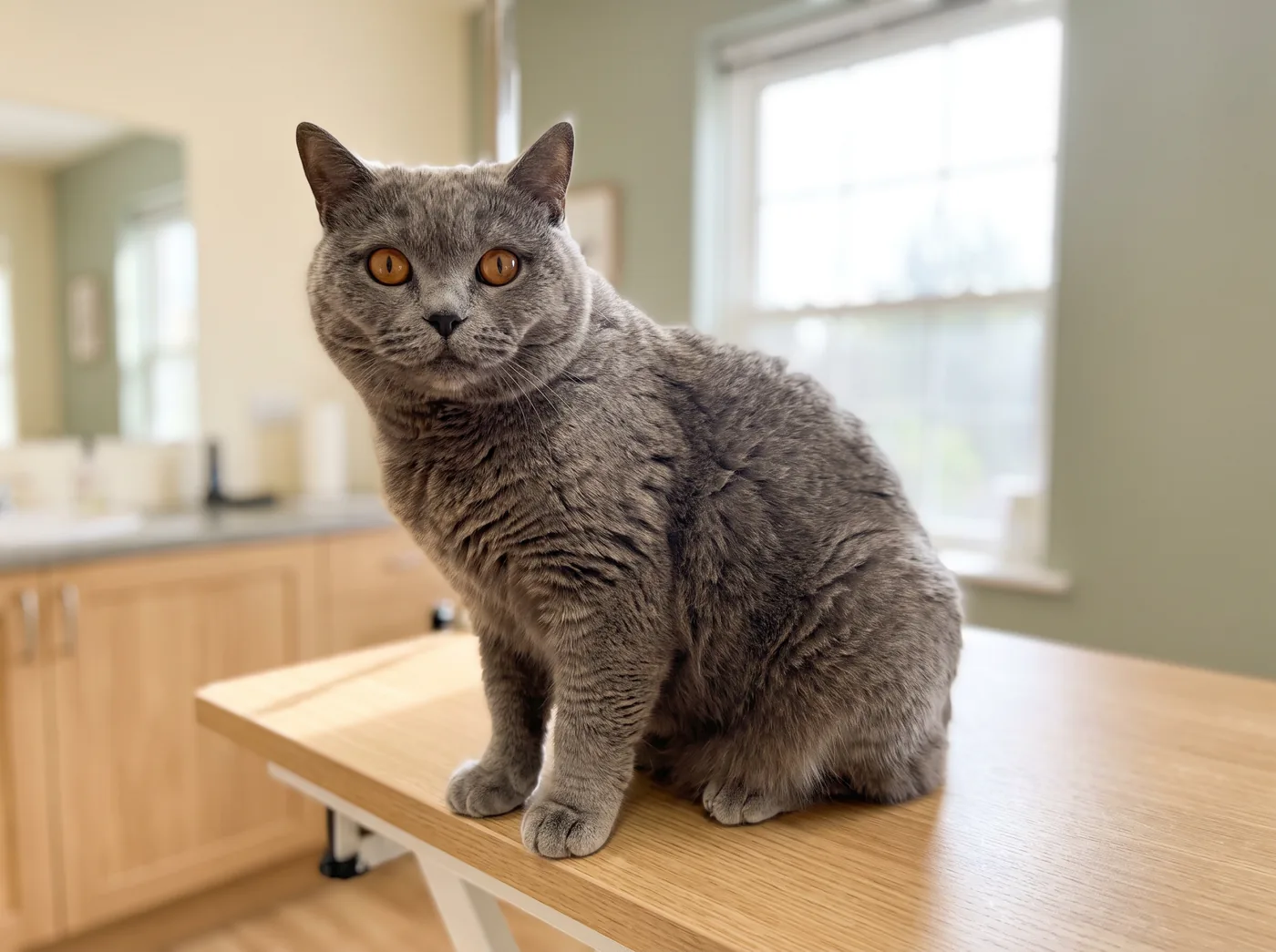
A Russian Blue has a short, dense, even double coat that stands out from the body like plush and effectively never mats. A Chartreux has a coat the standard calls woolly: dense, slightly longer, water resistant, and with enough texture that it breaks into visible ripples at the neck and along the flanks.
That woolliness is the difference. It is the closest thing to a sheep's fleece on a shorthaired cat, and it genuinely tangles and mats, especially as the cat ages, gets heavier or stops grooming itself as thoroughly.
So this is one of the few shorthaired cats on the site that needs a comb rather than a mitt.
The Chartreux has a double coat that regulates its own temperature. Shaving it does not keep the animal cooler, removes the protection against sun and insects, and the top coat often grows back patchy or never returns correctly. A thorough deshed takes out the undercoat and does the job the owner was actually asking for.
A woolly coat, and combing rather than brushing
The coat is short but not thin. It is dense, slightly resilient, water repellent, and it has a distinctive break: the fur separates into soft ripples at the ruff and along the flanks the way a fleece does, which is exactly what the breed standard is describing when it says woolly.
Comb every two or three days with a fine metal comb, working right down to the skin rather than skimming. A rubber mitt or a soft brush moves the top of this coat and does nothing about the dense layer underneath, which is where the tangling starts.
The places to check: the ruff around the neck, behind and under the front legs, the flanks where the coat breaks, and the britches at the back of the hind legs.
Mats on a Chartreux are usually small and tight rather than large pelts, and caught early they comb out. Left alone they pull at the skin, and a cat with sore skin stops letting you comb it, which is how the situation gets worse rather than better.
Never cut a mat out with scissors. Cat skin is thin and mobile and lifts into the blades far more easily than anyone expects, and it is one of the commonest serious injuries done by well meaning owners. If it will not come out with a comb or a mat splitter, that is a job for a groomer or a vet with clippers.
The seasonal change, which is substantial
A Chartreux carries a genuine double coat and it changes with the season, noticeably.
The winter coat is thicker, woollier and heavier, with a fuller ruff. In spring it comes out over several weeks and the summer coat is shorter and lies closer, and then it builds again through autumn.
Comb daily through the change. It is the period when tangles form fastest, because the loose undercoat has a dense woolly outer layer to get caught in rather than dropping free.
It is also the main control on hairballs, which matters on a cat with this much coat to swallow.
A cat that used to be immaculate and is now developing tangles on its back and rump is telling you something: usually that it has gained weight, or that arthritis or dental pain is stopping it turning and grooming properly. That is a veterinary conversation, not a grooming failure, and it is the commonest reason a self sufficient cat suddenly needs help.
Do not bathe routinely and do not clip. The coat is doing a job and a woolly water resistant coat that is clipped can grow back with a different texture.
Telling it apart from a Russian Blue
Worth knowing, because the two are sold and rehomed interchangeably and they need different things.
A Chartreux is a heavy, broad, muscular cat on comparatively fine legs, often described as a potato on toothpicks, with a rounded head, a tapered muzzle that produces the famous smiling expression, and copper to gold eyes. The coat is woolly and breaks.
A Russian Blue is finer boned, more elegant and angular, with vivid green eyes and a short even plush coat that does not break and does not mat.
Both are blue, both have a silver sheen from lighter tipped hairs, and coat color alone tells you nothing.
The grooming difference is the practical one: a Russian Blue is happy with a weekly comb or mitt and effectively never mats, while a Chartreux needs a proper comb through every two or three days and can mat if neglected.
Eye color is the quickest field test, since gold or copper means Chartreux and green means Russian Blue, though kittens change eye color as they mature.
Weight, claws and the rest
Chartreux are big, slow maturing cats that take up to three years to reach full size, and males in particular are substantially heavier than they look.
Because they are naturally broad and muscular, obesity is easy to miss and easy to dismiss as breed type. Feel for the ribs rather than judging by outline, since a heavy Chartreux under a dense coat looks much like a well built one.
Weight matters here more than usual, because a cat that cannot turn and reach its own back end stops maintaining the part of the coat most likely to mat.
Claws want tipping every two to three weeks, taking the sharp tip only and staying clear of the quick. Provide a sturdy post, since this is a heavy cat that will destroy a flimsy one, and do not consider declawing.
Ears and teeth get the ordinary weekly attention.
The breed is generally quiet, undemanding and famously almost silent, which is charming and does mean a Chartreux may not complain loudly when something is wrong. The weekly hands-on session is how you find out instead.
What to tell your groomer or vet
Say it is a Chartreux and not a Russian Blue, because the coats behave differently and the advice differs.
Ask for a fine metal comb to the skin rather than a mitt or a soft brush.
Point out the ruff, the flanks and the britches as where it tangles.
Say the coat is not to be clipped and the cat is not to be bathed without a reason.
Ask for claws tipped, and mention if the cat has been reaching its back end less.
Never let anyone cut a mat out with scissors, and say so.
Keeping the coat between grooms
Fine comb, down to the skin
A mitt only moves the top of a woolly coat. Ruff, flanks and britches first.
Every two to three days
Comb daily through the change
A real double coat. Spring is when tangles form fastest and hairballs peak.
Seasonally
Feel for ribs, not outline
A naturally broad cat hides weight, and a heavy cat cannot reach its own back.
Monthly
Never scissors on a mat
Cat skin lifts into the blades. Comb, splitter, or a professional with clippers.
Always
Common Questions About the Chartreux
Does a Chartreux mat, being a shorthaired cat?
Yes, and it is one of the few shorthaired cats that genuinely does. The coat is what the standard calls woolly: dense, water resistant and textured enough to break into visible ripples at the neck and flanks, more like a fleece than the flat coat most shorthairs have. That texture tangles, particularly at the ruff, behind the front legs, on the flanks and in the britches. Comb every two or three days with a fine metal comb rather than using a rubber mitt, which only moves the surface.
What is the difference between a Chartreux and a Russian Blue?
They are both blue with a silver sheen and they get confused constantly, but the coats behave differently. A Russian Blue has a short even plush double coat that effectively never mats and is happy with a weekly comb. A Chartreux has a woolly coat that breaks and genuinely tangles, needing a comb through every two or three days. Physically a Chartreux is heavy, broad and muscular on fine legs with a smiling muzzle and copper or gold eyes; a Russian Blue is finer, more angular and has vivid green eyes.
Can I cut a mat out of my cat with scissors?
No, and this is worth being blunt about. Cat skin is thin, loose and lifts into the blades far more readily than anyone expects, and cutting mats out is one of the commonest serious injuries owners cause. A mat sits tight against skin that comes up with it. Use a fine comb early, or a mat splitter, and if it will not come out then it is a job for a groomer or a vet with clippers. On a Chartreux the best answer is prevention: comb every two or three days and daily through the seasonal change.
Similar breeds
Same coat, same schedule, or the breeds this one is crossed from.

Russian Blue
A short coat dense enough to stand away from the body, and the silver tips that do the work
Russian Blue
British Shorthair
A short coat that is denser than most long ones, and sheds accordingly
British Shorthair
Norwegian Forest Cat
A weatherproof double coat on a cat, with a spring blow that startles owners
Norwegian Forest CatFind a groomer who knows this coat
Search 37,863 groomers by town, or keep reading the breed guide.
Find a Local Groomer View All Breeds