Chiweenie Grooming
A Chihuahua and Dachshund cross: an easy coat on a long back and crowded teeth
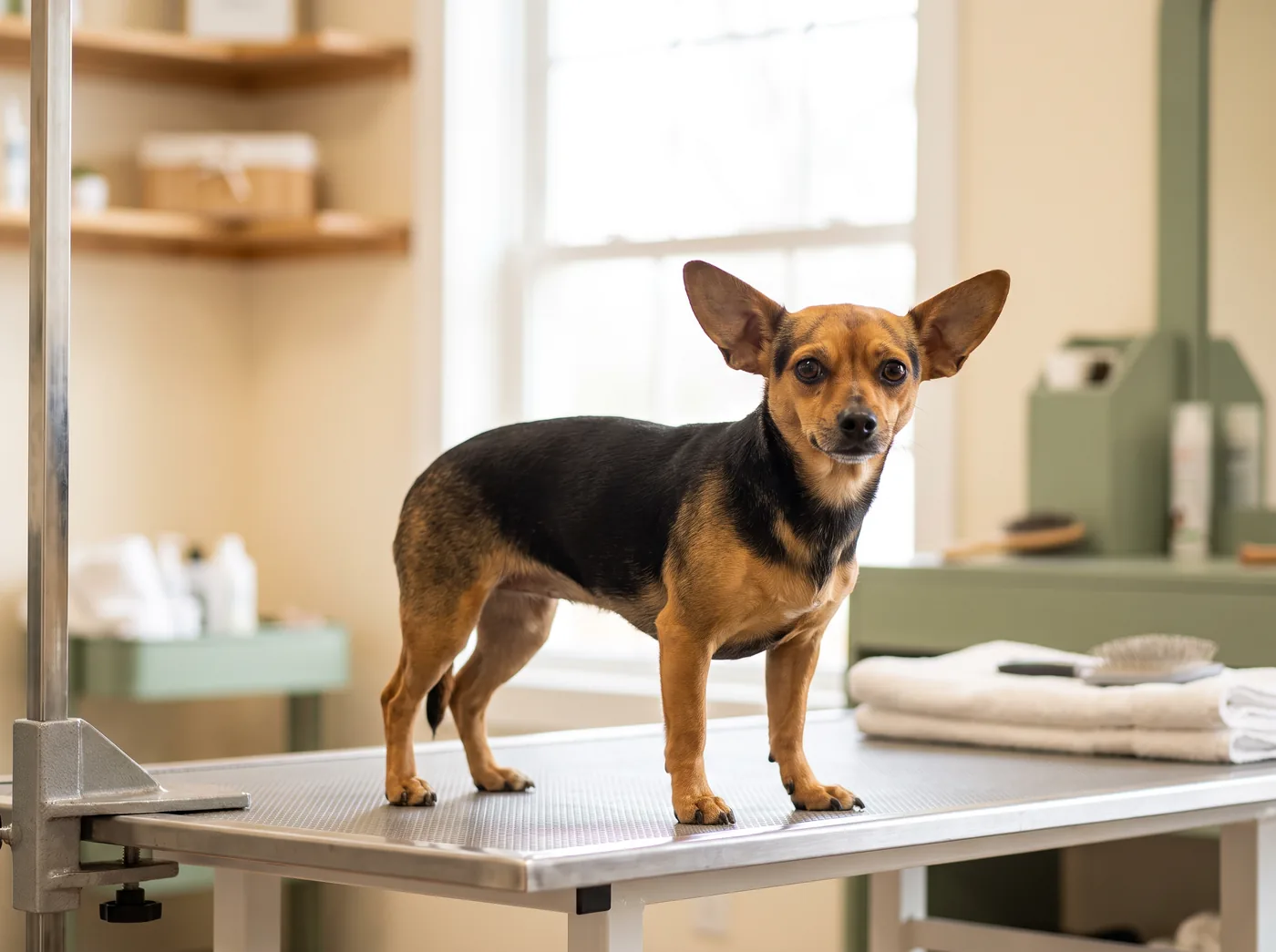
About the Chiweenie
A cross of two of the most popular small breeds there are, and unusually for a designer cross, the coat is the least of it.
Both parents come in more than one coat. A Chihuahua is smooth or long coated. A Dachshund is smooth, long or wire. So a Chiweenie is most often smooth and easy, sometimes longer coated with feathering, and occasionally has a wiry face from a wire Dachshund parent.
Whichever it gets, the grooming is light: a weekly mitt or comb and a bath every couple of months.
What both parents definitely contribute is more consequential. The Dachshund brings a long back that is genuinely at risk of disc disease, and both bring the crowded jaws and early dental disease that define toy breeds.
The Chiweenie has a double coat that regulates its own temperature. Shaving it does not keep the animal cooler, removes the protection against sun and insects, and the top coat often grows back patchy or never returns correctly. A thorough deshed takes out the undercoat and does the job the owner was actually asking for.
What the Chiweenie is crossed from
The back, which is the whole point of the page
A Dachshund is a dwarf breed: the short legs come from a cartilage growth gene, and the same gene affects the discs in the spine, which is why Dachshunds have one of the highest rates of intervertebral disc disease of any breed.
A Chiweenie can inherit that long body on short legs, and with it the risk. Not every one does, and there is no way to know from looking, so the sensible assumption is that the dog has it.
That makes handling a grooming issue rather than only a veterinary one, because the highest risk moments in a small dog's week are often on a table or a sofa.
Never let a Chiweenie jump down from a grooming table, a bath, a bed or a car. Lift it properly: one hand or forearm under the chest and the other supporting the hindquarters, so the spine stays level. Picking a long backed dog up under the front legs alone lets the whole back end hang from the spine.
Say this at the first appointment and check the dog is lifted on and off rather than allowed to leap.
Keep the dog lean, since weight loads a back already at a mechanical disadvantage. Ramps for furniture are worth it.
Sudden reluctance to jump, a hunched back, yelping when picked up, wobbling or dragging a back foot needs a veterinarian the same day.
The coat, whichever one turned up
A smooth Chiweenie, which is the commonest, needs a rubber curry mitt or a soft brush once a week, working against the lie then with it, and a bath every eight weeks or so. That is genuinely the whole routine.
A longer coated one, from a long coated Chihuahua or Dachshund parent, has feathering on the ears, the backs of the legs, the belly and the tail. Comb those areas through weekly with a metal comb, since they tangle where the body coat does not.
A wire influenced coat, from a wire Dachshund parent, gives a harsher body coat with a beard and eyebrows. Brush weekly, and the beard needs wiping after meals like any bearded breed.
None of the three needs clipping.
Smooth Chiweenies shed more than owners expect for the size, steadily rather than seasonally, and weekly currying is what controls it.
Whichever coat, keep the hair between the pads cleared, since a small dog skidding on hard floors is a real risk factor for a dog with a fragile back.
Teeth, and the toy breed problem in duplicate
Both parent breeds are notorious for dental disease and the cross gets it from both sides.
Toy breeds carry full sized teeth in small crowded jaws, food packs between them, and periodontal disease starts early and progresses fast. Chihuahuas in particular are among the worst affected breeds there are.
Brush daily from puppyhood, and budget for professional cleanings under anesthetic. This is the single thing most likely to cause a Chiweenie real, sustained pain, and it is entirely preventable.
Retained baby teeth are very common in these lines: if an adult tooth erupts alongside a puppy tooth rather than replacing it, that needs a veterinarian, because the pair traps food and accelerates disease.
Bad breath in a small dog is not normal and is not a food issue. It is usually dental disease.
Ask a groomer to look at the mouth and tell you what they see, since they handle a lot of small dogs and will notice a change.
A Chiweenie can live to sixteen, which is a very long time to live with a bad mouth.
Cold, kneecaps and a big personality
A smooth coated Chiweenie has very little coat and very little body mass, and it feels the cold badly. A coat outdoors in winter is a genuine need, and most will burrow under blankets given the chance.
Bath water warm rather than hot, dry properly, and do not leave the dog damp in a cool room.
Luxating patellas are common in both parent breeds. A dog that skips a step, holds a back leg up briefly and carries on is showing a slipping kneecap, and it should be assessed rather than watched.
Chihuahuas often have a moleran, a soft spot on the skull that may not close fully, so handle the head gently and never press on the top of the skull.
Nails every three to four weeks. A small indoor dog does not wear them down, and long nails change how it stands, which matters on a long back.
Temperament varies widely in this cross and many are bold, vocal and quite convinced of their own size, so early handling matters more than the coat does.
Ears vary from upright Chihuahua ears to Dachshund drop ears, and a drop ear needs the weekly lift, look and smell.
What to tell your groomer
Say the dog must be lifted on and off the table, chest and hindquarters supported, and never allowed to jump down, because of the Dachshund back.
Say which coat it has, since a smooth, a feathered and a wire influenced Chiweenie need slightly different things.
Ask for the hair between the pads cleared, since skidding is a real risk on a fragile back.
Ask them to look at the mouth and tell you what they see.
Say the dog chills easily: warm water, thorough drying, not left damp.
Mention any skipping on a back leg, and handle the head gently if the dog has a soft spot.
Keeping the coat between grooms
Lift it, never let it jump
Assume the Dachshund back. Chest and hindquarters supported, spine level.
Every time
Brush the teeth
Crowded jaws from both parents. The thing most likely to cause real pain.
Daily
Curry mitt or comb the feathering
Ten minutes. Which tool depends on which of the three coats turned up.
Weekly
Keep it warm
Very little coat and very little body mass. A coat outdoors in winter.
In cold weather
Common Questions About the Chiweenie
Does a Chiweenie have Dachshund back problems?
It can, and the safe assumption is that it does. The Dachshund's short legs come from a dwarfism gene that also affects the spinal discs, giving the breed one of the highest rates of disc disease of any dog, and a Chiweenie can inherit that long body on short legs. There is no way to tell from looking. So never let it jump off a table, bath, bed or car, lift it with one arm under the chest and one under the hindquarters so the back stays level, and keep it lean.
What coat will a Chiweenie have?
One of three, and all are easy. Both parents come in multiple coats: a Chihuahua is smooth or long, a Dachshund is smooth, long or wire. Most Chiweenies are smooth, needing a weekly curry mitt and a bath every couple of months. Some are longer coated with feathering on the ears, legs and tail, which needs a weekly comb through those areas. A few inherit a wire influenced coat with a beard. None of them needs clipping.
What is the biggest health issue in a Chiweenie?
Teeth, closely followed by the back. Both parent breeds are notorious for dental disease, and Chihuahuas are among the worst affected of any breed: full sized teeth crowded into a small jaw, food packing between them, and disease starting early and progressing fast. Brush daily from puppyhood and budget for professional cleanings. Watch for retained baby teeth, where an adult tooth erupts alongside a puppy one, since the pair traps food. Bad breath in a small dog is dental disease, not diet.
Similar breeds
Same coat, same schedule, or the breeds this one is crossed from.

Chihuahua
Two coats in one breed, and a dog small enough that the handling matters more than either
Chihuahua
Dachshund
One breed with three completely different coats, and three different appointments
Dachshund
Cardigan Welsh Corgi
The older of the two corgis, with a tail, a heavier coat and the same fragile back
Cardigan Welsh CorgiFind a groomer who knows this coat
Search 37,863 groomers by town, or keep reading the breed guide.
Find a Local Groomer View All Breeds