Ibizan Hound Grooming
Smooth and wire coats in the same litters, and a sighthound's thin skin either way
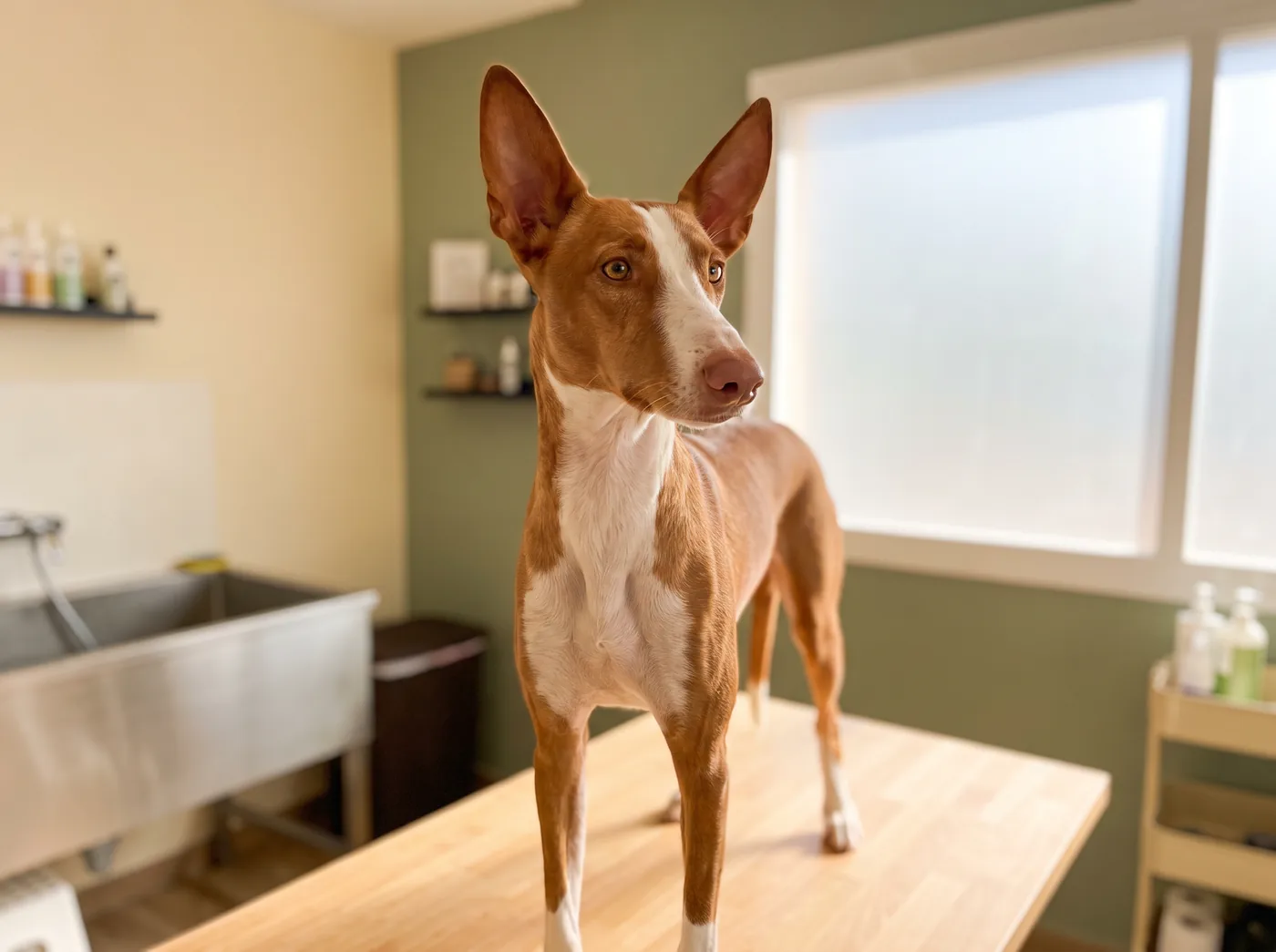
About the Ibizan Hound
A Mediterranean sighthound with enormous upright ears, and a coat that comes two ways from the same parents.
The smooth coat is short, hard and close, and needs a rubber mitt once a week. The wire coat is harsh and rough, from about an inch to three inches long, often with a mustache, and it wants plucking rather than clipping.
Both occur in the same litters, both are correct, and an owner is frequently not told which they have until the puppy coat settles. It puts this breed with the Brussels Griffon and the Xolo: one breed, two routines.
Everything else on this page is sighthound, and it is the same list as the Pharaoh Hound: thin skin, no body fat, a pale nose that burns, and nails whose quick runs long.
The Ibizan Hound has a double coat that regulates its own temperature. Shaving it does not keep the animal cooler, removes the protection against sun and insects, and the top coat often grows back patchy or never returns correctly. A thorough deshed takes out the undercoat and does the job the owner was actually asking for.
Which coat you have, and what each one needs
The smooth is the commonest. Short, hard, close lying, with no undercoat. A rubber curry mitt or hound glove once a week, against the lie of the coat and then with it, and a bath every ten weeks. Nothing is cut.
The wire is harsh and rough, anything from an inch to three inches long, usually with a distinct mustache and sometimes a rough coat on the legs and tail. It is plucked by hand two or three times a year, taking whatever dead hair has loosened, and brushed weekly in between.
Do not clip the wire coat. Cutting the harsh hair off leaves the root, so it comes back softer and thinner, and on a coat this length it grows back unevenly.
Do not neaten it either. Like the Laekenois and the Wirehaired Pointing Griffon, the correct look is rough rather than sculpted.
The mustache on a wire coated dog wants combing and wiping after meals, like any beard.
Both coats shed little and neither mats.
Thin skin, and the pale nose
Like every sighthound here, an Ibizan has very little body fat, thin skin and a coat that provides almost no padding. A correctly conditioned one shows ribs, and owners used to thicker breeds often think it is underweight.
The skin tears more easily than on a thicker coated dog, and this is a fast athletic dog that jumps remarkably well and runs into things.
Check the whole dog over weekly. On a smooth coat nothing is hidden.
At a salon, ask for a padded surface, since a lean dog on a hard table is uncomfortable on bony hips and elbows, and be careful with clippers on skin with nothing over it.
The nose is flesh colored rather than black, which is correct and required by the standard, exactly as on the Pharaoh Hound. It is not depigmentation.
What it does mean is sunburn. Use a dog formulated sunscreen on the nose and ear tips before extended sun, never a human product containing zinc oxide, and give shade.
Sighthounds are also sensitive to some anesthetics because of low body fat, which is a veterinary conversation to have before any procedure.
The ears, the nails and the cold
The ears are enormous, upright, thin and highly mobile, and they are the best ventilated ear shape there is, so infection is uncommon. Wipe the visible part weekly.
The thin ear leather is worth checking for scrapes and for sunburn on the tips, which are exposed and unpigmented on many dogs.
Nails matter more on a sighthound than on most breeds. The quick tends to grow long, so a nail allowed to get long cannot be cut back in one go. Take the tip every one to two weeks rather than a lot every couple of months, and the quick gradually recedes.
Long nails change how a lightly built very fast dog loads its feet, which is a soundness issue rather than a cosmetic one.
Cold is a real consideration on the smooth variety: no undercoat, little body fat, so a coat outdoors in cold weather is sensible, and bath water and drying should be warm rather than hot with the dog not left damp.
The wire coat carries slightly more protection but not much.
Teeth as for any dog, and this is a long lived breed at twelve to fourteen years.
Handling a jumper
Ibizan Hounds are famous for their vertical jump, clearing fences from a standstill, and it is worth mentioning to any salon.
A grooming table is not a secure surface for a dog that can leave one from standing, and a Beezer that decides to be elsewhere will be. Never leave one unattended on a table, and check that doors are shut before the dog is loose.
They are also sensitive and reserved with strangers, more so than most hounds, and they do not respond well to being restrained firmly. Calm and slow works; forcing does not, and it is remembered.
Start handling in puppyhood and keep sessions short.
There is very little to do on either coat, so an appointment should be brief: bath, mitt or pluck, nails, ears and a skin check.
Deep chested, so bloat is a risk: no large meal around an appointment.
What to tell your groomer
Say whether the dog is smooth or wire coated, since one takes a mitt and the other is plucked.
For a wire coat, say it is plucked not clipped and is meant to look rough rather than neatened.
Say the flesh colored nose is correct for the breed and not a pigment problem, and that it burns.
Ask for a padded surface and gentle handling, and no restraint battles.
Ask for nails little and often, and explain that the quick runs long in sighthounds.
Warn them the dog can jump from standing and must never be left on the table.
Keeping the coat between grooms
Mitt the smooth, pluck the wire
Two coats from one litter. Neither is ever clipped and neither mats.
Weekly
Sunscreen the nose and ear tips
A flesh colored nose is correct for the breed, and unpigmented skin burns.
Before sun exposure
Nails little and often
The quick runs long in sighthounds, and long nails change how the foot loads.
Every one to two weeks
Never leave it on the table
This breed clears fences from a standstill. A table is not a secure surface.
Every time
Common Questions About the Ibizan Hound
Does an Ibizan Hound come in two coats?
Yes, smooth and wire, and both occur in the same litters from the same parents, so an owner is often not told which they have until the puppy coat settles. The smooth is short, hard and close and takes a rubber mitt once a week. The wire is harsh and rough, one to three inches long, often with a mustache, and is plucked by hand two or three times a year rather than clipped. Neither mats and both shed little.
Is a pink nose normal on an Ibizan Hound?
Yes, and it is required. The standard calls for a flesh colored nose, exactly as it does on the Pharaoh Hound, so a pale nose here is not depigmentation or an autoimmune problem. What it does mean is sunburn risk on unpigmented skin, so use a dog formulated sunscreen on the nose and ear tips before extended sun, never one containing zinc oxide, and give the dog shade. The thin ear tips burn just as easily as the nose.
What should a groomer know about handling one?
That it can jump a fence from standing, so it must never be left unattended on a grooming table and doors should be shut before it is loose. Beyond that, the sighthound list: thin skin that tears more easily than most, bony hips and elbows that want a padded surface, nails whose quick runs long so little and often beats occasional big trims, and a sensitive reserved temperament that does not respond well to firm restraint and remembers a bad session.
Similar breeds
Same coat, same schedule, or the breeds this one is crossed from.

Pharaoh Hound
A ten minute coat on a dog whose ears and nose genuinely flush pink when it is happy
Pharaoh Hound

Brussels Griffon
Rough and smooth in the same litter, one hand stripped and one needing almost nothing
Brussels GriffonFind a groomer who knows this coat
Search 37,863 groomers by town, or keep reading the breed guide.
Find a Local Groomer View All Breeds