Japanese Bobtail Grooming
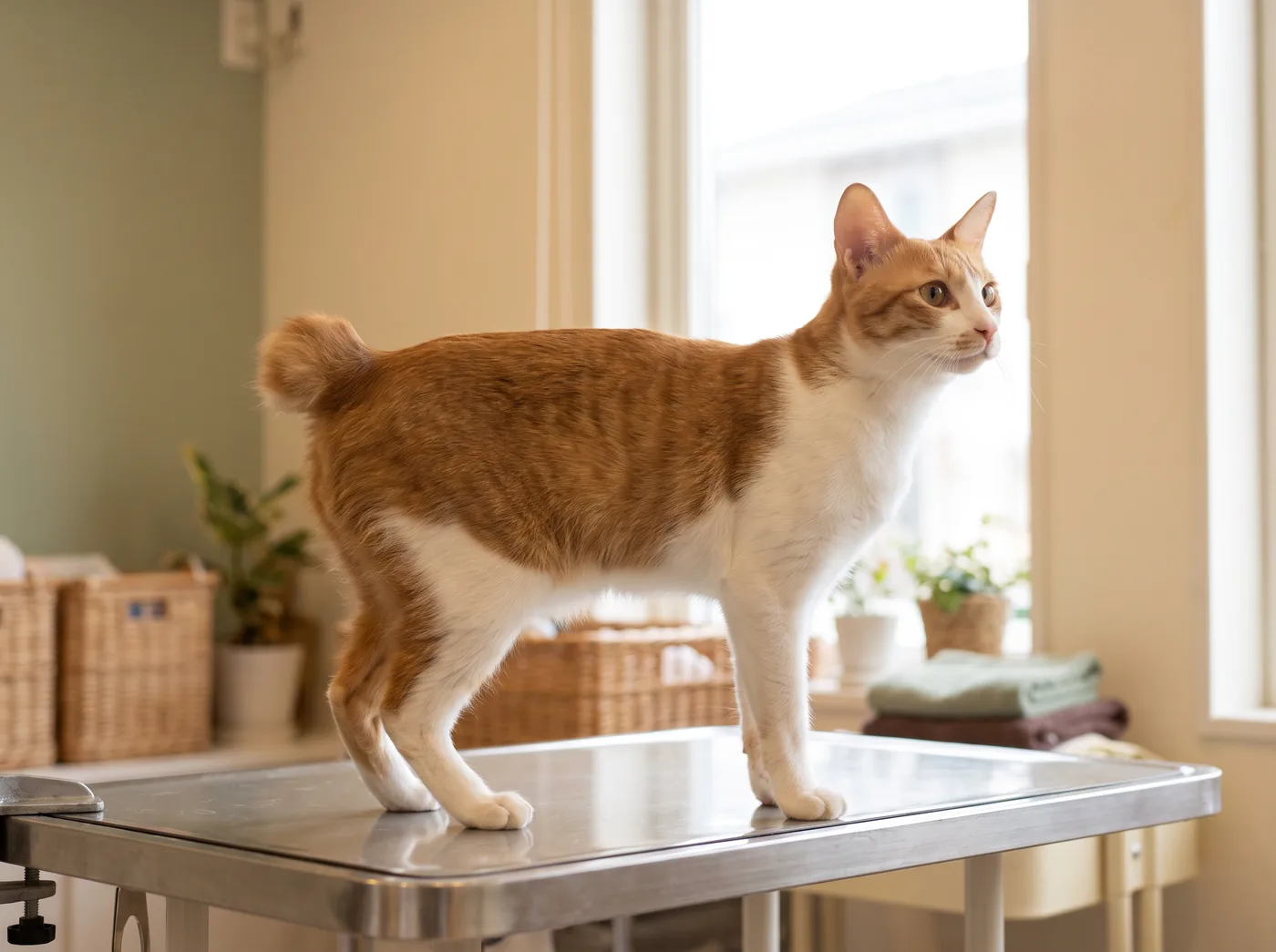
A short pom pom tail from a recessive gene that carries none of the Manx problems
About the Japanese Bobtail
The Manx and Cymric pages carry the site's most serious cat welfare warning: taillessness there comes from a dominant mutation affecting spinal development, and it can bring a shortened spine and real problems with the hind legs, bladder and bowel.
A Japanese Bobtail also has a short tail and the situation is completely different, in the same way the American Curl differs from the Scottish Fold.
The bobtail here comes from a separate recessive gene that affects only the tail vertebrae, producing a short kinked pom pom. It is not associated with spinal disease, and the breed is generally robust and long lived. A cat needs two copies to show it, and cats carrying one copy are entirely normal.
The grooming is easy either way. The correction is the reason the page is worth having.
The Japanese Bobtail has a double coat that regulates its own temperature. Shaving it does not keep the animal cooler, removes the protection against sun and insects, and the top coat often grows back patchy or never returns correctly. A thorough deshed takes out the undercoat and does the job the owner was actually asking for.
The tail, and why it is not a Manx tail
Every Japanese Bobtail's tail is different. It is short, usually two to four inches, and it is kinked, curved or angled so that the fur fans out into a pom pom that hides the shape underneath. No two are alike, and it is as individual as a fingerprint.
The gene responsible is recessive and it affects the tail vertebrae only. A cat needs two copies to have a bobtail, which is the opposite of the Manx situation where a single dominant copy produces taillessness and can also disrupt the rest of the spine.
Because it is recessive and localized, Japanese Bobtails do not carry the associated problems: no spina bifida risk attached to the breed, no bladder or bowel complications, no hind leg weakness as a breed trait, and no lethal gene combination that breeders have to work around.
The tail is normal tissue and it does have feeling, so it is handled like any cat's tail rather than avoided, but it is not a fragile spinal endpoint the way a Manx rump is.
Practically, that means none of the special handling rules from the Manx and Cymric pages apply here.
The pom pom does collect a little debris in the longhair variety, so it is worth combing through.
The coat, in both lengths
Japanese Bobtails come in shorthair and longhair, and both are the same breed.
The shorthair coat is short, soft and silky, lying close to the body, with almost no undercoat. A comb or a rubber mitt once a week is the whole routine, and shedding is low.
The longhair is semi long, silky and again with very little undercoat, longer at the ruff, the britches and the tail pom pom. Because there is so little undercoat, it does not mat the way a Persian or a Ragamuffin does. A comb twice a week keeps it, with a little attention to the britches and behind the front legs.
Neither needs bathing routinely and neither should be clipped.
The classic coloring is mi-ke, the tricolor of white with red and black patches, and calico patterning is strongly associated with the breed. Because calico and tortoiseshell coloring is linked to two X chromosomes, the great majority of mi-ke cats are female, which is a piece of trivia that occasionally matters when somebody is told they are buying a male one.
Combing is the main control on hairballs in the longhair.
An active, talkative, easy cat
Japanese Bobtails are athletic, sociable, notably talkative and much more interactive than the average cat, often described as behaving a little like a dog. They fetch, they follow, and they tell you about their day.
For grooming that is straightforwardly helpful. A cat that seeks out interaction and communicates freely makes the weekly session easy, and it will let you know when something hurts, which is the opposite of the problem on the Ragamuffin page.
They are strong jumpers with slightly longer hind legs, so nail care matters for the furniture as much as for the cat. Tip the claws every two to three weeks and provide a solid post.
They are generally healthy and long lived, often fifteen to eighteen years, with no breed specific grooming complications.
Start handling in kittenhood, keep it short and routine, and use the weekly comb as a check over the body.
A cat this communicative that goes quiet, hides, or stops grooming itself is giving you a clear signal, and it is worth acting on.
Deafness, and the white cat question
Because white and largely white coats are common in this breed, one general cat fact is worth raising here.
Congenital deafness is associated with the dominant white gene in cats, particularly in white cats with blue eyes, and the association is strongest in cats with two blue eyes. It is not specific to Japanese Bobtails, and it is relevant to a breed where white and mi-ke patterning is the norm.
An odd eyed white cat may be deaf on the blue eyed side only.
It has practical consequences rather than grooming ones: a deaf cat startles when approached from behind, so approach where it can see you, use vibration or light rather than voice to get its attention, and keep it indoors.
For grooming, simply do not surprise a deaf cat with a clipper, a dryer or a hand from out of view.
A simple clap test at home is unreliable, since cats respond to air movement, so if it matters, ask a veterinarian.
What to tell your groomer or vet
Say the short tail comes from a recessive gene affecting the tail only, and carries none of the Manx spinal problems, since the two get grouped together.
Say the tail is normal tissue with feeling and is handled like any cat's tail.
Ask for a comb or rubber mitt, twice a week for the longhair, and no bathing or clipping.
Point out the britches and behind the front legs on a longhair.
Mention if the cat is white and may be deaf, so nobody approaches it from behind with a dryer.
Ask for claws tipped, since this is a strong jumper.
Keeping the coat between grooms
Comb or mitt
Once a week for the shorthair, twice for the longhair. Little undercoat either way.
Weekly
Comb through the pom pom
It collects debris on a longhair, and it hides the shape of the tail underneath.
Weekly
Tip the claws
A strong jumper with long hind legs. Sharp tip only, clear of the quick.
Every two to three weeks
Approach a white cat in view
White cats with blue eyes are often deaf. Never surprise one with a dryer.
Every session
Common Questions About the Japanese Bobtail
Does a Japanese Bobtail have the same problems as a Manx?
No, and it is the most useful thing to know about the breed. A Manx is tailless because of a dominant mutation that affects spinal development generally, which can bring a shortened spine and problems with the hind legs, bladder and bowel. A Japanese Bobtail's short tail comes from a separate recessive gene affecting only the tail vertebrae, so a cat needs two copies to show it and there is no associated spinal disease. The breed is generally robust and often lives fifteen to eighteen years.
How much grooming does a Japanese Bobtail need?
Very little in either coat length. The shorthair has a soft silky close coat with almost no undercoat and takes a comb or rubber mitt once a week. The longhair is semi long and, because it also has very little undercoat, does not mat the way a Persian does, so a comb twice a week keeps it with some attention to the britches, behind the front legs and the tail pom pom. Neither needs routine bathing and neither should be clipped.
Are all mi-ke Japanese Bobtails female?
The great majority are. Mi-ke is the tricolor pattern of white with red and black patches, and calico and tortoiseshell coloring in cats depends on having two X chromosomes, so it appears almost entirely in females. Male tricolors do occur very rarely, usually with an extra chromosome, and they are typically sterile. It is worth knowing if somebody is offering a male mi-ke kitten, since it is genuinely uncommon rather than merely unusual.
Similar breeds
Same coat, same schedule, or the breeds this one is crossed from.

Manx
A dense double coat and no tail, and the missing tail changes the grooming rather than decorating it
Manx
American Curl
Backward curling ears with rigid cartilage, and none of the Scottish Fold's skeletal disease
American Curl
Find a groomer who knows this coat
Search 37,863 groomers by town, or keep reading the breed guide.
Find a Local Groomer View All Breeds